Yes, be angry, but don’t take anger into your darkness

Sometimes a sermon feels half-baked, but that’s all this preacher has this Sunday for a small congregation meeting in the heart of Warwickshire. The focus is on anger, one of the gifts of being human, in the context of violent anti-immigration riots which have been going on in towns and cities in the UK over the last week or so. “Be angry, but don’t let the sun go down on your anger” is the text from the reading appointed for the day – Ephesians 4:25-5:2.

August 11th 2024

See how fearfully and wonderfully made we are. That’s the frame of mind of the Psalmist. We say our Amen when we join the prayer of the psalmist. We are fearfully and wonderfully made. Our Amen is our Yes to this frame of mind and part of our adoration of God. The Psalmist thanks God: “You yourself created my inmost parts. You knit me together in my mother’s womb. I thank you, for I am fearfully and wonderfully made.” (Psalms 139: 12-13)

We don’t just come with our physical make up. We have our psychological make up. We have soul. We are fearfully and wonderfully made – complete with our basic instincts and appetites. Without those instincts and appetites we wouldn’t survive or organise ourselves or build society. The desert fathers listed these instincts so that they could help people discipline them, because without that discipline they turn on us and ruin us.

Among their list of instincts and habits, as an example, is the habit of dejection – which lowers our sights and expects the worst of ourselves. Greed is in that list, and so is anger. They tried to cover all our basic instincts and habits of thought, recognising the demons that turn those instincts against us. They recognise that we all get caught up in corrupt chains of thought that ultimately bind us. You may see that in yourself. I see it in myself. I hear one thing, which leads me to another – it is my doom-looping which has made me bound to think and behave this way and that.

This morning we have a letter to read dating back nearly 2000 years which is dedicated helping to free people from these chains of thoughts and behaviours. It comes to us from the Christians of Ephesus.

Be angry, the letter reads recognising the basic instinct of anger which is part of our make up – part of being fearfully and wonderfully made. 

Be angry – why not? Jesus got angry. Our anger can be very useful. Cassian, one of the desert fathers, taught that the proper focus for anger is on our malicious thoughts and on the destructiveness we see around us. These are things we need to get angry about. Imagine a world in which no anger was focused on such things. Imagine ourselves and what we would be like without an anger against some of the ways we are. Anger can make things better.

And anger can make things worse. Anger can turn nasty. Our anger can be deeply hurtful of others and ourselves.

Anger needs reining in. Ephesians has given us a pearl of wisdom which has become almost proverbial. Be angry, but don’t let the sun go down on your anger. I dare say that has saved a good many relationships. Don’t let the angry word be the last word of the day. Don’t take your anger into the night. Keep your anger in the light.

Don’t take your anger into the darkness. Break the chain of thought before the chain of thought traps you in darkness.

We’ve seen anger spilling onto our streets this last week using mis-information to make targets of immigrants and their defenders, and Muslims and their mosques, 

Having read his book The Lightless Sky I’ve been following Afghan refugee Gulwali Passarlay. He featured in the Channel 4 election debate. He posted on Twitter this week that he has “never been this afraid” He’s lived in the UK for 17 years and been a citizen for the last 5. He posted: “I’m afraid for my kids. I to;d my wife, don’t go to the park. I had to travel from Bolton to take my kids to nursery because I was afraid for my wife to walk on the road.” There were NHS staff frightened to go to work. And yesterday I heard that a Faceboog group of British Asians in Leamington were warning members not to go into town because of the possibility of racist attack.

The mob violence we have seen is anger gone wrong – anger pent up, anger that has been taken into darkness by perpetrators who have been misled – and we all need to be very afraid. Thank God for the counter-protesters, and for those who day in and day out defend the stranger and the defenceless.

When we take anger (as well as our other instincts) into our darkness, into the night and into our sleep, we find that, there the darkness spins chains of doomloops to bind us. Anger belongs to the day. Be angry, but be angry in the light of day. The Ephesians tell us, Don’t make room for the devil to work with your anger.

If we don’t make room for the devil to work in our anger we leave room for compassion and love to work there, to direct and discipline our anger.

The permission for anger in Ephesians comes with disciplines that rein in this basic instinct. Putting away falsehood, let all of us speak the truth to our neighbours, for we are members of one another. We belong together. We are made for one another. Anger needs the light of truth, so we only speak the truth to our neighbours and about our neighbours. We’ve seen this week how the incitement to riot relies on falsehoods, deception and misinformation.

In anger, let no evil talk come out of your mouths, but only what is useful for building up, as there is need, so that your words may give grace to those who hear …. Be imitators of God … and live in love.

Anger is one of our instincts. We are fearfully and wonderfully made – with anger and much else. God loves our anger when we are imitators of God. His anger was shown by Jesus. His anger and wrath is against those who put themselves first, the entitled, the supremacists who demean others and put others beneath them and never go to their help. His anger and wrath is against those wolves in sheep’s clothing who lead people astray.

But for those put last, for those lost and misled, for those least, for those forced to flee, for those seeking sanctuary and safety, for those housed in the hotels being attacked in the mob violence, there is only words of love giving grace to those who hear them, and the promise of a rule which puts them first, not last.

Ephesians 4:25-5:2
So then, putting away falsehood, let all of us speak the truth to our neighbours, for we are members of one another. Be angry but do not sin; do not let the sun go down on your anger, and do not make room for the devil. Thieves must give up stealing; rather let them labour and work honestly with their own hands, so as to have something to share with the needy. Let no evil talk come out of your mouths, but only what is useful for building up, as there is need, so that your words may give grace to those who hear. And do not grieve the Holy Spirit of God, with which you were marked with a seal for the day of redemption. Put away from you all bitterness and wrath and anger and wrangling and slander, together with all malice, and be kind to one another, tender-hearted, forgiving one another, as God in Christ has forgiven you. Therefore be imitators of God, as beloved children, and live in love, as Christ loved us and gave himself up for us, a fragrant offering and sacrifice to God.
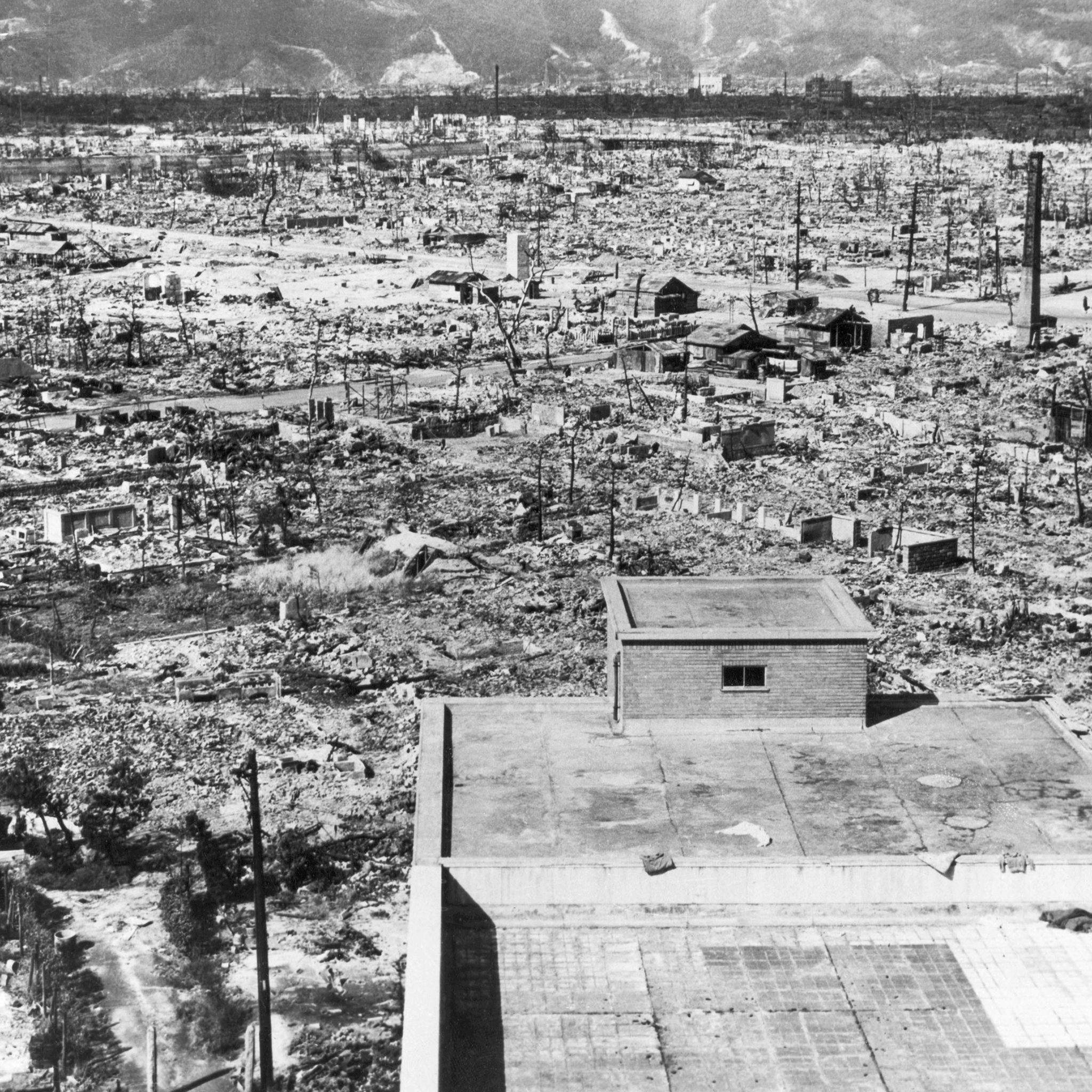
The thousands of deserted places: exploring the feeding of the 5000

The gospel for the 9th Sunday after Trinity is the Feeding of the 5000. It’s the only miracle that is in all four gospels. Today’s reading is from Matthew 14:13-21. I was taken by the references to the “deserted place” and the time and chose to explore the good news of these key features.

This deserted place is Hiroshima after the first atomic bomb was exploded on August 6th 1945. This deserted place stretched my imagination about deserted places God seeks out. This, and the writing of Belden Lane gave the energy for this sermon.

Reflection on the time and place

Today’s gospel follows a sequence of readings from Matthew’s gospel when so much is made with so little: the parable of the sower planting seed which crops an enormous yield, the parable of the good seed which withstands the weeds, the parable of the mustard seed which grows into a shelter for the birds, the parable of the leaven folded into the loaf – and here we have the feeding of thousands with just a couple of fish and a bag of loaves.

For our imagination I’m going to focus on the where and when of the story.

The place

It was a deserted place. It was a desert place. So many of the landscapes of the Bible are desert places, just as so much of Israel is desert and mountain, desolate, deserted. God seems to choose to make God-self known in such places. The landscapes of the Bible are barren, wild and fierce. 

This place is on the edge. Jesus got there by boat. It’s on the edge of water and on the edge of the town and villages. It’s on the edge of where people really want to go. Jesus sought this place out as a place he wanted to be. He wanted a retreat and somewhere to pray. This was where he wanted to recover and where he expected to be fed. 

Many of us search these places out and we make holiday of them, climbing mountains, challenging rivers, going “off grid”. There we often find out about ourselves, we feel invigorated and our souls get fed.

But we don’t live there. You might find a few eccentrics living in places like that. It’s OK going there if you have the right gear and have taken safety precautions.

David Douglas has this to say about desert places and barren landscapes where nothing seems to grow. He writes: “the crops of wilderness have always been its spiritual values – silence and solitude, a sense of awe and gratitude – able to be harvested by any traveller who visits.”

But there are many who are forced into such places. They haven’t chosen to be there. They’ve been driven there by the circumstances of their lives, driven to the edge. I’m thinking of refugees. Poet Warsan Shire points out in her poem called Home:

No-one leaves home unless
home is the mouth of a shark.

you only run for the border
when you see the whole city
running as well.

you have to understand,
no one puts their children in a boat
unless the water is safer than the land.

who would choose to spend days
and nights in the stomach of a truck
…….?

We may have come to such a desparate place as this in our own lives, or may know that we have been there in a place where no-one really wants to go. No one wants to go to the place of extreme pain, or the loss of a loved one. They are the dread-ful places we dread to go. It is because no-one wants to go there that makes the place deserted, and where the place is deserted there are no well-trodden paths to guide our way. There are no maps. We feel that we are on our own, deserted in desert places, helpless and hopeless.

It was in such a place that Jesus had compassion for the thousands, who like him, were living on the edge, those who had joined him in that deserted place, and those he had joined. It’s on the edge that we realise what little we have, what little we have in terms of hope or resources of resilience. We are hanging on.

Jesus had compassion on those thousands
– and the little that they had
became more than enough for all of them.
He took five loaves and two fish,
he looked up to heaven, blessed the bread,
broke the bread and shared the bread
and they ate and were satisfied. 

These are precisely the actions of the work of the church,
also known as “the liturgy”.
In our Communion we take bread,
bless it, break it and share it. 
Our very language is fed by the memory
of that miracle of multiplication in that deserted place.

It’s as if the bread we are given is meant for such a place,
a wedge in a thin place, raising the angle of hope.
It’s as if the desert place is the perfect place
for the work and liturgy of the church
for those on the edge, just hanging on,
for those deserted in love through loss or betrayal,
for those deserting homes through the cruelty of others,
refugees and all those seeking refuge (no one leaves home
for those straying paths of addiction, for those shamed
and those who are ashamed, for those who are bullied,
for whom the playground or workplace is a friendless desert,
for those who have little and those who think little of themselves.

The psalmist has it. “You make us lie down in green pastures. You join us even as we walk through the valley of the shadow of death. You prepare a table to feed us in the sight of our enemies.” (Psalm 23)

So we have established where this miracle took place. We also know the time. Matthew tells us that the time is ‘when Jesus heard this’ – “this’ being the news brought to him by John the Baptist’s disciples that John, Jesus’s cousin had been killed by Herod – and that he had been killed in the most barbaric way, by being beheaded. Jesus’ grief is written into the landscape he deliberately searched for as his sense of desolation and desertion are reflected in the desolate deserted landscape. The when and where come together at this deserted place at the time of Jesus’ grief.

We are also told that it’s the end of the day. 

It’s going dark. 
Shadows are lengthening.
Time is running out.
It’s closing time.
It’s time for Jesus to send the crowds away
(according to the disciples).
But this is precisely the time
when Jesus makes time.
Just when it’s going dark,
when time is running out,
at the end of the day,
Jesus bids them stay with him.

We know this time at the end of the day.
It may have been a good day for us,
a  time for us to rest on our laurels,
for a job well done, the promises kept,
We may sleep well tonight.

But we know of other times, 
this time in the desert place deserted,
when promises are broken,
when we are exhausted and tired,
when time runs out
and the darkness spooks us.

And we know that for thousands,
(make that millions), 
time has lost all meaning,
there is only darkness.
At the end of the day,
when the shadows are
so threatening,
when promises lie broken,
when luck’s run out
leaving no chances
when both health and hope
have run out,
when the food’s run out
when friends have run out
leaving them there deserted
at wit’s end,
Jesus had compassion.
Worn out, grief-stricken, Jesus
at the end of the day,
looked to heaven
with the little he had,
the loaves, the fish, the love,
enough for another day.

And so we have the time and the place – and it is a miracle that thousands were fed, and that there was still enough to fill 12 baskets with what was left over. Those twelve baskets symbolise the twelve tribes of Israel, underlining the fact that God’s people have their fill of daily bread through Jesus and his compassion.

This feeding of thousands is a foretaste of our Communion service and a signal for the work of the church day in and day out. We know it’s not bread and fish for Communion. But it’s still the little Jesus had: his body broken for us, and his blood shed for us. His body seen in the bread and his compassion and passion seen in the drop of wine.

We have the time and the place. The place deserted, the time getting on. And so we come to Communion. Never think we come alone. We can never duck the fact that Communion is a political act. The timing and the placing of Communion place the broken and wronged at the scene of their greatest hope. We never come alone. We come together and we come in our thousands.

When you come for Communion don’t think you stand alone. Think of who you stand with and think of who you take a stand for. It might be the people you are literally standing by – in which case, pray for them and any grief, pain or challenge they or their loved ones may be going through and pray for their feeding for another day. Or they may be on the mountain, trying to achieve great things for others – in which case pray for their success.

And/or, you might cast your mind and your compassion further afield to others deserted and others lost in deserts. Maybe you will have already begun to name them in your prayers and intercession: those lost in addictions of various kinds, those in prison or detention centres, those in care homes, those whose work in dangerous, those who are bullied and abused, those who have been forced out of home, those caught up in conflict of one kind or another.

At the end of the day, when all is said and done, we stand together in our thousands. Thank God that he finds us when we are on the edge, in wilderness, in desert and desertion, when there’s no map to guide us or any other way to find us.

Matthew 14:13-21

Now when Jesus heard this, he withdrew from there in a boat to a deserted place by himself. But when the crowds heard it, they followed him on foot from the towns. When he went ashore, he saw a great crowd, and he had compassion for them and cured their sick.. When it was evening, the disciples came to him and said, ‘This is a deserted place, and the hour is now late, send the crowds away so that they may go into the villages and buy food for themselves.’ Jesus said to them, ‘They need not go away; you give them something to eat.’ They replied, ‘We have nothing here but five loaves and two fish.’ And he said, ‘Bring them here to me.’ Then he ordered the crowds to sit down on the grass. Taking the five loaves and the two fish, he looked up to heaven, and blessed and broke the loaves, and gave them to the disciples, and the disciples gave them to the crowds. And all ate and were filled, and they took up what was left over of the broken pieces, twelve baskets full. And those who ate were about five thousand men, besides women and children.

Post script:
Belden C Lane makes much of the desert and mountain landscape of the Bible in his book The Solace of Fierce Landscapes: exploring desert and mountain spirituality.
There are so much good work to help us understand the dreadfulness of the experience of refugees. Here’s four books I’ve found helpful:
My Fourth Time, We Drowned by Sally Hayden (2022), winner of the 2022 Orwell Prize for Political Writing, looking at efforts by the rich world to keep refugees from seeking safety
The Lightless Sky by Gulwali Passarlay (2015) – an Afghan refugee boy’s journey of escape
The Beekeeper of Aleppo by Christy Lefteri (2019)
American Dirt by Jeanine Cummins (2020)