>Psalm 78

>He remembered that they were but flesh ………… so the Psalmist (Psalm 78:39) explains the mercy of God and how God excuses the calamities of human history and human nature. Time and again God rescues his people, but repeatedly the people forget God and become so utterly absorbed in their own needs. But “we are but just flesh”.

This is immensely liberating – the realisation by God that we are just flesh. Who else, or what else, could we be? If we were anything else we too would be gods, and as gods, perfect. Perfection is not an option for us – and the imperfections (and the wrong doing) are the occasions for God’s love of us, and our love for each other. Is it right to think that we are loved only because we are imperfect? If we were perfect we wouldn’t be loved as much as worshipped – and we all discover sooner or later that those who are worshipped and given hero status – soon come tumbling from their perch and their feet of clay smash when they come down to earth. Similalry millions of lives are ruined by those who think themselves “gods” with their divine rights.

However, those who know God’s love for them – in spite of the shortcomings of being fleshly – seem to raise their game as a response to the lover. They become sanctified – or as the saying goes, “those who are loved become lovely – those who aren’t become unlovely”.

>Psalm 78

>He remembered that they were but flesh ………… so the Psalmist (Psalm 78:39) explains the mercy of God and how God excuses the calamities of human history and human nature. Time and again God rescues his people, but repeatedly the people forget God and become so utterly absorbed in their own needs. But “we are but just flesh”.

This is immensely liberating – the realisation by God that we are just flesh. Who else, or what else, could we be? If we were anything else we too would be gods, and as gods, perfect. Perfection is not an option for us – and the imperfections (and the wrong doing) are the occasions for God’s love of us, and our love for each other. Is it right to think that we are loved only because we are imperfect? If we were perfect we wouldn’t be loved as much as worshipped – and we all discover sooner or later that those who are worshipped and given hero status – soon come tumbling from their perch and their feet of clay smash when they come down to earth. Similalry millions of lives are ruined by those who think themselves “gods” with their divine rights.

However, those who know God’s love for them – in spite of the shortcomings of being fleshly – seem to raise their game as a response to the lover. They become sanctified – or as the saying goes, “those who are loved become lovely – those who aren’t become unlovely”.

Love is a temporary madness. It eruupts like an earthquake and then subsides. And when it subsides you have to make a decision. You have to work out whether your roots have become so entwined together that it is inconceivable that you should ever part. Because this is what love is.
Love is not breathlessness, it is not excitement, it is not the promulgation of promises of eternal passion. That is just being ‘in love’ which any of us can convince ourselves we are. Love itself is what is left over when being in love has burned away, and this is both an art and a fortunate accident. Your mother and I had it; we had roots that grew towards each other underground, and when all the pretty blossom had fallen from our branches we found that we were one tree and not two.

Louis de Bernieres – Captain Corelli’s Mandolin

>Being loved

>
We don’t hear much of what God (as Father) has to say in the gospels. He does say to Jesus “You are my beloved”, and then Jesus says to us “as the Father loves me so I love you”, so Jesus had the clear intention that we would know ourselves as “beloved”.
It is for us to hear this one voice above all the other voices that crowd our minds – all with the same basic message “Prove yourself. You are guilty until proved innocent” – so we try to prove ourselves through our image, through our hard work – and still those voices refuse to believe us, perhaps because in all our hearts of hearst we know that we are guilty. There’s always something of ourselves we need to hide away. “If they knew what I was really like they would never love me” – and so we bury our shame.
There is a beautiful story in Genesis of Adam hiding his shame. But God searches out Adam and his shame – and in the lovely story of the return of the prodigal the father embraces the shame of his son. (The picture is from the Poor Clare Colettine Community at Hawarden and shows the embrace of the prodigal)
When Jesus says “I love you” he means us to to know that God loves us. He knows that we all have a dark place in which we hide our shame. We do not have to prove ourselves before God loves us.
Henri Nouwen wrote of “being the beloved” and claimed that the greatest temptation is “self-rejection”, the flip side of which is “arrogance”. He wrote:

Both self-rejection and arrogance pull us out of the common reality of existence and make a gentle community of people extremely difficult, if not impossible, to attain.

This video is worth a watch/listen – a sermon from Henri Nouwen.

>Pearls

>Good authors gift us with pearls. Here are some pearls polished and presented by Timothy radcliffe from my reading today – What is the Point of being a Christian?
How about this?

  • As fish were made to swim in water, human beings were made to thrive in the truth (p121)
  • When Wittgenstein was asked how philosophers should greet each other, he replied ‘Take your time.’ (p123)
  • We come to see people as lovable because we see other people loving them. (p124)

and then Radcliffe uses this story. “one day a rabbi asked his students, ‘How can you tell that night has ended and the day is returning? One student suggested, ‘When you can see clearly that an animal in the distance is a lion and not a leopard.’ ‘No’, said the rabbi. ‘It is when you can look on the face of another person and see that woman or man is your sister or brother. Because until you are able to do so, no matter what time of day it is, it is still night.'”

>Sexuality and lust

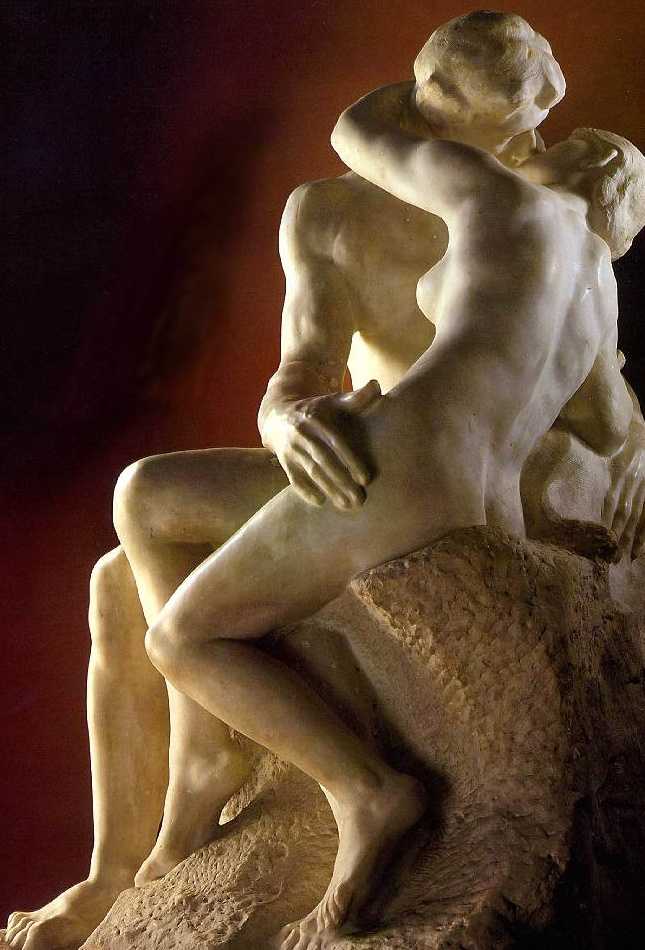
> “This is my body which is given for you.” Any Christian worshipper will recognise these words of Jesus by which he declares his love for the world because they are central to the Christian gathering. We meet round the table and celebrate that Jesus gave his body for us. The words are repeated by lovers who give themselves to one another. They could be words used in the marriage service – that would hot things up well wouldn’t it? Tim Radcliffe – in What is the Point of Being a Christian? – underlines the importance of the body in love and sexuality, and in so doing manages to distinguish between love and lust, and between erotic and pornographic art. (Rodin’s kiss is lovely. It’s erotic and it’s good because both partners are lost in their mutual self-giving).

We give ourselves in love. With lust we make of the other an object of desire for our own pleasure. Often the focus of desire is one part of the body, so the object of our desire is dismembered before our very eyes. Interestingly Jesus says “If your right eye causes you to sin, gouge it out and throw it away.” (Matt 5:29) presumably to help us to understand that if we dismember others we ought to dismember ourselves. Radcliffe refers to the Red Queen in Alice in Wonderland who wouldn’t let Alice eat the mutton to which she had been introduced. “It isn’t etiquette to eat anyone you’ve been introduced to.” she says.
The cure for lust is not chopping off our hand or plucking out our eye – and it’s good that very few have tested that theory – the first step, according to radcliife’s wise words “is not to abolish desire, but to restore it, liberate it, discover that it is for a person and not an object.”