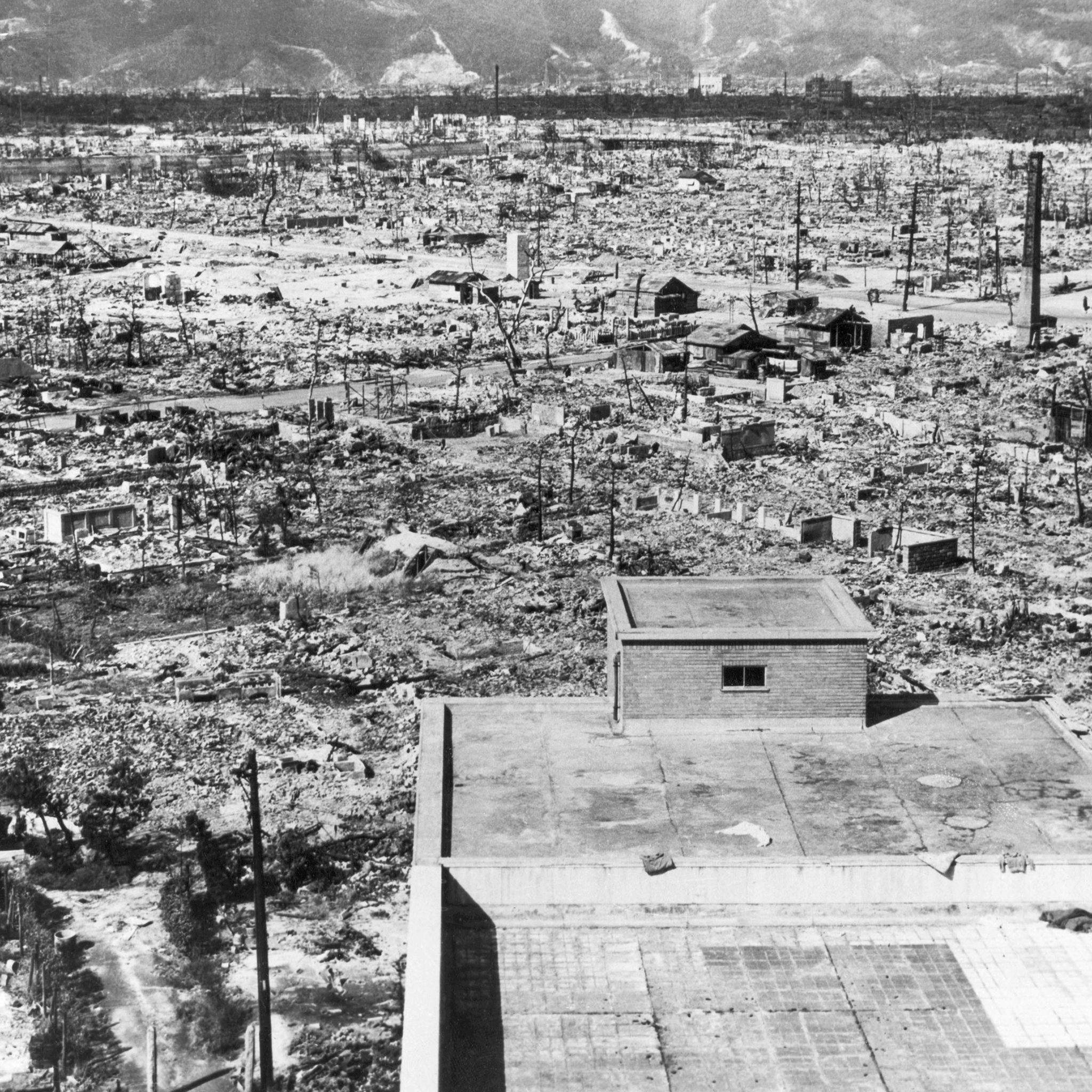
Setting Mary free to be herself – listening to her song

This is something for the 3rd Sunday of Advent, Gaudete Sunday, in a country church in Warwickshire dedicated to Mary, I have focused on Mary’s Magnificat.

Have any of you been put on a pedestal?

I can imagine it’s hard and you can be brought to earth with a bang. You’re not allowed to be yourself, always having to be what others want you to be.

The church hasn’t done Mary any favours. Above all women she has been put on a pedestal for so long that we’ve forgotten what she was really like. It’s what men have done to her over the centuries.

This morning I want us to listen to her song.

My aim in preparing this sermon is that you and I get a better idea of who Mary was. This, I believe will help us into the Christmas gospel and will help us better understand the son who spent most of his life with her in their village and home of Nazareth.

As a church dedicated to Mary, I suggest we dedicate ourselves to her liberation so that she can be herself, rather than what we have made her over the centuries, whether we have devoted ourselves to her as within the catholic traditions if the church, or whether we have been critical of such devotions, as within the protestant traditions.

When we look at her, what do we see? What we see is what people have made of her over the years. We see all the images laid on top of one another as she has been used for this or that purpose. 

She has become stereotyped. She comes to us well dressed in her blue flowing gown looking like a beauty queen. She usually has pale skin, blue eyes. She looks peaceful. She looks heavenly. She’s usually on her own, surrounded by quiet. She has her hands together, eyes closed, praying. Often her setting is the architecture of a palace. She is often reading. And in all of this there is no sign of trouble. There is no sound of her song and no sign of her joy. There isn’t much sign that she has done anything at all. 

But the gospels give us a very different view of Mary.

She was a woman of history. She was Mary, Mary of Nazareth, a small village of about 300 people off the beaten track to the sophisticated nearby city of Sepphoris. This was the village people scoffed at – “can anything good come out of Nazareth?” 

Archaelogists there have pieced together a picture of rural poverty, with people living in one and two roomed houses clustered around courtyards shared with extended families with shared cooking facilities. They’ve found no signs of any wealth. 

This was a small peasant community. Mary was married to the village carpenter. This wouldn’t have been a small business as we know them. He wouldn’t have had the status we give to small businesses. He would have been an artisan, the class below the peasants, earning less than the peasants and serving their needs. They probably would have had a small plot of land for growing food to eke out a living. They would have made their own clothes from their sheep.

They were poor. They were taxed three times. They paid 10% to the Temple. They paid tribute to the Roman emperor. And then they also had to pay tax to fund the vanity projects of Herod, such as the building of nearby Sepphoris, the equivalent of our HS2.

They would have been very poor, barely scraping a living together. Many of them would have been in debt to the wealthy and would have their land taken off them. Resentments grew and  there were frequent rumblings of revolt. Many days they would have gone hungry.

Life didn’t treat any of them gently.

It takes a village to raise a child. That village raised Mary and Jesus, Jewish babies having to grow up very quickly. Their village meetings would have dwelt on the different ways their people had suffered in Egypt, in persecution, in exile and the way that God had graced these suffering servants. She picks up the song of Hannah and makes it her song.

My soul does magnify the Lord, she sings. “My spirit rejoices in God my Saviour for he has looked with favour on the lowliness of his servant. The Mighty One has done great things for me. His mercy is on those who fear him. He has shown strength with his arm, he has scattered the proud in the thoughts of their hearts. He has brought down the powerful from their thrones and lifted up the lowly. He has filled the hungry with good things and sent the rich away empty.”

This isn’t the song of the woman we have put on the pedestal for so long. This is the song of a woman who lives with the day to day challenge of survival. It’s a song Jesus will have heard from his mother and from the scriptures shared in their village meetings. This isn’t a song of the docile, or of those who take things lying down. This is the song of those who rejoice that the proud are scattered, the powerful dethroned and the rich sent away empty. 

This is the song which prompted one artist to portray Mary in the style of Russian communist posters, muscular, all boiler suited and booted.

You are a church dedicated to Mary. Can I suggest that we all try to get to know her better and that we talk about her more? Can you let her be herself rather than forcing her to be somebody she isn’t?

As we get to know her better we will know better where God plants his seed and where the baby Jesus grew, side by side with his mother as he joined her in her prayer, magnifying the Lord and praying for their daily bread and the forgiveness of their debts, joining her and watching her in the household tasks, digging the soil, planting seeds, baking bread – funding his imagination for sharing with those who followed him the images of the kingdom of the one he magnified in the song of his mother.

I am indebted to my Advent reading – to the work of Elizabeth A Johnson, in her book Truly our Sister: a Theology of Mary in the Communion of Saints

Magnificat

My soul proclaims the greatness of the Lord,
my spirit rejoices in God mySaviour;
he has looked with favour on his lowly servant.

From this day all generations will call me blessed;
the Almighty has done great things for me
and holy is his name.

He has mercy on those who fear him,
from generation to generation.

He has shown strength with his arm
and has scattered the proud in their conceit,

Casting down the mighty from their thrones
and lifting up the lowly.

He has filled the hungry with good things
and sent the rich away empty.

He has come to the aid of his servant Israel,
to remember his promise of mercy,

The promise made to our ancestors,
to Abraham and his children for ever.
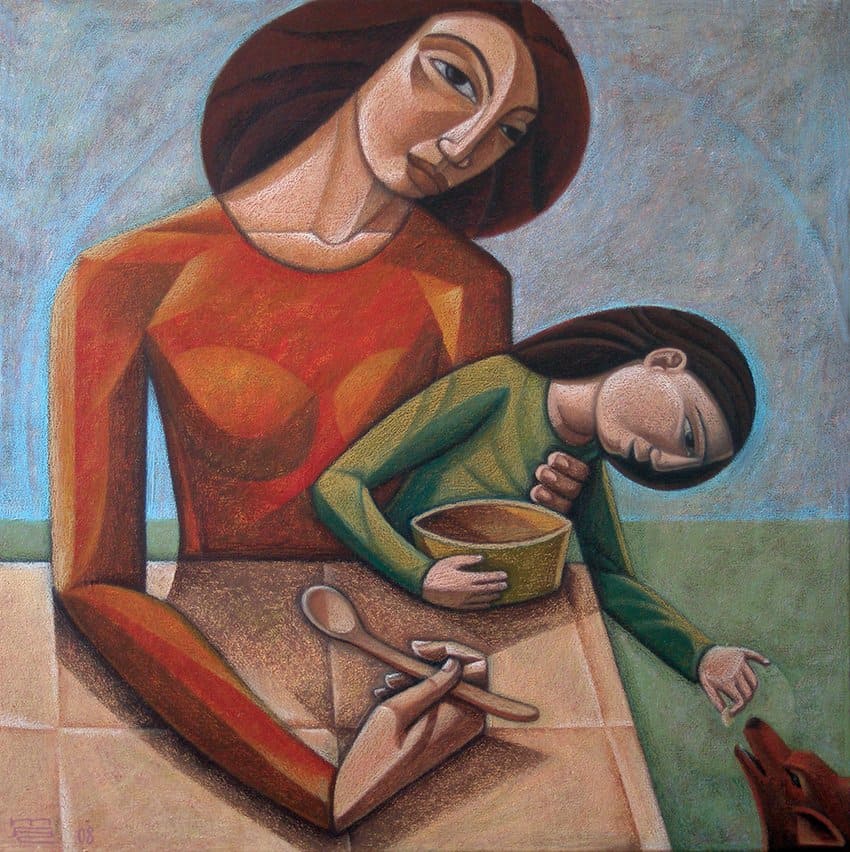
A final judgement: the parable of the sheep and goats

The last Sunday of the Christian year (liturgically speaking, the celebration of Christ the King, the Sunday before Advent (Year A)). The readings from Ezekiel 34 and Matthew 25 (the parable of the sheep and goats) are printed below.

The liturgical year leads us to this. Today is the last Sunday before the new year starts next Sunday, the first Sunday of Advent, when we start a new round of readings, rediscovering the gospel for our dark times. The liturgical year with all its readings and reflections leads us to the kingdom of heaven, to the coronation of Christ the King and the admission that the love and mercy that makes his majesty should be the rule of our lives. It is our final judgement.

Jesus sees himself with those who are hungry, thirsty, stranger, naked, sick and in prison. They are his brothers and sisters. He calls them his family. “Just as you did it to the least of these who are members of my family, you did it to me”. (Matt 25:40). 

Many of us will be starting to write Christmas cards – some may be of the “holy family” but this passage shakes up our preconceptions of the holy family. The holy family, (the royal family if we accept Christ the King), is made up of those who are hungry, thirsty, stranger, naked, sick and prisoner. Jesus is a king like no other, his kingdom is like none other, his royal family is like no other royal family.

It is just like us to idealise the nuclear family – Mum, Dad, baby (and the pet, the wee donkey!), but Jesus “extends” the family. Matthew has already told us of the time when Jesus’ mother and brothers stood waiting to speak to Jesus while he was talking to the crowd. He was told that his Mum and brothers were outside but he said “who is my mother, and where are my brothers?”, and pointing to the disciples he said “here are my mother and brothers”. 

So, here we are in this parable of the sheep and the goats with the family Jesus has extended – with his brothers and sisters, those who are hungry, thirsty, naked, stranger, sick and prisoner and our final judgement is based on whether we have sided with them or whether we have walked by on the other side joining with those who won’t be bothered, or who are too busy, or who think they have enough to bother about, or who join those who scoff at the last and the least pretending that their state is a “lifestyle choice”.

Our final judgement is about our kindness to the last and least who Jesus claims as members of his long lost family. Jesus identifies with them all and it’s his gratitude which places those who follow him and his family on his right hand. 

You gave me food when I was hungry. You gave me drink when I was thirsty. You welcomed me when I was a stranger. You gave me clothes when I had nothing. You took care of me when I was sick. You visited me when I was in prison. 

It’s acts of kindness such as these that sorts the sheep from the goats, that puts some on the right hand of God – the right hand being the the hand of God’s power, the hand of righteousness, the hand that puts things right – and puts some on the wrong hand of God, the dismissive hand, the hand that discards, the hand that says ‘to hell with you’.

(A note on prisons. They served a different purpose in Jesus’ day. It’s where they put people waiting for trial – as with Jesus before his trial, as with Paul, Stephen and John and so many of his brothers and sisters.)

It is about kindness. Kindness appreciates our kinship, that we are one of a kind, humankind. We could say that this final judgement in this parable of the sheep and goats is about the KINDOM extended by Jesus – the kindom (without the g) of the kingdom of heaven. The KINDOM (no G) of God rescues the vulnerable. In the language used by Ezekiel, these too are like sheep and the Lord is their shepherd, searching out those who have become lost, who have strayed, who are injured and who are too weak to withstand the cruelty of the “fat sheep” who “push with flank and shoulder, and butt at all the weak animals with their horns until they have scattered them far and wide.” The kindom of God centres around the victims of the powers that be and those who suffer from the way things are.

Timpsons, the cobblers, is a business that organises itself around kindness. 10% of their workforce is recruited directly from prisons. There are just two rules for staff members: “look the part” and “put the money in the till”. James Timpson is the company’s CEO. He tweets @jamestcobbler, last week listing random acts of kindness of Timpson staff members. It gives some food for thought for those who hunger for kindness.

  • Nigel at Solihull engraved a memorial plaque for a grieving mother
  • Thom at Cambridge cleaned a suit for a customer attending their child’s funeral
  • Raymond at Ponders End donated bone marrow to a stranger
  • Dave at Loudwater gave an elderly couple a lift home with some heavy curtains
  • Darren in Henley bought someone a coffee who was sitting in the middle of the road
  • Terri at Paddock Wood stopped whilst dropping garments back to a branch to help save a person from jumping off a bridge
  • Etc etc

Then the righteous will answer him, “when was it that we saw you?”. It’s as if this final judgement comes as a total surprise to those who are counted as sheep, to those who find themselves on the right side. Nigel, Thom, Raymond and the rest may also be totally surprised to find themselves on the “right side”. “Just as you did it to the least of these who are members of my family, you did it to me.” What they did in kinship and kindness for the grieving mother, the parents who had lost their child, the stranger, the elderly couple, the one thinking of suicide, “you did it to me”, says Jesus.

I don’t know about you but the questions posed by the sheep (on the right side) and the goats (on the wrong side) weigh heavy with me. “When was it that we saw you hungry and gave you food, or thirsty and gave you something to drink?” I struggle to remember when I ever did any of those things, but I can remember so many times when I have walked by on the wrong side, avoiding their troubles.

How do I justify myself in the final judgement? I can’t and perhaps you can’t. Part of it may be that we are pre-occupied with ourselves. And part of it may be that we just don’t know what to do in the midst of so much trouble.

So what do we do?

We can put in plenty of practice. Practice seeing Christ at the heart of his extended family, a heavenly kin(g)dom on earth amongst brothers and sisters who, in the way of the world, are hungry, thirsty, stranger, naked, sick or in prison. Practice seeing Christ not at the heart of a nuclear family, the so-called “holy family”, but at the heart of the family he has extended by his search and rescue as the good shepherd of those scattered, lost and bruised.

Put in the practice of prayer. Grow your prayer from the love of your own nuclear family to this kin(g)dom of God and let the people of his extended family populate our prayers. 

Pray for those who go hungry, depending on food banks. Pray for your brothers and sisters who are parched and who don’t have easy access to water. Pray for your brothers and sisters who come amongst us as strangers, newcomers and refugees, that we may welcome them and that they feel at home. Carry on praying for those who are sick and for your brothers and sisters in prison. 

These are the people to populate our prayers – the brothers and sisters of Christ the king – his royal family. And give thanks for all those who join them, on their side, the right side, in their various practical acts of kindness.

We can never do enough. We are not asked to do enough to save the world. The kingdom of God, with Christ as king, is the kingdom where the last and the least are prized. We may be surprised that Christ makes so much of the little we do, even a cup of water for the thirsty, or a knitted blanket for the poorly clad, or just a smile, a word, or a touch. They are the seeds that grow.

Ezekiel 34:11-16, 20-24

For thus says the Lord God: I myself will search for my sheep, and will seek them out. As shepherds seek out their flocks when they are among their scattered sheep, so I will seek out my sheep. I will rescue them from all the places to which they have been scattered on a day of clouds and thick darkness. I will bring them out from the peoples and gather them from the countries, and will bring them into their own land; and I will feed them on the mountains of Israel, by the watercourses, and in all the inhabited parts of the land. I will feed them with good pasture, and the mountain heights of Israel shall be their pasture; there they shall lie down in good grazing land, and they shall feed on rich pasture on the mountains of Israel. I myself will be the shepherd of my sheep, and I will make them lie down, says the Lord God. I will seek the lost, and I will bring back the strayed, and I will bind up the injured, and I will strengthen the weak, but the fat and the strong I will destroy. I will feed them with justice.

Therefore, says the Lord God to them: I myself will judge between the fat sheep and the lean sheep. Because you pushed with flank and shoulder, and butted at all the weak animals with your horns until you scattered them far and wide, I will save my flock, and they shall no longer be ravaged; and I will judge between sheep and sheep.

I will set up over them one shepherd, my servant David, and he shall feed them: he shall feed them and be their shepherd. And I, the Lord, will be their God, and my servant David shall be prine among them; I, the Lord have spoken.

Matthew 25:31-end

When the Son of Man comes in his glory, and all the angels with him, then he will sit on the throne of his glory. All the nations will be gathered before him, and he will separate people one from another as a shepherd separates the sheep from the goats, and he will put the sheep at his right hand and the goats at the left.

Then the king will say to those at his right hand, “Come, you that are blessed by my Father, inherit the kingdom prepared for you from the foundation of the world; for I was hungry and you gave me food, I was thirsty and you gave me something to drink, I was a stranger and you welcomed me, I was naked and you gave me clothing, I was sick and you took care of me, I was naked and you gave me clothing, I was sick and you took care of me, I was in prison and you visited me.”

Then  the righteous will answer him, “Lord, when was it that we saw you hungry and gave you food, or thirsty and gave you something to drink? And when was it that we saw you a stranger and welcomed you, or naked and gave you clothing? And when was it that we saw you sick or in prison and visited you?”

And the king will answer them, “Truly I tell you, just as you did it to one of the least of these who are members of my family, you did it to me.” Then he will say to those at his left hand, “You that are accursed, depart from me into the eternal fire prepared for the devil and his angels; for I was hungry and you gave me no food, I was thirsty and you gave me nothing to drink, I was a stranger and you did not welcome me, naked and you did not give me clothing, sick and in prison, and did not take care of you?”

Then he will answer them, “Truly I tell you, just as you did not do it to one of the least of these, you did not do it to me.” And these will go away into eternal punishment, but the righteous into eternal life.”

Three people walk into a parable

Thinking through the parable of the talents for the 2nd Sunday before Advent I wondered what sort of life the cast of Jesus’ parables had in his mind and whether they featured in his other parables, and whether the same happened in the mind of Jesus’ hearers. It did for me and led me to preach this. The text of the parable of the talents is printed below.

Who does the one who hid his talent remind you of from the gospels?

While the parable of the talents is deadly serious there is something jokey about it.

There were three people walked into a parable. One was given five talents. The second was given two talents. And the third was given one. It’s the classic: there was an Englishman, a Scotsman and an Irish man ……..

There is a light-heartedness in the parable as you would expect from the one who preaches from the heart and who is the light of the world. He uses exaggeration and the absurd to create a comic effect to engage and challenge us, his hearers and disciples. 

We’ve misheard the parable if we think it’s about the sort of talents which make Britain’s Got Talent. The talents Jesus is talking about here is a unit of measurement used for weighing silver. We have our strange units of measurement too. Like a yard of cloth, or a pint of beer. Here we have talents of silver.

Three people walked into a parable. Each given a weight of silver. Here’s the funny bit. A talent weighed 80 lbs (about half my weight) and was worth 6000 denarii. How would you even carry it? 

Typically one denarius was the wage for a day’s work. So one talent was the equivalent to 20 years labour at a denarius a day for a six day week. Five talents of silver was worth 100 years labour, two talents was worth 40 years labour. The slave given the one talent wasn’t given a little. He was given less but it was still a small fortune. He was set up for life.

Jesus gives us something here that is hard to imagine because it is so preposterous. The slave with the one talent hid it. Where can you hide so much? How deep do you have to dig the hole to bury it?

So, who does he remind you of, this one who walked into a parable and was given a talent of silver?

He reminds me of the labourers who worked the whole day in the vineyard only to find that the landowner paid those who worked the last hour the same as them. In that parable the landowner hires workers throughout the day – including some at the last hour. He instructs the manager to pay the last first and to pay them all the same. They each get their one denarius. The ones working the longest, and used to being paid the most, complained. But they could have been delighted that the last and least chosen had, for once, been paid what they needed.

These disgruntled ones were probably always used to being the first chosen. There are those who are used to coming first. Coming first is beyond most of us. It requires hard work: the greasing of palms, the pulling of strings, the favour of friends in high places, the use of elbows to stay ahead of the game. They were ahead of the queue on the labour market and the first to be taken on by the landowner. But then they got nothing more than the ones who came last.

Is the one who is given the one talent one who is used to always being amongst those first chosen – and one of the complainers that the last chosen and the least chosen are paid the same? Is he one of those who complain about the state of affairs in the kingdom of heaven where the last always come first and the first always seem to come last?

Something has happened to make him misjudge the master. Something has happened to make him afraid. He says: “Master, I knew that you were a harsh man, reaping where you did not sow, and gathering where you did not scatter seed; so I was afraid, and I went and hid your talent in the ground.” Whatever led him to think he was a harsh man? There must have been something that made him disgruntled and that coloured his judgement. Was he amongst those used to being first who now were last?

That’s who he reminds me of – of all those who misjudge God, who fear his judgement, rather than loving his judgement because it is full of mercy and love for the last and the least and for those who have suffered the wrongs of how things are.

The Psalmist wrote this into what became the prayer book for millions, including Jesus:
With the loyal you show yourself loyal.
With the blameless you show yourself blameless.
With the pure you show yourselves pure.
With the crooked you show yourselves perverse. (Psalm 18:25-26)

However kind, generous or good the master is, the crooked will always have a perverse view of him. Often, when we read this parable we say we don’t like the sound of the master. What I am suggesting is that this fearful one has got the master wrong. He isn’t actually a harsh man, reaping where he has not sown and gathering where he has not scattered. And that is particularly so if the master is actually God, as he has been for so many who have heard this parable. We surely don’t share in this perverse view of those who complain about the master and are afraid of him.

If we’re not like him then we are like the other two who walked into the parable: those given so much by a generous master who trusted them with all that he had. He trusted them with his life, and his generosity and trust were their stock in trade. That is what makes me think that the one who knew the master to be a harsh man had got him so wrong. He was anything but harsh.

I read this parable with a group of residents of a fairly prosperous retirement village this week. One of them had found it difficult to adjust to a life where she was no longer so high profile and where she was limited by health issues. Being of a similar age I sympathised with her, realising that our power dwindles as we age. We could say that we become less “talented”. But in the gospel where the least, the last and the smallest count for so much, even a little talent, a lightweight born from the thankful heart of a person is good enough for the kingdom of heaven. 

Complaints and resentment, on the other hand, bury what little talent we may have ended up with.

I don’t know whether you’ve noticed that the number of talents match the number of loaves and fish with which Jesus fed the five thousand. There were five loaves and two fish. No one went hungry, and there was enough left over to feed a nation. In the right hands so much can be made of so little – a smile, a word, a touch, a seed. This is the currency of the kingdom, the currency of grace, our weight of silver.

There were three people walked into a parable, ourselves included because we have been given our weight of silver, our talent. We have been given enough to set us up for life. It’s not money, that would only be small change. It’s grace. That is what we trade in – unless, like the least talented in the parable we perversely fear God and God ceases to be gracious in our eyes.

Three people walked into a parable. And the punch line is that the worthless slave gets thrown into the outer darkness, the darkness that is beyond darkness, where there is no light, and where there is only the weeping and the gnashing of teeth of his fellow complainants.

But fear and threats is not what the gospel leaves us with. What we are left with is a generous spirit which goes to the heart of our lives. That is the talent given to the church. He sets us up for life to trade in the affairs of the kingdom of heaven, putting the last and least first and forgiving one another. No other talent compares to this.

We are his beloved. We are his trusted ones. He trusts us with his life. (We celebrate that when we receive his body in our hands at Communion). 

We are the ones to whom God shows himself loyal, blameless and pure. For us there is nothing perverse about God. There is nothing for us to complain about. There is no reason to fear his judgement. His ways are not perverse, but straightforward love.

Matthew 25:14-30

For it as if a man, going on a journey, summoned his slaves and entrusted his property to them; to one he gave five talents, to another two, to another one, to each according to his ability. Then he went away. The one who received the five talents went off at once and traded with them, and made five more talents. In the same way, the one who had the two talents made two more talents. But the one who received the one talent went off and dug a hole in the ground and hid his master’s money.
After a long time the master of those slaves came and settled accounts with them. Then the one with the five talents came forward bringing five more talents, saying, “Master, you handed over to me five talents; see I have made five more talents.” His master said to him, “Well done, good and trustworthy slave; you have been trustworthy in a few things, I will put you in charge of many things; enter into the joy of your master.”
And the one with the two talents also came forward bringing two more talents, saying, “Master, you handed over to me two talents; see I have made two more talents.” His master said to him, “Well done, good and trustworthy slave; you have been trustworthy in a few things, I will put you in charge of many things; enter into the joy of your master.”
Then the one who had received the one talent also came forward, saying, “Master, I knew that you were a harsh man, reaping where you did not sow, and gathering where you did not scatter seed; so I was afraid, and I went and hid your talent in the ground. Here you have what is yours.”
But his master replied, “Yu wicked and lazy slave! You knew, did you, that I reap where I do not sow, and gather where I did not scatter? Then you ought to have invested your money with the bankers, and on my return I would have received what was my own with interest. So take the talent from him, and give it to the one with ten talents. For to all those who have, more will be given, and they will have an abundance; but from those who have nothing, even what they have will be taken away. As for this worthless slave, throw him into the outer darkness, where there will be weeping and gnashing of teeth.”

Saints and Stains – a sermon for All Saints Sunday

Some churches celebrate All Saints on the Sunday following All Saints Day (November 1st). Here’s a sermon for All Saints Day for our troubled times inspired by the gospel of the day is Matthew 5:1-12, itself a sermon for troubled times.

November 5th 2023

This is how to start a sermon.

How blessed are you who are poor in spirit, for yours is the kingdom of heaven.

There are two clauses in that first sentence – if you like, two lines. We could read between the lines “and those who aren’t aren’t” because Jesus is singling out communities and people who are poor in spirit. Theirs, and only theirs is the kingdom of heaven. 

So reading between the lines of that first beatitude we would have, “How blessed are you who are poor in spirit”, and then brackets (“and those who aren’t aren’t”). But then that doesn’t sound like the gospel until we add another line such as “but grace can change that”. 

I thought we would read the gospel again – reading between the lines. Could one side of the church say between the lines these five words: “and those who aren’t aren’t” with the other side of the church following on with the other five words: “but grace can change that”?

Let’s see how it translates:

  1. How blessed are you who are poor in spirit
  2. (and those who aren’t aren’t)
  3. (but grace can change that)
  4. for yours is the kingdom of heaven
  1. How blessed are the sorrowful and those who mourn
  2. (and those who aren’t aren’t)
  3. (but grace can change that)
  4. for you will be comforted.
  1. How blessed are you who are meek
  2. (and those who aren’t aren’t)
  3. (but grace can change that)
  4. You will inherit the earth
  1. How blessed are you who hunger and thirst after righteousness
  2. (and those who don’t aren’t)
  3. (but grace can change that)
  4. You will be filled
  1. How blessed are you who are merciful
  2. (and those who aren’t aren’t)
  3. (but grace can change that)
  4. Mercy will be shown to you
  1. How blessed are you whose hearts are pure
  2. (and those who aren’t aren’t)
  3. (but grace can change that)
  4. You will see God
  1. How blessed are you who are peacemakers
  2. (and those who aren’t aren’t)
  3. (but grace can change that)
  4. You are true children of God

……………….

The kingdom of heaven isn’t a heavenly space into which the poor in spirit move when they die. The kingdom of heaven isn’t so much a space as a rule. Theirs is the kingdom of heaven because they accept, follow and love the rule of heaven which puts the last first and the first last. They accept, follow and love the rule of heaven on earth.

The Beatitudes has been chosen by the church to celebrate this All Saints Sunday. Across the world, across denominational divides worshippers will be hearing this gospel. 

The passage tells us something important about the saints, and that is that life doesn’t look too good for those Jesus blessed. They were not squeaky clean. They were not like the unsullied in Game of Thrones. They were not untouched by what was going on around them. 

They were in the thick of it, suffering in the thick of it, hoping and praying in the thick of it. Jesus’ blessing comes in the thick of it. Blessed are those of you who mourn – those of you who are upset by the way things are, those who grieve for what’s been lost, those of you who are crying.

Those of you crying out for justice, who hunger and thirst for righteousness, those of you crying because of persecution. These people are in the thick of it, just as God’s kingdom people have always been in the thick of it, suffering trouble and troubled to their heart. 

God’s kingdom is not for the so-called innocent bystander or those who pass by on the other side – it’s for those who get involved in the politics of the gutter, both victims and helpers.

When we gather to hear Jesus’ preaching we join the crowd listening to his sermon begun with his blessings. There, on the mountain, is the throne of God, the majesty of God in the words of grace, blessing, encouragement and love. In Revelation  chapter 7 there is one who looks and marvels at the huge multitude of people around the throne of God. As this one looked he saw that there were people from every nation, from all tribes and peoples and languages. What they had in common was that they had all come through a great ordeal, they had come through the thick of it.

In my mind I gave this sermon the title of Saints and Stains. The author of Revelation sees the multitude robed in white – and that is the way we usually picture them in our stained glass – well dressed. The reality is very different. They’ve been through a great ordeal.They’ve been in the thick of it. They are blood stained, wounded. Their clothing is dishevelled and ripped. They’ve walked the refugee trails. They’ve cared for loved ones to their wit’s end. They’ve been bullied and taunted. They’ve been through great ordeals. What do we expect them to look like?

Here’s what St Paul says of himself and his travelling friends. “We are afflicted in every way, but not crushed; perplexed, but not driven to despair; persecuted, but not forsaken; struck down, but not destroyed… We do not lose heart. Even though our outer nature is wasting away our inner nature is being renewed day by day.” (2 Cor 4)

Not all of us face great ordeals but so many in the world are in the thick of it struggling to get food, keep warm, find rest in the midst of war, famine, flight, poverty, prejudice and health issues. Life is difficult. The challenge and call is about how we live in the thick of it and how we help and care. 

Those first hearers of Jesus’ preaching heard their blessing in their troubled times, in their troubled hearts, while they were in the thick of it, as ones going through great ordeals. How blessed are you who show mercy. How blessed are you who make peace. In the thick of it there is Jesus’ blessing. In the ordeals of the here and now, not pie in the sky when you die, there is the blessing of Jesus who himself is in the thick of it – (who, incidentally, on the throne of God, with a mock crown of thorns pressed on his head by crucifiers until his blood poured looks remarkably like the ram or lamb caught in the thicket as the sacrifice God provides in the story of Abraham and Isaac and the suffering servant pictured by Isaiah).

It was in the thick of it that Jesus knew his own blessing. It is in the thick of it that Jesus’ blessing has been heard down the ages.

A friend’s suggestion was for all of us to identify people who fit these blessings we call the beatitudes. For example, who would we single out as those in the thick of things who hunger and thirst after righteousness? ………….. These people would be our communion of saints.

We can take that further. Not only naming the poor in spirit, the mournful, the persecuted, but also joining Jesus in their blessing, growing our appreciation, our encouragement and our love for the work they do and the way they are, as well as appreciating, encouraging and loving them in the state they are in, in the thick of great ordeals. What would it be to be a church broken and gracious, hearing and  knowing God’s blessing in the thick of things while all the time joining the prayer of others in their ordeals?

Reading the Bible and learning from lessons – a sermon for Bible Sunday

October 29th 2023

The last Sunday after Trinity – also Bible Sunday. The readings for the day are printed below: Leviticus 19: 1-2, 15-18 and Matthew 22:34-end

Today is Bible Sunday. My aim in this sermon follows the words of our collect for Bible Sunday. We pray to God, who caused all holy scriptures to be written for our learning. My aim is to encourage you to confidently expect to learn from the Bible and that we can confidently expect to read, mark, learn and inwardly digest them.

My first point is simple. The Bible isn’t one book – seeing it as one book would make it daunting and off putting. It’s a library and a boxed set. For most of our centuries most of the readers of scripture have been people who couldn’t read or who didn’t like reading. They will only have heard scripture being read. They certainly would never have had their own copy of the book version. That only became possible with the invention of the printing press – until then you could buy a house for the cost of a Bible.

The Bible and Christianity isn’t for the clever. In Paul’s first letter to the Corinthians he reminds his brothers and sisters: “think of what you were when you were called. Not many of you were wise by human standards; not many were influential; not many were of noble birth. But God chose the foolish things of the world to shame the wise, God chose the weak things of the world to shame the strong”. (I Cor 1:26f).

It’s not about being clever, influential or posh. In fact, the clever, influential and posh are going to be the last people to “get” scripture. Hear Mary singing in her song we call the Magnificat of the rich (presumably the rich and clever) being turned empty away while he lifts up the humble and fills the hungry with good things. (Luke 1).

It’s not about being clever. It’s not the clever writing clever things for clever people. It’s people who share the experience of being bruised and battered helping those who are poor in spirit get through the experiences of being bruised and battered – and those who go to their aid. You don’t need a degree. Jesus didn’t teach in a university. He taught in the heart. 

And he taught in the heart of a people who were bruised and battered by centuries of bitter experience of empire. They’d been enslaved, persecuted, occupied, exiled, crucified. The conflict we are witnessing in Israel and Gaza has a long and complicated history and we do well to remember that Jesus taught at the heart of this history.

Those of us who read the Bible who have never known exile, persecution, poverty or who have never been at the wrong end of identity politics do well to remember that we are reading the scriptures of those who have. We read over their shoulders – at best, as their guests.

A large part of our scriptures is focused on Jesus – even a lot of the Old Testament is about Jesus, and the books of the Old Testament were Jesus’s scriptures with Psalms being his prayer book. Jesus is always understandable. He made it so. Even his enemies understood him and that is why they were so infuriated by him.

He was always casting around for images that would speak to people about his passion – his passion for the kingdom of heaven. He spoke of things his followers would know, of seeds and weeds, of leaven in loaves, of losing things and finding them again. He aimed to be understood.

The difficulty of following Jesus isn’t that he is hard to understand. The difficulty in following Jesus is facing the challenge of his teaching and accepting the cost. The response of those who want to hear Jesus has never been that they have felt mystified and lost, but have been amazed and felt found.

Today’s gospel (at least the first half) is typically simple and straightforward. A lawyer, a Pharisee, asks Jesus what the most important commandment is. (There are 613 commandments in the Old Testament.) It wasn’t hard for Jesus to choose because the answer was well known. It was what they were told to talk about at home, when they walked along the road, when they lay down and when they got up. They impressed it on their children. It was wrapped around their heads and hands and pinned to their doors, and it’s a verse from Deuteronomy: “You shall love the Lord your God with all your heart, and with all your soul, and with all your mind.” The lawyer gets a straightforward answer to a straightforward question, until …

Jesus adds a second which twists the meaning. Again he answers from scripture – it’s the other reading we have had, from Leviticus: “a second is like it” he says. “You shall love your neighbour as yourself.”

That’s not hard to understand is it? But it’s hard to put into practice isn’t it? The lawyer will have known where the reference came from and what the commandment spells out. We’ve heard it ourselves this morning (from our OT reading from Leviticus) what loving your neighbour means “you shall not render an unjust judgement; you shall not be partial to the poor or defer to the great: with justice you shall judge your neighbour. You shall not go around as a slanderer among your people, and you shall not profit by the blood of your neighbour.”

This is where it gets more difficult as we deal with culture and context that isn’t ours. It all needs translating for us so that each of us hears in our own language – which is God’s intention made plain at Pentecost when everyone heard the preaching of the apostles in their own language.

Scripture always raises questions and those questions are taken up by scripture itself in many cases. Jesus adds the second commandment about loving our neighbour to the first and then says everything, the whole law and the prophets, hang on these two. But then the question is raised (in Luke’s gospel) “but who is my neighbour?” How do we translate that?

Jesus translates for us by drawing a picture of a man, bruised and battered lying in a gutter. He takes three people by this helpless victim and asks which of them was the real neighbour. The answer we all know to be the one who stopped and so generously and tenderly helped. And that person turned out to be a Samaritan – who the Jews despised. Jesus gave that lawyer and all who have shared that story ever since, a new meaning, a new twist, a new challenge and new translation to the question of “who is my neighbour?” – something along the lines that you don’t really know who your neighbour is until you’re in trouble and that your neighbour can be a total stranger reaching across all sorts of barriers.

We might argue that Jesus’ parable of the Good Samaritan doesn’t have the same impact on us as it would have had on those who first heard it because they were Jewish people caught up in the prejudice against the Samaritans. 

We might also be tempted to think about who we are good neighbours to – who is going to receive our kindness and generosity. Our own national history tends to cast us as winners, generally not knowing exile, occupation or poverty, so our focus may be on the helper rather than the victim. So, we could tell the story differently – such as imagining you’re in the metaphorical gutter, bruised and battered, you don’t know where to turn. You have neighbours but they don’t know you and you don’t know them. They are no help. You have family, but they’re all busy with their own lives and they’ve mostly moved away. But there was one person who saved me – and here we full in the blanks. S/he was a ——- I’d never met them in my life. They were so brave. They never left my side. There was nothing that was too much trouble.

We never know who is going to come to our help do we? And we would turn none of them away would we? And we would be forever grateful to them wouldn’t we? And we would call them our neighbour, our good samaritan. In that one person we come to understand what it means to be a neighbour – and nothing less will do.

Jesus makes it easy for his followers to understand his teaching about the kingdom of heaven. He was hardly going to make it difficult was he? He’s a teacher who loves his followers, and his followers love him for his teaching.

For those whose heart is set on God’s kingdom the Bible is easy reading and those who are powerful, rich and clever according to the kingdoms of this world are always going to find our scriptures mystifying unless they have a change of heart.

I want to finish with a word for those who read our scriptures in our worship on Sundays.

First of all, do you realise that Jesus was also asked to read scripture in worship? You’re on the same rota. So much depends on the public reading of scripture. 

Our attitude to the Bible is shaped by the way the Bible is read in worship. Those of you who take on the role of readers are translating the text from the lectern into our hearts and minds. Every word counts and will carry its own resonance, so each word needs to be heard. 

It’s important to be as inclusive as possible for the sake of the hard of hearing and the sake of those easily distracted. It’s important that the language we use is as inclusive as possible – try not to use exclusive language. Yes, at one point, “men” and “brothers” may have been inclusive terms but they no longer are and exclusive language is offensive because we can do better if we care. Our call is to love our neighbours, not to unnecessarily offend or exclude them.

Our great translators have loved us with their efforts to bring God’s word alive. It cost some their lives. We owe a huge debt to our translators. Those who read in public worship are our translators. They need our prayer. I’ll ask them to stand while we pray for them.

Let us pray: 

Loving Lord, in Jesus you make plain your word,
we pray for our readers,
that you may give them boldness of spirit
to compensate for shyness and self-consciousness.
We pray that you will be with them in their preparations
that they may translate the word of the page to the heart of our communities
through love for our neighbours,
so that all of us come to help one another
to hear, read, mark and inwardly digest
your word of salvation.

Leviticus 19: 1-2, 15-18
The Lord spoke to Moses, saying:
Speak to all the congregation of the people of Israel and say to them; you shall be holy, for I the Lord your God am holy.
You shall not render an unjust judgement; you shall not be partial to the poor or defer to the great: with justice you shall judge your neighbour. You shall not go round as a slanderer among your people, and you shall not profit by the blood of your neighbour: I am the Lord.
You shall not hate in your heart anyone of your kin; you shall reprove your neighbour, or you will incur guilt yourself. You shall not take vengeance or bear a grudge against any of your people, but you shall love your neighbour as yourself: I am the Lord.

Matthew 22:34-end
When the Pharisees heard that he had silenced the Sadducees, they gathered together, and one of them, a lawyer, asked him a question to test him. ‘Teacher, which commandment in the law is the greatest?’ He said to him, “You shall love the Lord your God with all your heart, and with all your soul, and with all your mind.” This is the greatest and first commandment. And a second is like it: “You shall love your neighbour as yourself.” On these two commandments hang all the law and the prophets.’
Now while the Pharisees were gathered together, Jesus asked them this question: ‘What do you think of the Messiah? Whose son is he?’ They said to him, ‘The son of David’. He said to them, ‘How is it then that David by the Spirit calls him Lord, saying,
“The Lord said to my Lord,
‘Sit at my right hand,
until I put all your enemies under your feet’”?
If David thus calls him Lord, how can he be his son?’ No-one was able to give him an answer, nor from that day did anyone dare to ask him any more questions.

Blessing the small, the least, the last and all those suffering empire.

A sermon for Trinity 20A. I focus on Jesus takes a people bruised and battered by empires to a whole new realm. The readings are printed below. They were Isaiah 45:1-7 and Matthew 22:15-22. It was the emperor in each of the readings which first grabbed my attention.

October 22nd 2023

My Bible

These are the writings of a bruised and battered people who have lived through the worst of times.

This is the reading of a bruised and battered people.

This is their literature. They have treasured it. They have handed it on for the sake of other bruised and battered people.

As always our scriptures are brought to us by a troubled people. It is a troubled people, inspired in the Spirit of God who have chosen the scriptures we inherit and hand on. It is a troubled people who have treasured them and bottled them for us because they have been a a very present help in times of trouble.

They are a people who have had all kinds of suffering inflicted upon them by dominating empires, from slavery in the hands of the Egyptian empire, to destruction of their institutions, to exile, persecution and occupation by the Assyrian, Babylonian, Greek and Roman empires. Their imperial domination, at various times, took their labour, their homes, their institutions, their land, their networks, their lives. Our scriptures give us the very best trauma literature and survival resources. 

For those dominated by powers which are not their own there is always the question, “how do we get through this?”

This morning’s readings, brought to us by a traumatised people feature two emperors. In the red corner we have Cyrus whose Persian empire survived a mere 7 years in the 6th century BC. He is the golden boy amongst emperors. He shows us that it is possible for those rich in power to enter the kingdom of heaven by allowing God to take his hand (and arms) to dismantle empire and repair its damage. He is called the Lord’s anointed in our reading from Isaiah – provides a happy and short interlude.

In the blue corner we have the unnamed Caesar, the Roman emperor. 

The question the unlikely alliance of Herodians and Pharisees ask Jesus is a trick question. The answer Jesus gives isn’t a simple “pay your taxes”. It’s a trick answer. Pay Caesar what is his. What is his? What is rightfully the emperor’s in a land which he has taken from others. It’s a trick question with a trick answer. Underlying both is that harder question of how do we live with this overwhelming, stifling foreign power?

When we read our scriptures we are always bumping into emperors and hearing of the troubles and damage that they bring. That is the context.

I don’t know whether you will agree with this assessment of our own context – that most of us have shared the benefits and privileges of empire, that we might feel uneasy in the aftermath of empire, uncomfortable about what we might have taken from others and unsure about how we begin to repair the damage. 

Empire is always our context. They are built all around us. We may be one of their builders. The superpowers operate imperial models. There are global empires like Amazon and Google (and who should they pay taxes to?) There are the media empires and their hidden persuaders with their bots affecting our habits and views. These are large empires. There are other empires operating the other side of the law – the drug cartels with their barons, the warlords, people traffickers, as well as the little empire builders we see around us. Mr Big always brings favours to some and trouble to many. He is always self serving.

This is our context. And this is the context for Jesus’ teaching about a kingdom and way of life so radically different from the ways of empire. Jesus was tempted by the ways of empire – world domination, stunts and political popularity were not going to be his way. He saw the devil in them.

Instead he helped his followers explore a different realm – a realm in which there is no domination and only amazing grace. To these troubled people Jesus offered an alternative vision of hope. He opens up a kingdom in which everything is small and vulnerable rather than mighty and impregnable.

He casts around for images that we will all understand. To what shall I liken the kingdom of heaven?  To people so often belittled by empires, to people who can so easily be lost or disappeared, to a people whose lives are hidden and voice unheard he likens the kingdom to things that are hardly noticed and that can so easily disappear. Like the mustard seed, the smallest of all seeds. Like the leaven folded into the loaf. Like the scattering of seed.

He trains our eye on the birds of the air and the lilies of the field and says there is no glory in empire, nothing like the glory of the lilies of the field. To those who have little, he shows what can be done with little – feeding 4000, feeding 5000.

He turns the world’s rule upside down by saying to those used to coming last that the rule of his kingdom is that the last come first and the first come last. He turns the world upside down by putting children central to the kingdom of heaven, the qualification for entry being that we have to become small and just like a child.

We love to remember that the son of God came to us as smaller than a child, a baby. The teaching he shares is his learning to be a child. In John’s gospel, Jesus teaches that we have to be born again, to seize the opportunity of a second chance of being children. 

In that gospel Jesus is just a ray of light that shines in overwhelming darkness, the word of God in edgeways. The words that come to mind when we think of God’s kingdom – if we have learned anything from Jesus – is small and vulnerable.

Maybe it is only as I have retired from the church’s institutions and put some distance between myself and the systems and thinking which mimic the ways of empires and powers, that I have seen, as if for the first time, that the kingdom of heaven is only to be understood in things small, hidden and vulnerable, and that the kingdom of heaven is for those who are the last and least chosen in the kingdoms of this world – for the hidden and vulnerable, and for those who are prepared to make themselves small for the sake of the kingdom.

I have noticed this particularly in this year’s successive gospel readings from Matthew.

At the beginning of his gospel Matthew gives us a name for Jesus, Emmanuel. That name means “God with us”. At the end of his gospel he gives us a promise to remember. “I am with you always, to the end of the age.” He shows the battered, bruised and bloodied people the battered, bruised and bloodied face of Jesus – joined with them in their suffering – and he shares Jesus’s blessing of them.

How blessed are you who are poor in spirit – yours is the kingdom of heaven.

How blessed are you who mourn – you will be comforted.

How blessed are you who are meek – the earth will be yours.

How blessed are those of you who hunger and thirst for righteousness. You will be well satisfied.

How blessed are you who are merciful. Mercy will be shown to you as to no other.

How blessed are the pure in heart. You will see God in the smallest and most vulnerable.

How blessed are those of you who are persecuted. Yours is the kingdom of heaven.

This is the blessing of a bruised and battered community. Today we join them in reading their scripture, in their prayer, in their struggles, in their blessing and in the kingdom prepared for them.

Isaiah 45:1-7

Thus says the Lord to his anointed, to Cyrus,
whose right hand I have grasped
to subdue nations before him
and strip kings of their robes,
to open doors before him –
and the gates shall not be closed:
I will go before you
and level the mountains,
I will break in pieces the doors of bronze
and cut through the bars of iron,
I will give you the treasures of darkness
and riches hidden in secret places,
so that you may know that it is I, the Lord,
the God of Israel, who call you by your name.
For the sake of my servant Jacob,
and Israel my chosen,
I call you by your name,
I surname you, though you do not know me.
I am the Lord, and there is no other;
besides me there is no god.
I arm you, though you do not know me,
so that they may know, from the rising of the sun and from the west, that there is none besides me;
I am the Lord, and there is no other.
I form light and create darkness,
I make weal and create woe;
I the Lord do all these things.

Matthew 22:15-22

Then the Pharisees went and plotted to entrap him in what he said. So they sent their disciples to him, along with the Herodians, saying, “Teacher, we know that you are sincere, and teach the way of God in accordance with truth, and show deference to no one; for you do not regard people with partiality. Tell us then, what you think. Is it lawful to pay taxes to the emperor, or not?” But Jesus, aware of their malice, said, “why are you putting me to the test, you hypocrites? Show me the coin used for the tax.” And they brought him a denarius. Then he said to them, “Whose head is this, and whose title?” They answered, “The emperor’s”. Then he said to them, “Give therefore to the emperor the things that are the emperor’s, and to God the things that are God’s.” When they heard this they were amazed, and they left him and went away.

Do I look good in this? Thinking about the wedding guest who got kicked out

This is a sermon on the parable of the wedding banquet (or the wedding guest) from Matthew 22:1-15 (the text is below).

Do I look good in this?

You all look very well turned out, if I may say so.

But not a patch on how people dressed for worship, say 50/60 years ago. Then people had their “Sunday best”. If you saw someone in the street in their Sunday best you knew they were on their way to the church.

What was that all about?

Was there a sense you had to look your best? Who for? Was it that you had to look your best for the neighbours (or look better than the neighbours, or look better than you really were)? Or, was it looking your best for God?

By and large God doesn’t do clothes.

In the Sermon on the Mount Jesus taught his followers not to worry about what they should wear. “Consider the lilies of the field, how they grow, they neither toil or spin, yet I tell you, even Solomon in all his glory was not clothed like one of these.” (Matthew 6:28f) When Jesus sent out the 70 he told them not to take purse, bag or sandals. Adam and Eve didn’t wear so much as a stitch. It was only when they started to be ashamed that they put something on. Their clothing, which didn’t hide much, is associated with shame.

But then there is the guest who turns up at a wedding without a wedding robe. He sticks out like a sore thumb to the king who had invited him. He is thrown out. Not just thrown out, but bound hand and foot, thrown into the outer darkness where there is weeping and gnashing of teeth. He’s not just thrown out, he’s thrown out, out. He’s not thrown out into the dark where there would still have been some light coming from the windows. He’s thrown out into the darkness beyond that, where there is no light and just the piercing screams and howling and the sound of weeping and gnashing of teeth. In other words, this was a serious expulsion.

For wearing the wrong clothes? I don’t think so!

This was a wedding feast the good, the bad and the ugly had been invited to. These are the ones who accepted the invitation that others had refused. They weren’t the first to be invited, they were the last to be invited, as is fitting for the rule of the kingdom of heaven which puts the last first and the first last.

Think who they might have been from the streets of Leamington, this mixture of good and bad. Borrowing from Ralph McTell, have you seen the old man from the closed down market, the old girl, dirt in her hair and her clothes in rags? The street vendors, Big Issue sellers, the Deliveroo guys, the shoppers, the drunks, the pensioners who usually meet on one of the benches, children and their harassed mothers …….these are the people the king chooses to invite – anyone they met on the street, the good and the bad who happened to be there.

Maybe the custom was for the host to give the guests a wedding garment – sort of overalls – and this man had refused and made an exception for himself. Could this parable be a judgement on the “exceptional man”, those who think they can be an exception to all the rules, including the rule of the kingdom of heaven which puts the first last and the last first? We’ve known political leaders and serial abusers like that haven’t we? And the outer darkness is where they need to be.

Maybe the garment has greater meaning. What if the wrong garment was not so much about wearing the wrong clothes but other things he had on?

For example, did he have a cob on? What was the bearing he was wearing? What if he had a face on? What if he had a face on him which showed his disgust for the host, the king, who had invited the good, the bad, the ugly off the streets?

In which case, this parable becomes a judgement on judgement itself.

Of all the wrongdoings of those partygoers the only crime that is singled out is judgementalism. It’s the judgemental one who is cast out. All the others remain, the whole company, good and bad. The disgusted face was a face set against his fellow guests.

The face he had on him was the face of hypocrisy – accepting the invitation of the king for himself but throwing it back in the king’s face. It’s the face of one who is hyper-critical of the king. And if it is the kingdom of heaven the parable is likening the wedding feast to, then the king the guest is offended by is none other that the ruler of the kingdom of heaven.

Is it the judgemental (and their air of arrogance and superiority) who are singled out for that outer darkness? Is that place of outer darkness where the judgemental are – where the light of grace cannot pierce because of the pride at their heart? Was it his blasphemy against the spirit of the king?

We don’t always know what Jesus means in his parables. As disciples we are always looking to understand, with our ears, eyes, minds and hearts open to the challenges of the life of the kingdom on earth, as it is in heaven. We have to have a go at what this parable means for us.

Here’s my go.

Remembering that the last are first in the kingdom of heaven and the first last we can assume that this is a celebration for those who were invited last, not first. It’s for down to earth people gathered from the streets and we are to assume that we are amongst them, as one of them, the last chosen.

It’s about the bearing we’re wearing. It’s a lot more than clothes. It’s about our attitudes, particularly whether we show grace and mercy. It’s about how we set our faces to our neighbours, both the good and the bad. It’s about how we honour the host, the king and ruler of heaven. It’s about our love and understanding.

Have we got it in our locker to avoid the fate of the guest who was bound hand and foot and cast into outer darkness?

The language of clothing can be helpful. The parable uses the language of the wedding garment. Religious garments are often called habits. As novices for the kingdom of heaven, what habits do we need to put on? What habits do we need to have to grow as disciples? What are the habits that are going to set our faces right? What is the lifestyle we need to in-habit to help us fit the company God has chosen.

We’re best letting the host of the wedding feast choose for us. Listen to him as he says “put this on”, “put this on”, “try this”. Paul, in Galatians 3, talks about us being “clothed with Christ” so that we are all one in Christ and there are no longer the divisions of Jew and Greek, slave and free, male and female. We could say it’s cross-dressing. The author of the letter to the Ephesians talks about us putting on the whole armour of God for our struggle against the rulers and authorities of this present darkness – the belt of truth, the breastplate of righteousness, the helmet of salvation.

Jan Richardson has this prayer for getting dressed:

In your mercy
clothe me

in your protection
cloak me

in your care
enfold me

in your grace
array me.

With your justice
dress me

for your labour
garb me

by your love
envelop me and fit me
for your work.

Matthew 22:1-14
Once more Jesus spoke to them in parables, saying: 2‘The kingdom of heaven may be compared to a king who gave a wedding banquet for his son. 3He sent his slaves to call those who had been invited to the wedding banquet, but they would not come. 4Again he sent other slaves, saying, “Tell those who have been invited: Look, I have prepared my dinner, my oxen and my fat calves have been slaughtered, and everything is ready; come to the wedding banquet.” 5But they made light of it and went away, one to his farm, another to his business, 6while the rest seized his slaves, maltreated them, and killed them. 7The king was enraged. He sent his troops, destroyed those murderers, and burned their city. 8Then he said to his slaves, “The wedding is ready, but those invited were not worthy. 9Go therefore into the main streets, and invite everyone you find to the wedding banquet.” 10Those slaves went out into the streets and gathered all whom they found, both good and bad; so the wedding hall was filled with guests.
11 ‘But when the king came in to see the guests, he noticed a man there who was not wearing a wedding robe, 12and he said to him, “Friend, how did you get in here without a wedding robe?” And he was speechless. 13Then the king said to the attendants, “Bind him hand and foot, and throw him into the outer darkness, where there will be weeping and gnashing of teeth.” 14For many are called, but few are chosen.’

So late in the day – the parable of the labourers in the vineyard

So late in the day. This is a sermon on the parable of the labourers in the vineyard from Matthew 20:1-16 (text below). It’s for a small congregation in rural Warwickshire who only meet once a month and use the Book of Common Prayer for their worship. Interestingly there is a local landlord and the villagers are his tenants.

So late in the day I am realising how earth shattering Jesus’ teaching is, shaking us to our foundations. None more so than this parable of the labourers in the vineyard in which the time of the day is so important. It is late in the day.

Preparing this has shaken me up – me, now so long in the tooth and late in the day.

I am in my 70s. I’ve been preaching for 50 years. I am white, educated, male. I have been privileged, among the first chosen, and never short of work.

So, so, so late in the day I come to this parable and I am shaken to my core by Jesus’ teaching about the kingdom of heaven where the last come first and the first come last.

I realise that even so late in the day I have much work to do. At last I realise I am among the last. It has taken me so long.

The landowner in Jesus’s parable of the kingdom seems outrageously unfair and the labourers who have worked the longest hours are right to complain that they could have worked for just one hour for the same pay. They complain: “You have made us all equal”.

Imagine your local landowner doing something like that.

Now, remember the horrors of your school PE lessons when two people were chosen by the teacher to pick sides. You may have been one of the lucky ones to be amongst those picked first. You may have even been one of the gifted and talented privileged to choose the teams. Or you may have been the one picked last with your arm forlornly over your head the longest calling half-heartedly “pick me”. It was always humiliating to be amongst the last to be picked – to be one of the “also rans”.

We easily understood how those decisions and choices were made. Those who were “best” were chosen first because they were “winners”, or they had friends in high places. Those chosen last are the “losers”, who, because they are “losers” are the Billy-no-mates. If ever they complain they’re told to get over it, “life’s like that”, “get used to it”. Life isn’t fair, Everybody isn’t equal.

This parable uses the labour market as its backdrop. The labour market works pretty much the same way as teams are chosen in PE. The strong candidates, with their strong applications, with their right qualifications and their right experience are the ones chosen first. They’ve often been to the right schools and know the right people. Other candidates show their weaknesses and carry penalties such as their not-so-good education possibly because of the poverty of their childhood, or the way they talk, or look, or the colour of their skin, or their gender or their age. There will always be people who are chosen last, who might eventually be told that there is a little job they can do to help. That little job will keep the wolf from the door, but the gap between those who are chosen first (the well paid) and those chosen last (the poorly paid) gets wider and wider.

This is the economic order we live with in the kingdoms of this world. This is the rule: the first will be first and the last will be last.

In the parables treasured by the church, Jesus points us to a different kingdom – the kingdom of heaven. The kingdom of heaven is nothing like the kingdoms on earth because in the kingdom of heaven the rule is not that the first will be forever first and the last forever last. The rule of the kingdom of heaven puts the first last and the last first.

The landowner is strict in his instructions to the manager. He tells him to call the labourers and give them their pay. “Begin with the last, then go to the first.” This is how the last come to be first and the first come to be last. It is the deliberate choice of the landowner who, of course, is God.

Jesus’s teaching really does shake us to our foundations.

Here was something for them to really complain about – those complaining would have been those who were first – those who had lost out in the landowner’s deliberate discrimination in favour of those hired at last. It’s their complaint that makes them last. They complain “you have made us all equal”. That is a complaint against the landowner, against God and against the last. It’s a complaint that makes them unfit for the kingdom of heaven. Of course they will be last in that kingdom where the truth is that the first will be last and the last will be first.

It’s not the first time in Matthew’s gospel that we have heard that the first will be last and the last first. In the previous chapter (19:16-30), when Jesus is explaining to his followers how difficult it is for those who are rich to enter the kingdom of heaven (as hard as it is for a camel to climb through the eye of a needle!), he uses the same rule. “Many who are first will be last, and the last will be first.” And he says that this will happen “at the renewal of all things”.

What can we take from this?

The first thing is that there is hope for those who are last in the choices and power dynamics of the world and that they have every reason to fervently and faithfully pray for the “renewal of all things” because they are the first choice of God.

The second thing is that those who have been used to the privileges and power of being among the first have a choice to make. They (we?) can choose to complain or not complain. They (we?) can choose to join the complaints about the apparent injustice of the rule of the kingdom of heaven (which puts the last first), implying that they will have no part in such a rule or kingdom.

Or they (we?) can choose to celebrate with the last at the renewal of all things. They (we?) can help them (us?) to be first. They (we?) can take their side. Even so late in the day they (we?) can take the side of the refugee, the poor, the sick, the disabled, the weak, the voiceless, the excluded, the ridiculed, joining their prayer for the renewal of all things, joining God’s pleasure in those otherwise forgotten and often forsaken.

All of us have that choice to make – and we make that choice in our prayer. There are people who always come first in our way of thinking and there are people who always come last. If we pray as our Saviour taught us, for his kingdom to come on earth as it is in heaven, we will be praying for those who are the last or seldom chosen. When we make that choice we join Jesus and Mary in their prayer. 

Mary’s joy in God is captured in her song. Her soul rejoices that God has looked with favour on the lowliness of his servant, that he scatters the proud in the thoughts of their hearts, that he brings down the powerful from their thrones, lifting up the lowly, filling the hungry with good things and sending the rich away empty. (Luke 1:46-55)

These are the people Jesus has chosen to be uppermost in his mind. He names them in his teaching (Matthew 25: 31-46) in the parable of the sheep and the goats. Those chosen are the hungry, the thirsty, the stranger, the naked, the sick and the prisoner. These are the people who come first to Jesus and they are the ones who come first in the prayer of the church. Among them are those who want to join Jesus in his prayer for the renewal of all things.

It’s not that we don’t also pray for those who come first. We do pray for those who come first, our leaders. Our prayer for them is that the last will always be first for them, that everything will be for their sake. So we will pray this morning for King Charles and the government that their governance will be governed by the rule that the last come first and the first come last.

In the parable the landowner, the owner of all, gives very careful instructions to his “manager”. The instruction is: begin with the last then go to the first. The question for all those who hear the parable is CAN WE MANAGE THAT? Can we manage to do that and manage the complaints and grumbling that come our way for always beginning with those who come last in the kingdoms and empires on earth? It is, after all, teaching like this that crucified Jesus.

St John the Baptist, Lower Shuckburgh – September 24th 2023

Matthew 20:1-16
“For the kingdom of heaven is like a landowner who went out early in the morning to hire laborers for his vineyard. 2After agreeing with the laborers for the usual daily wage, he sent them into his vineyard. 3When he went out about nine o’clock, he saw others standing idle in the marketplace; 4and he said to them, ‘You also go into the vineyard, and I will pay you whatever is right.’ So they went. 5When he went out again about noon and about three o’clock, he did the same. 6And about five o’clock he went out and found others standing around; and he said to them, ‘Why are you standing here idle all day?’ 7They said to him, ‘Because no one has hired us.’ He said to them, ‘You also go into the vineyard.’ 8When evening came, the owner of the vineyard said to his manager, ‘Call the laborers and give them their pay, beginning with the last and then going to the first.’ 9When those hired about five o’clock came, each of them received the usual daily wage. 10Now when the first came, they thought they would receive more; but each of them also received the usual daily wage. 11And when they received it, they grumbled against the landowner, 12saying, ‘These last worked only one hour, and you have made them equal to us who have borne the burden of the day and the scorching heat.’ 13But he replied to one of them, ‘Friend, I am doing you no wrong; did you not agree with me for the usual daily wage? 14Take what belongs to you and go; I choose to give to this last the same as I give to you. 15Am I not allowed to do what I choose with what belongs to me? Or are you envious because I am generous?’ 16So the last will be first, and the first will be last.”

Crumbs, the Canaanite woman is a faith leader!

11th Sunday after Trinity

It’s the Canaanite woman who catches the eye of the church on the 11th Sunday after Trinity (A). “Crumbs!” was what I said when I read the story from Matthew 15 as if for the first time. So Crumbs remains the title for this reflection/sermon.

Crumbs

On the one hand there’s the bread from the feeding of the 5000 (12 baskets worth) and on the other hand there’s the bread from the feeding of the 4000 (7 baskets worth) and between there are the crumbs that are more than enough for the Canaanite woman in this morning’s gospel. 

Today’s gospel, showing the growing tension between Jesus and the Pharisees and the great faith of the Canaanite woman is sandwiched between the feeding of the 5000 and the feeding of the 4000.

“Woman, great is your faith” is what Jesus finally notices about the Canaanite woman the disciples wanted to silence, send away and have nothing to do with. She may have only been a dog in the pecking order but she knew that she would be satisfied with the crumbs that fell from the table. Great is her faith in any crumb that falls from the hand of Jesus.

In contrast the disciples thought that they would never have enough to feed the five thousand (as well as women and children) or the four thousand (as well as women and children). They say before the feeding of the 5000: “We have nothing here but five loaves and two fish”. And before the feeding of the 4000 they want to know “where are we to get enough bread in the desert to feed so great a crowd?” Jesus had to show them. They would never have believed that there would be 12 baskets left over from feeding 5000, or 7 baskets left over from feeding 4000.

I dare say that most of us fall into the same boat as those first disciples. Common sense is enough to know that five loaves and two fish are never going to be enough for 5000, and seven loaves and few small fish are never going to be enough for 4000. Can we ever believe that so little can go so far?

We perhaps have little faith in such miracles.

In the same boat, when the storm was blowing a gale, Jesus notes the “small faith” of his disciples. “Why are you afraid, you of little faith?” (Matthew 8:26).  Seemingly they had such little faith in him that they thought they were all going to drown together. It almost seems as if this is what Jesus called his disciples; “You of little faith”.

In the sermon on the mount, Jesus said “if God so clothes the grass of the field, which is alive today and tomorrow is thrown into the oven, will he not much more clothe you – you of little faith?” (Matthew 6:30)

When Peter realised he wasn’t walking on water Jesus reaching out to rescue him said, “You of little faith, why did you doubt?”

When the disciples were worried that they had forgotten to take bread with them Jesus said, “You of little faith, why are you talking about having no bread?” (Matthew 16:8)

You might expect those first disciples to have great faith but they remain the ones of little faith. They have “little faith” and are slow to understand. In today’s gospel Jesus asks Peter, “Are you still without understanding?

As for the religious leaders, it would be reasonable to expect that they would have great faith. These are the religious leaders of Israel we are talking about. But they have no faith in Jesus at all. “Blind guides” and “hypocrites” is what Jesus calls them. Their concern was the keeping of rules – all 613 of them were to be kept at any cost. They were offended by Jesus’ attitude toward washing hands before eating and were more concerned about what came out of people’s bottoms than mouths. (If everyone had to wash their hands before eating then the 5000, the 4000 (plus women and children) would have remained starving. The feeding would have been impossible.)

The only faith the Pharisees had was in a god who demanded obedience and required people to do x, y and z and follow every letter of the law. They had no faith in a gracious God. They looked for offences. Tragically there are still religious leaders who have no faith in a gracious God and who are looking for offences. They too are blind guides and hypocrites. And they are frightening.

Jesus had to go a long way to find great faith. He had to leave Israel. He left that place and went away to the district of Tyre and Sidon. Tyre and Sidon are a long way out. They’re in what is now known as Lebanon. They were beyond the pale. Jesus probably went there with his disciples to get away from the pressure building from the Pharisees – he was wanting some space.

And then this Canaanite woman came to him.
She knew precisely who he was and she knew exactly what he could do.
He was the Lord and son of David.
He was the one who would show her mercy.
He was the one to help her daughter.

But she was a woman.
She was a foreign woman, a despised Canaanite.

And she shouted.

The disciples wanted Jesus to send her away.
They didn’t want to hear anything from her. 

What a good job Jesus resisted, because otherwise he would never have discovered her great faith. 

And nor would we.

It was only through what some people now call “radical listening” that Jesus found what he probably wasn’t expecting to find. Radical listening is a discipline which allows the other person their say and hearing. The discipline involves removing our personal biases which bias us to listen to the people we are most used to hearing, and like hearing from. It’s about giving the mic to those who are often silenced and taking it away from those who jealously guard it.

Jesus allowed her the mic, and Matthew’s gospel provides the amplifier, amplifying her “great faith”. This Canaanite woman was a faith leader for Jesus and for Matthew. I wonder why she hasn’t remained so. Her “great faith” is what Jesus was working towards for his disciples as he continued to teach them about the way of faith and the graciousness of God.

Her “great faith” is such a contrast to those “of little faith” and those who had no faith in Jesus. She echoes the prophetic voice which insists that no faith is to be found where it is expected – for example, in the Temple, or the religious leaders, the Pharisees and scribes and the keepers of tradition. No “great faith” is to be found in Israel. Only some “little faith” – which little faith is carefully nurtured by Jesus.

Great faith is found elsewhere, where it is not expected, beyond the pale, in foreign bodies. It is found through radical listening which shushes our biases so that we hear the voice of others (perhaps for the first time), their stories, their journeys, their faith. We might be outraged like the disciples (those of little faith). That woman did SHOUT, but people need to shout if they’re not being heard, particularly when they so need help. They often need to get their rage out, which may come across as outrageous. 

At our moment in history it is refugees who are shouting and struggling to be heard. It is the planet which is shouting, struggling to be heard – their claims being too easily dismissed as outrageous, their voices being too easily silenced. We need to be disciplined to hear those made to suffer in silence.

The Canaanite woman, our great faith leader, is key to the door that opens up mission everywhere. Matthew lets his gospel rest with the great commission to go and make disciples of people everywhere, baptising them in the name of the Father, the Son and the Holy Spirit, and opening the way of faith to them. 

The mission of God has always been a mission to overcome boundaries. We’ve heard that this morning from our reading from the prophet Isaiah in the promise to bring all the foreigners who join themselves to the Lord to the holy mountain, to make them joyful in the house of prayer, which will be forever known as a house of prayer for all people, says the one who gathers those cast out by Israel.

The story of the Canaanite woman is sandwiched between the feeding of the 5000 and the feeding of the 4000, between the feeding of the 5000 tired, radical listeners and the crowd of 4000 including the lame, maimed, blind and mute on whom Jesus had compassion.
She was prepared to eat the crumbs which fell from the table.
In communion we join her, her great faith.
In communion we join her to the 5000 and the 4000.
In communion we join her great faith even with the little faith we may have in the gracious God Jesus is showing us.

Isaiah 56:1, 6-8
Thus says the Lord:
maintain justice, and do what is right,
for soon my salvation will come,
And my deliverance be revealed.
And the foreigners who join themselves to the Lord,
to minister to him, to love the name of the Lord,
and to be his servants,
all who keep the sabbath and do not profane it,
and hold fast my covenant –
these I will bring to my holy mountain,
and make them joyful in my house of prayer;
their burnt-offerings and their sacrifices
will be accepted on my altar;
for my house shall be called a house of prayer
for all peoples.
This says the Lord God,
who gathers the outcasts of Israel,
I will gather others to them
besides those already gathered.

Matthew 15:10-20, 21-28

Then he called the crowd to him and said to them, ‘Listen and understand. It is not what goes into the mouth that defiles a person, but it is what comes out the mouth that defiles.’ Then the disciples approached and said to him, ‘Do you know that the Pharisees took offence when they heard what you said?’ He answered, ‘Every plant that my heavenly Father has not planted will be uprooted. Let them alone; they are blind guides of the blind. And if one blind person guides another, both will fall into a pit.’ 
But Peter said to him, ‘Explain this parable to us.’
Then he said, ‘Are you still without understanding? Do you not see that whatever goes into the mouth enters the stomach, and goes into the sewer? But what comes out of the mouth proceeds from the heart, and this is what defiles. For out of the mouth come evil intentions, murder, adultery, fornication, theft, false witness, slander. These are what defile a person, but to eat with unwashed hands does not defile.’

Jesus left that place and went away to the district of Tyre and Sidon.
Just then a Canaanite woman from that region came out and started shouting, ‘Have mercy on me, Lord, Son of David, my daughter is tormented by a demon.’ But he did not answer her at all. And his disciples came and urged him, saying, ‘Send her away, for she keeps shouting after us.’ He answered, ‘I was sent only to the lost sheep of Israel.’ But she came and knelt before him, saying, ‘Lord, help me.’ He answered, ‘It is not fair to take the children’s food and throw it to the dogs.’ She said, ‘Yes, Lord, yet even the dogs eat the crumbs that fall from their master’s table.’ Then Jesus answered her, ‘Woman, great is your faith! Let it be done for you as you wish.’ And her daughter was healed instantly.

Image credit: Michael Cook, “Crumbs of Love” http://www.hallowed-art.co.uk/twelve-mysteries-2/

The thousands of deserted places: exploring the feeding of the 5000

The gospel for the 9th Sunday after Trinity is the Feeding of the 5000. It’s the only miracle that is in all four gospels. Today’s reading is from Matthew 14:13-21. I was taken by the references to the “deserted place” and the time and chose to explore the good news of these key features.

This deserted place is Hiroshima after the first atomic bomb was exploded on August 6th 1945. This deserted place stretched my imagination about deserted places God seeks out. This, and the writing of Belden Lane gave the energy for this sermon.

Reflection on the time and place

Today’s gospel follows a sequence of readings from Matthew’s gospel when so much is made with so little: the parable of the sower planting seed which crops an enormous yield, the parable of the good seed which withstands the weeds, the parable of the mustard seed which grows into a shelter for the birds, the parable of the leaven folded into the loaf – and here we have the feeding of thousands with just a couple of fish and a bag of loaves.

For our imagination I’m going to focus on the where and when of the story.

The place

It was a deserted place. It was a desert place. So many of the landscapes of the Bible are desert places, just as so much of Israel is desert and mountain, desolate, deserted. God seems to choose to make God-self known in such places. The landscapes of the Bible are barren, wild and fierce. 

This place is on the edge. Jesus got there by boat. It’s on the edge of water and on the edge of the town and villages. It’s on the edge of where people really want to go. Jesus sought this place out as a place he wanted to be. He wanted a retreat and somewhere to pray. This was where he wanted to recover and where he expected to be fed. 

Many of us search these places out and we make holiday of them, climbing mountains, challenging rivers, going “off grid”. There we often find out about ourselves, we feel invigorated and our souls get fed.

But we don’t live there. You might find a few eccentrics living in places like that. It’s OK going there if you have the right gear and have taken safety precautions.

David Douglas has this to say about desert places and barren landscapes where nothing seems to grow. He writes: “the crops of wilderness have always been its spiritual values – silence and solitude, a sense of awe and gratitude – able to be harvested by any traveller who visits.”

But there are many who are forced into such places. They haven’t chosen to be there. They’ve been driven there by the circumstances of their lives, driven to the edge. I’m thinking of refugees. Poet Warsan Shire points out in her poem called Home:

No-one leaves home unless
home is the mouth of a shark.

you only run for the border
when you see the whole city
running as well.

you have to understand,
no one puts their children in a boat
unless the water is safer than the land.

who would choose to spend days
and nights in the stomach of a truck
…….?

We may have come to such a desparate place as this in our own lives, or may know that we have been there in a place where no-one really wants to go. No one wants to go to the place of extreme pain, or the loss of a loved one. They are the dread-ful places we dread to go. It is because no-one wants to go there that makes the place deserted, and where the place is deserted there are no well-trodden paths to guide our way. There are no maps. We feel that we are on our own, deserted in desert places, helpless and hopeless.

It was in such a place that Jesus had compassion for the thousands, who like him, were living on the edge, those who had joined him in that deserted place, and those he had joined. It’s on the edge that we realise what little we have, what little we have in terms of hope or resources of resilience. We are hanging on.

Jesus had compassion on those thousands
– and the little that they had
became more than enough for all of them.
He took five loaves and two fish,
he looked up to heaven, blessed the bread,
broke the bread and shared the bread
and they ate and were satisfied. 

These are precisely the actions of the work of the church,
also known as “the liturgy”.
In our Communion we take bread,
bless it, break it and share it. 
Our very language is fed by the memory
of that miracle of multiplication in that deserted place.

It’s as if the bread we are given is meant for such a place,
a wedge in a thin place, raising the angle of hope.
It’s as if the desert place is the perfect place
for the work and liturgy of the church
for those on the edge, just hanging on,
for those deserted in love through loss or betrayal,
for those deserting homes through the cruelty of others,
refugees and all those seeking refuge (no one leaves home
for those straying paths of addiction, for those shamed
and those who are ashamed, for those who are bullied,
for whom the playground or workplace is a friendless desert,
for those who have little and those who think little of themselves.

The psalmist has it. “You make us lie down in green pastures. You join us even as we walk through the valley of the shadow of death. You prepare a table to feed us in the sight of our enemies.” (Psalm 23)

So we have established where this miracle took place. We also know the time. Matthew tells us that the time is ‘when Jesus heard this’ – “this’ being the news brought to him by John the Baptist’s disciples that John, Jesus’s cousin had been killed by Herod – and that he had been killed in the most barbaric way, by being beheaded. Jesus’ grief is written into the landscape he deliberately searched for as his sense of desolation and desertion are reflected in the desolate deserted landscape. The when and where come together at this deserted place at the time of Jesus’ grief.

We are also told that it’s the end of the day. 

It’s going dark. 
Shadows are lengthening.
Time is running out.
It’s closing time.
It’s time for Jesus to send the crowds away
(according to the disciples).
But this is precisely the time
when Jesus makes time.
Just when it’s going dark,
when time is running out,
at the end of the day,
Jesus bids them stay with him.

We know this time at the end of the day.
It may have been a good day for us,
a  time for us to rest on our laurels,
for a job well done, the promises kept,
We may sleep well tonight.

But we know of other times, 
this time in the desert place deserted,
when promises are broken,
when we are exhausted and tired,
when time runs out
and the darkness spooks us.

And we know that for thousands,
(make that millions), 
time has lost all meaning,
there is only darkness.
At the end of the day,
when the shadows are
so threatening,
when promises lie broken,
when luck’s run out
leaving no chances
when both health and hope
have run out,
when the food’s run out
when friends have run out
leaving them there deserted
at wit’s end,
Jesus had compassion.
Worn out, grief-stricken, Jesus
at the end of the day,
looked to heaven
with the little he had,
the loaves, the fish, the love,
enough for another day.

And so we have the time and the place – and it is a miracle that thousands were fed, and that there was still enough to fill 12 baskets with what was left over. Those twelve baskets symbolise the twelve tribes of Israel, underlining the fact that God’s people have their fill of daily bread through Jesus and his compassion.

This feeding of thousands is a foretaste of our Communion service and a signal for the work of the church day in and day out. We know it’s not bread and fish for Communion. But it’s still the little Jesus had: his body broken for us, and his blood shed for us. His body seen in the bread and his compassion and passion seen in the drop of wine.

We have the time and the place. The place deserted, the time getting on. And so we come to Communion. Never think we come alone. We can never duck the fact that Communion is a political act. The timing and the placing of Communion place the broken and wronged at the scene of their greatest hope. We never come alone. We come together and we come in our thousands.

When you come for Communion don’t think you stand alone. Think of who you stand with and think of who you take a stand for. It might be the people you are literally standing by – in which case, pray for them and any grief, pain or challenge they or their loved ones may be going through and pray for their feeding for another day. Or they may be on the mountain, trying to achieve great things for others – in which case pray for their success.

And/or, you might cast your mind and your compassion further afield to others deserted and others lost in deserts. Maybe you will have already begun to name them in your prayers and intercession: those lost in addictions of various kinds, those in prison or detention centres, those in care homes, those whose work in dangerous, those who are bullied and abused, those who have been forced out of home, those caught up in conflict of one kind or another.

At the end of the day, when all is said and done, we stand together in our thousands. Thank God that he finds us when we are on the edge, in wilderness, in desert and desertion, when there’s no map to guide us or any other way to find us.

Matthew 14:13-21

Now when Jesus heard this, he withdrew from there in a boat to a deserted place by himself. But when the crowds heard it, they followed him on foot from the towns. When he went ashore, he saw a great crowd, and he had compassion for them and cured their sick.. When it was evening, the disciples came to him and said, ‘This is a deserted place, and the hour is now late, send the crowds away so that they may go into the villages and buy food for themselves.’ Jesus said to them, ‘They need not go away; you give them something to eat.’ They replied, ‘We have nothing here but five loaves and two fish.’ And he said, ‘Bring them here to me.’ Then he ordered the crowds to sit down on the grass. Taking the five loaves and the two fish, he looked up to heaven, and blessed and broke the loaves, and gave them to the disciples, and the disciples gave them to the crowds. And all ate and were filled, and they took up what was left over of the broken pieces, twelve baskets full. And those who ate were about five thousand men, besides women and children.

Post script:
Belden C Lane makes much of the desert and mountain landscape of the Bible in his book The Solace of Fierce Landscapes: exploring desert and mountain spirituality.
There are so much good work to help us understand the dreadfulness of the experience of refugees. Here’s four books I’ve found helpful:
My Fourth Time, We Drowned by Sally Hayden (2022), winner of the 2022 Orwell Prize for Political Writing, looking at efforts by the rich world to keep refugees from seeking safety
The Lightless Sky by Gulwali Passarlay (2015) – an Afghan refugee boy’s journey of escape
The Beekeeper of Aleppo by Christy Lefteri (2019)
American Dirt by Jeanine Cummins (2020)