Is the I a number that marks a beginning, or, is that I me with rather less feeling, as in number with a silent b? Is this a play on words, or, a play on numbers with words, a play for today, November 1st?
Here it is: 1 11, 11/1 or 1/11 – depending whether you’re American or not, All Saints Day, when the air’s cleaned of mischief when the I’s come out to play, 1 11, the first eleven, the perfect team.
The play goes on. Picture that All, for all the saints, its two ll’s standing as one, seeing as one, holding hands, a love’s embrace.
Or is it illness we see under the spill and spell of numbers – III, iIIness – to make a season to remember the dark days of the fall, when another I joins the ranks of the ones of one and eleven
to make 11/11 a day when the evil of war became an anvil for the forging of peace? Is this a play on numbers, or a poem that builds today?
There are other acts, other dates, nothing ever begins with the first.
Take, for example, 911, our 11/9 which we’ll call 9/11 for its hallowing of American soil. 911, the emergency number, our 999. The 9 followed by the twin towers, all the ones destroyed when the ground reduced to zero.
Picture those 1s and you’lll see there’s never one alone.
Ceiling to floor, ceiling to floor, each 1 towering, one copying another, each office a cell a spreadsheet of humanity, each one working part of their lives, one of a family, one of a community of so many other ones.
And then came Hamas on a day which belongs to the same season of war. Did that mark a beginning? Was that the start of things as the Israeli right claims? Or was it just the extreme one in a string of grievance and reprisals?
7/10 we’d call it, a high mark of history, possibly the end of a nation. Israel has always known its numbers, the seven days of creation, the ten, the measure of God’s authority. They multiply those numbers to sum up the fullness and perfection of life
or to ask the question of the times – how many times must we forgive? Is it 70? Is it just 70? Good news responds: It’s not just 70. It’s 7 times that. It’s so many times we’re bound to lose count. There’s no going back to number 1 and whatever its cause. No one ever started it.
a poem marking the 80th anniversary of the ending of World War 2
Match of the Day cameras focus their lenses on young boys and their disappointments in the closing minutes in the dashing of hope. The fingers on their hands go to the bone of the sockets of eyes to prevent their tears staining their faces.
After the match, so we’ve heard, men will go home and pass on their beating.
There are no cameras for those beaten in war.
They’re all parading victors their celebrations their talk of living for peace.
How does it feel to be a beaten people? What would history tell us if written by losers?
The shame is in defeat, in losing everything they’ve ever fought for, for being on the wrong side for allowing themselves to be misled, for still breathing and surviving and wondering forever if they fought hard enough, or if survival was its own betrayal.
They need new warriors to help them fight again.
Kiefer had it, the imagination for a nation down on its knees.
Following Vincent, he painted the sunflower, now bent and grey, head shaking stem hollowed, shame-faced, shaken to its core, spilling the seed of its future watering the bloody earth for a different golden dawn.
My eyes were turned by the simplicity of Psalm 123, the psalm appointed for the 6th Sunday after Trinity (year B), prompting this brief exploration of how we pray.
Psalm 123
To you I lift up my eyes, to you that are enthroned in the heavens.
As the eyes of the servants look to the hand of their master, or the eyes of a maid to the hand of her mistress,
So our eyes wait upon the Lord our God, until he have mercy upon us.
Have mercy upon us, O Lord, have mercy upon us, for we have had more than enough of contempt.
Our soul has had more than enough of the scorn of the arrogant, and of the contempt of the proud.
July 7th 2024
Can you smoke while you pray? No. Can you pray while you smoke? Of course you can. So goes one of the old jokes about prayer.
How do we pray? I googled “why we pray with our eyes closed”. The answer from Christian Stack Exchange: “For many, prayer is a private matter, an intercession between a person and another higher power. Closing your eyes as you do it is a way to block out distractions and focus on the conversation. Instead of using your eyes to communicate with others, you shut them and turn your thoughts inward.”
The psalm appointed for our worship today (Psalm 123) has been described as a “primer on prayer” (Richard Clifford) and as “one of the loveliest prayers in all of scripture, simple and direct, trusting and confident, spoken out of need and in much hope”. (Bellinger and Brueggemann)
The eyes of the prayer are very much open – and the prayer is very much a public matter.
How do we pray? Poet Naomi Shihab Nye explores Different Ways to Pray:
There was the method of kneeling, a fine method, if you lived in a country where stones were smooth. The women dreamed wistfully of bleached courtyards, hidden corners where knee fit rock. Their prayers were weathered rib bones, small calcium words uttered in sequence, as if this shedding of syllables could somehow fuse them to the sky.
There were the men who had been shepherds so long they walked like sheep. Under the olive trees, they raised their arms – Hear us! We have pain on earth! We have so much pain there is no place to store it! But the olives bobbed peacefully in fragrant buckets of vinegar and thyme. At night the men ate heartily, flat bread and white cheese, and were happy in spite of the pain, because there was also happiness.
Some prized the pilgrimage, wrapping themselves in new white linen to ride buses across miles of vacant sand. When they arrived at Mecca they would circle the holy places, on foot, many times, they would bend to kiss the earth and return, their lean faces housing mystery.
While for certain cousins and grandmothers the pilgrimage occurred daily, lugging water from the spring or balancing the baskets of grapes. These were the ones present at births, humming quietly to perspiring mothers. The ones stitching intricate needlework into children’s dresses, forgetting how easily children soil clothes.
There were those who didn’t care about praying. The young ones. The ones who had been to America. They told the old ones, you are wasting your time. Time? – the old ones rayed for the young ones. They prayed for Allah to mend their brains, for the twig, the round moon, to speak suddenly in a commanding tone.
And occasionally there would be one who did none of this, the old man Fowzi, for example, Fowzi the fool, who beat everyone at dominoes, insisted he spoke with God as he spoke with goats, and was famous for his laugh.
How do we pray? As Jesus taught us so we pray. They’re the words that launch our prayer – “Our Father ……” But surely we want to join Jesus as he prayed. The book of Psalms was his prayer book as it is for all Jews as well as ourselves. The prayers of the Psalms came readily to Jesus’ lips, as we know from the time he was crucified when he directly used the words from Psalm 22. “My God, my God, why have you forsaken me” which, incidentally is a cry of trust, not a cry of abandonment. That prayer goes on:”All who see me mock at me, they make mouths at me, they shake their heads …… Dogs are all around me; a company of evildoers encircles me …… they divide my clothes among themselves and for my clothing they cast lots. But you, O Lord, be not far away! O my help, come quickly to my aid! Deliver my soul from the sword, my life from the power of the dog! Save me from the mouth of the lion!” The psalms and the tradition behind them is where Jesus and his fellow Jews got their prayers from.
Psalm 123 is one of a collection of psalms of ascent – prayer-songs of pilgrims on their way up to festivals in Jerusalem. It’s a personal prayer that becomes a shared prayer. It starts with “my eyes”. “To you I lift up my eyes” which becomes the eyes of the whole pilgrim community. Not “my eyes”, but “our eyes”. This is the prayer of a people matching stride for stride on their way to Jerusalem. Stride for stride, shoulder to shoulder – their eyes lifted to the one “enthroned in heaven, as the eyes of servants look to the hand of their master, or as the eyes of a maid to the hand of her mistress”.
Those of you who have dogs will know that look – as they wait for us to recognise their need, whether that is food, water or a walk. So the eyes of the pilgrims “wait”. They wait “until he have mercy on us”.
This is the manner of the prayer of the pilgrim community – the community who believes in God’s mercy and the people promised God’s blessing by Jesus: those who are poor, those poor in spirit, who mourn, who are meek, who hunger and thirst for righteousness, the merciful, the pure in heart, the peacemakers, the persecuted, the ones reviled and scorned – the “salt of the earth” (Matthew 5:1-13)
This is the prayer of those, who in their own words “have had more than enough”. They’ve had more than enough of contempt, more than enough of the scorn of the arrogant, of the contempt of the proud.
This is how we pray if we join Jesus – himself scorned by his own village and by the powers that be. We join Jesus as he joins others who have had enough, who have had enough of contempt, who have had enough of the scorn of the arrogant and of the contempt of the proud. The arrogant and the proud never look up. They don’t walk as part of the pilgrim community – because they don’t lift up their eyes to the one enthroned in the heavens. Their eyes look down. They look down their noses at the poor, the refugee, the unfit, the least, the lost and all those Jesus promises God’s blessing – the meek, the merciful, the persecuted, the scorned.
I don’t know about you but I’ve had more than enough. I’ve had more than enough of the scorn of the arrogant, I’ve had more than enough of the contempt of the proud. I’m ready to walk with them, stride for stride, shoulder to shoulder – our eyes looking up in hope and expectation to the one who answers our call for mercy, love and a new earth.
When we pray we lift up our eyes. Because of the hope that is in us, we refuse to be be downcast, with eyes cast down, self-defeated. We refuse to look down our noses – we defy the gaze of the proud who admire themselves and look down.
We know the words of “we’ve had enough”. We’ve got the music of the psalms to articulate our prayer. Shall we answer the call to prayer, to join the prayer of Jesus who only joins the prayer of the scorned and those who seek mercy?
Are we going to join Fowzi in his prayer? Are we going to join his laugh? Remember, he’s the fool. Or, rather, he’s the one the proud call foolish. Like us, he’s had enough. He has had enough of the scorn of the arrogant. Shall we follow his eyes as he lifts them to the one enthroned in the heavens, fixed in his search for help and mercy – as the eyes of the servants look to the hand of their master, or the eyes of a maid to the hand of her mistress?
I assume that everyone’s feeling tired by midnight on Christmas Eve. Midnight is not the time to be preaching long and hard. Here’s my offering for a group of churches in rural Warwickshire.
Wherever we look in the story of Jesus’ birth there is darkness.
Matthew’s gospel begins with Mary’s disgrace and how Joseph saved her from being cast out by marrying her. Then we’re told that the Magi’s search triggers the slaughter of the innocents by Herod – he killed all the children in Bethlehem and around who were under two years old! Then Mary and Joseph become refugees to escape Herod’s slaughter.
Luke’s gospel begins with the darkness of Joseph and Mary being forced to make the long journey from Nazareth to Bethlehem by order of the Roman emperor -just to be counted – just to become numbers in the machine of a foreign empire.
John’s gospel begins with the life which was to be the light of all people, the light that shines in darkness.
Darkness is never far from us. It’s within us – all those dark thoughts, and it’s all around us. On this night of darkness we celebrate how the light comes to us, how the light comes to us as love (all vulnerable), how the night becomes holy – thanks be to God.
I wrote this for tonight.
One light, so much darkness. If truth be told what Christmas needs is the longest of nights, the shortest of days, and the time when people are at their coldest and meanest.
For truth to be told darkness needs light for the night to find its way to day, for those who walk through the dark night of the soul lost in a cloud of unknowing frightened in the valley of the shadows of death.
If truth be told darkness lies in the distance between us, what we do to one another in war, rape, rubble, ruin in Gaza and Kyiv. It rides the nightmares of suffering, anxiety, despair. It’s the cost of living.
The data of darkness is hidden in official secrets and personal shame, in the blindness of prejudices in the lies of truth twisters in the scheming of profiteers in the denial of freedoms in the erections of borders
that divide darkness from darkness, hiding the terror from which so many flee. It’s in their denial. Yes, there is no room. It’s in their small boats not built for the darkness of the deep and stormy sea.
If truth be told, it’s told in numbers: in the homeless numbers, the foodbank users, the choosers choosing heating or eating, the children killed in war. It‘s in the numbers of those who are just numbers.
It’s the middle of the night, when even the clocks put their hands together in time to pray. They pray for first light to end the night, a baby flame in the frame of shame, and then they pray us awake
and in the darkness, see, shimmering and flickering in the world which, if truth be told, has no room for Light, where the only place to rest his head lay in the love of a mother
and the kindness of a stranger in the inn the light came in, casting shadows with halos, our light never dying. With the angel band backing, all hallelujah singing, watching shepherds dance the night away.
The gospel for the 9th Sunday after Trinity is the Feeding of the 5000. It’s the only miracle that is in all four gospels. Today’s reading is from Matthew 14:13-21. I was taken by the references to the “deserted place” and the time and chose to explore the good news of these key features.
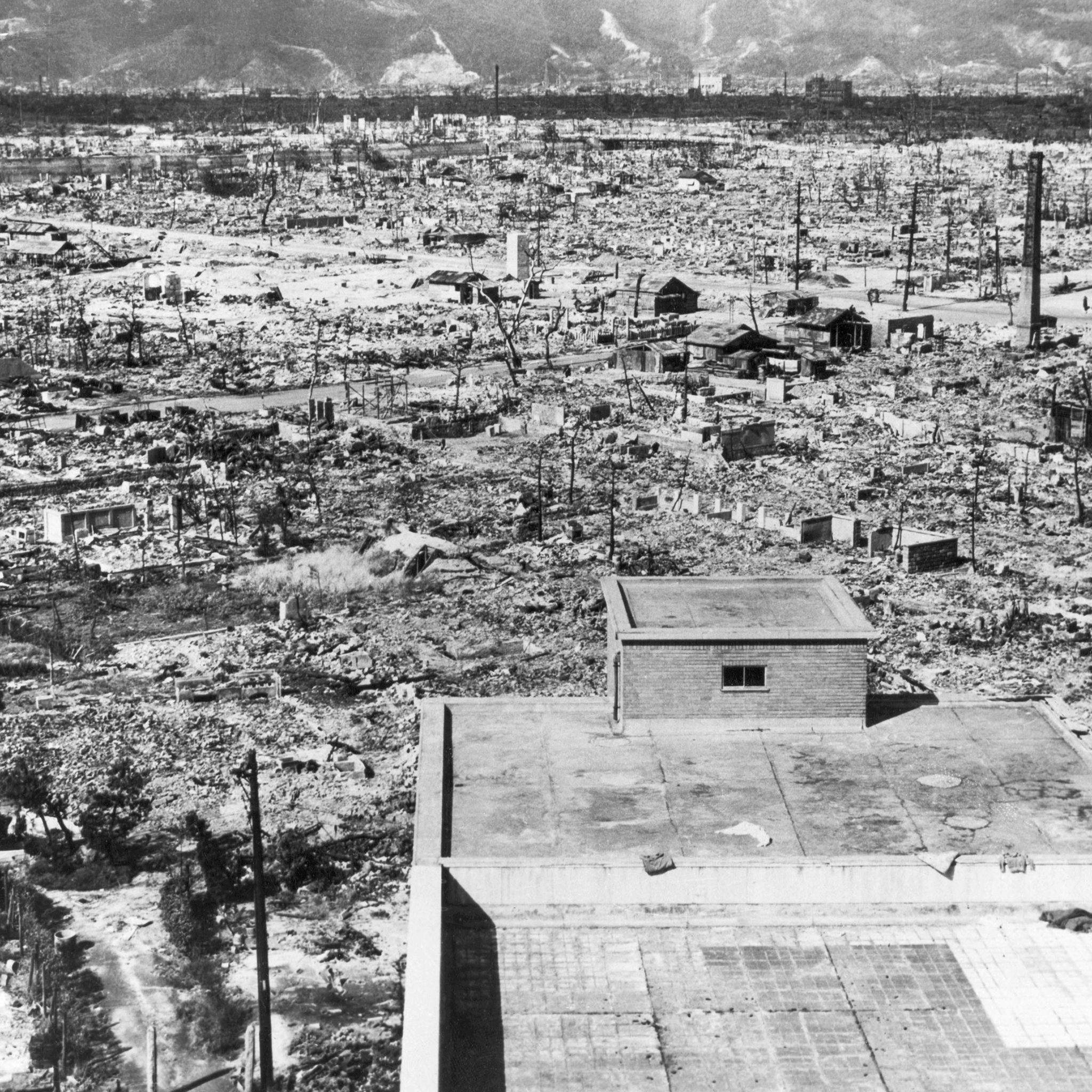
This deserted place is Hiroshima after the first atomic bomb was exploded on August 6th 1945. This deserted place stretched my imagination about deserted places God seeks out. This, and the writing of Belden Lane gave the energy for this sermon.
Reflection on the time and place
Today’s gospel follows a sequence of readings from Matthew’s gospel when so much is made with so little: the parable of the sower planting seed which crops an enormous yield, the parable of the good seed which withstands the weeds, the parable of the mustard seed which grows into a shelter for the birds, the parable of the leaven folded into the loaf – and here we have the feeding of thousands with just a couple of fish and a bag of loaves.
For our imagination I’m going to focus on the where and when of the story.
The place
It was a deserted place. It was a desert place. So many of the landscapes of the Bible are desert places, just as so much of Israel is desert and mountain, desolate, deserted. God seems to choose to make God-self known in such places. The landscapes of the Bible are barren, wild and fierce.
This place is on the edge. Jesus got there by boat. It’s on the edge of water and on the edge of the town and villages. It’s on the edge of where people really want to go. Jesus sought this place out as a place he wanted to be. He wanted a retreat and somewhere to pray. This was where he wanted to recover and where he expected to be fed.
Many of us search these places out and we make holiday of them, climbing mountains, challenging rivers, going “off grid”. There we often find out about ourselves, we feel invigorated and our souls get fed.
But we don’t live there. You might find a few eccentrics living in places like that. It’s OK going there if you have the right gear and have taken safety precautions.
David Douglas has this to say about desert places and barren landscapes where nothing seems to grow. He writes: “the crops of wilderness have always been its spiritual values – silence and solitude, a sense of awe and gratitude – able to be harvested by any traveller who visits.”
But there are many who are forced into such places. They haven’t chosen to be there. They’ve been driven there by the circumstances of their lives, driven to the edge. I’m thinking of refugees. Poet Warsan Shire points out in her poem called Home:
No-one leaves home unless home is the mouth of a shark. … you only run for the border when you see the whole city running as well. … you have to understand, no one puts their children in a boat unless the water is safer than the land.
who would choose to spend days and nights in the stomach of a truck …….?
We may have come to such a desparate place as this in our own lives, or may know that we have been there in a place where no-one really wants to go. No one wants to go to the place of extreme pain, or the loss of a loved one. They are the dread-ful places we dread to go. It is because no-one wants to go there that makes the place deserted, and where the place is deserted there are no well-trodden paths to guide our way. There are no maps. We feel that we are on our own, deserted in desert places, helpless and hopeless.
It was in such a place that Jesus had compassion for the thousands, who like him, were living on the edge, those who had joined him in that deserted place, and those he had joined. It’s on the edge that we realise what little we have, what little we have in terms of hope or resources of resilience. We are hanging on.
Jesus had compassion on those thousands – and the little that they had became more than enough for all of them. He took five loaves and two fish, he looked up to heaven, blessed the bread, broke the bread and shared the bread and they ate and were satisfied.
These are precisely the actions of the work of the church, also known as “the liturgy”. In our Communion we take bread, bless it, break it and share it. Our very language is fed by the memory of that miracle of multiplication in that deserted place.
It’s as if the bread we are given is meant for such a place, a wedge in a thin place, raising the angle of hope. It’s as if the desert place is the perfect place for the work and liturgy of the church for those on the edge, just hanging on, for those deserted in love through loss or betrayal, for those deserting homes through the cruelty of others, refugees and all those seeking refuge (no one leaves home for those straying paths of addiction, for those shamed and those who are ashamed, for those who are bullied, for whom the playground or workplace is a friendless desert, for those who have little and those who think little of themselves.
The psalmist has it. “You make us lie down in green pastures. You join us even as we walk through the valley of the shadow of death. You prepare a table to feed us in the sight of our enemies.” (Psalm 23)
So we have established where this miracle took place. We also know the time. Matthew tells us that the time is ‘when Jesus heard this’ – “this’ being the news brought to him by John the Baptist’s disciples that John, Jesus’s cousin had been killed by Herod – and that he had been killed in the most barbaric way, by being beheaded. Jesus’ grief is written into the landscape he deliberately searched for as his sense of desolation and desertion are reflected in the desolate deserted landscape. The when and where come together at this deserted place at the time of Jesus’ grief.
We are also told that it’s the end of the day.
It’s going dark. Shadows are lengthening. Time is running out. It’s closing time. It’s time for Jesus to send the crowds away (according to the disciples). But this is precisely the time when Jesus makes time. Just when it’s going dark, when time is running out, at the end of the day, Jesus bids them stay with him.
We know this time at the end of the day. It may have been a good day for us, a time for us to rest on our laurels, for a job well done, the promises kept, We may sleep well tonight.
But we know of other times, this time in the desert place deserted, when promises are broken, when we are exhausted and tired, when time runs out and the darkness spooks us.
And we know that for thousands, (make that millions), time has lost all meaning, there is only darkness. At the end of the day, when the shadows are so threatening, when promises lie broken, when luck’s run out leaving no chances when both health and hope have run out, when the food’s run out when friends have run out leaving them there deserted at wit’s end, Jesus had compassion. Worn out, grief-stricken, Jesus at the end of the day, looked to heaven with the little he had, the loaves, the fish, the love, enough for another day.
And so we have the time and the place – and it is a miracle that thousands were fed, and that there was still enough to fill 12 baskets with what was left over. Those twelve baskets symbolise the twelve tribes of Israel, underlining the fact that God’s people have their fill of daily bread through Jesus and his compassion.
This feeding of thousands is a foretaste of our Communion service and a signal for the work of the church day in and day out. We know it’s not bread and fish for Communion. But it’s still the little Jesus had: his body broken for us, and his blood shed for us. His body seen in the bread and his compassion and passion seen in the drop of wine.
We have the time and the place. The place deserted, the time getting on. And so we come to Communion. Never think we come alone. We can never duck the fact that Communion is a political act. The timing and the placing of Communion place the broken and wronged at the scene of their greatest hope. We never come alone. We come together and we come in our thousands.
When you come for Communion don’t think you stand alone. Think of who you stand with and think of who you take a stand for. It might be the people you are literally standing by – in which case, pray for them and any grief, pain or challenge they or their loved ones may be going through and pray for their feeding for another day. Or they may be on the mountain, trying to achieve great things for others – in which case pray for their success.
And/or, you might cast your mind and your compassion further afield to others deserted and others lost in deserts. Maybe you will have already begun to name them in your prayers and intercession: those lost in addictions of various kinds, those in prison or detention centres, those in care homes, those whose work in dangerous, those who are bullied and abused, those who have been forced out of home, those caught up in conflict of one kind or another.
At the end of the day, when all is said and done, we stand together in our thousands. Thank God that he finds us when we are on the edge, in wilderness, in desert and desertion, when there’s no map to guide us or any other way to find us.
Matthew 14:13-21
Now when Jesus heard this, he withdrew from there in a boat to a deserted place by himself. But when the crowds heard it, they followed him on foot from the towns. When he went ashore, he saw a great crowd, and he had compassion for them and cured their sick.. When it was evening, the disciples came to him and said, ‘This is a deserted place, and the hour is now late, send the crowds away so that they may go into the villages and buy food for themselves.’ Jesus said to them, ‘They need not go away; you give them something to eat.’ They replied, ‘We have nothing here but five loaves and two fish.’ And he said, ‘Bring them here to me.’ Then he ordered the crowds to sit down on the grass. Taking the five loaves and the two fish, he looked up to heaven, and blessed and broke the loaves, and gave them to the disciples, and the disciples gave them to the crowds. And all ate and were filled, and they took up what was left over of the broken pieces, twelve baskets full. And those who ate were about five thousand men, besides women and children.
Post script: Belden C Lane makes much of the desert and mountain landscape of the Bible in his book The Solace of Fierce Landscapes: exploring desert and mountain spirituality. There are so much good work to help us understand the dreadfulness of the experience of refugees. Here’s four books I’ve found helpful: My Fourth Time, We Drowned by Sally Hayden (2022), winner of the 2022 Orwell Prize for Political Writing, looking at efforts by the rich world to keep refugees from seeking safety The Lightless Sky by Gulwali Passarlay (2015) – an Afghan refugee boy’s journey of escape The Beekeeper of Aleppoby Christy Lefteri (2019) American Dirt by Jeanine Cummins (2020)
Let me tell you about countries: nobody has their own and where we come from moves. Our mothers’ wombs aren’t where we left them. Continents calve. Jerusalem holds a tray full of glasses which a scrum of men take and put back, take and put back, unworried for the weight she must shift. Let me tell you: some of the countries aren’t where we left them. Someone pulls a string and six tumble from Yugoslavia’s pocket. Someone halves Sudan like a branch over their knee. Someone crumbles a bailey between Berlin and Germany is one place again. Only Adam had his own country, and he could not go back. A country is land that’s learned to disown.
This poem has been reproduced with the poet’s permission. It first appeared in Contemporary Verse 2.
If a poem has love I will call it lovely. If a poem rings powerfully true I will call it stunning. This is a lovely, stunning poem which begins so well with a request to come alongside and explain. “Let me tell you” – that is such a good way to begin a poem, and such a good way to start to complicate a racist and nationalistic mindset with the thought that wombs and countries are never where we left them.
The Pioneers by Stephen Broadbent in Ellesmere Port, just off J9 of the M53.
For one day only
I thought I’d have some fun with numbers today, (or is it 2day?), 11.ii.21, one month, ten years after 11.1.11 when we launched Headway with an image of one by one forward-peering, prowed-standing pioneers coupled for growing enterprise like two sides of a coin, one complementing the other, one complimenting the other, tied and tethered in affection and imagination. One by one, the perfect team, the first eleven, the prime number no one can divide.
So it is, the perfect eleven, the perfect spell, vowel, consonant, vowel, consonant bound in rhythm marching time, beating heart time, one two, one two, two one, one by one partners like Noah’s passenger list and those first gardeners. There is a second eleven, the mourning break, the eleventh of the eleventh, when we remember the one who stood with one and fell, along with all the fallen ones, tragically flat lining when one stood against one as betrayer, the twelfth man making even eleven odd.
When Aylan Kurdi’s photo splashed across the waves, it was a scoop, a spotlight on refugees, a beacon of hope for better treatment, more welcome ways. It became Sea Prayer for parents casting their children to sea in light vessels. But nothing changed. It was a false dawn. Children keep drowning. Here in Bethlehem, lives are poor, government weak.
A concrete cordon of wall dominates, not for our security mind, but as shutter and blind to lives despised. We are occupied by those whose minds pre-occupied by counting our threat, known by numbers, never names. Our lives are poor, our movement restricted, often imprisoned for raising flag, hand or stone, getting by with our whittled olive tourist trade.
When reporters came from way out east, that was our moment, that Aylan Kurdi flash. Three came. They’d heard our plight. and noted our views, their reports were carried in paper news. Their attraction, they said, was a star, a pin prick in a night sky, inspiration for their camera and that first photograph, a baby captured, strangely focused, fast exposed as a flash of light.
That was the image of us. It sold and sold. going world-wide, framed, kissed and even enshrined, the light of the world, while we still in darkness lie. There was a child, a shot in the dark. Because of that aperture in this little Goliath walled town where streets stay dark and soldiers still count their enemy, we picture endurance in that light relief, that blink of an eye, that pin prick in the night.

 Grits and Grains