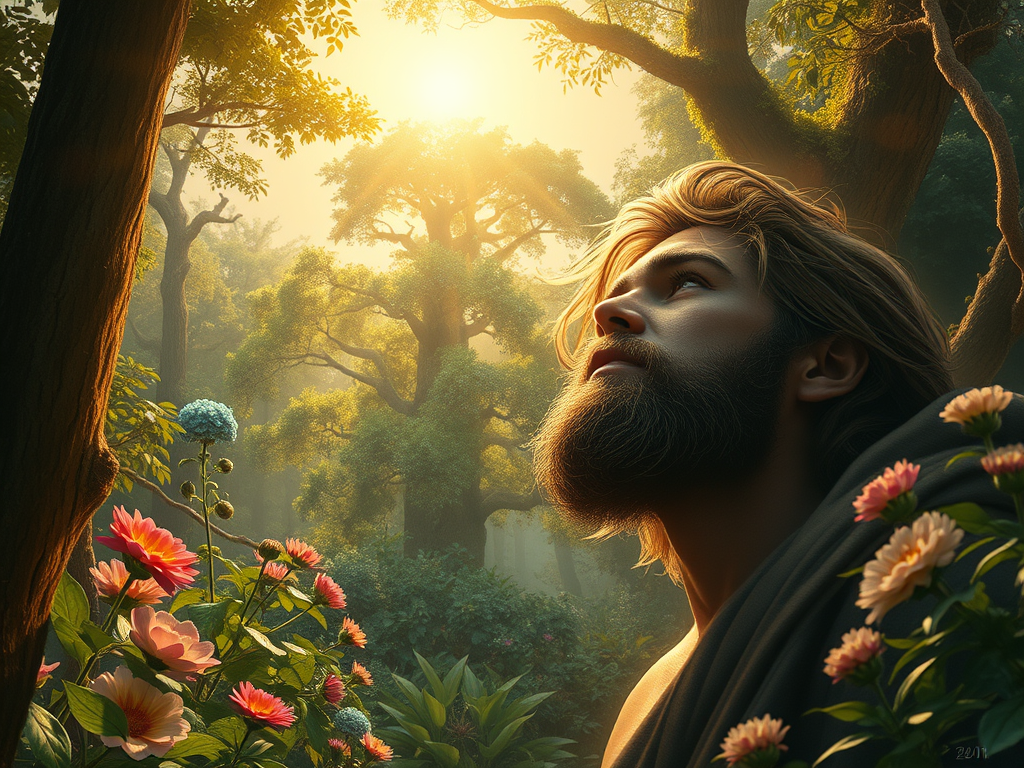
A reflection on the stories of creation in Genesis 2 and the storm on the lake in Luke 8:22-25. These are the readings set for the 2nd Sunday before Lent (C).

In the beginning everything was so good, and so well made.
Everything was generated from the heavens and the earth when they were created, when the Lord God made the earth and the heavens.
This story of creation is not the history of creation – as if this happened, then that happened, and the rest is history, sort of thing.
This story of creation is the theology of creation, and is true.
It is true for those who believe in God, who see God in all our beginnings, who trust in God’s blessing. It is spiritually true, not scientifically true.
Spiritual truth stands the test of time.
It is so true that it moves us to wonder and reverence.
It comes from a faith that sees God’s blessing in the beginnings of all life, that sees heaven and earth knitted together by a God who in the first place only ever wanted to give life. It comes from a faith that sees God loving everything he has made, delighting in what he has so well made.
It is a faith which realises that without God we are nothing.
Here God brings man to life by getting into his face and breathing into his nostrils the breath of life, and the first breath of language.
God brought to the man in the garden everything he’d made from the dust of the ground.
This was to see what he’d call them and whatever he called them, that became their name.
God wanted to see what he called them.
That is something we’ve stopped imagining isn’t it?
Do we imagine God being interested in the names we call things, and the names we call people?
How different our world would be if we did have that imagination to name others in a way that would please God.
How different our world would be if, with that imagination, we didn’t demean the creatures of God’s making.
Our naming, our calling, the language we use, is part of the choice that is fundamental to the book of Genesis. In a world where language so much divides us we could usefully reflect on the choices of words and names we make and how they reflect our relationship with God and creation.
The choices we make about language can be mighty acts of creation.
But remember, it takes time to call someone “lovely” in a way they will understand and take to heart.
It takes no time at all to voice a hurtful call that will break the heart of a relationship.
Our words have creative power and they have destructive power.
The choice is ours to make.
From the beginning there is choice.
There’s always been choice.
Besides our naming and calling there’s the choice of obedience and disobedience.
The choice is there for the couple in the garden.
Can we get away with eating the fruit from the tree of the knowledge of good and evil?
There was only one thing forbidden by God and that was it.
The man and the woman only had to be obedient in that one thing and they weren’t.
They were disobedient and took the law into their own hands.
This was their first bad choice, and the rest they say is history.
One bad choice led to another, and then another and then another in rapid succession.
They got dressed to cover their shame (bad choice, but perhaps necessary), they ducked their responsibility and blamed something else (the serpent) and they hid themselves from God.
One rotten choice after another.
Hot on the heels of these choices comes the story of the children of the first procreation, the story of Adam and Eve’s two sons, Cain and Abel, the story of the first murder, a shocking murder, fratricide, the killing of brother by brother.
God had tried to help Cain. “Why are you angry?”
(Perhaps we all need God to ask us that question in our anger.)
“Why are you angry? Why is your face downcast?
If you do what is right, will you not be accepted?
But if you do not do what is right, sin is crouching at your door; it desires to have you, but you must rule over it.” (Genesis 4:6-7).
That’s the choice.
That’s the choice for Cain and it’s the choice for us.
Sin crouches at the door.
We must rule over it.
That’s the way with sin, isn’t it?
It makes itself small and then looms large.
It makes itself seem so small that we often think that we have done little wrong.
The book of Genesis concludes with stories about Joseph and the right choices he made.
He goes from being a tactless 17 year old (37:2) to become a powerful and self-disciplined man by the choices he make.
He refuses sex when it’s offered him on a plate, and he refuses to retaliate against his brothers for their jealous bullying, instead he saves their lives and the lives of all in Egypt.
Sin was always at his door, but he nails it.
His good choices undo some of the harm caused by the bad choices of his brothers – including their jealousy of Joseph, their intention to kill Joseph (another fratricide) and their intention to deceive their father into believing his son was dead.
The picture painted by Genesis is that in all our beginnings is God’s love of life, love for our life and blessing in abundance.
There are all the blessings of creation, all the animals, the flora and fauna, and all living beings – all to enjoy.
There is almost too much to choose from and choices become challenging and difficult decisions have to be made.
From the beginning it’s the choices we make that intrigue God.
He wants to see what we will call others.
He wants to see how we will manage the passions he has given us to work the garden and take care of everything.
He wants to see how we manage our emotions.
He wants to see the choices we make when all around us people are choosing to hate and despise others.
He wants to see the choices we make about brotherhood and sisterhood. He wants to love all the choices we make.
Genesis is a book about beginnings, but is also about the mean time, when times get mean in the midst of life, when life gets challenging and difficult, like the time depicted in today’s gospel in the crossing of the lake (Luke 8:22-25).
At first, it’s all plain sailing, so much so that Jesus fell asleep.
Then a squall came down on the lake, and the boat was swamped and they were in danger.
They panicked.
“We’re going to drown!”
Isn’t this the way life goes?
First it’s plain sailing – then as we grow up life gets rough and we have choices to make.
The choice is whether we become doomsayers – “we are drowning in this, or in that”, or whether we remain hopeful, constant in love, believing our blessing.
When the storm subsided, when all was calm, Jesus asked those who were with him, “where is your faith?”
They were amazed.
“Even the winds and the water obey him”.
Their choice was to follow him.
How do the choices we make show our faith and our choice to trust that God is with us in the storms of our lives, longing to love the choices we make within those storms – whether we choose life, whether we choose peace, whether we choose kindness, whether we choose obedience?
 The
The  Grits and Grains