Where are you heading?

red bricks wall
It’s a week for appreciating leadership and for scrutinising leadership. Roy Hodgson’s leadership will be under scrutiny as England’s campaign in Euro ’12 begins, and nation and Commonwealth have been jubilating in appreciation of the Diamond Jubilee of Queen Elizabeth’s reign. Leaders often make the mistake of thinking that they know what is good for those who are their followers. Parents trying to get children to do homework often meet their own French resistance. Congregational leaders trying to introduce change “because it’s good for them” often feel like they are banging their head against a brick wall. The response to resistance is to try even harder and be rewarded with even greater frustration. For Edwin Friedman, in Generation to Generation: Family Process in Church and Synagogue, “In such situations, the motivators function as though their followers did not know what was good for them, and, furthermore, would never change were it not for their efforts.”

Traditional models of leadership focus on individualism on a continuum of charisma/concensus. None of these models can effectively combat resistace and inertia, according to Friedman. He suggests that a family systems approach which focuses on the organic nature of the leadership/follower relationship as constituent parts of the same organism is far more effective. “The family approach to leadership, precisely because it is systemic, offers a more effective, less enervating, way of dealing with such resistance to change because it considers the paradoxes of resistance not as something blocking efective leadership, but, as part and parcel of the leadership process itself.” (p.225)

Friedman emphasises the importance of position. “If a leader will take prime responsibility for his or her own position as “head” and work to define his or her own goals and self, while staying in touch with the rest of the organism, there is a ore than reasonable chance that the body will follow.” (p.229) “It is in the capacity of the leader to maintain a position and still stay in touch that the organism’s potential growth resides.”

What Friedman is here saying about “self-differentiation” is a reminder of Dee Hock’s advice that we should invest our time in self care and managing “up” rather than “down”.  Hock suggests that we should spend 50% of our time managing ourselves and 25% on managing those who have authority over us. Instead of concentrating on the functioning of others, the “self-differentiating” leader’s focus is their own functioning.

For Friedman, the effects of dependency are reversed when the leader is concentrating on where we are “headed”. “It is the leader who now becomes the resistant one as he or she, instead of having to work to change others, now works to resist their (the followers) efforts to change him or her back.”

Photo by Ezioman.

Resilience and efficiency

ImageWhen I had a study I wished I worked in an office. Now I work in an office and I wish I had a study. (Interesting that I use the verb “work” only in relation to the “office”). I was shy about the “study” because I didn’t think it had the street cred of the offfice. Like many of my peers I referred to my study as the office. Now I find myself fighting for the place of the study in ministry which seems to have less time for it.

In a recent blog post, Sam Charles Norton has some wise words as he contrasts efficient and resilient systems. An efficient system “is one in which each resource is being utilised to the greatest possible extent.” We love efficiency and worship its icon of the (upwardly mobile) graph which is the prerequisite of any office wall. Norton suggests that the Church of England is hell-bent (my words) on a drive towards efficiency which is (mis)-guided by a spirituality “which is based upon a fear that all that seems to be going wrong will continue to go wrong.” According to Norton, we have forgotten what it means to believe in God. “The Church of England will only be saved by those who are not consumed with conviction about how to save it, and who sit lightly at the prospect of the Church of England not being saved – simply because they are utterly committed to the sovereignty of the living God, and they trust in his provision, rather than our own choices.”

A “resilient system” is what the Church of England has been as it “has emphasised the importance of the local and the different, the queer and the inefficient”. Resilient systems have resources within them which enable them to withstand shocks and trauma.  These “unexploited” resources aren’t built or stored in offices. That would be too inefficient. Many of our offices stand empty with their enterprise blown away by the latest economic shocks to the system. Offices are only open for business and efficiency. They are closed to resilience and their house is blown down with but one puff.

“Happy are those who delight in the law of the Lord, and on his law they meditate day and night. They are like trees planted by streams of water, which yield their fruit in its season, and their leaves do not wither. In all they do, they prosper.” (Psalm 1).

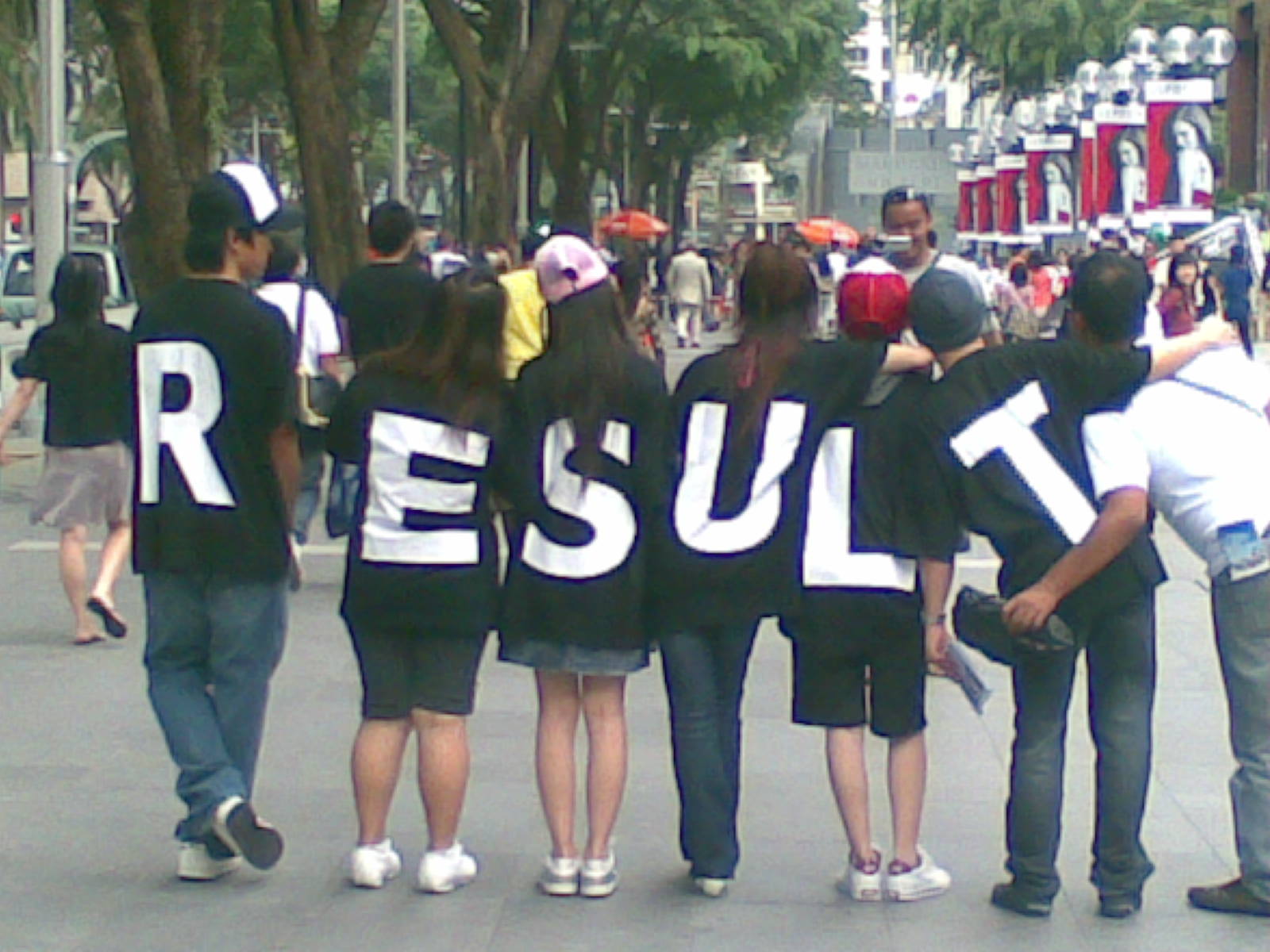
Results, relegation and relationships

The football season is virtually over, relegation issues are settled and just a few teams have any further stake in the rest of the season as they fight for promotion through the play-offs. This wool gathering of a northern dean has some useful insights into the mind of the footballing world, particularly exploring the feelings of players who have failed to perform to expectation and feel the responsibility for relegation.

At the same time, our Year 6 children are sitting their tests and are expected to produce the results that, as they say, won’t let themselves down , their parents down, their teachers down, their schools down and everything else down. Are “results” an  obsession of our age? Is the fascination for measurement and standardisation something that has grown through the industrial revolution and our increasing capacity for measurement?

Results measure success and failure. Kenny Dalglish has discovered that not getting enough of them (wins) while managing Liverpool FC is fatal. Results are the stuff of competition, with the result that they set team against team and performer against performer. In battle there is only one winner and many losers, and, therefore, it is best to avoid that result by finding peace. Some are driven by results, but most of us, most of the time work without seeing results for our effort. How do we keep going?

Thanks to Meg Wheatley (Finding our Way: leadership for an Uncertain Time) I have these thoughts to challenge our results culture: the first is from Vaclav Havel, and the other is from a letter written by Thomas Merton to peace activist Jim Forest.

Hope is a dimension of the soul … an orientation of the spirit, an orientation of the heart. It transcends the world that is immediately experienced and is anchored somewhere beyond its horizons … It is not the conviction that something will turn out well, but the certainty that something makes sense regardless of how it turns out.

Do not depend on the hope of results … You may have to face the fact that your work will be apparently worthless and even achieve no result at all, if not perhaps results opposite to what you expect. As you get used to this idea, you start more and more to concentrate not on the results, but on the value, the rightness,the truth of the work itself … You gradually struggle less and less for an idea and more and more for specific people … In the end, it is the reality of personal relationship that saves everything.

Wheatley’s own comment is that hope and fear are inescapable partners. “Any time we hope for a certain outcome, and work hard to make it happen, then we also introduce fear – fear of failing, fear of loss.” She says that we can live beyond hope and fear, and that all we need is each other.

I couldn’t resist including the photo I found here. I have asked for permission to use it.

Tiki Taka

One of the highlights of my week has been spending time with a group of clergy committed to developing more leaderful communities and congregations, but facing the problems of working with those who don’t see leadership as their responsibility. How do we bridge that gap?

Leadership models have focused on individuals and individualism. New models of leadership inspired by “new science” focus on process and what goes on between people (this has coincided with a renewed awareness of the interplay and community of the Trinity). Other facilitators, like Viv McWaters and Chris Corrigan talk about developing play. The result is that leadership develops as a community activity rather than a one man (often gender specific) band.

Tomorrow is Cup Final Day. Kenny Dalglish and Roberto di Matteo, managers of Liverpool and Chelsea respectively will be giving their team talks. The winning team will most likely be the team that plays better together, and that is less like a collection of interviews. As we play together, we grow together. As we play together, we take more risks together. Chris Corrigan picks up the theme of football teamwork when he refers to a style of play called Tiki Taka:

A style of play characterised by short passing and movement, working the ball through various channels, and maintaining possession.” With Tiki Taka the ball is continuously passed between team members in a way that the whole team operates as one intelligent field, rather than sum total of talented individuals.

Is that it? Do we need a rich passage of interplay to become a successful team? Is it the short passes, working the channels, the give and go which turns an unresponsive group of individuals into one intelligent field and a leaderful organisation.

If you liked this post, you may also like this recent post: https://davidherbert.me/2012/05/03/leadership-lessons/

Leadership lessons

Photo by LHG Creative

For Dave Soleil, in this blogpost, leadership is a community action rather than a person. Soleil, like so many others, is critical of the traditional model of leadership which consists of a single heroic person that large groups of people follow.  Soleil describes this as the “find a parade and walk in front of it” model of leadership.

If leadership is identified with a particular person we are often left in a position of waiting on that leader (who we can also conveniently scapegoat). Soleil suggests that “if we see the visionary … as one of many pieces of a community-based leadership movement, we empower everyone in the community to contribute their gifts as a critical piece of the collective effort we call leadership.” Those gifts will include vision, co-ordination (of the collective effort), encouragement etc etc.

Leadership models forged in the heat of battle and industrial process have looked for control, but Meg Wheatley asks:

What if we stopped looking for control, and began, in earnest, to look for order? Order we will find in places we never thought to look before – all around us in nature’s living, dynamic systems. In fact, once we begin to look into nature with new eyes, the teachers are everywhere. (Leadership and the New Science, 1999, p25).

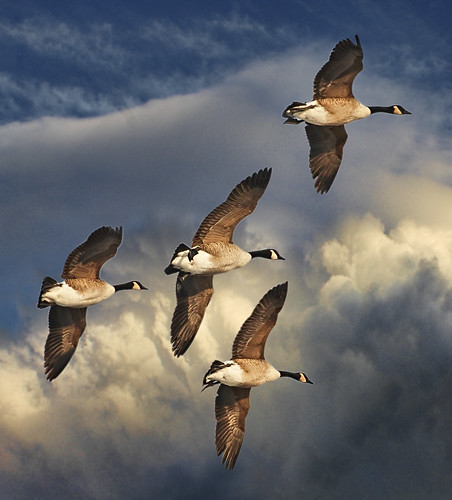
The flight of geese is one of nature’s stock supply teachers when it comes to leadership programmes. I have never heard the translation of Goosehonk, but my guess is that the question they are asking is not “who is the leader?” but “who is leading next?”.  Leadership is not something they leave to the next bird. There isn’t a goose who ducks the responsibility it shares with its whole community. Leadership is a community inter-action.

Reflections

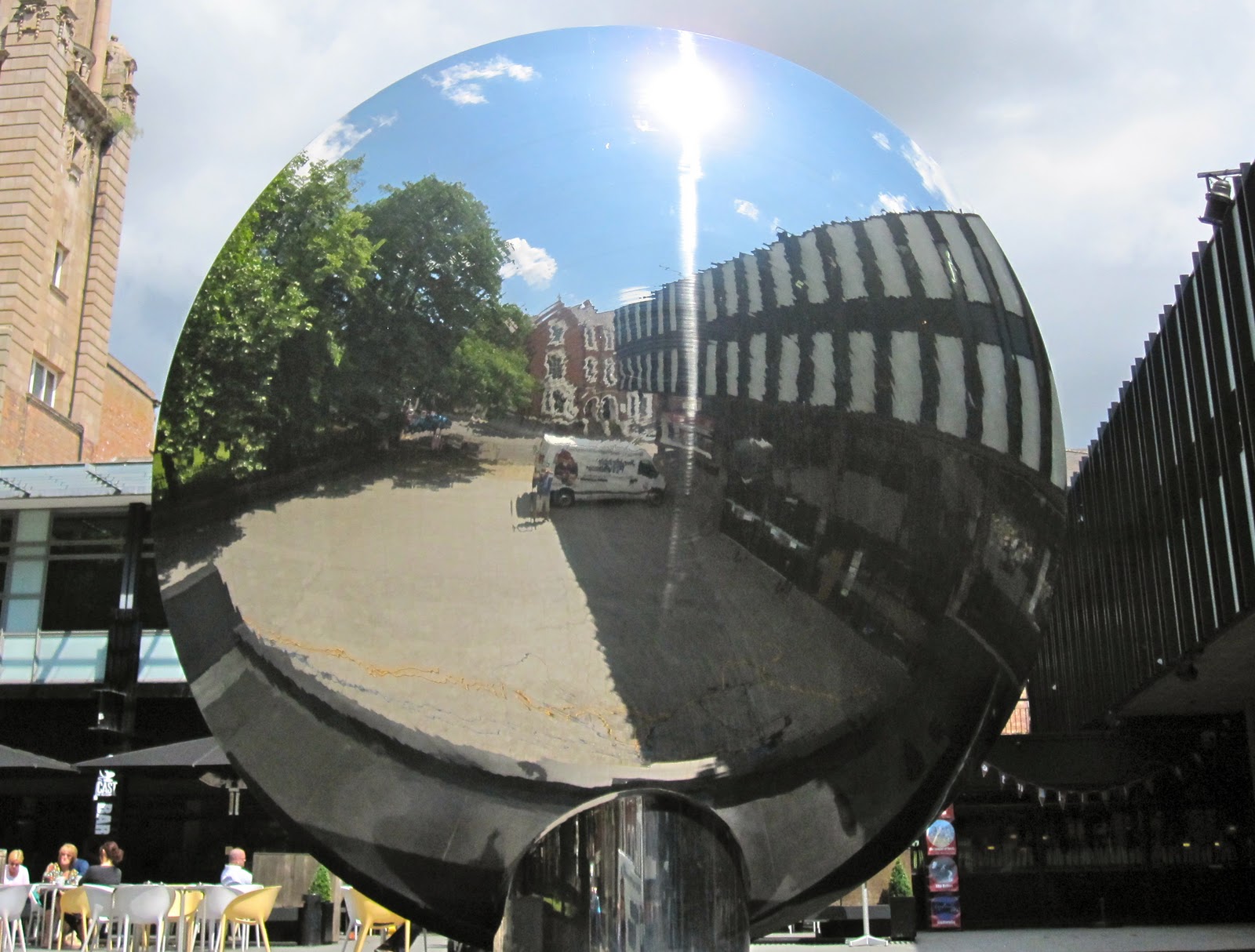
Anish Kapoor Sky Light at Nottingham

Alan Smith & Peter Shaw provide some helpful advice about the importance of reflection in The Reflective Leader. They remind us that the “greatest sea changes that have come about in human history have been rooted in reflection”.

They list six principles:

  1. Record first impressions, thoughts and reflections systematically, particularly when we are new to a situation.
  2. Reflect when things are going well. I suppose that we are not defensive at that point.
  3. Prepare for times of reflection. We need as much data and information as possible (there’s never too much information!) including comments and feedback from others.
  4. Ask questions. Curiosity is essential for reflection.
  5. Seek out those who are gifted at reflection, then nurture this gift in them, then tell others about them to encourage a culture of reflection.
  6. Bridgewater Canal, Warrington
    Reflecting on the Bridgewater Canal near Warrington
  7. Reflect regularly. It’s hard work but gets easier with practice.
My response:
  1. Go easy.
  2. Shower longer.
  3. Use feedback.
  4. Use ripples.
  5. Welcome surprise.
  6. Be prepared to change – all the time.

Gimme a man after midnight

Gimme a man after midnight. Today we are given such a man as our liturgical calendar encourages us to celebrate and embrace the life of Saint John of the Cross. Through his writings he speaks to us of things we often deny and of which we are so frightened that we don’t even go there. For Thomas Merton, St John of the Cross is the Father of all those whose prayer is an undefined isolation outside the boundary of “spirituality”. His poem Dark Night of the Soul describes the purification of the senses and the spirit on the journey to union with God. The phrase dark night of the soul is used to describe the experience which many know by the name of Depression, in which all that has supported our lives loses its value and meaning, in which we aren’t so much as letting go of things, as things have let go of us and we are left with barely so much as a thread to hold on to. His example is encouragement for us to not be frightened of chaos and the abyss.

lorenz_640x480_003
Strange attractor from Michael Wassmer

Western culture has been frightened of chaos, and anything which isn’t predictable and stable. We have preferred to think that people, information and change should all be managed and controlled. Even the dark night has been no dark night to us as we have controlled even that with our artificial light. I have been joining others in looking at chaos, and with them have been astounded by its order and beauty. Computers have helped us to model chaos’s behaviour, which in real time is, of course, unpredictable and chaotic. But the computer models help us to see that its behaviour is orderly and within boundaries. 
Gimme a man after midnight. The voice that speaks from the other side of chaos is a powerful voice. That is the voice of leadership, the future beckoning us. St John of the Cross lived through his dark night, and the voice of his experience of that night is a powerful voice. So is the voice of the likes of Nelson Mandela. So is the Word of God which only shines in darkness.
Gimme a man after midnight – one who has had the courage to embrace chaos, to hear its voices and not be afraid of its ambiguities and uncertainty, one who is able to speak from his experience of darkness. With him there is the promise of a new day with its possibilities and potential. Otherwise there is just the tiredness of the old day and our refusals to put our old certainties to bed.
Gimme a man after midnight. The voice of St John of the Cross is a companionable voice to all those who have lost themselves in that awful place of darkness which we call the Abyss or Chaos, and from which there seems no way out. 

Lessons on leadership from nature

“There is a simpler, finer way to organize human endeavor. I have declared this for many years and seen it to be true in many places. This simpler way is demonstrated to us in daily life, not the life we see on the news with its unending stories of human grief and horror, but what we feel when we experience a sense of life’s deep harmony, beauty, and power, of how we feel when we see people helping each other, when we feel creative, when we know we’re making a difference, when life feels purposeful.”
“Over many years of work all over the world, I’ve learned that if we organize in the same way that the rest of life does, we develop the skills we need: we become resilient, adaptive, aware, and creative. We enjoy working together. And life’s processes work everywhere, no matter the culture, group, or person, because these are basic dynamics shared by all living beings.”
“Western cultural views of how best to organize and lead (now the methods most used in the world) are contrary to what life teaches. Leaders use control and imposition rather than participative, self-organizing processes. They react to uncertainty and chaos by tightening already feeble controls, rather than engaging people’s best capacities to learn and adapt. In doing so, they only create more chaos. Leaders incite primitive emotions of fear, scarcity, and self-interest to get people to do their work, rather than the more noble human traits of cooperation, caring, and generosity. This has led to this difficult time, when nothing seems to work as we want it to, when too many of us feel frustrated, disengaged, and anxious.”
“There is no power for change greater than a community discovering what it cares about.”
“To resolve most dysfunctional situations, the first thing to do is flood them with information.”