Friends Meeting

Untitled

Witton Church Council had their first “awayday” yesterday and used marbling to learn about  flow, influence and interaction. We decided that it doesn’t take much to make something beautiful – just a lot of flow and some interaction. We used straws to blow the ink, and we realised that in our lives there is a time to blow, and a time to refrain from blowing. For everything there is a season. Though marbling may seem a bit random, it actually isn’t. It’s just that the outcome is unpredictable, and is, thereby, a good reflection of life which refuses attempts to control and regiment it.

Untitled

It was a great pleasure to be involved with facilitating the day. Together we explored “the ground on which they stand” – a question that had more significance than I was anticipating. Northwich is a place undermined by salt works in which subsidence has been a problem. St Helen’s Church, apparently, is the only house built on rock. The day was full of encouragement as they explored how they would step out from the ground on which they stand – and they built up a good head of steam.

This was a cheerful group of “friends” who met at the Friends’ Meeting House in nearby Frandley. The house dates back to the early days of George Fox, founder of the Religious Society of Friends. George was born in 1624 (at Fenny Drayton, near Leicester) and travelled the country preaching as a dissenter. Along with other dissenters Fox had several periods of imprisonment as he challenged religious authority and the attempts to crush the movement that he had started.

Untitled

Fox appears to have preached at Frandley at 1657, when he was 33. He resisted the idea that religious experience was limited to ecclesiastical buildings. He refused to call them “churches” and referred to them as “steeplehouses” instead. He knew that God meets people in their heart of hearts, and preferred Friends’ meetings to be in the open air. There is a plaque at Frandley of the oak tree at which Fox preached to the gathering of Friends.

William Gandy is reputed to be the founder of the first local “society”. He farmed at Sevenoaks in Frandley. Interestingly there is a plaque on the meeting house commemorating the planting of seven oaks to celebrate the Diamond Jubilee of Queen Victoria in 1897 (sounds like the local Friends had become friendlier to the monarchy with the passage of time).

The PCC decided it was their spring. The “Witton Spring” may not have the same ring to it as the Arab Spring, but we did have some thoughts from Friend and Quaker, Parker Palmer.

In my own life, as winters turn into spring, I find it not only hard to cope with mud but also hard to credit the small harbingers of larger life to come, hard to hope until the outcome is secure. Spring teaches me to look more carefully for the green stems of possibility; for the intuitive hunch that may turn into a larger insight, for the glance or touch that may thaw a frozen relationship, for the stranger’s act of kindness that makes the world seem hospitable again.
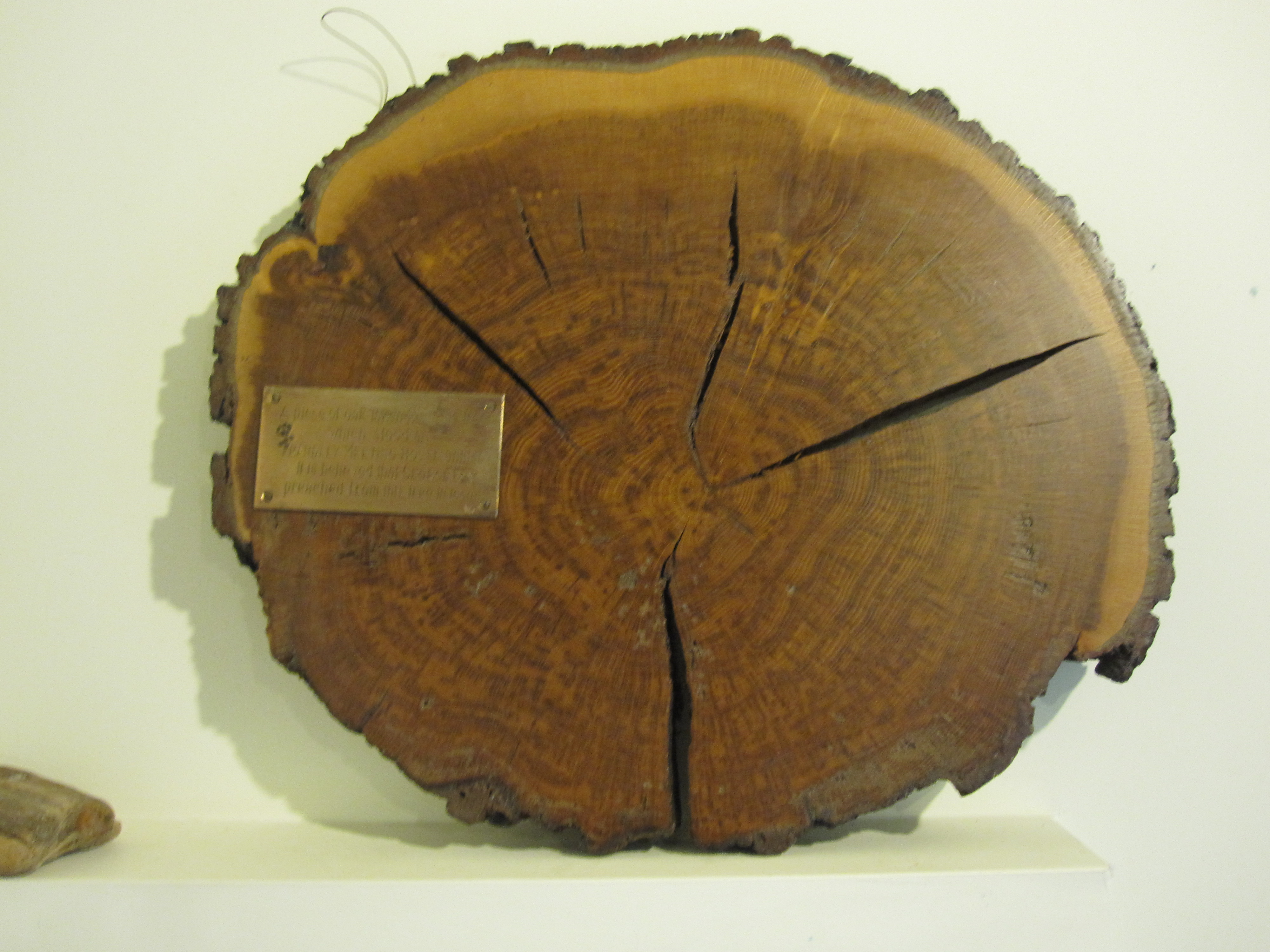
Some quotes from George Fox – maybe from under the oak:

The Lord showed me so that I did see clearly, that he did not dwell in these temples which men had commanded and set up, but in people’s hearts … his people were his temple and he dwelt in them.

Why should any man have power over any other man’s faith, seeing as Christ himself is the author of it?

Pentecost is a very special festival. Malcolm Guite’s post here reminds us of the thoroughgoing blessing of God’s love embracing/infusing all the ‘four elements’ of earth, air, water and fire described by Malcolm as four evangelists. Adam is his answer to the question “where on earth?” Like it.

malcolmguite's avatarMalcolm Guite

Continuing in my cycle of sonnets for the Church Year this is a sonnet reflecting on and celebrating the themes and readings of Pentecost. Throughout the cycle, and more widely I have been reflecting on the traditional ‘four elements’ of earth, air, water and fire, considering how each of them expresses and embodies different aspects of the Gospel and of God’s goodness, as though the four elements were, in their own way, another four evangelists. In that context I was very struck by the way Scripture expresses the presence of the Holy Spirit through the three most dynamic of the four elements, the air, ( a mighty rushing wind, but also the breath of the spirit) water, (the waters of baptism, the river of life, the fountain springing up to eternal life promised by Jesus) and of course fire, the tongues of flame at Pentecost. Three out of four ain’t…

View original post 304 more words

More results

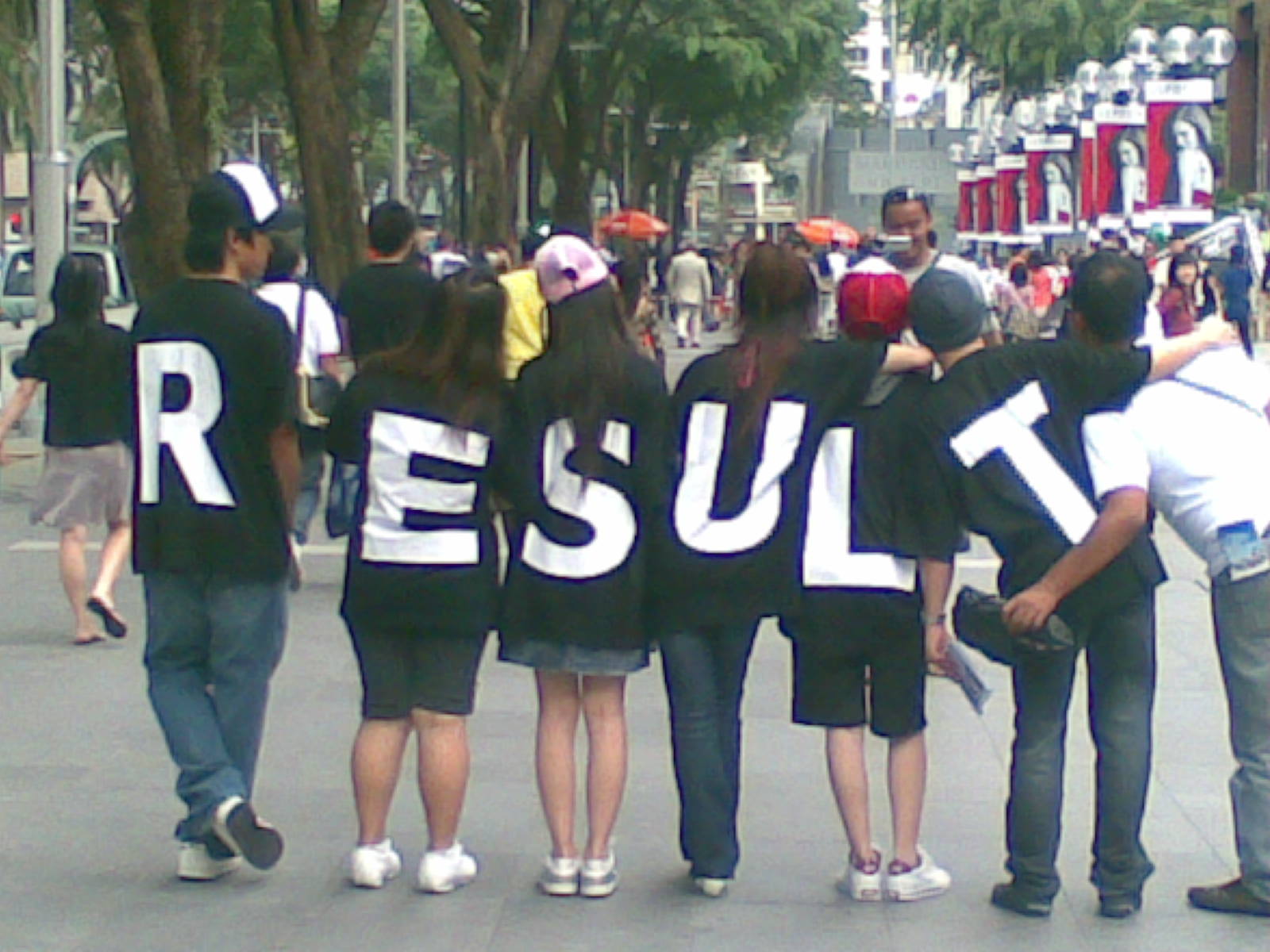
Continuing the theme of results, relegation and relationships  this quote was offered on a plate this afternoon:

“Target setting on its own is not enough.  Targets do little to enable progress; they merely signal the desire for it.  Unless you know how to improve they are impotent devices.  Concentrating on the process is where the real action is.  Thus putting energy into the ‘how’ is key.  Results will follow inexorably from this.  They do not lead or by themselves operate as some kind of backwards causation.”

Adrian Brown in Reassessing the Culture of Assessment (Grove Booklet)

Rachael Elizabeth’s poem on measurements is worth reading.

Results, relegation and relationships

The football season is virtually over, relegation issues are settled and just a few teams have any further stake in the rest of the season as they fight for promotion through the play-offs. This wool gathering of a northern dean has some useful insights into the mind of the footballing world, particularly exploring the feelings of players who have failed to perform to expectation and feel the responsibility for relegation.

At the same time, our Year 6 children are sitting their tests and are expected to produce the results that, as they say, won’t let themselves down , their parents down, their teachers down, their schools down and everything else down. Are “results” an  obsession of our age? Is the fascination for measurement and standardisation something that has grown through the industrial revolution and our increasing capacity for measurement?

Results measure success and failure. Kenny Dalglish has discovered that not getting enough of them (wins) while managing Liverpool FC is fatal. Results are the stuff of competition, with the result that they set team against team and performer against performer. In battle there is only one winner and many losers, and, therefore, it is best to avoid that result by finding peace. Some are driven by results, but most of us, most of the time work without seeing results for our effort. How do we keep going?

Thanks to Meg Wheatley (Finding our Way: leadership for an Uncertain Time) I have these thoughts to challenge our results culture: the first is from Vaclav Havel, and the other is from a letter written by Thomas Merton to peace activist Jim Forest.

Hope is a dimension of the soul … an orientation of the spirit, an orientation of the heart. It transcends the world that is immediately experienced and is anchored somewhere beyond its horizons … It is not the conviction that something will turn out well, but the certainty that something makes sense regardless of how it turns out.

Do not depend on the hope of results … You may have to face the fact that your work will be apparently worthless and even achieve no result at all, if not perhaps results opposite to what you expect. As you get used to this idea, you start more and more to concentrate not on the results, but on the value, the rightness,the truth of the work itself … You gradually struggle less and less for an idea and more and more for specific people … In the end, it is the reality of personal relationship that saves everything.

Wheatley’s own comment is that hope and fear are inescapable partners. “Any time we hope for a certain outcome, and work hard to make it happen, then we also introduce fear – fear of failing, fear of loss.” She says that we can live beyond hope and fear, and that all we need is each other.

I couldn’t resist including the photo I found here. I have asked for permission to use it.

Merton on sanity

We can no longer assume that because a man is “sane” he is therefore in his “right mind.” The whole concept of sanity in a society where spiritual values have lost their meaning is itself meaningless…

And so I ask myself: what is the meaning of a concept of sanity that excludes love, considers it irrelevant, and destroys our capacity to love other human beings, to respond to their needs and their sufferings, to recognize them also as persons, to apprehend their pain as one’s own? Evidently this is not necessary for “sanity” at all.

The worst error is to imagine that a Christian must try to be “sane” like everybody else, that we belong in our kind of society.

A Devout Meditation in Memory of Adolf Eichmann by Thomas Merton in Raids on the Unspeakable.

So, what about truth?

I share Simon Marsh’s reservations about those who insist on the authority of truth. I am not sure that the question of “what is truth?” is on many people’s minds (contrary to what some think). Pontius Pilate is an exception: he couldn’t see truth when he was staring him in the face (John 18:38). We are all too preoccupied for such philosophical discussion that the question of truth is left as a luxury for a small elite. The rest of us know when our interactions ring true.

I have been playing round with my new ArtSet app. Collapsing truth, as some people suggest is happening, I came up with a very different picture of truth. It is a picture which asks the question of whether my truth hurts – funny how we have that expression “truth hurts”. It’s a picture which raises the question about the quality of shelter, about whether there is hospitable space and about whether u r cared for.

It’s a picture which presents us with Ruth as well as truth. The book of Ruth is a story of loving-kindness. Ruth shows herself to be full of loving kindness to Naomi, her grief-stricken mother in law, and Ruth receives the loving kindness of Boaz who becomes her kinsman-redeemer. Ruth means compassion and pity. (Ruthlessness describes the absence of those qualities.) Boaz and Ruth are counted as sowing the seed of Jesus. Even though she was a Moabitess, and therefore foreigner, she is Jesus’ great (times many) grandmother – according to Matthew. It’s Ruth’s story which is often chosen by couples getting married. Ruth “plights her troth” to her mother in law:

Where you go, I will go; where you lodge, I will lodge; your people shall be my people, and your God my God. Where you die, I will die …

Truth is questionable. Just like Saint Paul, “we now see, only dimly in a mirror. As yet, we only partially know.” (1 Corinthians 13:12). We have only one pair of eyes and limited perspective. That is something that is factually true. But the truth that ignores the perspective of others, that hurts, that welcomes no stranger, that cares for no-one, is blatantly false. Truth is measured by what we do.

Signed: Yours truly

St George’s international holiday


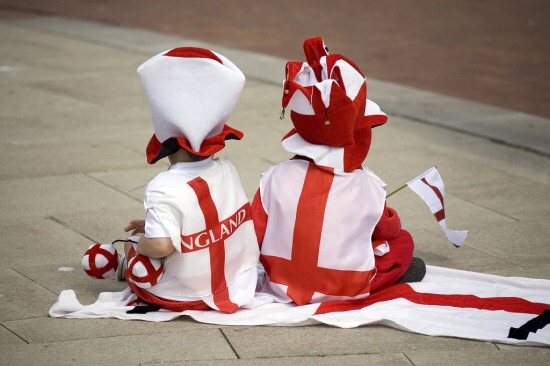
Palestinians, Moscovites, Ljubljanans, Beirutians, Genovians, citizens of Maltese cities Qormi and Victoria, and people of Bosnia-Herzegovena, Bulgaria, Canada, Catalonia, Croatia, Cyprus, Georgia, Greece, Macedonia, Portugal, Romania & Serbia enjoy celebrating the life of Saint George, along with the English – some of whom violently fly the flag of St George in the face of the dragon of multiculturalism. Long live the dragon and thank God for Wikipedia.
Photo by Guy Evans at Birmingham Culture

Crossing a path on Palm Sunday

MA062S01 World Bank
It’s only a donkey! There was no horsepower to Jesus’ entry to Jerusalem.
Photo from the World Bank Photo Collection

In his excellent book Barefoot DiscipleStephen Cherry reminds us that we have misunderstood Jesus’ “triumphal” entry into Jerusalem and suggests that we should not be celebrating a triumphal entry on Palm Sunday but a “humble entry”. That is what Matthew makes of it. Matthew cuts the “triumphant and victorious” reference of Zechariah’s prophecy and simply says, “Look your king is coming to you, humble, and mounted on a donkey.” (21:5). The crowd wanted a triumphal entry of a Saviour to please them. Jesus’ humble entry led to a humble end. He refused to play to the crowd (his last temptation?) who expected him to turn the tables on their occupiers, and then they turned the tables on him.

Like many Christians I joined the Palm Sunday procession yesterday. I was at Chester Cathedral. We went into the city. I have seen many processions, including many I dare not and could not cross. They were triumphal processions. They were pompous processions. Yesterday several people crossed our path.  This was an unpretentious procession. This was a procession you could touch (and the children loved petting the donkey!) I appreciated the soft edge of our procession and the hospitality of the ground that was given to all who passed by. If that’s the way of the cross, that’s the way to go.

How Jesus entered Jerusalem challenges our rather grand entrances. Don’t we like to wade in? Don’t we like to look big? Don’t we try to impress? I followed the humble procession yesterday. I’m not so sure how much I fit with my other interventions, my entries into conversations, rooms and situations. There’s a way to go: a way that is far more compassionate.

Stephen Cherry blogs at Another Angle

Changing the order of things

It is a privilege to be supporting newly ordained ministers: a group of people in short-term posts on their way to taking on posts of greater responsibility. They are a people in transition who manage remarkably well to avoid being anxious about what might or might not happen to them. They are going through the appointment process, which is also, of course, often a disappointment process. The process of appointment and disappointment is a confusing one. There is not always an apparent justice.

I have always been intrigued by the element of surprise in (dis)appointments and the more exciting appointments I have been involved with have had an element of surprise. Ruth was overwhelmingly surprised when she was appointed churchwarden. Jack was surprised when he wasn’t, though to his credit, he came to terms with his disappointment with great grace.

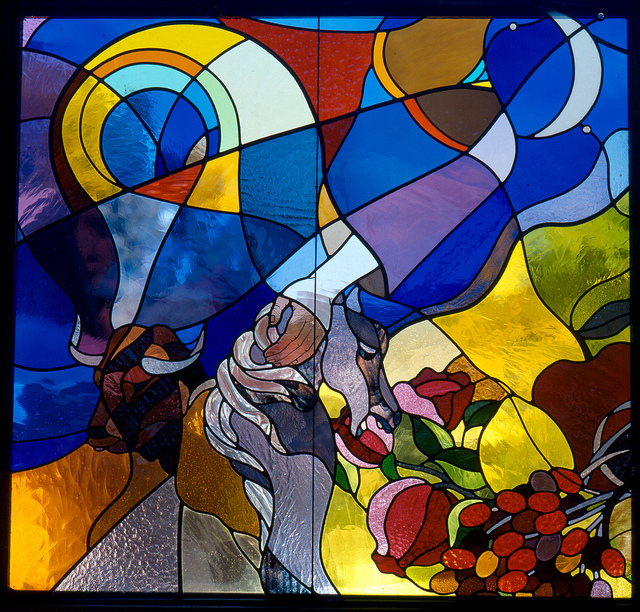
Ordinarily, there should be justice in appointments, and succession planning should follow well understood procedures. But there needs to be processes of disruption. I have been reading the story of Jacob’s blessing of Joseph’s two sons Manasseh and Ephraim (Genesis 48). They were born in that order and should, by rights, have been blessed in that order. Jacob himself “stole” his father’s blessing from his older twin Esau. Of Jacob’s twelve sons, Joseph was the last in line, inspiring murderous resentment amongst his brothers. (The stained glass pictured above shows Joseph’s blessing). Disappointments abound in the Bible. The choice of David by the prophet Samuel was a surprise to David’s father. David was not the first-born, but the last-born – and still so young. Each of his older brothers was presented to Samuel. Each was dis-appointed as Samuel turned the line of succession on its head (1 Samuel 16:1-13).

The New Testament takes up the theme. Everything is in the wrong order. Even the birth of Jesus is in the wrong place. The wise ones went for Jerusalem and finished up nine miles wide of the mark. (Matthew 2). Jesus, himself set the cat among the pigeons by describing the disappointment process. He said “The last will be first, and the first will be last” (Matthew 20:16) before being challenged by the Mum who claimed her two sons had the right to the best seats in the house (Matthew 20:20-24).

All these stories are a reminder that there has to be room for manoeuvre and that there have to be processes of disruption. Prayer before appointments is an invitation for the Holy Spirit to confirm or disrupt the natural order of things. Sometimes the order of things has to change if things are going to change. The story of Manasseh and Ephraim, (or is it Ephraim and Manasseh?) is a reminder of that. It represents the hope of a new order, in which those whose appointment comes as a surprise live for the sake of others and not for themselves. That is why the order is changed.

A new order is one in which all those who come last in things come first – a great disappointing for some.

The stained glass is by Maria Stolz of Renaissance Glassworks Howard Lake, MN 55349

Here is another post on the theme of disappointment and leadership.

More like the voice of angels

I am not sure why angel voices are those of women or of boys when the named angels are Michael, Raphael and Gabriel. But if I am not very much mistaken, the voice of the Webb Sisters is absolutely heavenly as it bears the gravelly voice of Leonard Cohen to the heights of beauty. For me this voice of the angel from John Tavener’s Eternity’s Sunrise sounds like it’s from the very heart of heavenI wonder if this is how angels sound. They seem to have all the time in the world.Friends Christopher Burkett and Jayne Shepherd have shared this story illustrating the power of words – surely the touch of an angel. (I wonder why Church of England bishops can’t sound and look like this).

For the record, the Webb Sisters sing (and pray) on Leonard Cohen’s new album Old IdeasWith Raphael (angel of healing) they sing Come Healing.

O gather up the brokenness
and bring it to me now
the fragrance of those promises
you never dared to vow
The splinters that you carry
the cross you left behind
come healing of the body
come healing of the mind
And let the heavens hear it
the penitential hymn
come healing of the spirit
come healing of the limb
Behold the gates of mercy
in arbitrary space
and none of us deserving
the cruelty of the grace
O solitude of longing
where love haas been confined
come healing of the body
come healing of the mind
O see the darkness yielding
that tore the light apart
come healing of the reason
come healing of the heart
O troubled dust concealing
an undivided love
the heart beneath is teaching
to the broken heart above
O let the ehavens falter
and let the earth proclaim:
come healing of the Altar
come healing of the name
O longing of the branches
to lift the little bud
o longing of the arteries
to purify the blood
And let the heavens hear it
the penitential hymn
come healing of the spirit
come healing of the limb