God’s work in broken community

Reflecting on Paul’s call to order and Jesus’ manifesto in the readings for the day, 1 Corinthians 12:12-31a and Luke 4:14-21 for the 3rd Sunday of Epiphany (C) for two small congregations in a lively/lovely group of parishes in rural Warwickshire. This post includes a video of Bishop Mariann Edgar Budde discussing her sermon that made headlines following President Trump’s inauguration service.

January 26th 2025

First of all, a note. I normally get round the problem of God’s pronoun by  using the name of God instead of a pronoun.  But, here, I am going to need a pronoun. There are many objections to using “he/him” because the name God is then linked with power, privilege and patriarchy – and the language we use about God needs to set God free from such associations, particularly in these days of right wing nationalism popularised by men such as Trump, Putin, Musk and Netanyahu. So, for this sermon, when I need to resort to God’s pronouns it will be she/her. I hope you will understand why.

In a world where God’s name is often associated with power, control, and patriarchy, using ‘she/her’ reminds us that God transcends these human limitations and works to free us from systems that seek to dehumanize and divide. It is not an attempt to redefine God’s essence but to challenge our projections of power. Forever God gathers the lost, gives strength to those who are weak, and honour to those who have been shamed and ashamed.

In the midst of controversy Paul has this to say to the troubled, disjointed community of Corinth. “We were all baptised by one Spirit so as to form one body – whether Jews or Gentiles, slave or free”. Here was a community facing all sorts of problems with all sorts of differences. Paul reminds them what God does in the middle of such a community. She brings us together to form one body from the splinters and divisions. She gathers us from far and wide and makes of us one body whatever the differences between us.

Paul stands in the middle of the conflict and witnesses to what God does. He reminds the community of the abundance of God’s gifts and the value and diversity of each and every one of them for the purpose of community building and reconciliation, reminding the body around him that every member needs every other body to fully function. 

Perhaps Paul remembered the prophecy in the valley of dry bones – a valley of untold war crimes from which the bones of those killed were left out in the scorching sun for the wild animals to pick the meat from. The sound from this valley overshadowed in death was the noise of a disjointed people overwhelmed by tragedy. “Our bones are dried up, our hope is lost” is what they said. (Ezekiel 37:11). Those bones speak of a people abandoned, dehumanised and rendered invisible. In that valley Ezekiel was made to tell the truth about what God does, how she undoes the shame by breathing life into the very bones of a community destroyed, dismembered and left to rot.


This is what God does. Even as we walk through the valley of the shadow of death, God brings us together. From the four corners of the world, Jews and Gentiles, slave and free, God brings us together in love in spite of differences between us. The Spirit that breathes life into the valley of dry bones is the same Spirit Paul saw at work amongst the Corinthians and is the same Spirit that unites us as the body of Christ, knitting us together from the corners of the world, and overcoming shame, division, and death itself.

You see, God remembers us. She remembers bodies that are broken, whether that be in the valley of dry bones, or the valley overshadowed by death, or communities torn asunder. 

Remembering for God isn’t simply a case of casting her mind back, as we would usually remember. God’s remember is always a re-creation, a bringing back together of what’s become disjointed and scattered, and making whole what has become broken. God’s remembering is a literal re-membering of the body, the remaking of community through the gifts of her Spirit.

This is, if you like, another creation story – the coming together of a people through the creativity of God’s Spirit. The Spirit remembers us as one body – connecting toe bone to foot bone to ankle bone to leg bone to knee bone to thigh bone.

So Paul reminds the broken body around him that God has remembered them. God has remembered their broken body. “God has placed the parts in the body, every one of them” – just as she wanted them to be.

He goes on: “God has put the body together so that there should be no division in the body.” This is what God does and this is why God does it. God knits us together in love to be a strong body, a resilient body, a withstanding body, a body that can stand, even in the valley overshadowed by death.

This is what God does. She puts the body together.  

And this is what she does as a rule. She gives “greater honour to the parts that lacked it”. The rule of God is always to put the last and the least first. Here we see that rule being followed again with greater honour given to the parts that lacked it so that those parts which seemed weaker become indispensable and those parts thought less honourable are treated with special honour. This is how God remembers her people. This is what God builds a body for.

This is not just a spiritual gathering; this is a body meant for action. To be bound together by the Spirit is to be called into the work of justice, to bring good news to the poor, freedom to the prisoners, sight to the blind and liberation to the oppressed. This is the body God is building: a body that stands in stark contrast to the systems of division, hatred and shame that continue to pull our bodies apart.

We are the body God is building – here today listening to the body God prepared for us, listening to Jesus as he finds the body’s purpose revealed through the prophet Isiaiah to read to his fellow villagers in their synagogue in Nazareth.

The Spirit of the Lord is on me, because he has anointed me to proclaim good news to the poor. He has sent me to proclaim freedom for prisoners, and recovery of sight for the blind, to set the oppressed free, to proclaim the year of the Lord’s favour. 

Mariann Budde is a member of the body of Christ, gifted to be Bishop of Washington, president within a community God has brought together. It was her responsibility to preach at the prayer service in her cathedral. She preached the only way she could appealing to President Trump for mercy for those afraid because of the policies of the incoming president – those who are gay, lesbian or trans, and immigrants being targeted for deportation. Trump should not have been surprised by her appeal. She was only embodying the very work of the body of Christ. In a time when power is often wielded by shame and divide, the body of Christ cries out on behalf of the oppressed, the disempowered and broken. This is the DNA of the body of Christ. This is all God brings us together for. This is what we are gifted for. We can do no other.

Closing prayer

God of unity, you breathe life into us and call us to be one body in Christ. We thank you for the gifts you’ve placed within each of us, and we ask that you strengthen us as a community, that we may bear witness to your love. We pray for healing where there is division, for hope where there is despair, and for courage to stand with the broken and the oppressed. May your Spirit unite us in justice, peace, and compassion. In Jesus’ name, we pray. Amen.

Finding Unity in January’s Gloom

2nd Sunday of Epiphany (C) – part of the Week of Prayer for Christian Unity. The readings for the day are 1 Corinthians 12:1-11 and John 2:1-11.
January 18th 2025

How’s your January going?

I’ve heard January described as “one long Monday”.

Dare I ask, how are the new year’s resolutions going? Are you keeping them, have you lapsed or have you forgotten what they even were?

We’re quite self-centred in our resolutions aren’t we? They tend to be centred on what we are going to do for ourselves and on our own. We tend to set the resolutions on our own. On our own we tend to set personal goals without deeper reflection on the greater needs around us. Our resolutions can be shockingly disconnected from our shared reality, such as the climate crisis, the migration crisis and the cost of living crisis.

And we make the resolutions at the time of the year we’re in the worst shape to keep them, in the gloom of January, when we’re often under the weather, whether the “weather” be the worst cold of the year, or whether “the weather” be our personal health, suffering flu or the worst cold of the year. Our resolutions are fragile. Our resolutions, if they could choose, would appreciate a February start, not a January one!

Tomorrow is Blue Monday, supposedly the most depressing day of the year. I wonder whether the likely failure of our resolution is a factor in this, alongside the cold, the credit card bills, the dark nights etc etc.

Our Sunday worship is our opportunity to reorientate ourselves in these days of darkness. The season of Epiphany takes us through January to February 2nd and gives us one epiphany after another, to help us to find our way and strengthen our resolve. There is one revelation after another.

Last Sunday it was the voice of revelation from the heavens when Jesus was baptised. Today it’s the changing of the water into wine and Mary’s instruction to the stewards to do what Jesus tells them that is the revelation. John writes: “What Jesus did here in Cana of Galilee was the first of the signs through which he revealed his glory.” These signs are revelations of God’s glory in the world – a new way of seeing and being in the world.

And, in our reading from Paul’s letter to the Corinthians, all the gifts of the Spirit to a troubled community are a manifestation of the Holy Spirit of God working through that community for the common good. “There are different kinds of service but the same Lord. There are different kinds of working, but in all of them and in everyone it is the same God [we see] at work”.

Paul sets out his reason for writing to the Corinthians (in 1:10). His purpose was “to appeal to you, brothers and sisters, by the name of our Lord Jesus Christ, that all of you be in agreement and that there be no divisions among you, but that you be united in the same mind and the same purpose. Paul’s appeal for unity isn’t just a call for believers to find agreement, but for them to see beyond their own individual desires and divisions. 

The gifts of the Spirit Paul talks about are not meant to isolate or empower individuals but to strengthen the body of Christ. The gifts of the Spirit are for the common good. Paul’s list reminds us that unity is not about sameness, but about recognising and celebrating the diversity of God’s work in us. Seeing that is a revelation of God’s glory in the church. Not seeing that reveals God’s powerlessness, even in the church where Jesus is supposedly lord.

Yesterday marked the beginning of the Week of Prayer for Christian Unity, a week of prayer when we pray that we will pray along with Jesus for all who believe in him that they (we) may be one and that they (we) “may be brought to complete unity”. That was Jesus’s prayer that we are called to join this week in particular. It’s a prayer to withstand our horrible histories and to find resolutions to all that divides us. It’s not a prayer for doctrinal unity but is a practical commitment to reconciliation and understanding. The prayer for unity which we are called to join Jesus in is prayer for the kind of unity which reveals God’s love to the world, a unity which transcends the personal, political, racial and denominational divisions of our horrible histories.

Jesus knew that then, when his prayer for unity was answered that that would be epiphany and revelation. “Then the world will know that you sent me and have loved them even as you have loved me.” (John 17:20-23)

The Roman Catholic Church are keeping 2025 as a Jubilee year. It sounds notes of joy and jubilation in our calendar. Every 25th year is kept in jubilee picking up on Jubilees referred to in Leviticus when the 50th year became a time for putting the economy right. Indentured servants were released from servitude, debts were forgiven and everyone was returned to their property. Imagine the jubilation!

This 2025 Jubilee was proclaimed in the papal bull, the title of which translates as “Hope does not disappoint”.  The motto for the year is “Pilgrims of Hope”. That is to be their resolution. Jubilee begins with the opening of the doors of the basilica in the Vatican. On Christmas Eve, Pope Francis knocked on the holy door of St Peter’s basilica. The door was swung open and Francis rolled through in his wheelchair.. There are four such doors in the Vatican. On the Feast of Stephen, December 26th, a fifth door was opened. This was the door of the prison in Rebibbia in Rome and this was intended to serve as a symbol “inviting all prisoners to look to the future with hope and a renewed sense of confidence”. In other words, this was another epiphany – a revelation of how the prisoners, and ourselves, can see ourselves and one another differently because of the glory of God in the world.

I have included their logo of the Jubilee on the sheet of readings. The four figures come from all corners of the world. They represent all people that on earth do dwell. They embrace each other as they hold on to the cross which anchors them in hope as they (we) navigate rough seas as pilgrims of hope.

Is this an image we can take with us into this special week of prayer and even, with fresh resolution, into the rest of the year? How will we embody the unity which Jesus prayed for? How can we be signs of his love? How can we resolve our differences and conflicts? How can we align ourselves with God’s greater purpose? It won’t be in our own strength. None of us are resolute enough for that. To change the world God’s Spirit wants to work through us, strengthening our resolve to do his will.

A Saviour Stitched to a Star

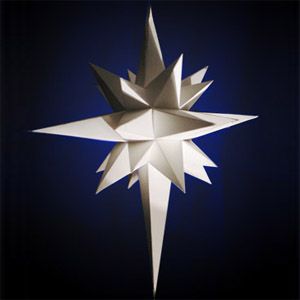
moravian starThe Feast of Epiphany – when wise ones followed a star, seeing in it the shape of things to come.

Poet Mary Karr stitches crucifixion and resurrection to a star (not her words) in a poem called Descending Theology: The Resurrection. I wonder if it is that same star, and I wonder whether the wise ones saw the shape of things to come in the star they followed.

I have stitched Mary Karr’s poem to a particular image of the star of Bethlehem. It is particularly three dimensional, with a reach not just from east to west, but in all directions – to all the nations. (In fact, it has 26 points – that makes a full alphabet for me.)

The poem:

From the star points of his pinned extremities,
cold inched in – the black ice and squid ink –
till the hung flesh was empty.
Lonely even in that void even for pain,
he missed his splintered feet,
the human stare buried in his face.
He ached for two hands made of meat
he could reach to the end of.
In the corpse’s core, the stone fist
of his heart began to bang
on the stiff chest’s door, and breath spilled
back into that battered shape. Now

it’s your limbs he comes to fill, as warm water
shatters at birth, rivering every way.

If you liked this poem you might also like Descending Theology: The Nativity, also by Mary Karr. There’s an interview with Mary Karr by Krista Tippett here. Here’s how to get instructions to make a Moravian star (as pictured).

Twelfth Night

Today is Epiphany – January 6th. Twelfth Night – down with that tree and away with that tinsel. Highlight of the season has been reading The First Christmas by Marcus Borg and Dominic Crossan. This has given spiritual direction for this wonderful season. Borg and Crossan describe the birth stories of Matthew and Luke’s gospels as “parabolic overtures” for their whole gospel of joy and conflict – personal and political.

Today, Epiphany, focus is on the story of the visit of the Magi who travel one road and then return by another road. The road they travel is to the palace of Jerusalem. Of course, they would go that way. The way of the worldy wise is to the palace and the court. They discover how wrong they are. In Breugemann’s phrase, they finish “9 miles wide”, and discover their journey’s end (and their beginning – TS Eliot) to be not at the court of Herod but in the outbuildings of an inn in Bethlehem. Their return “by another road” signifies repentance – a change of mind – demanded by the Jesus of the Gospel. “They no longer walked the same path, but followed another way.”

Messrs Borg and Crossan wonder whether I am “like the Magi who follow the light and refuse to comply with the ruler’s plot to destroy it.” Or whether I am like Herod “filled with fear and willing to use whatever means necessary to maintain power, even violence and slaughter.” Am I among those “who yearn for the coming of the kingdom of justice and peace, who seek peace through justice”, or am I among those “advocates of imperial theology who seek peace through victory?”

Borg and Crossan refer to the three tenses of Christmas. Past, present and future – as retold by Charles Dickens in the Christmas Carol. Of the future tense they refer to three different understandings:
One is called “interventionist eschatology” – in which only God can bring about the new world.
The second is called “participatory eschatology” in which we are to participate with God in bringing about the world promised by Christmas.
The third involves letting go of eschatology altogether in which Christian hope is not about the transformation of this world.
Only the second is affirmed by Borg and Crossan – thankfully. “We who have seen the star and heard the angels sing are called to participate in the new birth and new world proclaimed by these stories.” They quote Augustine’s aphorism: “God without us will not; we without God cannot.”