Who is the strong man who needs binding and casting out?

This is the question I explore with a small congregation in rural Warwickshire for the 2nd Sunday after Trinity (year B) at the end of a week where we have celebrated the bravery of the boys involved in the D-Day landings in Normandy, who forced their way to a toehold in the strong man’s stronghold. The gospel, binding the strong man, is printed below – Mark 3:20-end.

D-Day 75 Garden at Arromanches-les-Bains
D-Day 75 Garden at Arromanches-les-Bains – photo by Alan Wilson, picturing a 97 year old veteran looking back at himself as a 22 year old climbing on to the beach.

The Ins and Outs of the gospel.

Today’s gospel passage is crucial for the gospel of Mark. It is so crucial that one of the most important commentaries on Mark’s gospel lifts words from today’s passage for its title, Binding the Strong Man, as if this sums up Mark’s gospel and the mission of Jesus (and work of God).

In the week we’ve celebrated the 80th anniversary of the D-Day landings it becomes appropriate to explore this understanding of Mark’s gospel and the particular verse: no one can enter a strong man’s house and plunder his property without first tying up the strong man. By doing so we will honour the bravery of those involved in the D-Day landings – and the bravery of Jesus.

The strong man, Hitler, was always driven by his need for lebensraum (living room) and his occupation of France was a mighty extension of his living room. The D-Day landings were very much about the allied forces breaking and entering the strong man’s house, getting a foothold in his door on the beaches of Normandy, to tie up the strong man and free France.

Those who break into the houses of the strong man are brave – some, as we see in today’s gospel, think them foolish.

Mark wants us to know the ins and outs of his gospel.

Mark’s gospel is a journey. It starts in the wilderness, then working its way through Galilee (land of the poor and weakened) and then onto Jerusalem, the capital, the heartland of the STRONG MAN, with its fine buildings, its temple and its palace. Mark’s gospel follows Jesus all the way into the house of the strong and oppressive man.

These are the ins and outs of our gospel reading for today.

On the inside is Satan
and his demons
and Jesus
and those around Jesus.

On the outside
are the demons cast out by Jesus
and Jesus’ family – his mother, brothers and sisters.

The scene is set inside a house.
It’s the strong man’s house that somehow Jesus has got into.

Satan is a mythic figure who stands for actual people.
The demons too are mythic figures, and we know them in real life too. We often have to fight them.
The house too is metaphorical – just a domain name.

The actual people Satan stands for according to Mark is the STRONG MAN – who needs tying up and binding. 

Our popular imagination easily goes to the likes of Putin when casting for the villainous strong man.
But if we cast our search wider

The strong man is the cruel man,
the ruthless man,
the exploitative, oppressive, abusive man.
The strong man is the boss man.
He takes over our lives,

our opportunities and freedoms.
He grooms us, traps us,
and uses us
to build his empire
his power, his glory.
The strong man is the human trafficker,

with his demons his agents.
He is the scammer, the bully, the tyrant.
He’s the media mogul who hides the truth.
He’s the guarded.
He’s the first, the entitled,
and the one who puts himself first.
He’s the one we’re afraid of
in all his guises, the liar,
the master of disguise.

He’s the one
who sets his people onto people,
or against people.

But if truth be known
he’s also you and me,
no longer pronoun HE,
but you, me, she, we
whenever we are cruel like him

whenever we speak like him,
act like him, profit like him.
He’s #metoo, #wetoo,
with our power and strength
crying out for love’s binding.

This is how Mark portrays Jesus – as breaking and entering the house of the strong man, to bind him and tie him.

This is what God does.
This is what our scripture witnesses –
the binding of the strong man:
the Pharoah,
the Emperor,
the Dictator,
the Tyrant,
the High Priest,
the Devil incarnate,
the ones who come first
and the ones
who put themselves first.
This is what God does:
Father, Son and Holy Spirit
in perfect unity
they break into the house
the strong man has made
his strong hold
and makes it their kingdom,
the kingdom of God.

It reminds me of the way Jesus speaks in John’s gospel of the house he prepares for us. You know, “the house with many rooms”, the house with enough room even for us – with all our differences and diversity.

Mark takes us inside the house.
We’re his readers on the inside, the inside of the house seized from the strong man and Satan.
(I’d call it “the house of Israel” were it not for the cruelty that has taken over the strong men acting in Israel’s name in Gaza.)

Mark takes us inside the house.
We’re with Jesus, on the inside.
There’s an air of celebration.
We can sense victory.
We can see the end of the strong man.

But then comes an incoming call,
from the outside.

Outside the house are Jesus’s mother,
his brothers and sisters.
They want to see Jesus.
They call him OUT.
They think he’s gone out of his mind,
breaking into the house of the strong man
like that. They’re worried for him.
They’re worried for themselves,
and their reputations
and what the strong men
will do to them and their village.

They don’t hear Jesus’ response because they’re outside and Jesus is inside.
Inside, Jesus looks at those sitting around him, in the room he has prepared for them by binding the strong man.
Looking at those sitting round him he says: “Here are my mother and brothers! Whoever does the will of God is my brother and sister and mother.”

With all its “ins and outs”, Mark’s gospel begs the question of where “the strong man” is now, and whether we are insiders or outsiders.
Are we on the inside? Are we among those doing the will of God, in that place of bravery with Jesus, binding the strong man – even the strong man in us – with Jesus?
Or, are we outsiders, along with the outcast demons, amongst the scoffers and accusers of Jesus?

Mark 3:20-end
and the crowd came together again, so that they could not even eat. When his family heard it, they went out to restrain him, for people were saying, ‘He has gone out of his mind.’ And the scribes who came down from Jerusalem said, ‘He has Beelzebul, and by the ruler of the demons he casts out demons’.
And he called them to him and spoke to them in parables, “How can Satan cast out Satan? If a kingdom is divided against itself, that kingdom cannot stand. And if a house is divided against itself, that house will not be able to stand. And if Satan has risen up against himself and is divided, he cannot stand, but his end has come. But no one can enter a strong man’s house and plunder his property without first tying up the strong man; then indeed the house can be plundered.
Truly I tell you, people will be forgiven for their sins and whatever blasphemies they utter; but whoever blasphemes against the Holy Spirit can never have forgiveness, but is guilty of an eternal sin’ – for they had said, ‘He has an unclean spirit.’
Then his mother and his brothers came; and standing outside, they sent to him and called him. A crowd was sitting around him; and they said to him, “Your mother and your brothers and sisters are outside, asking for you.’ And he replied, ‘Who are my mother and my brothers?’
And looking at those who sat around him, he said, “Here are my mother and brothers! Whoever does the will of God is my brother and sister and mother.’

A priestly kingdom – inspired and created by Exodus

“See what I did to the Egyptians and how I bore you on eagles’ wings.
You shall be for me a priestly kingdom.” (from Exodus 19).

A “kingdom” is a proper collective noun for priests. God’s call of priests is for the whole people, the whole nation – for the many, not just the few. It is for all those who have been borne on eagles’ wings through the harshest circumstances imaginable – in the case of these people hearing God’s call in Exodus, it is people who have suffered slavery and all kinds of oppression. There are no priests who don’t belong to the kingdom, and outside of the kingdom there is no call for priests.

This priestly kingdom is more than the “priesthood of all believers” – this is a priesthood of all those who have been liberated. Their liberation defines their identity and identifies their function of being a blessing for the whole world, for all the nations. (It defines “blessing” as nothing less than liberative, nothing less than redemptive even from the worst evil imaginable.)

How have we got our understanding of priesthood so spectacularly wrong? In common parlance priests are those who are ordained. Peter writes to those who were “nobodies” – “aliens and strangers in the world”: “You are a chosen people, a royal priesthood, a holy nation, a people belonging to God, that you may declare the praises of him who called you out of darkness into his own marvellous light.” (1 Peter 2:9).

The Ordination Service takes up the call: “God calls his people to follow Christ and forms us into a royal priesthood”. This is the vocation of the whole church, not just a few of its members, “to declare the wonderful deeds of him who has called us out of darkness into his marvellous light”. The liturgy of the Ordination of Priests continues: “To serve this royal priesthood, God has given particular ministries” – ordained priests being among them.

What distinguishes those who are ordained priests is that they can be trusted with the power of ordering the life of this kingdom, co-ordinating its energy for the purposes of peace, making its wonder ordinary in the community’s DNA. The discernment and formation processes are supposed to see to that. The charge they accept is to do those things which serve this royal priesthood, the whole people of God, borne on eagles’ wings through times of trial and trouble in order that this kingdom of priests will be blessing for the whole world.

For that they will share with their Bishop as messengers and stewards, watching for the signs of God’s new creation. They will teach and encourage. They will guide people through temptation and confusion and they will declare in Christ’s name the forgiveness of sins.

With all God’s people they will baptise new disciples, preach faithfully in and out of season. They will preside at the Lord’s table and lead the kingdom of priests in worship. They will bless people in God’s name. They will resist evil, supporting the weak, defending the poor and interceding for those in need.

These things and others they are trusted to take on in order to serve the work of the kingdom of priests (aka “church” and “Israel”) – always for the purposes of the kingdom of priests: for the blessing and praise of all of God’s creation.

Opening Advent Doors

advent-door

Advent is a time for praying for the coming of Emmanuel, that God may be with us, and for each of the evenings of the week before Christmas there is an “O” antiphon. Each of the seven antiphons is prefaced by “O” and addressed to the Messiah according to the names for him found in Isaiah. The “O” expresses our longing. The seven antiphons are addressed to Wisdom, Lord, Root of Jesse, Key of David, Dayspring, King and Emmanuel.

Doors are very much a theme of Advent. Doors are both barriers and openings. We open a “door” a day on our Advent calendar to signify our willingness to open our hearts to the coming of Christ. Many decorate their front doors in a way that invites the stranger, in a way that begs to be opened (as in the door of one of our neighbours pictured above). Some doors are hard to shift and many are locked behind them.

Malcolm Guite has written a beautiful poem in response to the O Clavis antiphon (based on Isaiah 22:22):

O Key of David and sceptre of the House of Israel;
you open and no one can shut;
you shut and no one can open:
Come and lead the prisoners from the prison house,
those who dwell in darkness and the shadow of death.

This is Malcolm’s response (which is set in a beautiful image by Linda Richardson):

Even in the darkness where I sit
And huddle in the midst of misery
I can remember freedom, but forget
That every lock must answer to a key,
That each dark clasp, sharp and intricate,
Must find a counter-clasp to meet its guard,
Particular, exact and intimate,
The clutch and catch that meshes with its ward.
I cry out for the key I threw away
That turned and over turned with certain touch
And with the lovely lifting of a latch
Opened my darkness to the light of day.
O come again, come quickly, set me free
Cut to the quick to fit, the master key.

The poem senses despair but also senses freedom, if only we could find “the key  I threw away”, that “turned and over turned with certain touch and … opened my darkness to the light of day”. I love the sense of freedom because “every lock must answer to its key” and “each dark clasp … must find a counter-clasp to meet its guard”.

There are so many locks to spring. Back in the 14th century, Hafiz wrote about the sort of people who lock others up, and the sort of people who work in the darkness to set people free. They “drop keys all night long”:

The small person
builds cages for everyone
he
sees.

Instead, the sage,
who needs to duck his head,
when the moon is low
can be found dropping keys, all night long
for the beautiful
rowdy,
prisoners.

What are the cages, catches, vices, locks and blocks that bind us? What needs to be undone for peace to be declared on earth?

You may be interested in the Jesus Doors by Cheshire artist Ali Hutchison and the Advent Haikus Jim Bridgman has written for every day of Advent as part of his blog which is Really Nothing but which is in fact, quite something. You might also be interested in The Advent Door by Jan Richardson.

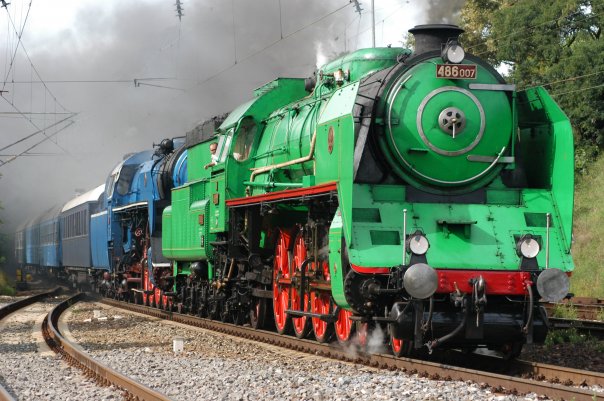
The Winton Train


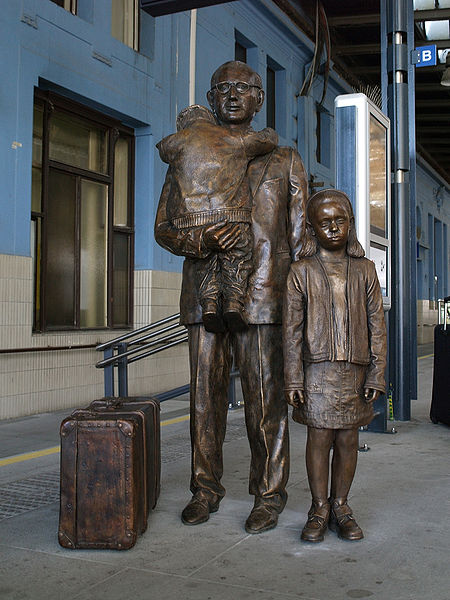
Wow. The Winton Train arrives at Liverpool Street Station today – with passengers rescued from Prague 70 years ago – the train will be met by the person who masterminded the rescue – Nicholas Winton (pictured). Nicholas Winton is 100 years old.


Altogether he managed to rescue 669 children transporting them by train from Prague to Lon don. Most of them were Jewish children who otherwise would have become victims of the holocaust. They have become known as the Winton Children – and that family of 669 has now become a family of 5000. This was part of the Kindertransport rescue mission which began a few days after Kristallnacht (1938) when some British Jewish leaders petitioned the Prime Minister, Neville Chamberlain, to accept unaccompanied Jewish children from Europe to protect them from Nazism. Six million Jews were killed in the holocaust. A quarter of them were children.

Dagmar Simova is one of the Winton Children on the train. Her response to the question of what it felt like to be once again being on a train from Prague is on the Winton Train Project’s blog: “My mother, father and grandfather came to the station with me. We all wept. This time my husband and daughter came to see me off. When we waved, suddenly it struck me. I was looking at them, but again I saw those three.”

Nicholas Winton never mentioned anything about this. It only became known 50 years later when his wife, Elizabeth, came across some papers when she was cleaning out their attic.

People like Nicholas Winton are honoured in a memorial park in Prague called the Orchard of Saviours. It celebrates all who helped Jewish children at great cost to themselves. Four types of apple trees have been planted and the refurbished fountain has been named after Sir Nicholas Winton.

The Winton Train Project hopes to despatch another Winton Train with young people and their artworks inspired by goodness bound for other European cities, and that it become a tradition to commemorate the resilient determination of people to believe in goodness and actively take part in a common future.