Seeing the wounds Jesus shows us

A sermon for the 2nd Sunday of Easter – Year C for two small churches. The gospel for the day is John 20:19-end.
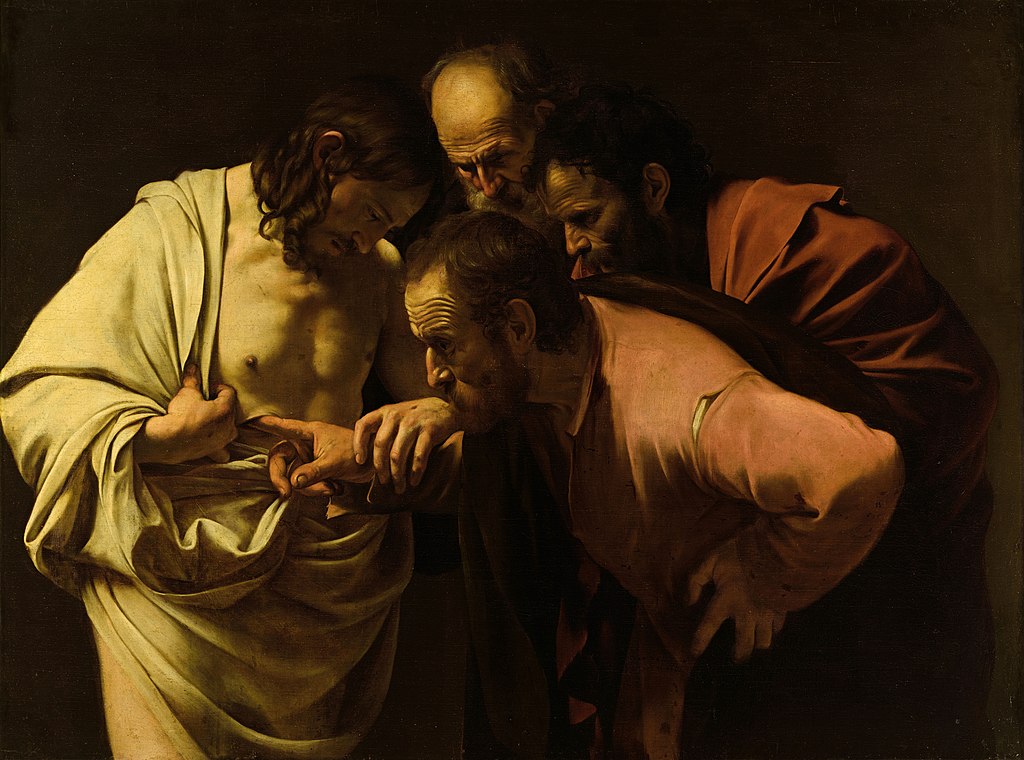
The Incredulity of St Thomas by Caravaggio – or should it be called Jesus showing Thomas his wounds?

I love preaching that brings Scripture to life—and that brings Scripture back to life.

That’s a line I’m going to repeat each week to remind us that every time we open Scripture together we are bringing it back to life.

This morning we return to John’s Gospel, still caught up in the wonder of that first Easter day (John 20:19-end). It’s a story only he tells.

John himself brings scripture back to life.
Particularly we see the influence of the creation story from the 1st chapter of our scriptures.
We can see that in the way that he tells us the time.
On the evening of that first day of the week.
It’s like last week’s gospel reading which began: Early on the first day of the week, while it was still dark. (John 20:1)
We are still on that first day which was like the first day of creation, when, according to Genesis 1:2, earth was a formless void and darkness covered the face of the deep.
That’s the time in today’s gospel. It was the first day of the week, and it was evening.
In other words, darkness was forming.
Taking our cue from Genesis, John’s readers can expect God’s wonders on this new day of creation.

Thomas wasn’t with the disciples when Jesus came on that first day, the day of resurrection.
It was the other disciples who had to let him know that they had seen the Lord.
Thomas told them that he would never believe “unless I see the nail marks in his hands and put my finger where the nails were, and put my hand into his side”.
It is this I suggest we focus on in our worship today.

Thomas is the patron saint of those who are blind because seeing wasn’t enough for him.
He needed to examine Jesus’s wounds by touching them and feeling them.
And the wonderful thing on that second Sunday, the first day of the week following, was that Jesus came and stood among them again and showed Thomas his wounds.
He welcomed his touch. He guided his hand. He let him explore his body.
Thomas is the patron saint of those who struggle to believe what they can’t see—or even what they can.
He shows us that resurrection faith isn’t just about seeing.
Sometimes it’s about touching, questioning and wrestling with God.

Jesus showed Thomas his scars. He wants his disciples to see them.


In the Last Supper, he took a loaf of bread and he broke it.
He wanted them to see his body in the brokenness of the bread.
“Take, this is my body,” he said. (Mark 14:22).
Then he gave them a cup for all of them to drink from.
In that cup he wanted them to see his blood.
“This is my blood of the covenant poured out for many.”
Even before he was wounded he wanted to show his disciples the wounds he was going to suffer.
And in today’s gospel, in one of his resurrection appearances, he invites Thomas to have a look at those wounds – to examine, inspect and see with his hands as well as his eye.

Thomas recognises Jesus through his wounds, just as Jesus wanted him to.
And this is how we come to know Jesus.
Just as Thomas encountered the risen Christ in his wounds, so too we encounter him today in the bread and wine of the Eucharist.
Every Communion we have with Jesus we have this invitation to examine the wounds of Jesus. Every time the bread is broken we are invited to see the brokenness of the body of Christ and to feel that brokenness in our mouths.
Every time we take this cup we are invited to taste the blood of Christ shed for us.

What is it that Jesus showed Thomas?
What did he want his disciples to see?
What does he want us to see when he shows us his wounds, when he invites us to see his body and his blood?

The first things we see are the wounds to his hands and feet where the nails were driven into his body by the hammer blows of empire.
Then, if he turns we see the wounds of the whipping scored into his back for being the scourge of empire and religion.
Then we see the scars on his head where they pressed the crown of thorns and added insult to injury, to press home the point that this “pretender” was nothing.

The rule of the kingdom of God is that the last, the lost and the least come first and those who are first in the kingdoms of this world come last.
The rule of the kingdom of God turns the rules of the world upside down.

In the wounds of Jesus, his disciples see a man who embodies that rule of the kingdom of God. In the brokenness of his body, in the bloodshed, we see a man the religious and political capital tried to reduce to nothing.
The plots against him and his crucifixion were intended to humiliate him and his followers – to make them least, last and lost – GONE for ever.

The problem for them was that the rule of the kingdom of God puts the least, last and lost – those lost and broken by the ways of the world – first.
When Jesus stood among his disciples, first without Thomas, then with him, he was the living proof of the fundamental rule of the kingdom of God.
Here was the humiliated, crucified and killed one.
You can’t get more “least, last and lost” than that.
Here he was, “the first fruits of those who have died”, Christ raised from the dead (1 Corinthians 15:20).

This is what Jesus showed Thomas –
the scars are the living proof of the rule of the kingdom of God.
Jesus stood among them as living proof of the rule he’d always followed,
that puts the last first and the first last.
Here is the one they put last made first.
This is what Thomas saw. This is what he said:
“My Lord, my God” – the rule of the kingdom of God realised in those few words.
“My Lord and my God” – Jesus comes first for Thomas.

So Jesus stands among us still, not with condemnation, but with scars.
What do we see? What difference does it make? Does Jesus come first?

Jesus doesn’t shame Thomas for his questions. He meets him in them.
He doesn’t rush belief. He invites it — gently, patiently, personally.

And he does the same with us.
To all who doubt, who ache, who long to see and touch and know — he says,
“Here I am. Peace be with you.”

He doesn’t hide his wounds. He offers them.
He lets us trace the pain and the mystery of a love that suffers with us and for us.
And in that wounded, risen body, we find our hope.

This morning, he says again:
“This is my body. This is my blood.”
This is how I choose to be known.
Look closely. Taste carefully.
And, if you are among the broken,
do not be afraid.

Being Believed we Become Beloved – on seeing our wounds

A sermon for the 2nd Sunday of Easter for a lively congregation in a Warwickshire village. The gospel for the day is John 20:19-end (text below)

 ‘Unless I see the mark of the nails in his hands, and put my finger in the mark of the nails and my hand in his side, I will not believe.’ So says Thomas – who is not really “the doubter” but the scientist who needs to see the evidence.

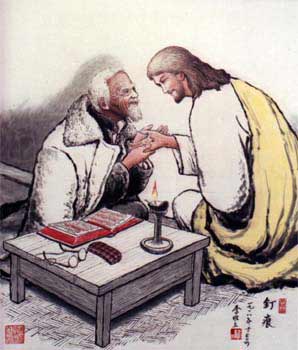
Nail Mark by Li Wei San.

Jesus showed him. He said: ‘Put your finger here and see my hands. Reach out your hand and put it in my side”. Normally we read Thomas’s response as a confession of faith – “My Lord and my God!” with a sense of joy. We could read it very differently – again with Thomas, the forensic scientist examining the body, probing Jesus, talking to to Jesus, as if a patient sufferer, while processing what he is seeing. “They did this to you?” “How deep that wound goes.” “This is what you put yourself through?” “You did this for me?” 

The realisation this examination evoked would have  a very different tone to the one we are used to. Read it differently. Instead of the tone of triumphant joy – as in “My Lord and my God” there may have been the tone of “Myyyyyy Looooord!” “Myyyyyyy God, what have they done to you?”

Thomas is the one who sees the wounds of Jesus, and the truth is in what he sees.

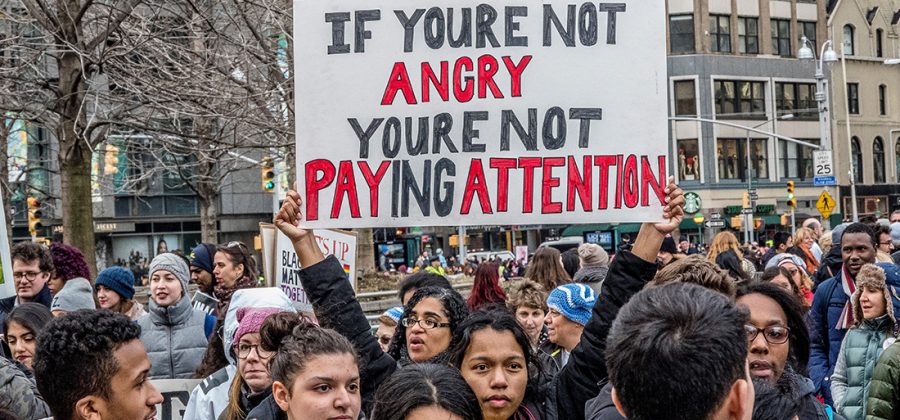
I want to explore what it is to see the wounds of others and our responses. It’s a growing question because there seems to be a battleground developing between those who want their wounds to be seen and those who very intentionally refuse to look, dismissing people for their whining. The battle has been fought down the ages, but is now being fought with a renewed intensity in the forefront of our politics.

The battle lines have been drawn between those who are “woke” and those who are “anti-woke”. The word “woke” made its way into our vocabulary through its usage in the African-American communities where it means staying “alert” to the wounds of racial discrimination. Its use spread through the Black Lives Matter movement and  the word was added to the Oxford English Dictionary in 2017. Being woke is being alert to the woundedness of others. But, most recently, woke has been turned into an offensive word and a term of abuse by those who are anti-woke who accuse the wounded and their sympathisers of being “snowflakes”.

“Unless I see your wounds” – that’s what this is about. The inspiration is Thomas and the wounds he sees, and the wounds Jesus carries. They take us to the heart of the battle.

Can we see one another’s wounds and the pain we bear. 

Can I see your wounds? Can I see how hurt you are? Can you tell us what hurts you?

We can only believe when we see the wounds and understand the back story to those wounds.

Gareth Malone has recently done a series where he put together a choir of eight singers to perform St John’s Passion by Johann Sebastian Bach. Some of you may have seen it. What made it so interesting was getting to know the eight people who formed their choir, hearing their stories and seeing their wounds. 

For example, a close relative of one of them, a niece, had been killed in a road traffic accident the previous week – and there Simon, her uncle, was there rehearsing, finding the rehearsing something that helped with the wounds.

Another of them, Joy, was one of the few who knew the passion story. She grew up in the church. Her wounds were wounds of rejection. She carried the scars of having been rejected by her parents when she was a baby, and then again felt rejected by her church at the age of 12 when it became clear to her that she was gay. (Incidentally, that has been thought to be an appropriate age for the Holy Spirit to confirm faith in a service of Confirmation.) Here we have a rejection, not a confirmation – with all the wounds and scarring that go with it. Her faith is still important to her. She was wearing a prominent cross of another rejected one.

Already, in two of them, we see their wounds. The wounds we were shown were fairly typical – the wounds of sudden loss and the wounds inflicted on some who are gay. It was only the surface we were touching. We obviously weren’t shown the complications which are personal to each wounding.

Bach himself was sore wounded. By the age of 10 he had lost both his parents. His first wife died after they’d been married 13 years. 12 of his 20 children died before they were 3. Research by John Eliot Gardiner reveals the violent, thuggish world of the young Bach. Gang warfare and bullying typified his schooling with inspection reports showing that boys were brutalised. They were “rowdy, subversive, thuggish, beer and wine loving, girl-chasing, breaking windows, brandishing daggers”. He missed 258 days of schooling in 3 years – kept at home, like many for fear of what went on in school. Do we understand his music more, do we see his musical score better for seeing the scarring and scale of his wounds?

Can we see the woundedness in others? The wounds of those who are gay. The wounds of those who have grown old and tired. The wounds of those who have had to fight through war. Can we see the woundedness of those who have had to flee – the refugee, the jilted. The wounds of those who are black those who are disabled. So many of their wounds have been inflicted by those who haven’t cared for them/us as they should

These wounds matter. The wounded don’t want to hide their wounds. Their wounds are who they are. Our wounds are who we are. They have made us who we are. As I said, it’s the Black Lives Matter movement which has encouraged wokeness. Members of the Black Lives Matter movement insist the wounds are part of who they are. Their history matters – their wounds matter.

With our own loved ones it is important to see their wounds. When a child is upset we want to know where it hurts. With a partner, we want to understand the story of their scars and the wounds they carry.

And all of us want to be believed for the stories we tell about ourselves, our battles, challenges and wounds. That is what is so important about a community like this. Our best chance of being believed is being amongst people who trust one another – who we can trust with our very lives – sheltered from the indifference and cynicism of those too wrapped up in themselves to see the gaping wounds so many have to hide because they fear they’d never be believed.

Some of our wounds are self-inflicted – maybe a relationship breakdown which was my fault, or the wounds may be the result of personal neglect, or the way we’ve misused our bodies. Our sense of shame covers up the wounds. 

Through prayer and encouragement
we may begin to open up
to the one who wants to see,
to the one who says “let me see”,
to the one we can trust
with the shame we are showing them,
to the one we trust will believe us,
even God who wants to see, to heal
what matters to us matters to him
what’s wounded us, wounded him,
crowned with agony.

It’s not “wokeness” that alerts us to the pain and wounds of others. It’s our passion for the other which we call compassion. We mustn’t let the anti-woke brigade prevent us seeing the pain and suffering of others. Not seeing why, how and what is hurting rubs salt into the wounds and isolates them from us.

When we are trusted enough for people to show themselves to us, and when we truly see them, we believe. Seeing is believing – and our hearts go out to those who have so trusted us to believe in them. They are believed and beloved. They are known.

Thomas said: “Unless I see the mark of the nails in his hands, and put my finger in the mark of the nails and my hand in his side, I will not believe.” Nor will we believe people unless we also see the marks of the nails, the cuts in their bodies, the scarring of their minds. Unless his/her/their/our nail marks are seen and his/her/their/our wounds felt he/she/they/we will not be believed and will not be beloved.

John 20:19-end

When it was evening on that day, the first day of the week, and the doors of the house where the disciples met were locked for fear of the Jews, Jesus came and stood among them and said, ‘Peace be with you.’ After he said this, he showed them his hands and his side. Then the disciples rejoiced when they saw the Lord. Jesus said to them again, ‘Peace be with you. As the Father has sent me, so I send you.’ When he had said this, he breathed on them and said to them, ‘Receive the Holy Spirit. If you forgive the sins of any, they are forgiven them; if you retain the sins of any, they are retained.’
But Thomas (who was called the Twin), one of the twelve, was not with them when Jesus came. So the other disciples told him, ‘We have seen the Lord’. But he said to them, ‘Unless I see the mark of the nails in his hands, and put my finger in the mark of the nails and my hand in his side, I will not believe.’
A week later the disciples were again in the house, and Thomas was with them. Although the doors were shut, Jesus came and stood among them and said, ‘Peace be with you.’ Then he said to Thomas, ‘Put your finger here and see my hands. Reach out your hand and put it in my side. Do not doubt but believe.’ Thomas answered him, ‘My Lord and my God!’ Jesus said to him, ‘Have you believed because you have seen me? Blessed are those who have not seen and yet have come to believe.’
Now Jesus did many other signs in the presence of his disciples, which are not written in this book. But these are written so that you may come to believe that Jesus is the Messiah, the Son of God, and that through believing you may have life in his name.

Kintsugi, the art of scars and the value of repair

kintsugi2Things break. We break things. We break. But what do we do with the pieces?

When I have broken things I have sometimes pretended it’s never happened (playing the innocent) or I have hidden the evidence. When I’ve broken I have pretended it’s never happened, or I have hidden the shame. This is shocking dishonesty.

The prophet Jeremiah knew a thing or two about brokenness and shame. The broken thing he had his eye on was the nation itself. He came to see hope in brokenness – not shame – by studying the work of a potter. The potter was making a vessel of clay and it was spoiled in the making. Instead the potter reworked it into another vessel “as seemed good to him”. He heard God say, “can I not do as this potter has done?”

There is another school of pottery which makes something of broken pieces. This is Kintsugi. Kintsugi is known as “golden joinery” because of the method of using gold dust to mend the broken pieces. The repairs themselves become the work of art. While we might be tempted to use superglue to mend a broken ornament and then turn the damage to the wall, Kintsugi works in a different way. The repair is brazen and flaunted. The breakage gives the object a story and the object becomes more valuable than it ever was before.

The Japanese art of Kintsugi has given rise to a philosophy and metaphor for life. Also known as the “art of scars” it signals a way for us to value what is broken in our lives and to celebrate what has re-paired us.

We can look at the broken pieces of our society. Those broken pieces all have labels to identify one piece from another, and we continue to break into new pieces. We’ve got new labels, more broken pieces with Leavers/Remainers. They go along with more worn labels such as Workers/Shirkers, Gay/Straight, Black/White, North/South, Red/Blue etc etc. I like the suggestion that prayer is like the gold dust of Kintsugi – when we pray we seek to make a-mends and pray for repair and reconciliation. The putting together of the pieces is the answer to that prayer.

Kintsugi is one art of scars. Writing this as we come into Holy Week I am conscious that Christianity too is the art of scars – though crimson rather than gold. Brokenness is taken with utmost seriousness. All the repair work and the reconciliations stand proud as witnesses. Repaired brokenness makes us more precious and valuable than ever.

PS. Here’s more about the spirituality of mending by Laura Everett

PPS. #Visiblemending is trending on Twitter

PPPS. Mending is seen as practice for “tikkun olam” – for the “mending of the world”