People gatherers

Feeding the 5000 by Eularia Clarke

Some people are just good at gathering people together. They call on people and the people come. This seems to be what leaders can do – or, rather, are those people who can gather us together our leaders? People gatherers have an attraction and an authority. Whether we call a meeting or throw a party, we are acting as people with authority, people able to call on others. Most people can grow that authority, usually by the attractive way that they gather people. Conversely, we have all been in gatherings which have been so carelessly organised that we have said “never again”. There’s usually a reason why “nobody came”.

Neighbours Table tells the story of a people gatherer. In an interview with Tammy Helfrich (available as podcast), Sarah Harmeyer talks about her recent life as a “people gatherer”. She adopts a word for the year. Word of the Year 2011 was “community” which brought a vision for inviting 500 people to her table during the year. At the point of the interview, she is nearing 1500 for the 3 year period on a budget of $75 per month. She started with an invitation to a “pot luck” delivered to her neighbours. Her father made a table to seat 20 – 91 came. She suggests that people are waiting to be invited, that whole neighbourhoods are waiting for such catalysts for change, for people to step forward.

Her “manners” can guide us all. “Plan ahead to be present with people”, develop a culture of mutual respect, interest and listening, introduce people to one another by saying what you love about them – all that makes for a good time gathering. So, pause for thought. Why do we call people together? Are they just instruments to our ambition, pawns in our little games? Are we prepared for them? What is our interest in their offering? Do we know them? Do we love them?

There is always a reason why “people come flocking”.

PS People gatherers are the image of God who gathers people like a shepherd, making of them a nation and a church. Eularia Clarke’s picture of the feeding of the 5000 is a celebration of God as “people-gatherer”, recalling the feeding of the multitude. The painting is part of the Methodist Modern Art Collection, © TMCP, and is used with their permission.

Celebrating eucharistic action: Dix’s purple passage

Fresco of a female figure holding a chalice from Catacomb of Saints Marcellinus & Peter in Rome
Fresco of a woman holding a chalice from Catacomb of Saints Marcellinus & Peter in Rome

“At the heart of it all is the eucharistic action, a thing of absolute simplicity—the taking, blessing, breaking and giving of bread and the taking, blessing and giving of a cup of wine and water, as these were first done with their new meaning by a young Jew before and after supper with His friends on the night before He died. He had told his friends to do this henceforward with the new meaning “for the anamnesis” of Him, and they have done it always since.

Was ever another command so obeyed? For century after century, spreading slowly to every continent and country and among every race on earth, this action has been done, in every conceivable human circumstance, for every conceivable human need from infancy and before it to extreme old age and after it, from the pinnacles of earthly greatness to the refuge of fugitives in the caves and dens of the earth.
People have found no better thing than this to do
  • for sovereigns at their crowning and for criminals going to the scaffold;
  • for armies in triumph or for a bride and bridegroom in a little country church;
  • for the proclamation of a dogma or for a good crop of wheat; 
  • for the wisdom of the Parliament of a mighty nation or for a sick old woman afraid to die; 
  • for a school child sitting an examination or for Columbus setting out to discover America;
  • for the famine of whole provinces or for the soul of a dead lover;
  • in thankfulness because my mother did not die of pneumonia;
  • for a village chief much tempted to return to fetish because the yams had failed; because the Turk was at the gates of Vienna;
  • for the repentance of Margaret; for the settlements of a strike;
  • for a child for a barren woman; for Captain so-and-so, wounded and prisoner of war;
  • while the lions roared in the nearby amphitheatre;
  • on the beach at Dunkirk; while the hiss of scythes in the thick June grass came faintly through the windows of the church;
  • tremulously, by an old monk on the fiftieth anniversary of his vows;
  • furtively, by an exiled bishop who had hewed timber all day in a prison camp near Murmansk;
  • gorgeously, for the canonisation of S. Joan of Arc—one could fill many pages with the reasons why people have done this, and not tell a hundredth part of them.
And best of all, week by week and month by month, on a hundred thousand successive Sundays, faithfully, unfailingly, across all parishes of Christendom, the pastors have done this just to make the plebs sancta Dei— the holy common people of God.”

Dom Gregory Dix, The Shape of the Liturgy, London, 1945, p. 743, with a few changes I’ve made for the sake of a more inclusive language.

Ordination of Deacons

Image

It is 40 years since I was ordained a deacon at Sheffield Cathedral, and I have the privilege of being present for the ordination of 21 new deacons at Chester Cathedral today. These are people who have listened to God, heard his call, and responded with “here, I am”. These words are a commitment to being “present”, to “lifelong, disciplined attentiveness” according to David Runcorn in Fear and Trust.

Runcorn contrasts the failed leaders of 1 and 2 Samuel (there isn’t a success story among them) and offers the examples of Gandalf (Lord of the Rings) and Dumbledore (Harry Potter).

  • both bring the gifts of widely lived and well processed experience
  • both are significant guides and mentors to younger characters
  • both have taken the time and trouble to enter and understand worlds very different from their own
  • both are able to function peaceably without being the centre of the action
  • both display a combination of gentleness and decisiveness, authority and compassion
  • both are reconciled to their dispensability and accept that when the time comes, the world will continue without them.

That sounds good to me as a summary for ordained ministry and as a guide for theological education.

A Rev review


It was the long awaited return of Rev to BBC2 last night. You can watch last night’s episode here. The clip above shows one of the many moving pastoral encounters from the previous series which are typical of ministry.

Rev is poetry, not prose. It is inner city parish life dramatised, moving and comic. It rings so many bells.

There is a wonderful cast of actors playing a wonderful range of characters. This series introduces the Area Dean, the Diocesan Secretary, the local Imam and Baby Smallbone. Colin is still there, staking a claim as godparent for baby Smallbone, and crack addict Mick offers to babysit for money to visit his dying Mum in Southend (hasn’t she already died three times?).

There are signs that Reverend Adam Smallbone is an endangered species as the Area Dean and Diocesan Secretary scent blood and are on the tracks of pastorally reorganising St Saviour in the Marshes out of existence. There are signs that there is no room in ministry for the Micks and Colins of the world. Presence and engagement are what satisfies the Adam Smallbones of the Church of England. Up and down the country clergy are present, engaged and overwhelmed by the poverty and deprivation of their parishes. (And research suggests that clergy have the most satisfying occupation.)

Area Dean, Diocesan Secretary and Archdeacon all scoff at Adam’s “presence and engaging”. They probably think that Adam has had his chance. If he was any good he would have a larger congregation. (Archbishop Justin later apologised for the impression he gave that good vicars mean growth. It’s not as predictable as that.) I hope the Area Dean and Diocesan Secretary don’t win. There aren’t many people who Colin can talk to, and there aren’t many doors that Mick can knock on. Presence and engagement ought to be the measure of ministry in such communities, not bums on seats.

It is true that Adam is out of his depth. He probably did do better in his previous country parish. But here he is in inner-city London. He and his achievements look very small when compared to the Imam and his achievements. Adam wonders whether his ministry would be more successful if there were more rules. But, unlike Islam, little Christianity is very short on rules and perhaps feeling out of our depth should be typical for clergy. Isn’t it natural to feel overwhelmed by the dilapidated children’s playground, the crushing poverty and the huge culture gap between church and community?

Adam Smallbone, Reader Nigel, the congregation of St Saviour in the Marshes and the community they are a part of need our support. They need a pastoral reorganisation that makes their presence and engagement more sustainable and fruitful. Area Dean and Diocesan Secretary please take note.

Secrets hidden in plain sight: accounts to treasure in the heart

20140130-105838.jpg

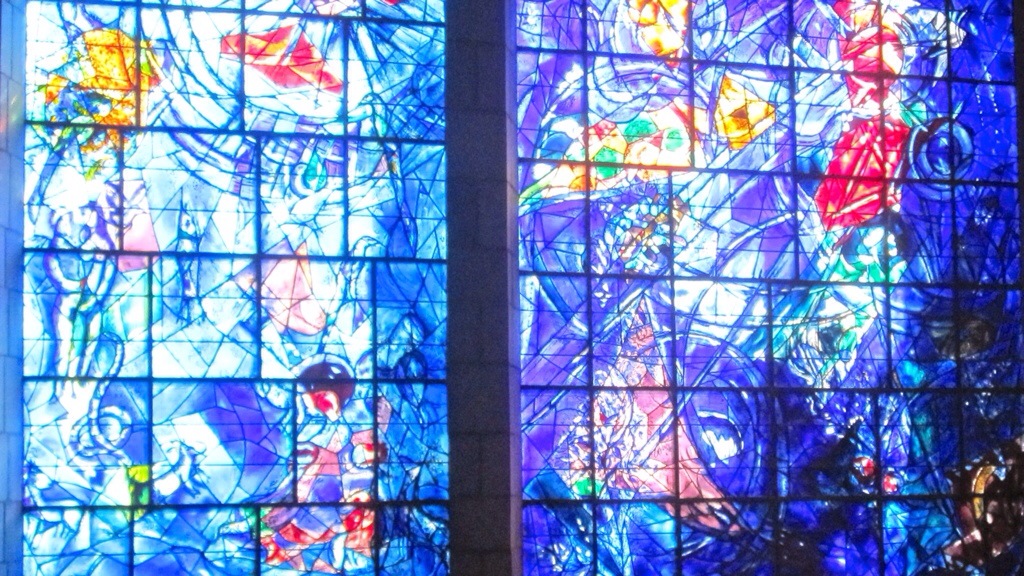
If I create from the heart, nearly everything works; if from the head, almost nothing.  Marc Chagall, who created the stained glass window at the Chagall Museum in Nice.

There’s counting and there is counting. There’s bean counting, and there is what counts as “ourstory”.

In an interview with UC Observer, on his book Healing the Heart of Democracy, Parker Palmer has this to say:

I once worked with a group of Episcopal churches in Texas. They were mostly small, rural churches, and collectively they felt like they were dying. Their budgets and membership had fallen off. I listened for a while, and then I said, “You know, it’s interesting to me that the only books you’re keeping have to do with dollars and numbers and members. Can you imagine another kind of book that has to do with the resourcefulness of the people in your congregations, the gifts they have to offer, the needs of the communities they serve in, and how those gifts and those needs might intersect?” I said, “You could actually do an inventory of that.”

There are accounts of measurable items, and there are accounts of wonder. The former are required reading for our “managers” and are lodged in safe places. Jobs, futures and political gain are staked by these measures which are often massaged into a healthy glow. Where is that other kind of book kept, as spoken of by Parker Palmer?

They are kept in the hearts of people. Luke rounds the story of the Annunciation with the beautiful expression, “and Mary treasured these things in her heart” (Luke 2:19). Things treasured in hearts are full of wonder, love and heart-felt story. Such stores are never emptying and never exhausted. They sustain communities and help them to thrive.

The accounts we are asked to keep of pounds, numbers and members are heartless and don’t change a thing. That is book-keeping for managers and survival. There is a different book-keeping and accountancy which takes account of gifts and needs, memories and longings. These are the accounts that are worth having. These are the accounts which give fresh heart to communities and churches. Our leaders need to treasure them in their hearts. They are “secrets hidden in plain sight”.

Christ the King – some sermon notes

Here are some notes for a sermon for the Feast of Christ the King, for the people of Christ the King, Birkenhead, for Sunday 24th November 2013

Christ the King

Today is the Festival of Christ the King.

The feast of Christ the King was announced by Pope Pius XI in 1925 at the time when fascism was growing across Europe, including here in England. It was thought that there should be special emphasis and celebration that Christ is King. It was a political choice. It was intended as a political opposition and challenge to those who were imposing themselves and their grand designs – the Mussolinis and Hitlers.

The Festival of Christ the King comes on the last Sunday of the liturgical year – and next Sunday is the start of a new one.

The Christian year culminates in this assertion that Christ is King, as if  through our worship, our reflections, our prayers and our readings we have come to the realization afresh that Jesus Christ is, for us, the King, and as if we want to be subject to his just and gentle rule, and that we prefer to be part of his kingdom than any other Kingdom, “United” or not.

Of course, this day has a particular significance for you. Your church has the lovely dedication of “Christ the King”. You are the church of Christ the King. You stand, sit and kneel realizing that Christ is King, subverting the tyranny of tyrants and representing the hope of those who are their victims – that they will be delivered – that there is another horizon of freedom as opposed to their awful and fearful horizons.

The introduction of the festival of Christ the King was a political act to oppose the growing power of the fascists in Europe. As the Church of Christ the King we are all called to be a political act. The church is political – we must never overlook that, and you, whose focus is on Christ the King, have a particular vocation to live that.

We have a king who rides a donkey. Have you ever sung that?

Our king, who rides into town on a donkey, contrasts and contradicts the power of the Roman emperor who arrives in town with all the cavalry and military trimmings. The Roman Emperor arrives in power to impress his power and to keep people down. Our king comes into town dishevelled and on a donkey. It’s a joke and a mockery of the superpowers who parade their strengths in their great squares. For Jesus, power is not for parading. Jesus has no need to impress, he is not like the leaders who ask “do I look big in this?”. The donkey was political act and political choice. He could have, as the story of the temptations show us, exercised his power very differently.

When it comes to horsepower God chooses the donkey. His intent was not to keep people down, but to bring them together as a kingdom of heaven, as a kingdom of God.

God and his people have always challenged the unjust rulers. That opposition goes back as far as to the times of Pharoah, from whose unjust rule God liberated his people through Moses. The opposition includes opposition to fascist tyranny and reaching to today, to the warlords, the drug barons, the local tyrant and the playground bully.

In the Old Testament we hear the voice of the prophets opposing the kings when they mislead Israel, and when their rule becomes unjust and corrupt.  For example, Amos denounces those who have built “stone houses” off the backs of the poor. He says “there are those who oppress the innocent and take bribes and deprive the poor of justice in the courts”.

Similarly, in our reading from Jeremiah (23:1-6), the prophet condemns the misleading leaders of his day, the shepherds who lead the people astray, who have scattered the flock and driven them apart, who have not attended to their needs and have only looked after Number One. He reports “The days are surely coming, says the LORD, when I will raise up for David a righteous branch, and he shall reign as king and deal wisely, and shall execute justice and righteousness in the land. In his days Judah will be saved and Israel will live in safety.”

There are leaders and kings in the Old Testament who were more interested in themselves than their subjects. The prophets rail against them. That is politics. And it is compassion for those who are neglected by the rulers.

This is what we stand and kneel for. We stand to welcome Christ as our king, to assent to the rule of heaven. We kneel to pray for the coming of the kingdom, on earth as in heaven. This is a political act.

Christ_the_King,_Birkenhead_(4)

I don’t know how well people of Birkenhead know this building, and that it is named “Christ the King”.  That dedication is relatively recent, isn’t it? Until 1990 the church was dedicated to St Anne. Why choose “Christ the King” for the dedication? It is a choice with political connotations. The naming was a political act that favours the poor and challenges the tyrannies of the community.

Christ the King as a building isn’t obvious. There is no spire dominating the landscape. You have been saddled with a spire, but as spires go it is quite unassuming. You have to look to find it. It’s not on the main drag. It is tucked into its community.

That seems quite appropriate to me. You don’t have to look big and impressive. You are a people tucked into your communities to share in the just and gentle rule of Christ, to exercise the responsibility we all share as the subjects of the kingdom of God – the responsibility to bring people together on the side of justice – to be trusted not to put people down, or let people down.

Christ as King isn’t obvious either, is he? He doesn’t force himself on us. He doesn’t stamp his authority everywhere. Our gospel reading reminds us of his rejection by crucifixion. He is the love that was promised by Jeremiah and longed for by so many. He is tucked into community, as the good shepherd, for bringing scattered and opposed people together, not for putting people down or letting people down as self-serving leaders do.

Other references include the painting Cast our Crowns by Jim Janknegt, the book God and Empire by John Dominic Crossan and Matthew 20:25

Intercession

Praying Hands
Thank you C Jill Reed for this photo of Praying Hands: a 30 ton 60 ft tall bronze statue at Oral Roberts University, in Tulsa, Oklahoma. The praying hands are just so huge that they make our own hands puny in comparison. Surely these are the hands of Christ, through whom our prayers are heard and minded by God.  He is the great High Priest whose love blesses the universe.

All Christians are called to be intercessors with responsibilities to pray for our enemies as well as our friends.

Dietrich Bonhoeffer wrote about the importance of intercessory prayer in Life Together:

A Christian community either lives by the intercessory prayers of its members for one another, or the community will be destroyed.

I can no longer condemn or hate other Christians for whom I pray, no matter how much trouble they case me. In intercessory prayer the face that may have been strange and intolerable to me is transformed into the face of one for whom Christ died, the face of a pardoned sinner. That is a blessed discovery for the Christian who is beginning to offer intercessory prayer for others.

As far as we are concerned, there is no dislike, no personal tension, no disunity or strife that cannot be overcome by intercessory prayer. Intercessory prayer is the purifying bath into which the individual and the community must enter every day.

The Church’s Lectionary prompts us to read two passages which talk about table manners. The passage from Hebrews (13:1-8) reminds us to entertain strangers (“for by doing that some have entertained angels without knowing it”) and to remember those in prison (“as though you were in prison with them”). The Gospel passage (Luke 14:7-14) Jesus turns the tables on our normal manners by telling us to “invite the poor, the crippled, the lame and the blind” when giving a banquet, rather than friends, family and people who do us good.

These are extraordinary and good table manners. What we are supposed to do at our tables we are also supposed to do in our prayers. In our prayers we are entertaining people in our hearts and minds. And we have to stretch our minds and hearts so that we pray for those who are at the margins of our consciousness – we prepare a place for the stranger, the poor, the prisoner.

In praying for them we bring them centre stage in an act of remembrance, as if we were in prison with them. We pray for those for whom life has gone wrong, for those who don’t know what peace is, or family is. We pray for the unlovely and the lost as if we are unlovely and lost with them. This is a sympathetic (or empathic) position, but it is not about identification, because, as Oswald Chambers reminds us, intercession also puts us in God’s place. He writes: “People describe intercession by saying, “It is putting yourself in someone else’s place.” That is not true! Intercession is putting yourself in God’s place; it is having his mind and his perspective.”

These are deeply healing processes. When we pray for others we are at the very least remedying neglect and overcoming fears and divisions. And we are, at the very most, putting ourselves “in God’s place” of overcoming evil with far better table manners and prayer.

Professionally speaking

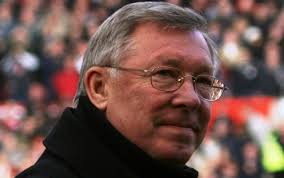
Sir Alex Ferguson: the consummate professional?

Professionally speaking: is that speaking well, or is that being paid for speaking?

Speaking well: is that speaking without hesitation, notes or blasphemy, or is it speaking truthfully?

In what sense has Sir Alex Ferguson been a professional football manager?

There is a sense of professionalism which comes from a realisation which is personally transformative and attitudinal. This is the sense which is behind the religious profession through which a person gives themselves utterly because of that realisation and profession. Here’s my starter for eight about such a professional life. Can anyone help me to make it a starter for ten?

  1. Professionals are driven by values that go to the core of their being. Their motivation comes from this inner sense of values.
  2. Professionals profess those values in their practice.
  3. Professionals enjoy their busyness when they can profess their faith, but become anxious when they lose sight of these guiding principles in their busyness – when practice prevents profession.
  4. Professionals are preoccupied by their profession at all times. They occasionally switch off when fully engaged by something else.
  5. Professionals choose an enabling lifestyle.
  6. Professionals develop disciplines to make themselves resourceful and effective.
  7. Professionals don’t count working hours or kill time. They are intrigued by opportunities. Kairos beats Chronos every time.
  8. Professionals cultivate their values as best friends. Continuing professional development is not an option but a natural course of action.

The ins and outs of learning

It is important to recognize that mastering any of the disciplines requires effort on both the levels of understanding the principles and following the practices, It is tempting to think that just because one understands certain principles one has “learned” about the discipline. This is the familiar trap of confusing intellectual understanding with learning. Learning always involves new understanding and new behaviours, “thinking” and “doing”. This is the reason for distinguishing principles from practices. Both are vital.

Peter Senge, The Fifth Discipline p 384. This quote from Peter Senge (picked up from Friday mailing) emphasises the ins and outs of learning. We can indeed take in many things in terms of understanding, but there needs to be outcome in terms of disciplined practice, through which we learn more and better.

Which way all the way

a sermon for Easter 3C for St John’s, Weston in Runcorn.

Hallo.

‘Allo, ‘allo.

One of the running gags of TV sitcom ‘Allo, ‘Allo! was the line, delivered in a French accent, “I will say this only once …….”, which was said over and over again, in a comedy called “Allo, allo”.

And we can perhaps imagine the market trader saying, “I’m not going to give you this once, I’m not even going to give you this twice, I’m going to give you this three times.”

That is what we get in today’s readings. We get it three times.

In the gospel, Jesus gives it to Peter three times. “Do you love me?” “You know I do.”

Three times, to correspond with the number of times Peter denied Christ before the cock crew.

Three times to emphasise that Jesus had got over that, that Peter was forgiven.

Three times to underline Peter’s particular pastoral responsibility

I wonder what he says to each of us, this Jesus risen from the dead. What his call is. “Mary, do you love me?” “You know I do.” “Then feed my lambs, teach my people, help them find their freedom.”

It’s not just once that Luke gives us the story of Saul’s conversion. It’s not just twice. It’s three times.

Why?

First of all, I presume it was because he thought this is a story worth telling.

And I presume that it was Luke’s intention that this story should capture the imagination of the church, and help us in our own journeys and our own transformations and conversions.

It’s worth remembering also that it’s not just one, it’s not just twice, but it’s three times that Luke tells us how brutal and callous Saul was towards the followers of the Way.

  1. In chapter 7, Luke tells us how Saul was involved in stoning of Stephen to death. He may only have been holding the coats, but Luke does say that Saul “approved of their killing him.” He was not a nice man.
  2. In chapter 8, Luke reports that “Saul began to destroy the church. Going from house to house, he dragged off both men and women and put them in prison.” What was wrong with the man?
  3. Here in chapter 9, he goes and gets letters from the high priest to authorise him to arrest those who followed Jesus’ Way, and imprison them in Jerusalem. This is a truly frightening man.

What on earth was Jesus doing with Saul?

This is a story of conversion told three times, intended to capture our imagination.

I want to look at this in not just one way, not even just in two ways, but in three.

I want to look at the idea of “going out of our way” (in the sense of waywardness), “mending our ways” and “finding our way”.

And I want to refer not just to one person, Saul, nor even to just two people, but three. I refer to Saul, to the prodigal and to ourselves as the people this story is intended to inspire and transform.

Firstly, Saul.

Saul went out of his way to find the followers of the Way.

It comes across as an obsession.

There are two places named. There’s Jerusalem and there’s Damascus. It’s hardly Runcorn to Liverpool in 20 minutes, so long as there are no lane closures on the bridge. This is 135 miles away, across rivers and mountains, on horseback – perhaps 4 or 5 days away.

Then, lo, Jesus meets him, risen from the tomb.

Lovingly he greets him.

“Who are you?” Saul asks.

“I am Jesus whom you are persecuting.”

And he said to Saul, “Now get up and go into the city, and you will be told what to do.”

And Saul had to be led the rest of the way by hand, and then he was told his way forward.

And what a long way he went.

Luke emphasises all the places Paul went, by road, overseas, through storms carrying Jesus’ to all the nations.

The way was found for Saul, and the way was followed by the convert all the way, all the miles, through trial, suffering, all the way to his death.

Saul’s way, Paul’s way, reminds us of the ways of the prodigal son.

His way was to get his inheritance and run for the time of his life.

Until his luck runs out, and he sees the error of his ways.

The father’s way is to tuck his skirt into his belt and run out to embrace the son he thought he had lost.

Lovingly he greets him, in such an outrageous way that the elder brother protests.

“This isn’t the way.

This isn’t the way to deal with someone who stripped you of half of your money, and who let down the family business.”

And the father says “This is the only way.

The only way to share your father’s pleasure is to forgive your brother. That is the only way. That is my way.” 

What about ourselves?

What are our ways? Are they his ways?

Our waywardness may not be as dramatic as Saul’s, or the murderer who becomes a preacher, or the prodigal’s.

Or as awful as Peter’s, who when he realised what he had done just broke down and wept.

Waywardness is part of our reality which is realised in our worship. We confess the ways in which, whether in thought or in deed, we have sinned against our brothers and sisters, and sinned against God.

We ask for God to help us to mend our ways.

We let Jesus lovingly greet us, lead us, his way, so that we may “do justly, love mercy, and walk humbly with you our God.”

That is the way God wants us.

He wants us to walk with him. He wants us to be yoked to him, on the way and all the way.  This is the way of life.

Before Jesus’s followers became known as Christians, they were known as followers of the WAY.  The followers of the WAY were known because they had a way of life.

And that way of life is spelled out not just once, not just twice, but three times, by both Jesus and Luke in today’s readings.

Through both Peter and Saul Jesus experienced betrayal and persecution.

To both he showed forgiveness.

For both he gave them a way to go, a direction.

For both there is the prediction of suffering, but for them that was another aspect of walking with Jesus and following his way.

Ourselves, we help each other on our way at the end of our liturgy.

Go in peace, to love and serve the Lord. “In the peace of Christ, we go”.

We don’t simply get on our way.

We commit ourselves to his way, to keep in step with Jesus, loving mercy, and walking humbly with our God as we meet other Sauls, Peters, Sharons and Janets.

What is our way with them?