Sermon for today – in which I have chosen to go with theappointed Old Testament text (Exodus 33:12-end) for preaching this morning. The OldTestament is often neglected in our thinking – but I hope you will see whytoday’s reading is important to us, and not only to us, but to all the peopleof God.
 |
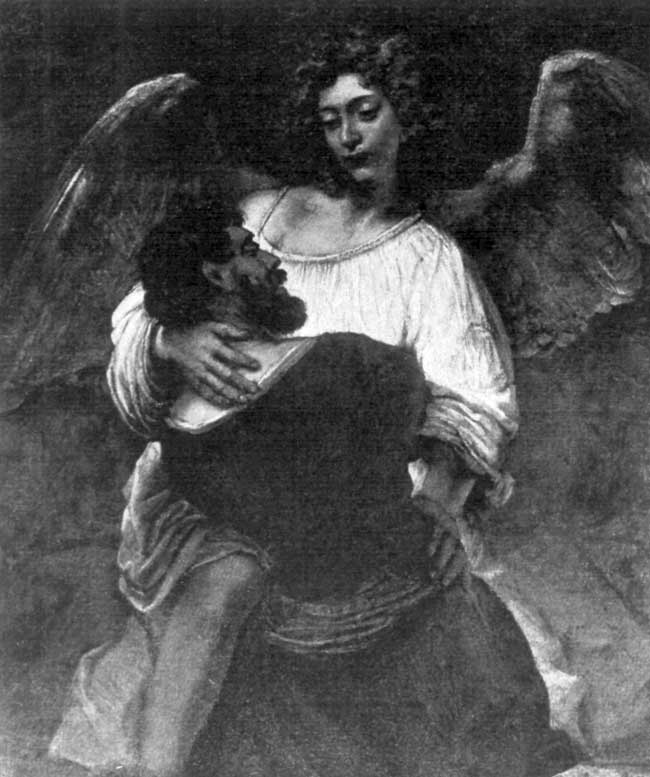
| Jacob wrestling with angel by Rembandt |
Can I remind you that thepeople of God were named Israel, by God after Jacob’s sleepless night of wrestling with the angel of God (or withGod)? After that match Jacob is called ISRAEL – and the name Israel means “onewho wrestles with God”, or “one who is straight, direct with God.”
The people of God wrestlewith him, struggle with him, and are straight and direct with him. This line ofthought suggests that we are not called to be mildly submissive to God, butthat God actually wants us to struggle with him, be direct with him, and begrown up with him. He wants us to get to grips with him.
This straightness anddirectness is reflected in the prayer of the People of God – which might aswell start with “I want to be straight with you God”, in a spirit of challenge. Our reading from Exodus showsMoses engaged in this sort of conversation which consists of challengingdemands.
We are told that “the Lordused to speak to Moses face to face, as one speaks to a friend.” In our readingwe have the privilege of overhearing that conversation in which Moses isnegotiating with God.
We may take it for grantedthat God answers prayer – but in this passage we have the foundation of thatfaith which Scripture wants us to take for granted.
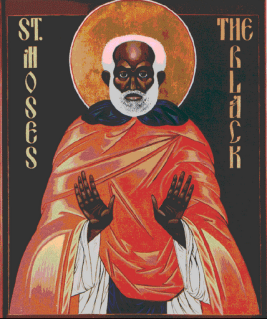 |
| Black Moses |
Speaking face to face, as onespeaks with a friend, God hears Moses’ prayer and answers it in the mostpositive way. He doesn’t just answer Moses’ prayer, but gives more than Mosesdares even to imagine – and it isintended that we get used to that, and take it for granted, so that we may toowith trust let God get to grips with us so that he can know our mind and whatis on our heart.
Thebackground to Moses’ demands is that God had told him that he wouldn’t go withthem to the Promised Land because he was so angry with the people for breakingthe agreement that they had.
“Go up to a land flowing with milk andhoney; but I will not go up among you, or I would consume you on the way, foryou are a stiff-necked people.” (Exodus 33:3).
Mosesinsists that God must accompany his people. He recognizes that the relationshipwith God is more important than the real estate of the Promised Land.
Theanswers to Moses’s prayer in these chapters of Exodus are outrageouslygenerous. He is prepared to start again and offers new tablets of commandmentsto replace the agreement and commandment that the people had broken.
Mosesand the Lord stood together on Mount Sinai – as friends so that Mosesunderstands just how God is going to fulfill his part of the bargain, hispromise to his people.
Thisis how God summarized the characteristics of his behavior with his peopleduring that conversation with Moses:
The Lord passed before him, andproclaimed, “The Lord, the Lord, a God merciful and gracious, slow toanger, and abounding in steadfast love and faithfulness, keeping steadfast lovefor the thousandth generation, forgiving iniquity and transgression and sin,yet by no means clearing the guilty, but visiting the iniquity of the parentsupon the children, and the children’s children, to the third and fourthgeneration.” (34:5-7).
Whilethere is mention of punishment the emphasis is on God’s forgiving love. Theguilty aren’t cleared, but the consequences of their guilt only reach to thethird and fourth generation, while steadfast love reaches to the thousandthgeneration – in other words – forever. This is how God is going to be forever:merciful and gracious, slow to anger, abounding in steadfast love andfaithfulness, keeping steadfast love to the thousandth generation.
We have to remember howdifferently God is promising to behave. He had been so angry with his people(and justly so, according to the text) – but now, in response to the demands of his people, he isgoing to be so slow to anger. In response to one of us humans, God changes hismind about his behaviour. In future his behaviour is going to be governed bysteadfast love and faithfulness.
In the section of the storywhich we read this morning we have the summary of God’s response to Moses. “Mypresence will go with you, and I will give you rest.”
All of us can find rest inthe knowledge of the manner of God’s promised presence, particularly when thatpresence is governed by steadfast love and faithfulness. This is how God iswith us. We don’t need to worry that he is any different. We can trust in hisforgiving love. We don’t need to be afraid – the Lord is here, unconditionally.
Moses makes one request toGod that God does not agree to. Moseswants to see God face to face. God’s response: “You cannot see my face; for noone shall see my face and live.” (33:20)
Instead, we have a ratherpuzzling response.
“Thereis a place by me where you shall stand on the rock; and while my glory passesby I will put you in a cleft of the rock, and I will cover you with my handuntil I have passed by; then I will take away my hand, and you shall see myback.”
 Seeing the back of God israther strange. Most people see this as “the WAKE of God” – just as we see theripples and waves in the wake of a boat, so we are given sight of the effectsof God’s love. Seeing the back of God is seeing where God is and has been.
So far, I have mentioned onlyhow God is governing his behaviour in covenant with his people. I haven’t mentionedwhat he promises to do. He said “before all your people I will perform marvels,such as not have been performed in all the earth or in any nation. (34:10).
Seeing the back of God isseeing the wake of marvels, seeing the work of God. And the work of God ismending the broken – the broken in this case, being the very heart of therelationship between God and his people.
Seeing the wake of God isseeing where God is going. Seeing the wake of God is being able to follow hiswork of mending. Seeing the wake of God is being able to follow him and joiningin his most marvellous work of remaking broken relationships, and SHALOM.
Even in this way, Godresponded to Moses request, but gave him, once again, more than he could everdream of. Which is better? To see God face to face, or to be able to followhim, in his wake, and love him for all his ways?


![saint paul's [1]](https://i0.wp.com/farm7.static.flickr.com/6160/6164379130_5278045f6c.jpg)