A Call to Worship and Defiance

A sermon for Trinity Sunday.

I love preaching that brings Scripture to life and that brings Scripture back to life, and I hope you do too. I begin this way as a reminder that when we open scripture together we are not just reading words from the past; we are bringing it back to life. What matters today is what happens to us when we worship God.

I take us back to the words of Mary, and the words Jesus would have heard her sing, and the song which has become a heritage track for Christians down the ages: 

My soul does magnify the Lord, and my spirit rejoices in God my Saviour,
for he has seen the lowliness of his handmaiden.
He that is mighty has magnified me and holy is his name.
He has shown strength with his arm, scattering the proud in the imagination of their hearts.
He has put down the mighty from their seat and has lifted up the humble and meek.
He has filled the hungry with good things and sent the rich away empty.

When we worship, we join Mary – and every other worshipper – in magnifying the Lord, until the name of God takes on a rich texture full of the meaning of life.

There are those who take the name of God in vain—using it without meaning, without reverence, without love. “Jesus Christ” is what they sday when they hit their thumb with the hammer. “God Almighty” – but not to worship, only to swear.

But when we magnify the name of God in worship, we are not just saying it louder—we are seeing it deeper. And what comes into view is the mystery at the heart of God: not a solitary ruler, but a communion of persons—Father, Son, and Holy Spirit.

When we worship God, we magnify God until we see God in three persons: Father, Son and Holy Spirit, perfectly united in love and purpose – a community of love giving everything for the sake of the world. —a community revealing the nature of relationships and the purpose of love and being alive for others.

What the magnification reveals to the worshipper remains hidden to those who never stop to magnify: the relational depth of God, the joy of divine communion, the living mystery of Father, Son, and Spirit, woven into the very fabric of creation.

When we join this worshiping community we join in this magnifying – seeing more, knowing deeper, loving wider.
We don’t change the size of God but through magnifying we begin to see God in the smallest things: in the still, small voice of calm; in the broken bread; in the least, the last, the lost.

The magnification of the Lord is an act of defiance.

When we magnify the Lord, when we consider the heavens, the work of his fingers, when we realise that we are the ones sought after by God, when we know our place in the created order – no more than a little lower than the angels, then we realise our responsibility for all creatures: animals, birds, fish and the very state of our oceans.

We are responsible for the state of things.
And when things fall apart, it’s not because God has forgotten us- but because we have forgotten who we are.
Made a little lower than the angels, yes – but crowned with glory and honour, and called to care.

There is a call to worship, to give worth to God, to magnify the Lord.
It is a call to wake ourselves to the beauty of a God who is Father, Son and Spirit, Creator, Wisdom and Breath of life.

Worship is a defiance of our worst selves and a remembrance of our true vocation: the call of God which crowns us with glory and honour and calls us beloved.

And it is an act of defiance against those who disrupt and spoil the very nature of human being, being human – those who abuse and neglect their neighbour and their responsibility for all that God has made.

Our worship is defiance.
According to the Psalmist, even the praise that comes from the mouths of babes at the breast becomes part of the stronghold of God –
the strong hold of God on the world – against the enemy and the forces of chaos and destruction.

And our worship is God’s creation.
Our worship would be empty, foolish and mis-directed were it not for the fact of God’s majesty – if not for the fact that there is something – Someone – worthy of magnification. Our worship is a consequence of the worth of God, when we magnify the Lord.

That’s Psalm 8: awe and vocation, majesty and meaning.

But now we listen for another voice—one that calls not from the stars, but from the street where the paths meet.
In Proverbs 8, Wisdom raises her voice.
She calls out at the crossroads, beside the gates, where life happens. And her voice is not new.

She was there from the beginning—before the mountains were shaped, before the depth of the oceans was established.

Wisdom is the voice of God’s delight—
the artisan at the Creator’s side, rejoicing always, delighting in the world, delighting in us.

Christians have long heard here the echo of the Son, the Word through whom all things were made.
And the Spirit – Hovering, present, giving breath.

This is the dance of Proverbs 8: not a cold blueprint for the universe, but a joyful choreography of divine relationship.
This is Trinity: not abstract doctrine, but the lived heartbeat of God – Creator, Word, and Breath in motion, in joy, in love.

Wisdom’s call is a call to worship.
This has always been her call, from the very beginning, when the world came to be – because as soon as the world came to be, there was the need to defy our worst selves, to resist the enemies of God,
and to magnify God until we see God –
not as remote, above the heavens, pie in the sky –
but as here and now, a stronghold of love, poured out from the whole being of God.

And so, like Mary,
our souls magnify the Lord.
Not because we make God larger,
but because in worship, we finally see.

Here Am I: Embracing God’s Call in Worship

Worship fires us. Worship hires us. This is what we see at the heart of our two readings today. (Isaiah 6:1-8 and Luke 5:1-11). This is a sermon for the 4th Sunday before Lent for a small church “in vacancy”.

The poetry of Mary Oliver is full of worship. Here are some of her lines:

Poems are not words, after all,
but fires for the cold,
ropes let down to the lost,
something as necessary as bread
in the pockets of the hungry.

Poems are not words, but fires for the cold, ropes let down to the lost, something as necessary as food in the pockets of the hungry.

There is poetry in the heart of worship – fires for the cold, ropes let down to the lost. We repeat these lines of poetry in the heart of our worship. We call it the Sanctus. The poetry goes along these two lines:

Holy, holy, holy is the Lord Almighty,
the whole earth is full of his glory.

This is the song of the seraphim overheard by the prophet Isaiah in his vision of heaven when he was transported in worship. They are words which reverberate in our own worship. Holy, holy, holy is the Lord Almighty. The whole earth is full of his glory. This has become our song too.

In Mary Oliver’s words, they are fires for the cold, ropes let down to the lost. Holy, holy, holy is the Lord Almighty; the earth is full of his glory. This is the song of those Isaiah sees around the throne – the song of the seraphim. 

Seraphim are the fiery ones. That is the meaning of seraphim. Their words are fires for the cold, ropes let down to the lost. They are ropes we hang onto as we join Isaiah as he is transported in worship.

The whole earth is full of his glory. This is the faith of the heavenly host. It doesn’t mean that everything is hunky dory. Isaiah knows only too well his own lies and the lies of those around him. I am a man of unclean lips, and I live among a people of unclean lips. And that hasn’t changed over the centuries, has it? We say one thing and mean another. We mislead and are misled. Truth is distorted to our own ends. We, too, are a people of unclean lips living among a people of unclean lips.

In our gospel reading Simon Peter is transported to a similar sense of wonder and worship. Luke paints the scene well. Jesus is on the edge of the lake, with people on the edge. 

Crowds are all around him. The only space he could find was by getting into the boat of one of the fishermen, one whose life was all at sea, a landless labourer on the lowest level of Roman occupations pushed to the edge by the taxes they had to pay for the right to fish and the right to sell their fish. Jesus put himself in the same boat as them.

Jesus told Simon Peter to put out a little from the shore – and there Jesus sat and taught the crowds on the shore. (Interestingly, he would have been on a lower lever to those he was teaching.)

Jesus then told Simon Peter to “put out into deep water, and there let down the nets for a catch”. They were astonished by how much they caught because they had been fishing all night and had caught nothing.

To deep water, far from the safe haven where everything is smooth sailing is where Jesus led Simon Peter, to where life is desperate, dangerous and difficult, the place we’re afraid to go to – and it was there that Simon Peter saw the glory of the Lord in the miraculous catch which would mean that he and his partners had something to take to market.

Both Simon Peter and Isaiah are gifted a vision of the glory of the Lord that fills the earth. Simon Peter’s reaction is similar to Isaiah’s. “Go away from me, Lord; I am a sinful man.” Jesus answers as if to calm the storm arising in Simon Peter. “Don’t be afraid.” he tells Simon Peter. “From now on you will fish for people.” And from that moment they did, pulling their boats onto the shore. They left everything and followed Jesus.

For Isaiah it had been a burning coal from one of the fiery ones to his unclean lips which took away his guilt and opened his mouth to the Lord’s question, “Whom shall I send? And who will go for us?” with his own words, “Here am I. Send me!”

Both recruits, Isaiah and Simon Peter were recruited in worship and their sense of the glory of the Lord that fills the whole earth. Neither recruit thought themselves worthy. One was a man of unclean lips, the other “a sinful man”.  Neither was a strong candidate, neither had anything they needed to prove and neither was recruited on merit. Once again we see the rule of the kingdom of God which starts with the last and the least in the building of that kingdom – the very opposite to the general rules of every other kingdom.

And here are we. Here are we, caught up in worship, sharing the sense of God’s glory in spite of our unworthiness, clinging to the songlines from the heart of heaven through the amazing grace of God. Lines let down to the lost, as necessary as bread in the pockets of the hungry.

Holy, holy, holy is the Lord Almighty,
the whole earth is full of his glory.

And here we are. Here we are in what we call “a vacancy” waiting for someone who knows the earth is full of God’s glory to say to the Bishop “here am I, send me”, someone who will leave everything to follow Jesus to the Bridges Group.

And here we are. Here we are – possibly tiring in waiting. It is, after all, getting to be a long vacancy. Let us not lose heart. Our worship becomes our encouragement however deep the water in which we find ourselves. Let the live coal touch our lips and be the fire for our cold hearts so that we don’t become prophets of doom.

Even in the waiting, God’s glory is at work. It may seem like there is no answer, but His glory fills the earth, and He is already moving in ways we can’t always see.

Here we are, worshipping through the amazing grace of God in sight of the glory which fills the earth. Our worship opens our minds, our hearts and our mouths. Our worship prepares our next step beyond our unworthiness

Our worship calls us back to God’s glory. How shall we respond to that call? Is ours a “yes” to God, or a “no” to God? Peter typifies us. His call reminds us that God is always at work in the deep waters, in the quiet moments, in the challenging seasons preparing his people to fish for people by reaching out in love and serving in faith. How shall we respond? What is the “here am I” that God is waiting to hear from our heart.

Here we are.
Here we are,
a few of us,
too few of us
if we keep saying “No”,
enough of us
if our response is “Yes”,
all of us
growing older by the day.
Here we are
looking round for help.
Who’ll do this,
who’ll do that?

It’s easy to lose heart and to say “nobody will”. That is the language of doomsayers and the sound of bitter experience. It’s a self-fulfilling prophecy and it’s the sound of people speaking for everybody. It’s not the sound of hope and not the sound of those who believe God’s glory is at work throughout the world in ways we can’t always see.

Here we are, without churchwardens. “Nobody wants to be churchwarden”. That is doomsaying and is without hope. When we say “Nobody wants to be ….” we are speaking for everybody. We can’t speak for everybody, only for ourselves.  Somebody will be churchwarden. It’s just a case of waiting for one or two people to be caught up in the glory that fills the earth – for their “yes” to the call they hear in their sense of worship, and for their reassurance that their recruitment is not about their merit but about God’s love and glory.

Even in the waiting, God’s glory is at work. It may seem like there is no answer, but His glory fills the earth, and He is already moving in ways we can’t always see.

How will each of us respond to the call of the moment when we realise Holy, holy, holy is the Lord almighty and the whole earth is full of his glory. The call will be different for each of us. 

What is the “Here am I” that God is waiting to hear from your heart?

Who do we see on our way to worship? A reflection on Acts 3:1-10

This is part of a series of reflections inspired by readings from the Book of Acts. This time the focus is on a scene at the Beautiful Gate of the Temple in Acts 3:1-10. The text is included at the end of the reflection. You might want to read that first because, after all, this is just a reflection. This is the part of the passage where I started:

One day Peter and John were going up to the temple at the hour of prayer … And a man lame from birth was being carried in. People would lay him at the gate of the temple called the Beautiful Gate so that he could ask for alms from those entering the temple.

And this is the question my reading left me with:

Who do we see on our way to worship? Who don’t we see?

The beggar isn’t named but I want to find a name for him. He is sitting at the Beautiful Gate and has his eye on all those going into worship, including Peter and John. They recognise him though they might not already know him. They see him as he looks at them.

Who do we see on our way to worship? Who don’t we see?

Willie James Jennings, in Acts, writes “At the doorway to worship are those whose very presence should discipline praise and guide hope. Before praises go up to God the poor and lame, the sick and pained must be seen.” (p41). Luke has already given his readers the story of the Good Samaritan featuring the pious hypocrites who fail to notice the needs of the wounded in the gutter.

Who do we see on our way to worship? Who don’t we see?

There is a lot of seeing in this passage. The lame man “saw Peter and John”, Peter “looked intently at him” and said “look at us”. Those in need need to be seen. So many in need remain invisible in corridors of power – being seen by those on their way to worship is their hope.

Who do we see on our way to worship? Who don’t we see?

The lame man, the beggar, probably didn’t know that he too was on his way to worship. Peter and John tell him to look at them. And Peter said to him: “I have no silver or gold, but what I have I give you; in the name of Jesus Christ of Nazareth, stand up and walk”. (Acts 3:6). His feet and ankles became strong and he was able to jump up, stand and walk, entering the temple with Peter and John, “walking and leaping and praising God”. (Acts 3:8)

Who do we see on our way to worship? Who don’t we see?

Jesus sees himself in the prisoner, the hungry, the stranger and the sick. In a parable the king curses those who gave him no food, no welcome, no clothing and no companionship. Those guilty ask the king, “When was it that we saw you hungry or thirsty or a stranger or naked or sick or in prison and did not take care of you?” He answers them: “Truly I tell you, just as you did not do it to the least of these, you did not do it to me.” (Matthew 25:31-46). Do we see Jesus in and with the vulnerable or do we overlook them?

Who do we see on our way to worship? Who don’t we see?

Perhaps we see Israel. From the beginning Israel walked with a limp. It might not be stretching imagination too far to see here those who inherited the name Israel from the patriarch Jacob who was called Israel because he wrestled with God. Israel is the Hebrew name that stands for those who wrestle with God. Israelites are bound by the injury and blessing of that wrestling and struggle. Jacob’s hip was put out of joint and he always limped after that. (Genesis 32:24-30). Is this who Peter and John saw? Perhaps significantly, we’re told that the man is more than 40 years old (Acts 4:22). 40 years is always the length of time that Israel waits. Did Peter and John see this man as Israel, limping and lame from the start, and now standing and leaping and praising God? If this is Israel, is this the Jewish people so often overlooked by Christians on their way to worship?

Who do we see on our way to worship? Who don’t we see?

Or, is this the church (or us), lying there lame in our excuses for mission and our attempts at Jesus begging for the power of the Holy Spirit.

Who do we see on our way to worship? Who don’t we see?

I said I wanted to find a name for the man born lame – we have a choice: he is the man born lame, he is Christ, he is Israel, he is church, he is us – all needing to be seen on the way to worship. Whatever his name, he is one who has been lame from the beginning and he is vulnerable. He begs to be seen and he begs to be seen by us, even on our way to worship. We need to make peace with him and take him with us in our hearts and imagination into our worship. If we don’t then our worship is hollow, hypocritical and unacceptable to God.

Who do we see on our way to worship? Who don’t we see?

Here’s the passage:

Acts 3:1-10
One day Peter and John were going up to the temple at the hour of prayer at three o’clock in the afternoon. And a man lame from birth was being carried in. People would lay him at the gate of the temple called the Beautiful Gate so that he could ask for alms from those entering the temple. When he saw Peter and John about to go into the temple, he asked them for alms. Peter looked intently at him, as did John, and said, “Look at us.” And he fixed his attention on them, expecting to receive something from them. Peter said, ” I have no silver or gold, but what I have I give you; in the name of Jesus Christ of Nazareth, stand up and walk.” And he took him by the right hand and raised him up, and immediately his feet and ankles were made strong. Jumping up, he stood and began to walk, and he entered the temple with them, walking and leaping and praising God. All the people saw him walking and praising God, and they recognised him as the one who used to sit and ask for alms at the Beautiful Gate of the temple, and they were filled with wonder and astonishment at what had happened to him.

New Revised Standard Version, Updated Edition. Copyright © 2021 National Council of Churches of Christ in the United States of America.

>Visual Theology

>

Visual theology, faithful images is Dave Perry’s fascinating blog.  He prefaces his blog with a quote from Marcel Proust:

The real voyage of discovery consists not in seeking new landscapes but in having new eyes.

He posts a weekly image, linked to the lectionary readings for the week. This one is his offering for “bespoke tailoring for an outspken life”. Read more

>Finding Happiness

>It was good to hear Christopher Jamison on R4 this morning. He is Abbot of Worth Abbey and has written a book called Finding Happiness.
He says definitions of what happiness is are hard to find, but most boil down to being about “feeling good”. Life isn’t like that though because we have good days and bad days – as well as sickness and suffering. He made the point that happiness is about knowing good and doing good.
He also referred to good worship being an experience of the imagination of God.

>Sexuality and lust

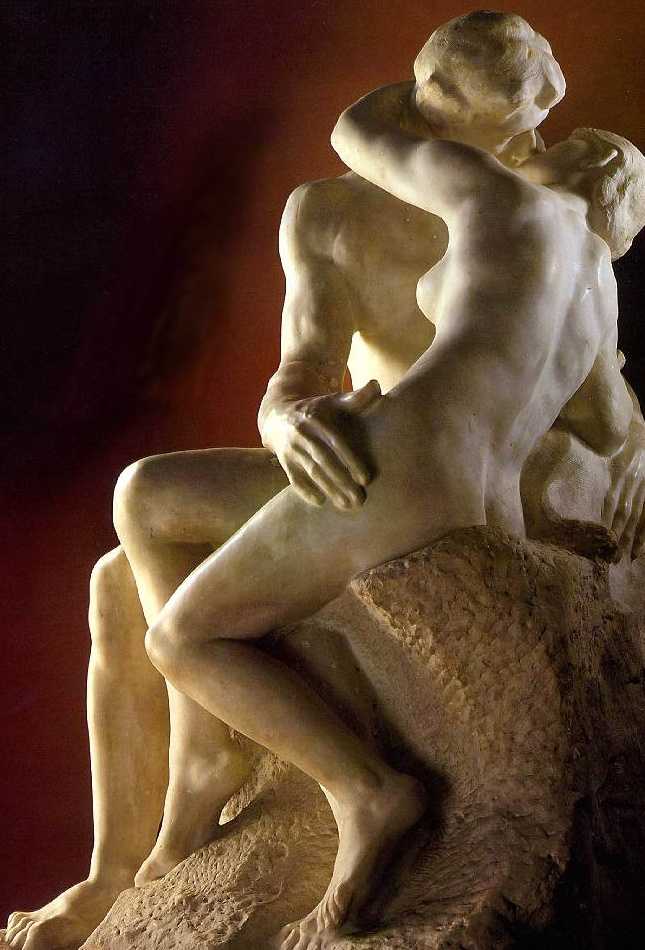
> “This is my body which is given for you.” Any Christian worshipper will recognise these words of Jesus by which he declares his love for the world because they are central to the Christian gathering. We meet round the table and celebrate that Jesus gave his body for us. The words are repeated by lovers who give themselves to one another. They could be words used in the marriage service – that would hot things up well wouldn’t it? Tim Radcliffe – in What is the Point of Being a Christian? – underlines the importance of the body in love and sexuality, and in so doing manages to distinguish between love and lust, and between erotic and pornographic art. (Rodin’s kiss is lovely. It’s erotic and it’s good because both partners are lost in their mutual self-giving).

We give ourselves in love. With lust we make of the other an object of desire for our own pleasure. Often the focus of desire is one part of the body, so the object of our desire is dismembered before our very eyes. Interestingly Jesus says “If your right eye causes you to sin, gouge it out and throw it away.” (Matt 5:29) presumably to help us to understand that if we dismember others we ought to dismember ourselves. Radcliffe refers to the Red Queen in Alice in Wonderland who wouldn’t let Alice eat the mutton to which she had been introduced. “It isn’t etiquette to eat anyone you’ve been introduced to.” she says.
The cure for lust is not chopping off our hand or plucking out our eye – and it’s good that very few have tested that theory – the first step, according to radcliife’s wise words “is not to abolish desire, but to restore it, liberate it, discover that it is for a person and not an object.”