Ordinations

28 Farbenfroh
Chester Cathedral was the setting for a remarkable ordination service yesterday. All ordination services are remarkable.

The service begins with a reminder that God “calls his people to follow Christ, and forms us into a royal priesthood … to declare the wonderful deeds of him who has called us out of darkness into his marvellous light.” That “royal priesthood” is the church. “To serve this royal priesthood, God has given particular ministries. Priests are ordained to lead God’s people in the offering of praise and the proclamation of the gospel. They share with the Bishop in the oversight of the church, delighting in its beauty and rejoicing in its well-being.”

The prayer of the people is that “in their vocation and ministry each may be an instrument of your love” and then particularly “the needful gifts of grace” should be given to those being ordained.

Their responsibilities are spelt out.

  • Priests are called “to be servants and shepherds among the people to whom they are sent.”
  • “With their Bishop and fellow ministers, they are to proclaim the word of the Lord and to watch for the signs of God’s new creation.”
  • They are to be “messengers, watchmen and stewards of the Lord”.
  • “They are to teach and admonish, to feed and provide for his family, to search for his children in the wilderness of this world’s temptations, and to guide them through its confusions.”
  • They are to call people to repentance and declare “in Christ’s name the absolution and forgiveness of their sins”
  • “With all God’s people, they are to tell the story of Gods love.”
  • “They are to baptise new disciples”
  • “They are to unfold the scriptures, to preach the word in season and out of season …”
  • “They are to preside at the Lord’s table and lead his people in worship …”
  • “They are to bless the people in God’s name”
  • “They are to resist evil, support the weak, defend the poor, and intercede for all in need.””
  • “They are to minister to the sick and prepare the dying for their death.”
  • “Guided by the Spirit, they are to discern and foster the gifts of all God’s people, that the whole Church may be built up in unity and faith.”

A tall order.

But they and the church have every confidence that they are able to do it. There is a “Will you?”, and a response “By the help of God, I will.” There is a clear understanding that “they cannot bear the weight of this calling in their own strength, but only by the grace and power of God.” And there is a commitment made by the church to continually pray for them, and to “uphold and encourage them in their ministry”. The church praises God for giving “his gifts abundantly, to equip your holy people for the gift of ministry” and prays “Renew them in holiness and given them wisdom and discipline … In union with their fellow servants in Christ, may they reconcile what is divided, heal what is wounded and restore what is lost.”

This follows a previous post for those being ordained

Simon Marsh has also blogged about the ordination.

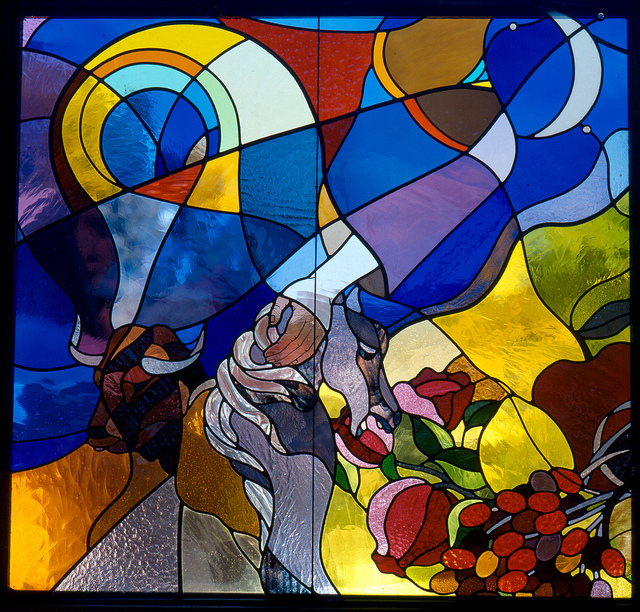
The photo is of the Creation Window in the Cathedral Refectory. The photo is by JuliaL49. The window was created by artist Ros Grimshaw. Its story is told here.


For those being ordained

Man on the beach head

I wanted to write a post for those who are being ordained at Chester Cathedral on Saturday. They are Avril Ravenscroft, Collette Jones, Grant Cohen, Heather Buckley, Heather Pang, Lorraine Reed, Nikki Eastwood, Patches Chabala, Paul Cumming, Rob Wardle, Sandra Langerhuizen, Stephen Callis, Steven Hildreth, Tim Watson and Trevor Legge. They will be preparing for this great event in God’s mission over the next few days. My own priesting was in Sheffield 38 years ago. I have to say that I am as enthralled today as I was then.

People are ordained as a response to vocation. This is a call for and in the church for the enabling of God’s mission. It is a call to the church that is heard within the church, and it is the church which tries to discern who is best to respond to that call and which then goes on to support and equip them. The discernment is concerned with whether the person has the gifts to minister to others given the needs of a situation in the capacity of an ordained minister or whether they are gifted for ministry in another form.

God’s call and his gifts are all God’s ministry to the world and his way of serving the needs of his creation. They are also God’s ministry to us personally. Ordination focuses on God’s ministry in and to his church, and on his ministry to and through us. The joy in this realisation is, for me, personified in the great laughter of Desmond Tutu.

Sadly, for all of us, the pressures and responsibilities can be overwhelming. Worldly pressures, anxiety and fear can be allowed to get the better of us. I joined this morning’s prayer of the church and read what Jesus said to his disciples. “Don’t worry about your life.” (Luke 12:22) I then joined the church’s response based on Psalm 73. “Lord, you will guide me with your counsel and afterwards receive me with glory. For I am always with you; you hold me by my right hand.” (That has to be the left hand for those who are left handed).

This hand in hand counselling reminded me of the consultancy model painted by Charles Margerison as “arm in arm consulting”. There is considerable responsibility in ministry, but that responsibility is not given to us to overwhelm us or weigh us down. It is given in love and for love. Those with heavy burdens are invited to yoke themselves to Christ to make light work, to lighten heavy hands and hearts and to be blessed and blessing. “Take my yoke upon you and learn from me, for I am gentle and humble in heart, and you will find rest for your souls. For my yoke is easy, and my burden is light.” (Matthew 11:28-30). (Yoke and yoga have the same Sanskrit root denoting union).

Jan Richardson’s If the Yoke Fits would make a wonderful design for stoles or chasubles. The traditional yoked chasuble is a visual reminder of the light work of ordained ministry and God’s ministry to his ministers, ordained and lay.

Here’s the link to the Service of Ordination.

The photo is of one of Gormley’s figures in Another Place on Crosby beach. It is by Lou Murphy.

In-built learning dynamic of church – or not

This quote from Roger Walton about Christian education landed on my desk today. I thought it was worth sharing because it says well that the organisation, system and church of which we are members is already a learning and teaching organisation before any training courses are ever thought of. We are learning all the time. We flourish and engage if the organisation is working well, but we shy away or shrink in an organisation that is not working well at a relational level. Some estimates suggest that as much as 80% happens informally, and that only 20% occurs through formal training. Canadian researcher Allen Tough uses the idea of the iceberg as a metaphor about learning. The bit above the surface is the formal training situation in which some learning happens, but the rest is under the surface. “You just don’t see it. You could forget it’s there unless you keep reminding yourself that it’s there.”

“Stanley Hauerwas once wrote: ‘The church does not “do” religious education…..The church is a form of education.’  Because it is a group of people in relationship with God through Christ, because it tells a story about how the world is, based on the life, death and resurrection of Jesus, because it is engaged in living together as a radical new and alternative community, it has a built-in pedagogical dynamic…….
This is not an excuse for not planning or running programmes or courses…..It is important, however, to make this broader claim about Christian education before turning to specific suggestions and ideas or we may miss the most critical aspect of Christian education.  Before any Alpha course is put on, small group is formed, or Lent programme devised, Christian education is operating in a church, either attracting, forming and transforming people or leaving them untouched, unengaged or even driven away…
In its practice of gathering together for worship and ordering its life, in its people and their relationships with each other, in its simple routines for sharing bread and wine, welcoming newcomers or using its financial resources, in the quality of spirituality and its expressions of compassion, forgiveness and delight, it offers a potent learning environment.”
Roger Walton, The Reflective Disciple (2009, Epworth) pp158 – 9

Resilience and efficiency

ImageWhen I had a study I wished I worked in an office. Now I work in an office and I wish I had a study. (Interesting that I use the verb “work” only in relation to the “office”). I was shy about the “study” because I didn’t think it had the street cred of the offfice. Like many of my peers I referred to my study as the office. Now I find myself fighting for the place of the study in ministry which seems to have less time for it.

In a recent blog post, Sam Charles Norton has some wise words as he contrasts efficient and resilient systems. An efficient system “is one in which each resource is being utilised to the greatest possible extent.” We love efficiency and worship its icon of the (upwardly mobile) graph which is the prerequisite of any office wall. Norton suggests that the Church of England is hell-bent (my words) on a drive towards efficiency which is (mis)-guided by a spirituality “which is based upon a fear that all that seems to be going wrong will continue to go wrong.” According to Norton, we have forgotten what it means to believe in God. “The Church of England will only be saved by those who are not consumed with conviction about how to save it, and who sit lightly at the prospect of the Church of England not being saved – simply because they are utterly committed to the sovereignty of the living God, and they trust in his provision, rather than our own choices.”

A “resilient system” is what the Church of England has been as it “has emphasised the importance of the local and the different, the queer and the inefficient”. Resilient systems have resources within them which enable them to withstand shocks and trauma.  These “unexploited” resources aren’t built or stored in offices. That would be too inefficient. Many of our offices stand empty with their enterprise blown away by the latest economic shocks to the system. Offices are only open for business and efficiency. They are closed to resilience and their house is blown down with but one puff.

“Happy are those who delight in the law of the Lord, and on his law they meditate day and night. They are like trees planted by streams of water, which yield their fruit in its season, and their leaves do not wither. In all they do, they prosper.” (Psalm 1).

Results, relegation and relationships

The football season is virtually over, relegation issues are settled and just a few teams have any further stake in the rest of the season as they fight for promotion through the play-offs. This wool gathering of a northern dean has some useful insights into the mind of the footballing world, particularly exploring the feelings of players who have failed to perform to expectation and feel the responsibility for relegation.

At the same time, our Year 6 children are sitting their tests and are expected to produce the results that, as they say, won’t let themselves down , their parents down, their teachers down, their schools down and everything else down. Are “results” an  obsession of our age? Is the fascination for measurement and standardisation something that has grown through the industrial revolution and our increasing capacity for measurement?

Results measure success and failure. Kenny Dalglish has discovered that not getting enough of them (wins) while managing Liverpool FC is fatal. Results are the stuff of competition, with the result that they set team against team and performer against performer. In battle there is only one winner and many losers, and, therefore, it is best to avoid that result by finding peace. Some are driven by results, but most of us, most of the time work without seeing results for our effort. How do we keep going?

Thanks to Meg Wheatley (Finding our Way: leadership for an Uncertain Time) I have these thoughts to challenge our results culture: the first is from Vaclav Havel, and the other is from a letter written by Thomas Merton to peace activist Jim Forest.

Hope is a dimension of the soul … an orientation of the spirit, an orientation of the heart. It transcends the world that is immediately experienced and is anchored somewhere beyond its horizons … It is not the conviction that something will turn out well, but the certainty that something makes sense regardless of how it turns out.

Do not depend on the hope of results … You may have to face the fact that your work will be apparently worthless and even achieve no result at all, if not perhaps results opposite to what you expect. As you get used to this idea, you start more and more to concentrate not on the results, but on the value, the rightness,the truth of the work itself … You gradually struggle less and less for an idea and more and more for specific people … In the end, it is the reality of personal relationship that saves everything.

Wheatley’s own comment is that hope and fear are inescapable partners. “Any time we hope for a certain outcome, and work hard to make it happen, then we also introduce fear – fear of failing, fear of loss.” She says that we can live beyond hope and fear, and that all we need is each other.

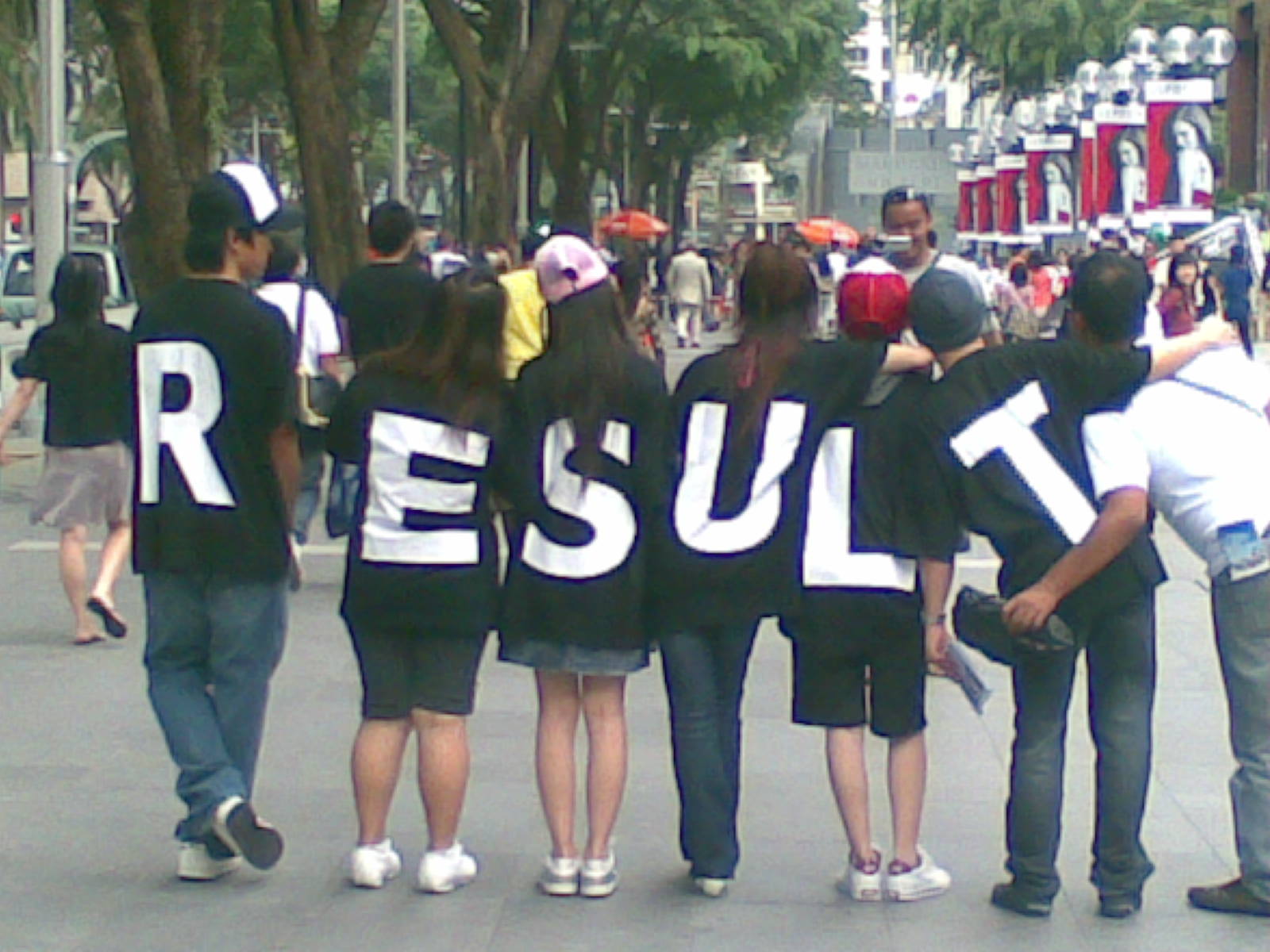
I couldn’t resist including the photo I found here. I have asked for permission to use it.

Overcommitment

To allow oneself to be carried away by a multitude of conflicting concerns, to surrender to too many demands, to commit oneself to too many projects, to want to help everyone in everything is to succumb to violence. More than that, it is cooperation in violence. The frenzy of the activist neutralises his work for peace. It destroys his own inner capacity for peace. It destroys the fruitfulness of his own work, because it kills the root of inner wisdom which makes work fruitful.

Thomas Merton in Confessions of a Guilty Bystander

Changing the order of things

It is a privilege to be supporting newly ordained ministers: a group of people in short-term posts on their way to taking on posts of greater responsibility. They are a people in transition who manage remarkably well to avoid being anxious about what might or might not happen to them. They are going through the appointment process, which is also, of course, often a disappointment process. The process of appointment and disappointment is a confusing one. There is not always an apparent justice.

I have always been intrigued by the element of surprise in (dis)appointments and the more exciting appointments I have been involved with have had an element of surprise. Ruth was overwhelmingly surprised when she was appointed churchwarden. Jack was surprised when he wasn’t, though to his credit, he came to terms with his disappointment with great grace.

Ordinarily, there should be justice in appointments, and succession planning should follow well understood procedures. But there needs to be processes of disruption. I have been reading the story of Jacob’s blessing of Joseph’s two sons Manasseh and Ephraim (Genesis 48). They were born in that order and should, by rights, have been blessed in that order. Jacob himself “stole” his father’s blessing from his older twin Esau. Of Jacob’s twelve sons, Joseph was the last in line, inspiring murderous resentment amongst his brothers. (The stained glass pictured above shows Joseph’s blessing). Disappointments abound in the Bible. The choice of David by the prophet Samuel was a surprise to David’s father. David was not the first-born, but the last-born – and still so young. Each of his older brothers was presented to Samuel. Each was dis-appointed as Samuel turned the line of succession on its head (1 Samuel 16:1-13).

The New Testament takes up the theme. Everything is in the wrong order. Even the birth of Jesus is in the wrong place. The wise ones went for Jerusalem and finished up nine miles wide of the mark. (Matthew 2). Jesus, himself set the cat among the pigeons by describing the disappointment process. He said “The last will be first, and the first will be last” (Matthew 20:16) before being challenged by the Mum who claimed her two sons had the right to the best seats in the house (Matthew 20:20-24).

All these stories are a reminder that there has to be room for manoeuvre and that there have to be processes of disruption. Prayer before appointments is an invitation for the Holy Spirit to confirm or disrupt the natural order of things. Sometimes the order of things has to change if things are going to change. The story of Manasseh and Ephraim, (or is it Ephraim and Manasseh?) is a reminder of that. It represents the hope of a new order, in which those whose appointment comes as a surprise live for the sake of others and not for themselves. That is why the order is changed.

A new order is one in which all those who come last in things come first – a great disappointing for some.

The stained glass is by Maria Stolz of Renaissance Glassworks Howard Lake, MN 55349

Here is another post on the theme of disappointment and leadership.

Image rich

>I think it takes a particular mindset to respond to opportunities of the new media. I was pleased to read that Liverpool Diocese is “working to engage with the online community” and has a twitter account to prove it. My own mindset seems to make me hang back awhile till the case is proved.

I delayed getting my first PC – I couldn’t see the point until friend Richard Todd persuaded me and guided me so that ministry in Tarvin became revolutionised through the new media we could use. I too have now been dragged into Facebook and Twitter. I don’t know how it’s going to work, but I am getting a kick out of getting messages from John Sentamu and Ed Milliband!

I used to search for images for hours when I was a young curate in Sheffield Manor. I wanted to make things presentable to youngsters who were preparing for Confirmation. There were no images in books. Books were text-books. All that was possible was using a stylus pen to create line drawings on a stencil for the old Roneo copier. The drawings had to be so simple because otherwise you ripped the skin of the stencil and it was back to square 1. (I spent many a Saturday night with duplicator ink up to my elbows!) It was a major technological breakthrough when electric duplicators were introduced – a lot easier on the arm, though jamming became the new issue.

Now we are image rich – particularly with digital cameras. We no longer count the cost of taking photos. The challenge now is how to manage them all. One person using images to amazing effect is Dave Perry through his Visual Theology blog. He is creating some stunning images to go with the lectionary. This is a real gift for preachers – and a wonderful new way for people to “read” and “hear” the sermon.

The art of conversation

>The words ‘sermon’ and ‘homily’ seem to get used interchangeably. I always thought that homilies get preached in Catholic churches or are sermons which aren’t long enough to be sermons. I have also always been rather wary of the power relationship between preacher and hearer and its patronising nature.

Timothy Radcliffe reminded me this morning (in ‘Why go to Church’) that the word ‘homily’ comes from a Greek word ‘homilein’ which means ‘to converse’. Aha! Inclusive language. Everyone converses, but not everyone preaches sermons (you have to be qualified for that!). “Conversation is surely the foundation of any society” writes Radcliffe. “It is by talking together that we overcome misunderstandings, receive and offer forgiveness, grow in sympathy and mutual understanding, take pleasure in each other’s company, and develop a shared language and memories.”

What if what we preach is ‘conversation’? It means ‘listening’ and ‘appreciation’ – by all parties. If conversation is something all of us do, then the Sunday homily should be enabling “the real preaching, the community’s conversations” so that Christian faith becomes embedded in the everyday conversation of our communities, the Word thereby becoming flesh and living among us.

Aha moments

From Friday Mailing:

From Ed Sanders (Richard Cooke says these are ‘ reflections on his practice as a university teacher. As well as being an outstanding NT scholar himself, Sanders has also produced a rich crop of graduate students – the quote below may show why!’)

“I think that the greatest moment in a teacher’s life is seeing a student have an “ah ha” moment by his or her own endeavor. The instructor’s clever or even memorable phrasing is worth much less. I began my career by overestimating students: I did not realize how much they needed repetition and the practice of describing texts and ideas in their own words. The more patient I was, and the harder I worked at getting them to see things for themselves—rather than offering my own glib solutions of difficulties—the better I was at teaching and the more rewarding I found the activity. The hardest thing to do—at which I often failed in my early years—is to find the students’ own level.”

The whole thing is at http://www.duke.edu/web/gradreligion/documents/GPRnewsfall2008.pdf.