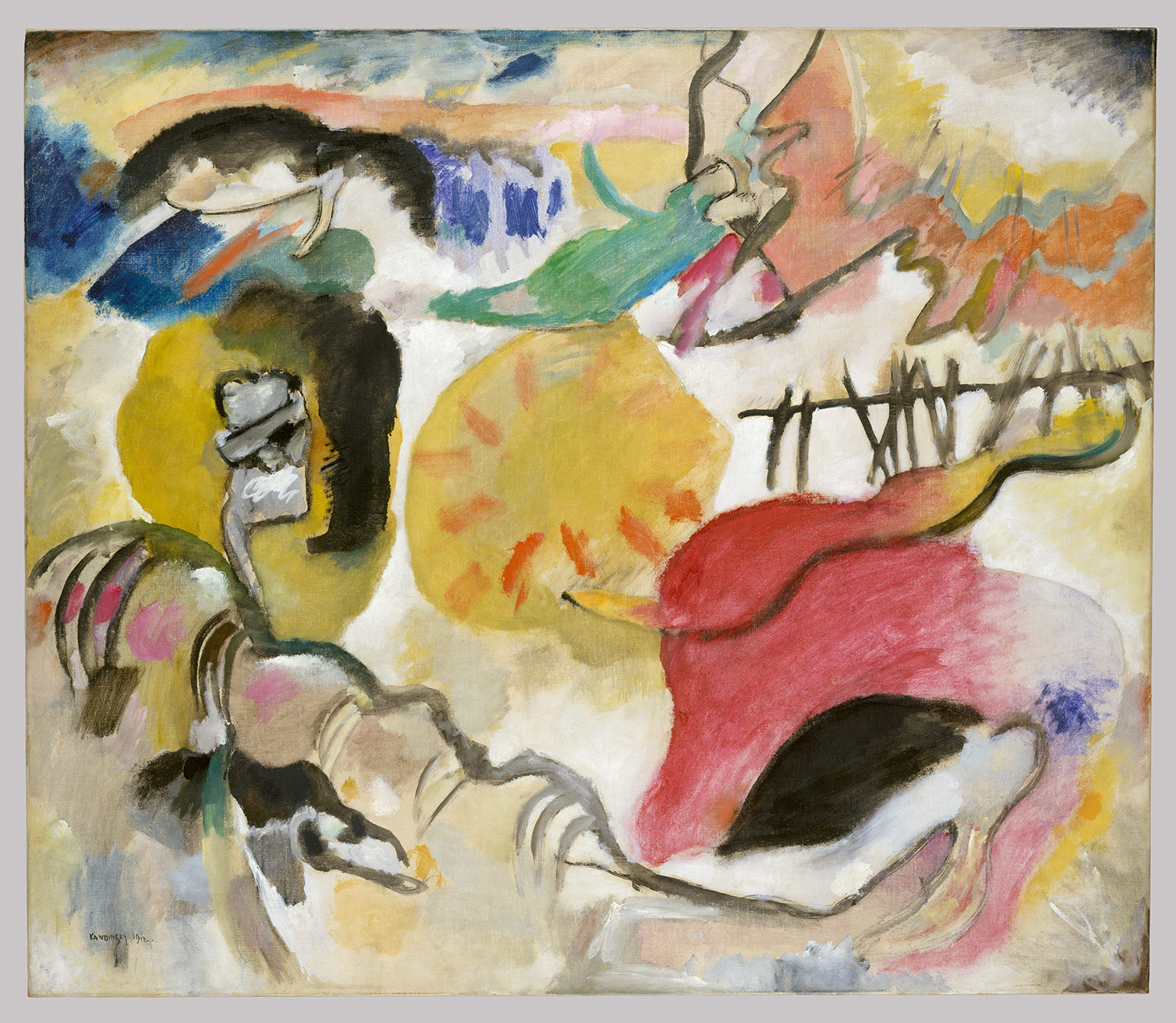
Pentecost

>Getting ready for Sunday one job is to prepare a weekly newsletter. We call it Network and we try to have a picture/photo as a focus for the Sunday. This one isn’t one we are using on Sunday, but it’s one that refreshed me. It’s called Pentecost by Chris Shreve. Pentecost is a great Jewish festival which has become the festival of the Holy Spirit for the Christian Church. John Pridmore writes in the Church Times, and referring to Pentecost and the Holy Spirit points out that fire, water and wind are all metaphors for the Holy Spirit, and that they are all things that flow.

Chris Shreve has captured this flow with the flame and the wind blowing the curtain – with the suggestion of dancing. Chris also captures the new creation of the Gospel with what reminds me of the stone rolled away from the tomb and the light, breath and energy of God bursting into the world. It’s a very dry picture though – unless that is a water pitcher, or a container of oil – another sign of the Holy Spirit and the gifts the Holy Spirit brings to the world.

Saint Patrick’s Day

>Good to meet friends Roddy Evans and Jim Lynn from Belfast on St Patrick’s Day, 10 years since the Good Friday Agreement. They have come over to take part in a series we have called Living Hope. Both have played their part in the peace process in Northern Ireland and seeing beyond revenge. They are both living hope. Roddy is Anglo-Irish and Jim is Roman Catholic, so I guess what was inspiring was not just their talks but their friendship which is based in their shared membership of the Clonard Bible Study group.
This prayer is supposed to be from St Patrick:
May the Strength of God guide us.
May the Power of God preserve us.
May the Wisdom of God instruct us.
May the Hand of God protect us.
May the Way of God direct us.
May the Shield of God defend us.
May the Angels of God guard us.- Against the snares of the evil one.
May Christ be with us!May Christ be before us!May Christ be in us,Christ be over all! May Thy Grace, Lord,Always be ours,This day, O Lord, and forevermore. Amen.

>Funny thing about prayer

>When I go to church to pray this is what I do:

I shift some books around, put waste paper in bin, rearrange furniture, sit down, stand up, fiddle.

Except if I am not on my own, when this is what I do:

read the psalms, read the Bible, pray for the peace of the world and those who I know who are in trouble.

When I jog, this is what I do:

entertain random thoughts which seem to rearrange my priorities and set my mind on higher things, and as if that wasn’t enough prayer, a “You lift them up, I put them down” prayer as the road rises up to beat me.

When I want to pray, what should I do?

Go for a run, I guess, or at least, when I go to church, give thanks for the others who help me to pray.

Let people be

> “The beginning of love is to let those we love be perfectly themselves, and not to twist them to fit our own image. Otherwise we love only the reflection of ourselves we find in them.”
~ Thomas Merton
The biggest temptation comes with our children. Their birth becomes even more miraculous when we realise how different they are from us. When we respond to questions about which parent they got this that or the other quality or characteristic from with “they didn’t get it from either of us” we are admitting our wonder at creation.
The myth of Narcissus illustrates the tragedy of self-love. Waterhouse’s painting (from the Walker Gallery) shows Narcissus helplessly in love with himself and totally oblivious of Echo’s desire.

Peace process

>

Bishop Alan draws attention to the procedures of the forthcoming Lambeth Conference.

“Indaba” is Zulu/ Xhosa thing — the IzinDuna come together to do mutual business in a way which enables each to be heard, and wisdom to emerge from the group. It’s rather like a monastic chapter. It’s radically different from either Institutionalism, where people pretend to agree to save public face, Imperialism, where Billy the Bully rules OK, or Fascism, where you leave your brain at the door and the Führer tells you what to do because he’s always right.Indaba is a noble ideal. It’s how the early Churches worked, often amidst bitter controversy, as every Patristics student is amazed to discover. Then, slowly, between the fourth and eleventh centuries, like formaldehyde, institutionalism and Roman imperialism seeped in. The reformation was a reaction to all that. Indaba is a gloriously messy concept. It annoys Anal Retentives, Bullies and Fascists, as well as lazy journos who can only understand punchups.It’s counterintuitive, but indaba, if you stick with it, raises spirits and offers hope to the world.

This reminds me of the padare tradition used during the World Council of Churches Assembly in Zimbabwe.
The Padare “is a style of dialogue and consultation which includes more rather than fewer people. It stresses the dignity and equality of all within the assembled company, and affirms unequivocally that, in the search for unity and understanding, the journey is as important as the destination, and the exploration and dialogue as vital as any decisions or conclusions.” The hallmarks of padare are equality, concensus and community.
The Dare is the place (as in Dar es Salaam?) where all participants became equals. There was never a rush to reach decisions, for that would have prevented the building of community.

Confessions of a Jogger

>Another crisp day for a run – like skating on ice. A bit greedy this morning, trying to run further than I could, and halfway round thinking what a long way there still is to go. That’s always dangerous. The thought comes with tiredness and the temptation is to up the pace and get it over with. Far better to take care with each step and to get there in the end. Who siad life’s a marathon?

The Last Word

>Sometimes we feel that people have to have the “last word” in an argument. It is so annoying! Sometimes I have to do presentations – and I apologise for all those occasions when I’ve appeared to want to have the “last word”. That’s the way it happened in my educational background – lecturers who seemed to have everything buttoned up. What they said really was “the last word”, and there was no chance of comeback or developing what had been presented. The impression given was that you had to go away and “learn your lesson”.

I would rather be giving a “first word” – something to set trains of thought going.

And that’s got me thinking about the first word and the last word. The first word is the Word by whom all things came into being – and the last word is also spoken by God. A word of triumph – “it is completed”. Kingdom come – on earth, just as in heaven. The first and the last – alpha and omega – but thanks be to God who allows us to get a word in edgeways, even if we do make a hell of a din.

Space – to fill or to create

> Do you fill a space or create a space?

I suspect Victorians loved spaces to be filled – if our church architecture is anything to go by. There’s no room to swing a cat let alone set it amongst pigeons. I wonder if that’s the reason. I wonder if it was a sort of control mechanism. If the space was filled with furniture there’s no room to move. If the space was filled with pews everyone is lined up – all neat and tidy. I wonder if this was a reflection of the mind games going on – that people had to believe and that minds were absolutely cluttered by what they were told to think and remember.
I wonder if that’s why there aren’t any cats in churches.
Post modernism has gone minimalist (has that got something to do with the atomic age?) and as we have explored space we have decided to make space. TV programmes focus on “decluttering our homes” which reminds me that is what I am supposed to be doing now, and architects talk about the significance of the space that surrounds an object. But. still many people insist on filling the space. Pages, diaries are there to be filled – when actually it is the white space of a page which highlights meaning and the days kept free which are the most refreshing.
Alan Eccleston – Communist priest serving in Darnall, Sheffield for many years – referred to the practice of the French philosopher Charles Peguy. His practice was to write blank pages into his books. When challenged by his publisher, Peguy replied that he wanted to give his readers “thinking space”.