“Dear Lord, be good to me
the sea is so wide
and my boat is so small.”
Irish Fisherman’s Prayer
a ministry scrapbook
“Dear Lord, be good to me
the sea is so wide
and my boat is so small.”
Irish Fisherman’s Prayer

As Christians we gather at the table and remember what Jesus did with bread on that hillside. The words used by Matthew here are familiar from the Last Supper account and from our own celebration of the Eucharist as well: the verbs–take, bless, break and give–are simple but powerful, and apply to our lives just as they apply to the bread we share with one another and with the world. In fact, this work of the church goes on in every age and every wilderness. Thomas Long writes: “the church is always in the desert, the place where it cannot rely upon its own resources, which are few. The church is hungry itself and is surrounded by a world of deep cravings….”
from Kate Huey with reference to the Feeding of the 5000
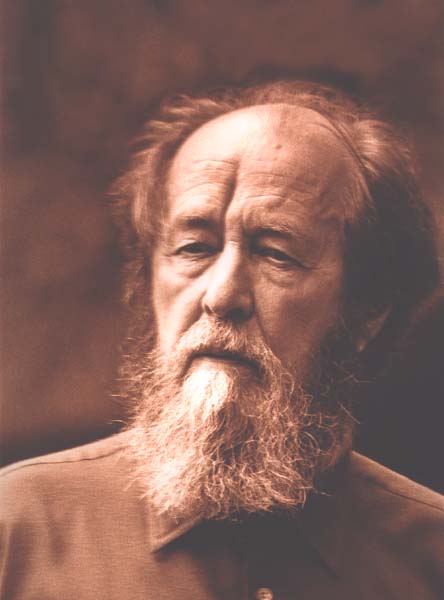
Picture is by Eularia Clarke
>
A bit of fun in preparing next Sunday’s sermon. With the passage being the invitation by Jesus to Peter to walk on water I looked at what it could possible mean and come to the conclusion that we believe in a Jam Jar – or should that be Yamm-Yah?
Not a lot of people know this (myself included) but Luke and Johjn in their telling of the story use the same Greek word for water as the Greek word for sea in Job who recognises God as the one who “alone stretched out the heavens and
treads on the waters of the Sea” (Job 9:8)
That word is Yam. God is Yah. So we have Yam Yah – God is a Jam Jar. Discuss.
Great video clip here of Jesus walking on water.
Job wasn’t the first to see God walking on water. In the beginning – “the earth was barren with no form of life. It was under a roaring ocean covered with darkness. But the Spirit of God was moving over the water.” (Genesis 1:2)
And then we have the gospel story of Jesus walking on water – and, in only Matthew’s gospel, Peter walking on water proving the point that rocks do float.
Is it just a stunt? Look at me – I can walk on water!
There has to be more to it than that – and the answer to that is in the Yam.
Apparently the Hebrews didn’t believe in sea monsters, but used the image of a sea monster to symbolise evil – referred to as Leviathan. The Canaanites – early settlers of the Promised Land – had a god called Yam – deity of the primordial chaos and representing the power of the sea untamed and raging.
I wonder whether people attributed the storms of the lakes and seas to Yam – evil or whatever name evil goes by. Walking on water then becomes not some super stunt, but a sign of Jesus’s power over the force of evil. When he invites Peter to walk on water he is inviting him to trust that the Spirit of God within him has power over evil.
We translate storms and turbulence psychologically. We know when we are upset, when we are overwhelmed – and when we feel we are drowning. We say we feel “all at sea” – but then we have Jesus who knows that we can walk on water – our Yam-Yah God.
Is that why Jesus washed his disciples’ feet – because they would walk on the water. When he washes the feet of the disciples, is it to admire them. Paul writes: “how beautiful are the feet of those who bring good news!” (Romans 10:5-15) Does Jesus admire the feet of those who by walking on water so declare the good news about the power of love?
>
A bit of fun in preparing next Sunday’s sermon. With the passage being the invitation by Jesus to Peter to walk on water I looked at what it could possible mean and come to the conclusion that we believe in a Jam Jar – or should that be Yamm-Yah?
Not a lot of people know this (myself included) but Luke and Johjn in their telling of the story use the same Greek word for water as the Greek word for sea in Job who recognises God as the one who “alone stretched out the heavens and
treads on the waters of the Sea” (Job 9:8)
That word is Yam. God is Yah. So we have Yam Yah – God is a Jam Jar. Discuss.
Great video clip here of Jesus walking on water.
Job wasn’t the first to see God walking on water. In the beginning – “the earth was barren with no form of life. It was under a roaring ocean covered with darkness. But the Spirit of God was moving over the water.” (Genesis 1:2)
And then we have the gospel story of Jesus walking on water – and, in only Matthew’s gospel, Peter walking on water proving the point that rocks do float.
Is it just a stunt? Look at me – I can walk on water!
There has to be more to it than that – and the answer to that is in the Yam.
Apparently the Hebrews didn’t believe in sea monsters, but used the image of a sea monster to symbolise evil – referred to as Leviathan. The Canaanites – early settlers of the Promised Land – had a god called Yam – deity of the primordial chaos and representing the power of the sea untamed and raging.
I wonder whether people attributed the storms of the lakes and seas to Yam – evil or whatever name evil goes by. Walking on water then becomes not some super stunt, but a sign of Jesus’s power over the force of evil. When he invites Peter to walk on water he is inviting him to trust that the Spirit of God within him has power over evil.
We translate storms and turbulence psychologically. We know when we are upset, when we are overwhelmed – and when we feel we are drowning. We say we feel “all at sea” – but then we have Jesus who knows that we can walk on water – our Yam-Yah God.
Is that why Jesus washed his disciples’ feet – because they would walk on the water. When he washes the feet of the disciples, is it to admire them. Paul writes: “how beautiful are the feet of those who bring good news!” (Romans 10:5-15) Does Jesus admire the feet of those who by walking on water so declare the good news about the power of love?
>During face-to-face contact, body language and tone of voice determine 85-90% of the impact. That’s the result of research apparently.
There has to be an integrity of what you say and the way that you say it – a bit like the old Fun Boy Three song – “it ain’t what you do it’s the way that you do it”.
One of my favourite verses is from Isaiah (chapter 42).
Here is my servant whom I uphold,
my chosen one in whom I delight;
I will put my spirit on him and he will bring justice to the nations.
He will not shout or cry out, or raise his voice in the streets.
A bruised reed he will not break,
and a smouldering wick he will not snuff out.
Gentleness, humility, patience are fruits of the Spirit – these fruits are evident in what we say and the way that we say it. Without them we will sound in-credible. What is true of individual communication is also true of organisations. What is the body language of government, our bank, our school/college, our church? What is its tone of voice?
Reviewing a book by Stephen Denning on Amazon, Robert Morris points to Howard Gardner’s book Five Minds for the Future, in which Gardner suggests that, to thrive in the world during eras to come, there are five cognitive abilities that need to be developed. Gardner refers to them as “minds” but they are really mindsets.
1. The disciplined mind enables us to know how to work steadily over time to improve skill and understanding;
2. The synthesizing mind enables us to take information from disparate sources and make sense of it by understanding and evaluating that information objectively;
3. By building on discipline and synthesis, the creating mind enables us to break new ground;
4. By “recognizing that nowadays one can no longer remain within one’s shell or one’s home territory,” the respectful mind enables us to note and welcome differences between human individuals and between human groups so as to understand them and work effectively with them;
5. and finally, “proceeding on a level more abstract than the respectful mind,” the ethical mind to reflect on the nature of one’s work and the needs and desires of the society in which one lives
>During face-to-face contact, body language and tone of voice determine 85-90% of the impact. That’s the result of research apparently.
There has to be an integrity of what you say and the way that you say it – a bit like the old Fun Boy Three song – “it ain’t what you do it’s the way that you do it”.
One of my favourite verses is from Isaiah (chapter 42).
Here is my servant whom I uphold,
my chosen one in whom I delight;
I will put my spirit on him and he will bring justice to the nations.
He will not shout or cry out, or raise his voice in the streets.
A bruised reed he will not break,
and a smouldering wick he will not snuff out.
Gentleness, humility, patience are fruits of the Spirit – these fruits are evident in what we say and the way that we say it. Without them we will sound in-credible. What is true of individual communication is also true of organisations. What is the body language of government, our bank, our school/college, our church? What is its tone of voice?
Reviewing a book by Stephen Denning on Amazon, Robert Morris points to Howard Gardner’s book Five Minds for the Future, in which Gardner suggests that, to thrive in the world during eras to come, there are five cognitive abilities that need to be developed. Gardner refers to them as “minds” but they are really mindsets.
1. The disciplined mind enables us to know how to work steadily over time to improve skill and understanding;
2. The synthesizing mind enables us to take information from disparate sources and make sense of it by understanding and evaluating that information objectively;
3. By building on discipline and synthesis, the creating mind enables us to break new ground;
4. By “recognizing that nowadays one can no longer remain within one’s shell or one’s home territory,” the respectful mind enables us to note and welcome differences between human individuals and between human groups so as to understand them and work effectively with them;
5. and finally, “proceeding on a level more abstract than the respectful mind,” the ethical mind to reflect on the nature of one’s work and the needs and desires of the society in which one lives
Resurrection: Borgo San Sepolcro
Today it is time. Warm enough, finally,
to ease the lids apart, the wax lips of a breaking bud
defeated by their steady push, hour after hour,
opening to show wet and dark, a tongue exploring,
an eye shrinking against the dawn. Light
like a fishing line draws its catch straight up,
then slackens for a second. The flat foot drops,
the shoulders sag. Here is the world again, well-known,
the dawn greeted in snoring dreams of a familiar
winter everyone prefers. So the black eyes
fixed half-open, start to search, ravenous,
imperative, they look for pits, for hollow where
their flood can be decanted, look
for rooms ready for commandeering, ready
to be defeated by the push, the green implacable
rising. So he pauses, gathering the strength
in his flat foot, as the perspective buckles under him,
and the dreamers lean dangerously inwards. Contained,
exhausted, hungry, death running off his limbs like drops
from a shower, gathering himself. We wait,
paralysed as if in dreams, for his spring.
(Piero della Francesca’s Resurrection hangs in the
civic hall of Borgo San Sepolcro, Tuscany.)
Love is a temporary madness. It eruupts like an earthquake and then subsides. And when it subsides you have to make a decision. You have to work out whether your roots have become so entwined together that it is inconceivable that you should ever part. Because this is what love is.
Love is not breathlessness, it is not excitement, it is not the promulgation of promises of eternal passion. That is just being ‘in love’ which any of us can convince ourselves we are. Love itself is what is left over when being in love has burned away, and this is both an art and a fortunate accident. Your mother and I had it; we had roots that grew towards each other underground, and when all the pretty blossom had fallen from our branches we found that we were one tree and not two.
Louis de Bernieres – Captain Corelli’s Mandolin
All that our society has to say suggests that death is the great enemy who will finally get the better of us against our will and desire. But thus perceived, life is little more than a losing battle, a hopeless struggle, a journey of despair. ……. Even though I often give in to the many fears and warnings of my world, I still believe deeply that our few years on this earth are part of a much larger event that stretches out far beyond the boundaries of our birth and death. I think of it as a mission into time, a mission that is very exhilirating and even exciting, mostly because the One who sent me on the mission is waiting for me to come home and tell the story of what I have learned.
Am I afraid to die? I am every time I let myself ber seduced by the noisy voices of my world telling me that ‘my little life’is all I have and advising me to cling to it with all my might. But when I let these voices move to the background of my life and listen to that still small voice calling me the beloved, I know that there is nothing to fear and that dying is the greatest act of love, the act that leads me into the eternal embrace of my God whose love is everlasting.
Henri Nouwen – Life of the Beloved
The world is evil only when you become its slave.
Think of yourself as having been sent into the world.
As long as you live in the world, yielding to its enormous pressures to prove to yourslelf and to others that you are somebody and knowing from the beginning that you will lose in the end, your life can be scarecely more than along struggle for survival.
Henri Nouwen – Life of the Beloved