The Sound of Jesus: hearing his voice, following his call

Using scripture appointed for the 4th Sunday of Easter (YrC), Psalm 23 and John 10.22-30, here’s a reflection on what it means to hear the voice of Jesus in a noisy world.

I love preaching that brings Scripture to life—and that brings Scripture back to life, and I hope you do too. That’s a reminder that every time we open scripture together we are bringing it back to life. What matters today is what we call people, what we call ourselves and what we call God. Today is Vocations Sunday – a day to explore our calling, our calling of one another and God’s calling of us.

That’s the point Jesus makes when he is confronted by Jews at the Festival of Dedication at Jerusalem with the question showing their lack of understanding of him. “How long will you keep us in suspense? If you are the Messiah, tell us plainly.” I’m discovering that John is always telling us the time. In our gospel readings through this Easter season, all from John’s gospel, he has always told us the time. It’s morning, it’s evening, it’s early in the morning. Today, we hear that it is “winter”. Perhaps John wanted to introduce a shiver in his readers to indicate the coldness of these Jews towards Jesus and the frostiness of their relationship towards him.

Jesus replied to them to say “I did tell you, but you do not believe”. He draws the distinction between those who do believe and those who don’t. Those who do believe have listened to his voice and followed him. It’s his voice that makes us think vocationally. We are those who believe. We’ve heard his voice.

Vocation is not just about what we do – it’s about whose voice we listen to, and whose voice we speak with.

We live in noisy days. Everyone has something to say. Social media, politics, advertising, even the voices in our own heads – so many trying to define who we are, what we’re worth, and what matters. Those who follow Jesus make out his voice in all the hullabaloo. As Jesus said, My sheep hear my voice. They listen to my voice and follow me. Even surrounded by the sound of enemies, or even traumatised by suffering, or even as we walk through the darkest valleys overshadowed by death, there is the one call we listen out for. It’s the call that leads us to metaphorical green pasture and the still waters that refresh the soul.

And here’s the gift and challenge of vocation: those who follow Jesus begin to speak like him. They begin to sound like him. It’s not because they have perfect words, nor because they are fluent in the language of the kingdom, but because they speak in love. They echo his truth that so loves the world. They call people “beloved”. They become the kind of people whose words give life.

This is Jesus calling. His calling isn’t just for those who we say “have had a calling”. His calling is for the sake of the world. His calling is for the whole church – to hear, and to follow. On this Vocations Sunday, we’re not just praying for more priests or deacons (though some who hear his call might follow that course). We’re also praying for a church that listens to the voice of Jesus and follows his call, for a church that sounds like Jesus. We are praying for a Pope who sounds like Jesus, for an Archbishop who sounds like Jesus, and for one another, that we dare to follow the voice of Jesus even when it sounds strange in our world of noise.

So, let me ask you. Can you hear his voice?

Do you hear his voice,
the still small voice of calm,
the voice on the lake, in the storm?
Do you hear his voice
in the noise of your lives?
Do you hear his voice
above the voices of harm?
Do you hear his voice
singling you out
for the new rule of the kingdom?

What does he call you?
Are you Forgiven?
Are you his Friend,
freed, no longer slave?
Are you his Beloved?

And what of others?
Can you hear him calling them?
Can you hear him
calling the last first,
the first last?

Can you hear him
calling the stranger
closer as neighbour,
extending the family
by calling brother, sister,
even mother of those
quite unrelated?

His call goes far and wide,
as far as those who are called
“far from the kingdom of God”,
even to those who’ve grown rich
at the expense of others,
the proud and arrogant,
the self-righteous,
the self-satisfied, the guilty.

He calls the warnings of woe,
speaks of mercy to the guilty.
He calls the wayward home,
and calls the proud down.

Love’s call is strong, not mealy-mouthed,
exactly what is needed by those
who put themselves first,
those who are comfortable now.

This is the call of the shepherd
who loves his sheep
and raises his voice
for them to follow.

But the call of the shepherd
also raises the alarm
to disrupt the plans of wolves.

That is not a gentle voice we hear
nor does the shepherd
reassure us to stay where we are.
His is the leading voice,
leading us to fresh pastures,
calling us back, calling us out,
calling us up to the narrow way
that leads to life.

Can you see
how his voice might carry
in every breath of the church,
on the wind and wings
of the Spirit?

Do you know
the messages of your own lives
in your words and deeds?

And can you imagine
all your words being of
the one word that made you
and called you by name
Forgiven and Beloved?

Can you imagine your voice
reverberating his love and
amplifying his call?

Can you imagine
that being your only call?

There are those
who find it hard to hear
and difficult to believe
the voice that calls them
Forgiven, Beloved,
First, not Last
Friend, no longer Stranger,
Brother, Sister, even Mother.

What did he say?

They need the words
in love’s translation,
the amplification
of those who follow
the sound of his voice.

So listen well, church.

Get the sense of vocation.
We know his voice,
we hear his call.

Let us follow the sound
of his voice so truly
that we too call
strangers friends
and the last first.

Let us see how
the voice of Jesus
carries light
into the darkness
of the night.
Let us echo
the good news
that names us
and calls us
Beloved.

© David Herbert
The congregation is the point

I don’t think I have ever preached a sermon where the point has been the congregation before. The congregation seems to be the point of the readings set for the 8th Sunday after Trinity (year B). They are Jeremiah 23:1-6, Psalm 23, Ephesians 2:11-end and Mark 6:30-34, 53-end (text below). I’m covering a long term “vacancy” in a group of churches. I’m hoping these congregations will find encouragement here.

July 21st 2024

The point of today’s readings is the gathering after the scattering – the scattering of people. I don’t think I have ever preached a sermon where the point has been the congregation before, but that seems to be the point that links the readings appointed for today. All four: the reading from Jeremiah, the Psalm, the reading from Ephesians and the gospel reading from Mark – they all build the point. The congregation is the point. The gathering after the scattering is the point.

Never has there been so many people on the move as now. By the end of last year 1 person out of every 69 was forcibly displaced, having been forced to flee persecution, conflict, violence, human rights violations and events seriously disturbing public order. That is double the number of a decade ago.

I in 69. 

Last year the global refugee population increased by 7% to over 43 million people. 73% of them came from just 5 countries: Afghanistan, Syria, Venezuela, Ukraine and Sudan.

As well as those 43 million people another 63.3 million people who were forced to flee remain in their own countries. They are known as internally displaced people. Can you imagine this? Over 9 million people in Sudan, over 7 million people in Syria, 6.9 million people in Columbia, 6.3 million people in the Democratic Republic of the Congo and 4.5 million people in Yemen – all internally displaced, mostly due to conflict and violence, and some due to natural disasters.

1 in 69.

Every bomb dropped on a village or a housing block in Ukraine and Gaza displaces the families who live there. Every military push forces out those in its path.

I in 69 people displaced and scattered. Poet Warsan Shire, herself a British poet born to Somali parents in Kenya, begins her poem called Home with the lines:
No one leaves home unless
home is the mouth of a shark.

Home by Warsan Shire, read here by Sir Jonathan Pryce

1 in 69 people forcibly displaced – according to the United Nations High Commissioner for Refugees recent report on global trends. 1 in 69 – and it’s getting worse. 1 in 69 displaced and scattered because of the failure of governments to guarantee their peace and security.

This is the world we live in. Our scriptures reflect the same realities – the failure of government to secure peace and security. Our scriptures come from the heart of people displaced by persecution, oppression and exile – and those moved with compassion for them.

Jeremiah is one such person used to address the tragedy of his contemporaries being displaced in large number and scattered far and wide. Just as the UNHCR report puts the blame on the failure of governments to safeguard peace and security, so does Jeremiah all those centuries ago.

Woe to the shepherds who destroy and scatter the sheep of the pasture! Says the Lord. Shepherd was a term used to describe the king. Jeremiah’s “woe to the shepherds” is a judgement on the line of kings who have failed the people. 

In the previous chapter Jeremiah protests against the succession of rulers whose eyes and hearts have been set on “dishonest gain, for shedding innocent blood and for practising oppression and violence” (22:17) in contrast to the good king (Josiah) who “judged the cause of the poor and needy” (22:16). 

It was the failure of the rulers to “execute justice and deliver from the hand of the oppressor anyone who has been robbed” which resulted in the scattering of people. The promise in Jeremiah is to gather the scattered, the ones lost, to raise up shepherds who will shepherd them, so that they shall fear no longer, nor be dismayed, nor go missing.

Similarly, in our gospel reading, Jesus sees the crowd coming to him. (Is Mark here seeing the fulfilment of the promise of Jeremiah?) Mark writes that Jesus had compassion on the crowd because they were like sheep without a shepherd. 

The verses of today’s gospel immediately follows the beheading of John the Baptist in prison – the beheading of Jesus’s own cousin by Herod at the request of his dancing daughter and wife. Herod, as king, was supposed to shepherd the people, but left the people like sheep without a shepherd. Mark pictures Herod partying with his courtiers and the “leaders of Galilee” – the very ones who should have been keeping watch of the people. Another Partygate. Mark pictures Herod and his court getting fat at the expense of the poor. 

The lost and scattered, then as now, are always the victims of failed government, self-serving leaders (misleaders) and corrupt shepherds. The lost and scattered are always the people on whom God shows compassion, through the prophets, through Jesus and through the work of the Holy Spirit.

All we see in today’s gospel is people gathering and coming together around Jesus and the disciples. The intention was that Jesus and his disciples were going to find a deserted place so that they could get some rest. They went by boat. But they were spotted. Many saw them and recognised them, and they hurried on foot from the towns and got there before the boat landed. There were five thousand of them – an unimaginable number of people, like sheep without a shepherd.

Again, later, when they landed at Gennesaret in the second section of our gospel reading), people recognised Jesus and they rushed about that whole region and began to bring the sick on mats to wherever they heard he was.

Notice the rush people were in. Mark underlines their hurry. They rushed about that whole region bringing the sick to wherever he was. Wherever he went, into villages or cities or farms, they laid the sick in the market-places, and begged him that they might touch even the fringe of his cloak.

Jesus doesn’t let them go. He has compassion on them.
He heals them. He makes clean what the religious (mis)leaders had made unclean He restores them to their communities – no longer outcasts.

He feeds them – yes, the crowd in today’s gospel is the crowd he feeds with just the five loaves and two fish.
And he began to teach them many things.

Here is the good shepherd doing what good shepherds do: gathering the scattered, the least, the lost, the sick and helpless – making right the people the bad shepherds and corrupt leaders had wronged.

This is the point: the gathering after the scattering. The crowding together is the point. 

And here we are – gathered, a congregation.
How do we see ourselves?
Do we see ourselves as among those on whom Jesus has compassion?
Do we see ourselves as held together by his love?
Do we see that without our gathering we would (in the words of the epistle) remain as strangers and aliens, hopeless and far off?
Do we see that we are brought to this point “by the blood of Christ”? 
Do we see that we are citizens with the saints and members of the household of God?
Do we see ourselves built together spiritually as a dwelling-place for God?
Do we see that Jesus feeds us – even as we walk together through the valley overshadowed by death?
Do we see that Jesus has begun to teach us many things?
Do we see this as the rule of heaven, his will on earth, as it is in heaven?
Do we see ourselves as the lucky ones, even as the ones the world counted least, or last or even lost, who by amazing grace have become among the first gathering of Jesus?
Do we see ourselves being joined by others, including some of the many others who make up the 1 in 69 people currently on the move, without a shepherd?
Do we see this as our place of belonging – after all our longing?

Is this not home, where we belong – counted, fed, healed, restored?
Do we see our congregation as the point that proves Jeremiah’s promise, the gathering that justifies our faith in the Lord our shepherd?

Mark 6:30-34, 53-end

The apostles gathered around Jesus, and told him all that they had done and taught. He said to them, ‘Come away to a deserted place all by yourselves and rest a while’. For many were coming and going, and they had no leisure even to eat. And they went away in the boat to a deserted place by themselves. Now many saw them going and recognised them, and they hurried there on foot from all the towns and arrived ahead of them. As he went ashore, he saw a great crowd; and he had compassion for them, because they were like sheep without a shepherd; and he began to teach them many things.

When they had crossed over, they came to land at Gennesaret and moored the boat. When they got out of the boat, people at once recognised him, and rushed about that whole region and began to bring the sick on mats to wherever they heard he was. And wherever he went, into villages or cities or farms, they laid the sick in the market-places, and begged him that they might touch even the fringe of his cloak; and all who touched it were healed.

The thousands of deserted places: exploring the feeding of the 5000

The gospel for the 9th Sunday after Trinity is the Feeding of the 5000. It’s the only miracle that is in all four gospels. Today’s reading is from Matthew 14:13-21. I was taken by the references to the “deserted place” and the time and chose to explore the good news of these key features.

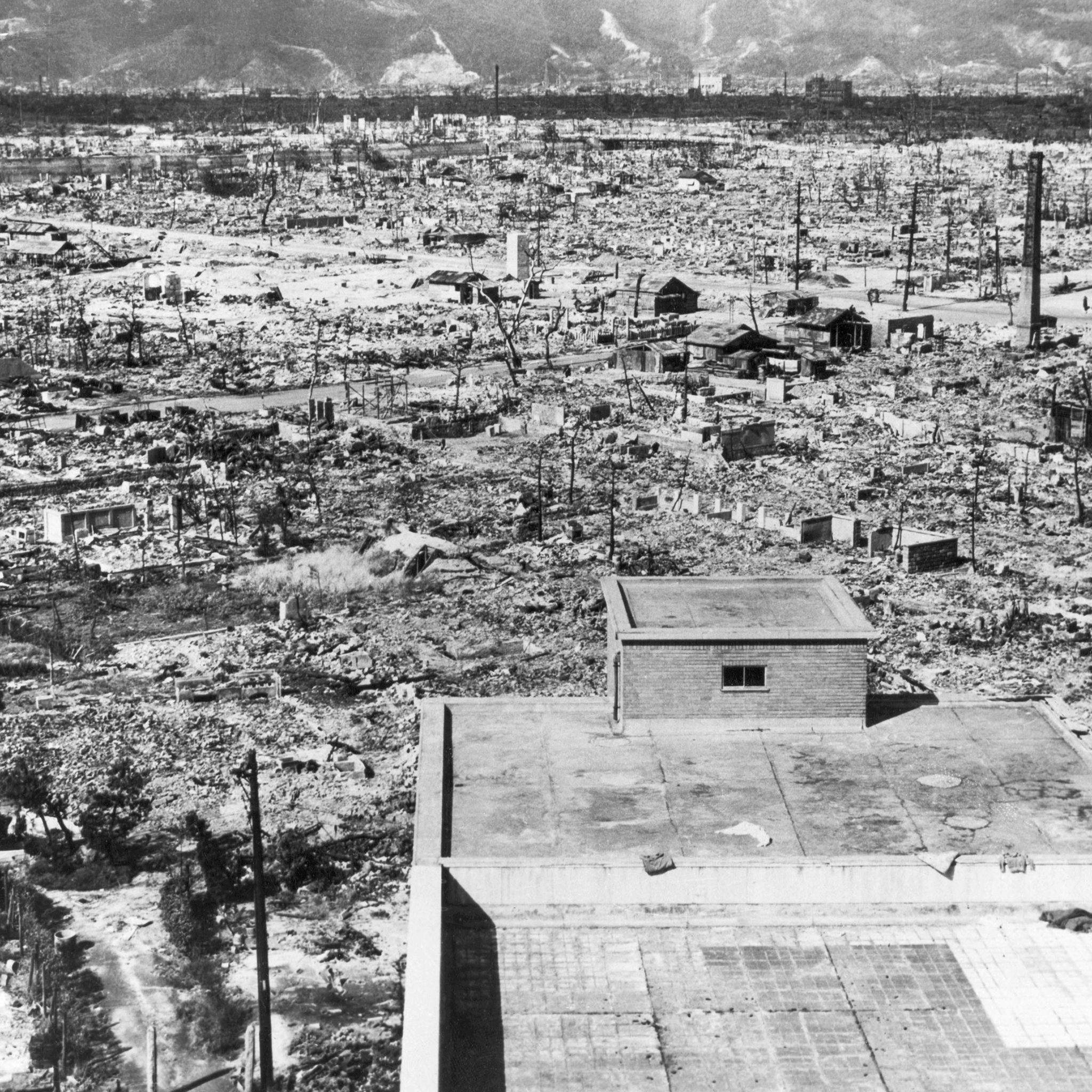
This deserted place is Hiroshima after the first atomic bomb was exploded on August 6th 1945. This deserted place stretched my imagination about deserted places God seeks out. This, and the writing of Belden Lane gave the energy for this sermon.

Reflection on the time and place

Today’s gospel follows a sequence of readings from Matthew’s gospel when so much is made with so little: the parable of the sower planting seed which crops an enormous yield, the parable of the good seed which withstands the weeds, the parable of the mustard seed which grows into a shelter for the birds, the parable of the leaven folded into the loaf – and here we have the feeding of thousands with just a couple of fish and a bag of loaves.

For our imagination I’m going to focus on the where and when of the story.

The place

It was a deserted place. It was a desert place. So many of the landscapes of the Bible are desert places, just as so much of Israel is desert and mountain, desolate, deserted. God seems to choose to make God-self known in such places. The landscapes of the Bible are barren, wild and fierce. 

This place is on the edge. Jesus got there by boat. It’s on the edge of water and on the edge of the town and villages. It’s on the edge of where people really want to go. Jesus sought this place out as a place he wanted to be. He wanted a retreat and somewhere to pray. This was where he wanted to recover and where he expected to be fed. 

Many of us search these places out and we make holiday of them, climbing mountains, challenging rivers, going “off grid”. There we often find out about ourselves, we feel invigorated and our souls get fed.

But we don’t live there. You might find a few eccentrics living in places like that. It’s OK going there if you have the right gear and have taken safety precautions.

David Douglas has this to say about desert places and barren landscapes where nothing seems to grow. He writes: “the crops of wilderness have always been its spiritual values – silence and solitude, a sense of awe and gratitude – able to be harvested by any traveller who visits.”

But there are many who are forced into such places. They haven’t chosen to be there. They’ve been driven there by the circumstances of their lives, driven to the edge. I’m thinking of refugees. Poet Warsan Shire points out in her poem called Home:

No-one leaves home unless
home is the mouth of a shark.

you only run for the border
when you see the whole city
running as well.

you have to understand,
no one puts their children in a boat
unless the water is safer than the land.

who would choose to spend days
and nights in the stomach of a truck
…….?

We may have come to such a desparate place as this in our own lives, or may know that we have been there in a place where no-one really wants to go. No one wants to go to the place of extreme pain, or the loss of a loved one. They are the dread-ful places we dread to go. It is because no-one wants to go there that makes the place deserted, and where the place is deserted there are no well-trodden paths to guide our way. There are no maps. We feel that we are on our own, deserted in desert places, helpless and hopeless.

It was in such a place that Jesus had compassion for the thousands, who like him, were living on the edge, those who had joined him in that deserted place, and those he had joined. It’s on the edge that we realise what little we have, what little we have in terms of hope or resources of resilience. We are hanging on.

Jesus had compassion on those thousands
– and the little that they had
became more than enough for all of them.
He took five loaves and two fish,
he looked up to heaven, blessed the bread,
broke the bread and shared the bread
and they ate and were satisfied. 

These are precisely the actions of the work of the church,
also known as “the liturgy”.
In our Communion we take bread,
bless it, break it and share it. 
Our very language is fed by the memory
of that miracle of multiplication in that deserted place.

It’s as if the bread we are given is meant for such a place,
a wedge in a thin place, raising the angle of hope.
It’s as if the desert place is the perfect place
for the work and liturgy of the church
for those on the edge, just hanging on,
for those deserted in love through loss or betrayal,
for those deserting homes through the cruelty of others,
refugees and all those seeking refuge (no one leaves home
for those straying paths of addiction, for those shamed
and those who are ashamed, for those who are bullied,
for whom the playground or workplace is a friendless desert,
for those who have little and those who think little of themselves.

The psalmist has it. “You make us lie down in green pastures. You join us even as we walk through the valley of the shadow of death. You prepare a table to feed us in the sight of our enemies.” (Psalm 23)

So we have established where this miracle took place. We also know the time. Matthew tells us that the time is ‘when Jesus heard this’ – “this’ being the news brought to him by John the Baptist’s disciples that John, Jesus’s cousin had been killed by Herod – and that he had been killed in the most barbaric way, by being beheaded. Jesus’ grief is written into the landscape he deliberately searched for as his sense of desolation and desertion are reflected in the desolate deserted landscape. The when and where come together at this deserted place at the time of Jesus’ grief.

We are also told that it’s the end of the day. 

It’s going dark. 
Shadows are lengthening.
Time is running out.
It’s closing time.
It’s time for Jesus to send the crowds away
(according to the disciples).
But this is precisely the time
when Jesus makes time.
Just when it’s going dark,
when time is running out,
at the end of the day,
Jesus bids them stay with him.

We know this time at the end of the day.
It may have been a good day for us,
a  time for us to rest on our laurels,
for a job well done, the promises kept,
We may sleep well tonight.

But we know of other times, 
this time in the desert place deserted,
when promises are broken,
when we are exhausted and tired,
when time runs out
and the darkness spooks us.

And we know that for thousands,
(make that millions), 
time has lost all meaning,
there is only darkness.
At the end of the day,
when the shadows are
so threatening,
when promises lie broken,
when luck’s run out
leaving no chances
when both health and hope
have run out,
when the food’s run out
when friends have run out
leaving them there deserted
at wit’s end,
Jesus had compassion.
Worn out, grief-stricken, Jesus
at the end of the day,
looked to heaven
with the little he had,
the loaves, the fish, the love,
enough for another day.

And so we have the time and the place – and it is a miracle that thousands were fed, and that there was still enough to fill 12 baskets with what was left over. Those twelve baskets symbolise the twelve tribes of Israel, underlining the fact that God’s people have their fill of daily bread through Jesus and his compassion.

This feeding of thousands is a foretaste of our Communion service and a signal for the work of the church day in and day out. We know it’s not bread and fish for Communion. But it’s still the little Jesus had: his body broken for us, and his blood shed for us. His body seen in the bread and his compassion and passion seen in the drop of wine.

We have the time and the place. The place deserted, the time getting on. And so we come to Communion. Never think we come alone. We can never duck the fact that Communion is a political act. The timing and the placing of Communion place the broken and wronged at the scene of their greatest hope. We never come alone. We come together and we come in our thousands.

When you come for Communion don’t think you stand alone. Think of who you stand with and think of who you take a stand for. It might be the people you are literally standing by – in which case, pray for them and any grief, pain or challenge they or their loved ones may be going through and pray for their feeding for another day. Or they may be on the mountain, trying to achieve great things for others – in which case pray for their success.

And/or, you might cast your mind and your compassion further afield to others deserted and others lost in deserts. Maybe you will have already begun to name them in your prayers and intercession: those lost in addictions of various kinds, those in prison or detention centres, those in care homes, those whose work in dangerous, those who are bullied and abused, those who have been forced out of home, those caught up in conflict of one kind or another.

At the end of the day, when all is said and done, we stand together in our thousands. Thank God that he finds us when we are on the edge, in wilderness, in desert and desertion, when there’s no map to guide us or any other way to find us.

Matthew 14:13-21

Now when Jesus heard this, he withdrew from there in a boat to a deserted place by himself. But when the crowds heard it, they followed him on foot from the towns. When he went ashore, he saw a great crowd, and he had compassion for them and cured their sick.. When it was evening, the disciples came to him and said, ‘This is a deserted place, and the hour is now late, send the crowds away so that they may go into the villages and buy food for themselves.’ Jesus said to them, ‘They need not go away; you give them something to eat.’ They replied, ‘We have nothing here but five loaves and two fish.’ And he said, ‘Bring them here to me.’ Then he ordered the crowds to sit down on the grass. Taking the five loaves and the two fish, he looked up to heaven, and blessed and broke the loaves, and gave them to the disciples, and the disciples gave them to the crowds. And all ate and were filled, and they took up what was left over of the broken pieces, twelve baskets full. And those who ate were about five thousand men, besides women and children.

Post script:
Belden C Lane makes much of the desert and mountain landscape of the Bible in his book The Solace of Fierce Landscapes: exploring desert and mountain spirituality.
There are so much good work to help us understand the dreadfulness of the experience of refugees. Here’s four books I’ve found helpful:
My Fourth Time, We Drowned by Sally Hayden (2022), winner of the 2022 Orwell Prize for Political Writing, looking at efforts by the rich world to keep refugees from seeking safety
The Lightless Sky by Gulwali Passarlay (2015) – an Afghan refugee boy’s journey of escape
The Beekeeper of Aleppo by Christy Lefteri (2019)
American Dirt by Jeanine Cummins (2020)

Taking sides on the road to Emmaus

A sermon for the third Sunday of Easter (April 23rd 2023) for Holy Trinity, Leamington, based on the gospel for the day – Luke 24:13-35 (text below)

Lovers in Arles by Vincent van Gogh

When you walk through a storm
Hold your head up high
And don’t be afraid of the dark

At the end of a storm
There’s a golden sky
And the sweet silver song of a lark

Walk on through the wind
Walk on through the rain
For your dreams be tossed and blown

Walk on, walk on
With hope in your heart
And you’ll never walk alone
You’ll never walk alone.

This Rogers and Hammerstein song has stood the test of time. It was originally part of their 1945 musical, Carousel. It is the anthem of Liverpool. It is also the anthem for Celtic and Borussia Dortmund, several Dutch teams, a Belgian team, and also became the anthem of support for medical workers, first responders and those in quarantine during the pandemic.

It’s an anthem which has stood the test of time. It’s seen us through the pandemic and saw Liverpool fans through Hillsborough and other tragedies. It was sung as a tribute to the Busby Babes at Manchester United’s first home game after the Munich air disaster in 1958 and was also used to support those affected by the fire at Bradford City’s Valley Parade which killed 58. Some of you may have YNWA tattooed on your body somewhere.

This is a song with legs. Behind it is a truth with even longer legs. The last words of Matthew’s gospel are “Remember, I am with you to the end of time”. These are the words of the risen Jesus even though he has walked through the valley of the shadow of death. Remember, I am with you to the end of time. These are the daddy long legs behind the Liverpool anthem and all the songs of faith which have sustained so many on their long and difficult walks to freedom through storms of betrayal, injustice and pain.

In today’s gospel, Jesus, the I AM of “I am with you always”, joins two people on their way home from the festival in Jerusalem. He asked them what they were discussing, and Luke tells us “they stood still, looking sad”. They had reason to be sad. They had hoped that Jesus was the one to free Israel, but their own leaders and priests had handed Jesus over to be condemned to death by crucifixion

They walked on. They walked on with Jesus. They walked on, with Jesus listening to the hope that was in their heart and his response: his explanation of things in all the scriptures about him.

Here, as in other resurrection appearances, Jesus appears as stranger. They don’t know the one who has joined them is Jesus, and only discover his identity when he broke bread with them and reflected on the change of heart they felt as they walked with Jesus.

Jesus becomes known in the breaking of bread and through companionship. Companions are literally those we eat bread with. That is the meaning of the word companion.

When Jesus accepted the invitation of these two (Cleopas and the other whose name isn’t given) he joined them as companions, and they found him in the intimacy of companionship.

Was the revelation, and is the revelation, through the way the bread was taken, blessed, broken and shared? Was it, and is it, through the visibility of the scars and vulnerability. All of us will have our stories to tell about how Jesus has become known to us through the companionship of breaking bread together.

Through Ezekiel (Ezekiel 36:26) God promised God’s people a new heart – a heart of flesh instead of hearts of stone. When the penny drops, Cleopas and his companion say to each other with the benefit of hindsight, “Were not our hearts burning within while he was talking to us on the road?” Is this not the fulfilment of that promise? 

The road home from Jerusalem had been a road of desolation for the two of them – they shared their heartbreak with the one who joined them at their side and then found all the consolation they could ever have wished for, and more. It was with a fresh heart that they rushed back to Jerusalem and told the eleven what had happened to them on the road. We’re not told what happened next for them. We can only assume that their next steps were to walk on, with that fresh heart to their being, with hope at their heart.

I was leading worship in a strange church a couple of weeks ago. It was a service I had never led before. I sat in the church beforehand, on my own when someone joined me, sitting at my side. She was calm, a non-anxious presence, who quietly engaged me in conversation. I knew her slightly – enough for us to have a conversation about what matters to us. So it wasn’t small-talk. I immediately knew what she had done. Of all the things that she could have been doing, she had joined me, she had taken my side.

She will never know the effect of that simple action – taking my side. It was certainly heart-warming. It was immensely encouraging (encouraging literally means heartening). It gave me confidence. I knew I wasn’t on my own.

All of us, feeling vulnerable,
love it when others take our side,
when they sit with us, 
when they walk with us, 
when their heart goes out to us, 
when they make sure 
we never walk alone. 

When they join our side 
with a love that is patient and kind, 
that isn’t boastful or rude, 
that bears all things, 
believes all things, 
hopes all things, 
endures all things – 
well, (in the words of Andrew Lloyd Webber), 
that changes everything, 
doesn’t it? 

Is it not Christ
in such love
who takes our side
even as a stranger?

Isn’t it this love,
joining us at our side
who gives us new heart,
a heart-warming of flesh,
emboldened and encouraged?

Emboldened and encouraged
enough for us also 
through Christ and in Christ
to take the side of others
along their roads of sorrow,
even through the valley
of shadows marked Death

heartened to side with them
as part of the promise
“You’ll never walk alone”,
joined by the insistence of Jesus,
“I am with you always,
to the end of time.”

So, who is it  who has joined you on your journey, particularly when you have felt like Cleopas and his companion? Who has taken your side, particularly when you have felt forsaken? Who has stayed by your side through thick and thin? Who has loved with a love divine? These are the people who have encouraged us and given us fresh heart. These are the people through whom Christ lives his life in ways we often don’t recognise.

We give thanks for them and their presence in our lives – and we pray that we too may commit ourselves to Jesus’ risen life by siding with those Jesus sides with – those who are poor, or lost, or broken – in fact, everyone apart from the proud and self-satisfied – walking with them, standing up for them, taking their side, joining them.

Note: the information about YNWA is from https://en.wikipedia.org/wiki/You%27ll_Never_Walk_Alone

Luke 24:13-35

Now on that same day two of them were going to a village called Emmaus, about seven miles from Jerusalem, and talking with each other about all these things that had happened. While they were talking and discussing, Jesus himself came near and went with them, but their eyes were kept from recognising him. And he said to them, ‘What are you discussing with each other while you walk along? They stood still, looking sad. Then one of them, whose name was Cleopas, answered him, ‘Are you the only stranger in Jerusalem who does not know the things that have taken place there in these days?’ He asked them, ‘What things?’ They replied, ‘The things about Jesus of Nazareth, who was a prophet mighty in deed and word before God and all the people, and how our chief priests and leaders handed him over to be condemned to death and crucified him. But we had hoped that he was the one to redeem Israel. Yes, and besides all this, it s now the third day since these things took place. Moreover, some women of our group astounded us. They were at the tomb early this morning, and when they did not find his body there, they came back and told us that they indeed had seen a vision of angels who said that he was alive. Some of those who were with us went to the tomb and found it just as the women had said, but they did not see him.’ Then he said to them, ‘Oh, how foolish you are, and how slow of heart to believe all that the prophets have declared! Was it not necessary that the Messiah should suffer these things and then enter into his glory?’ Then beginning with Moses and all the prophets, he interpreted to them the things about himself in all the scriptures.

As they came near to the village to which they were going, he walked ahead as if he were going on. But they urged him strongly, saying, ‘stay with us because it is almost evening and the day in now nearly over.’ So he went in to stay with them. When he was at the table with them he took bread, blessed and broke it, and gave it to them. Then their eyes were opened and they recognised him; and he vanished from their sight. They said to each other, ‘Were not our hearts burning within us while he was talking to us on the road, while he was opening the scriptures to us?’ That same hour they got up and returned to Jerusalem; and they found the eleven and their companions gathered together. They were saying, “The Lord has risen indeed, and he has appeared to Simon!’ Then they told what had happened on the road, and how he had been made known to them in the breaking of the bread.