The Cruel Sea is on its way out – a reflection for All Saints Sunday

All Saints Sunday

Some made heavy weather through this sermon for All Saints Sunday in spite of the very well read scripture for the day – Revelation 21:1-6a. (My fault.) It was the detail in the text of the sea being no more which caught my eye and triggered my imagination. It’s not often we preach from Revelation. It’s the last word in our scripture, the last book that graphically seems to sum up the ways in which the Bible as a whole reveals God in the troubles of our lives.

All Saints Sunday – November 3rd 2024

Every grandparent of young children knows the Disney film Moana – probably word for word. Moana is the daughter of the village chief on a remote island where no one goes beyond the reef because of the dangers of the wider sea.

The wider sea is a place of danger. It’s not a place for poor islanders if they want to stay safe. Their boats were for fishing in the shallow seas. The seas are dangerous particularly for those who are poor, as we have been seeing in the attempted channel crossings that desperate people are making. The seas swallow the poor who dare to go beyond the reef.

It’s only the empires of the world that have conquered the seas with their vast ships and wealth of engineering. Rule Britannia and all that. 

Rule, Britannia! Britannia, rule the waves!
Britons never, never, never will be slaves.

Rule Britannia was written in 1740 just at the time when the British empire did rule the waves – as it did for two centuries until the First World War. While it may be true that empires bring some benefit, so often the ships of empire only brought trouble, bringing occupation and taking land, minerals and people for empires own purpose.

This is how Revelation sees the sea. Revelation is the last book of our scriptures. It wraps it all up and wraps it all up so graphically. It’s like a graphic novel. 

Revelation 21.1-6a
21  Then I saw a new heaven and a new earth; for the first heaven and the first earth had passed away, and the sea was no more.
2  And I saw the holy city, the new Jerusalem, coming down out of heaven from God, prepared as a bride adorned for her husband.
3  And I heard a loud voice from the throne saying, ‘See, the home of God is among mortals. He will dwell with them; they will be his peoples, and God himself will be with them;
4   he will wipe every tear from their eyes. Death will be no more; mourning and crying and pain will be no more, for the first things have passed away.
5   And the one who was seated on the throne said, ‘See, I am making all things new.’ Also he said, ‘Write this, for these words are trustworthy and true.’
6  Then he said to me, ‘It is done! I am the Alpha and the Omega, the beginning and the end. To the thirsty I will give water as a gift from the spring of the water of life.

John sees a new heaven and a new earth, for the first heaven and the first earth had passed away, and the sea was no more.

In the graphics of his revelation, John sees “the beast” rising out of the sea with ten horns and seven heads bearing blasphemous names. The beast comes from the darkness and the vastness of the sea. The beast had authority over every tribe and people and language and nation. In other words it was “empire”. The beast/empire made war on everyone who threatened its power, including trying to conquer the saints. All the suffering of the first heaven and the first earth comes from the beastliness of what comes out of the seas – those who rule the waves cause poverty, pain and tears “for the peoples of the world”. This is John’s revelation – what God revealed to John.

John himself was a victim of the beast of the sea. In his introduction, in chapter 1, he tells us that he is a victim of the persecution of Christians and that he was on an island called Patmos “because of the word of God and the testimony of Jesus”. 

Pliny and Tacitus tell us that prophecy, particularly prophecy with political implications, was seen as a threat by the Roman empire. Those guilty of such prophecy were deported. So, here is John, having been deported across the sea of empire to an island surrounded by cruel sea, living in exile. More graphically, empire swallowed John up and spewed him on an island – cast away.

Just as empire was doing its worst for John, those earliest Christians and other peoples of the world John has this revelation of the end of empire – the ending of the first earth ruled by empire. He sees a new heaven and a new earth, for the first heaven and the first earth had passed away, and the sea was no more, because evil empire is no more.  He sees the end of the old rules and the beginning of a new rule in the form of the holy city, new Jerusalem, coming down out of heaven from God, and he heard a loud voice coming from the throne of the new rule saying the “home of God is among mortals. He will dwell with them; they will be his peoples, and God himself will be with them.”

The point about empire and the sea underlines the political context of this revelation of God’s work. We still live in a political context which causes untold suffering. It is within that political context that God lives, moves and has his being. This is how God has revealed himself, time and time again, ever present in the troubles of the peoples of the world. This is the revelation that is treasured in our scriptures in book after book.

He comes to us. The Lord is here. His Spirit is with us – in the here and now, helping us through times of trial, strengthening our fight against injustices, making saints out of sinners. “See” said the one seated on the throne so different from those of worldly empires to John. “See, the home of God is among mortals. He will dwell with them; they will be his peoples, and God himself will be with them.”  

This is down to earth. It’s not pie in the sky when we die, as when we say “she’s gone to be with Jesus”. No. The point of God’s revelation is that he is with us now. The Lord is here. His Spirit is with us.

Down to earth, not pie in the sky.  God makes his dwelling with us. He stands at the door and knocks – and waits, and waits till we answer his call – and all is revealed as soon as we let our hearts, minds, hands and eyes be opened.

It’s in our lives here and now that God reveals himself – as Father, Son and Holy Spirit. As father, making good things of earth, fashioning us for now, answering our prayer. In Jesus proving himself down to earth. As Holy Spirit breathing new life into us, inspiring us, encouraging us, strengthening us here and now.

Then the one seated on the throne made John see again. “See, I am making all things new.” This is heavenly Repair Shop stuff – making new the stuff of our lives. This brings hope here and now. This is the age we are living in – (the same as John’s, the same as everyone’s). We see so much that is broken – around us, and within us. But it is really the beginning of the end with God making all things new. Here’s the alpha, the beginning that leads to the end, the omega when there will be no darkness for shame to hide in.

This is how the book of Revelation came down to us. The one enthroned in love said to John, “Write this. Write this for these words are trustworthy and true” These words being “the home of God is with mortals” (those who will die), and “I am making all things new”.

This is how we have received the revelation of the love of God. Those words are trustworthy and true. We need to guard them with our lives and never let our Godtalk be pie in the sky when we die, but always the love from above, down to earth, here and now. Insist the Lord is here and his Spirit is with us, making all things new as we battle the beast.

We began our worship by remembering all the saints using this list circulated by Sheffield Manor Parish on their Facebook page. They credit Nel Shallow and Pete Phillips for the words.

We remember Lord today all Your saints
the brave and bold
the faithful and fearless
the pursued and persecuted
the imprisoned
the impoverished
the murdered
the martyred
the grace-full and generous
the poets and the prophets
the wonderers and the wise
the healers and the helpers
the preachers
the paupers
the cloistered
the commoners
the foolish and floundering
the unready and unsteady
the careless and the cautious
the following
the hopeless
the hopeful
the faithless yet forgiven
the faithful yet flawed
the wandering and wayward
the lost and longing
We remember today Lord all Your saints
called and chosen
beloved and beheld
holy and human
Amen

In our all together

LondonClubDressCode bordercropped

What shall I wear?

It’s a question that never crossed my mind when I turned up to a fancy dress party in plain clothes. Embarassing. It seems to be a question that never crossed the mind of the guest who was caught out at the wedding (Matthew 22:1-14).

He could have argued back. Jesus had, after all, told people not to worry about what to wear (Matthew 6:31), but there he was just tipping his head towards Eden where the boy and girl were unashamed by being in the all-together (Genesis 2:25). At the other bookend (Revelation 21:2) we are shown what we’ll look like when all-together we are got ready by God. “And I saw the holy city, the new Jerusalem, coming down out of heaven from God, prepared as a bride for her husband.”

There is a dressing down for those who worry about what they wear, and those who aren’t ready in time. Jesus reminds us that God clothes us. The guest who hadn’t dressed properly wasn’t clothed in righteousness.

There are various dressing prayers. David Adam has a dresing prayer based on St Patrick’s Breastplate. And Jan Richardson has this blessing in her Painted Prayerbook:

In your mercy
clothe me

in your protection
cloak me

in your care
enfold me

in your grace
array me.

With your justice
dress me

for your labor
garb me

by your love
envelop me

and fit me
for your work.

Photo by Paul Vlaar (http://www.neep.net/photo/london/show.php?12881) [CC-BY-SA-2.5 (http://creativecommons.org/licenses/by-sa/2.5)%5D, via Wikimedia Commons

Extra time and the end of BST

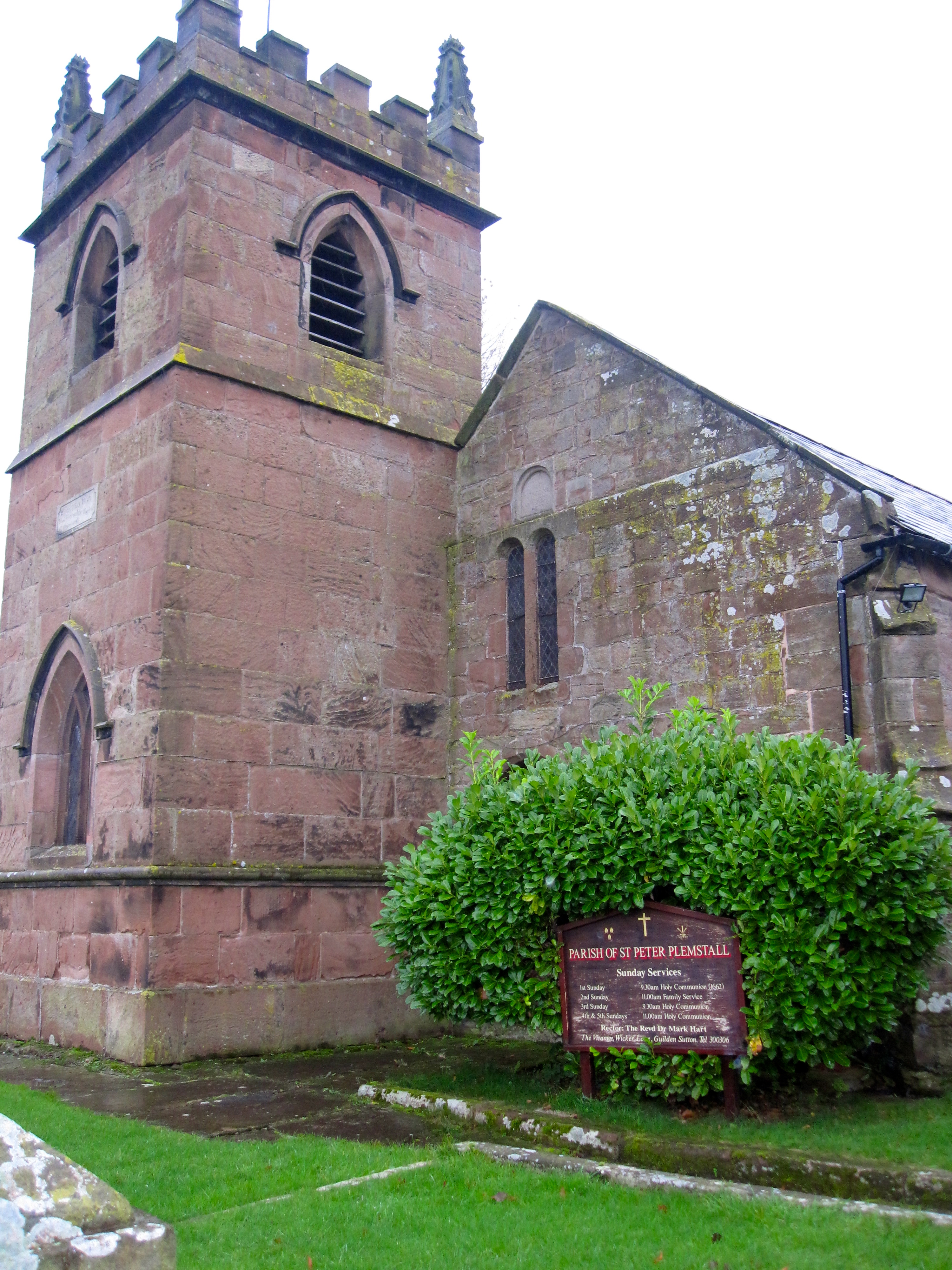
This is a sermon prepared for some of the good people of Guilden Sutton and Plemstall for the end of British Summer Time.

SS Simon and Jude – Sermon for October 28th 2012.

Well done for remembering to change your clocks!

The question we ask when the clocks change is “Do we gain an hour, or do we lose it?”

Well, this time, we “gain” an hour. We have an extra hour.

What have you done with it?

The same question was raised about the Leap Day earlier this year. February 29th. We got an extra “day”. Many people spotted the opportunity and planned extra events – I finished up with three competing commitments that day. One man used the day creatively. He had lost contact with his brother. He hadn’t seen him for over 30 years. He used the Leap Day as a day for the work of reconciliation.

What have you done with the extra hour?

I hope that some of you managed an extra hour of sleep – after all so many of us are suffering from having too much to do and handle. Phrases that we hear of time and time again are “work-life balance” and “time management”. We find it so difficult to manage time. We are stressed by it – I really do hope that some of you managed to get your own back on time by stealing another hour of sleep.

What do we do with time, and what does time do with us? These are questions I want to focus on.

Firstly, what does time do to us?

The short answer is that he terrifies us. Old Father Time, the Grim Reaper, terrifies us. Change and decay in all around I see.

Time is always running away with us and with our loved ones.

Time, like an ever rolling stream,
Bears all its sons away;
They fly, forgotten, as a dream
Dies at the opening day.

The clock is ticking, and we know that there is a countdown for our last chance, whether on the TV quiz show, or the science fiction that the earth is going to be destroyed, unless the superhero manages to “beat the clock”. Wasn’t there a TV programme called “Beat the Clock”?

Time stresses us out. We race against time. Time robs us of our youth, innocence and health and we are left wondering whether there is any point. Try as we like, we can’t manage time and we are left feeling that time is managing us. We are in his hands, and in his hands many are really anxious. What if, all the time, our lives count for nothing?

So, what do we make of time?

Actually, as Christians, we make a lot of Time.

In the Eucharist, in the end, through our faith, in our practice we trust that the One “who changest not” abides with us, even though it is often only change and decay that we see all around.

Our biblical myths of time confront the despair that grips so many. I have been reading a book written in the year I was born – an old book, by Rabbi Abraham Heschel. His view was that Judaism is a religion of time, aiming at the sanctification of time. That view spans both Testaments.

This holiness of time is expressed in the story of creation. Each day is a day because God says so. There is this present moment because God is present.

The work of creation did not finish after the sixth day. The work of creation goes on. Every moment is an act of creation and a new beginning. Heschel writes: “there are no two hours alike. Every hour is unique and the only one given at the moment, exclusively and endlessly precious”. This is such a contrast to the way in which time is something just to be killed by those who see no quality time, and who are simply bored by the flatline of time.

Our story of time encourages us to see every moment as significant. But our story of time also gives us the means to survive the times of our life when there is evil, violence, suffering, pain and crying. The Bible begins at Day One. It ends with the Last Day, when, in the end, there will be Shalom, and all will cry glory.

I mentioned the six days of creation. There is also the 7th day which God called holy, and which we are commanded to call holy. This is how we are called to tell the time. Observing the Sabbath is a resistance to the powers of the world, the powers that be, our business and the things that rule our lives “Monday to Friday”. It is a breathing space with strict rules for its protection. There is no work to be done (for some even flicking a switch is too much). One rule is “ye shall kindle no fire” – applied by Heschel to also not kindling the fire of righteous indignation. Sabbath observance demands great disciplines which build up through generations.

Heschel writes: “With the Sabbath comes a miracle: the soul is resurrected.” For him “the world’s survival depends on the holiness of the Sabbath”. The task is how to convert time into eternity, how to fill our time with spirit.

As Christians, we have a different story to tell. We see two different hands on the clock. The hands of Christ crucified, the hands of Jesus risen from the dead.

For us the holy day of Sabbath becomes the holy Day of Resurrection. Each week begins with holiday of the new creation by which all our days are numbered.

The discipline of people like yourselves coming together to celebrate resurrection is making something of time and resisting a tide of hopelessness. By celebrating the Day of Resurrection, by remembering all God’s works of redemption, we make something of time for ourselves and alternative calendar for the world, which can only be good news for all those who have grown tired, or bored, or who are oppressed day by day.

The Bible is more concerned with time than space. It pays attention to generations and events. We follow that tradition. Our year is full of grace as we move from one great celebration to another. This week we celebrate all the saints. Today we celebrate Saints Simon and Jude. We don’t know much about them. We know that Jude write one of the epistles, and that he is patron saint of hospitals, hospital workers, desparate situations and forgotten, impossible and lost causes.

There are many who feel desparate in their battle against Time. They feel overwhelmed and exhausted. They fear the end. They worry they are a waste of time, and feel that time has wasted them. All of us, from time to time, have shared the same despair – but we know there is another way of telling time.

That way is made through the resurrection, through faith, hope and love, and through the practice and devotion of local communities of Christians who tell the time differently – who manage time not by months and minutes, but by eternity and a love that never dies.

The last word belongs to the patron saint of desparate situations and forgotten, impossible and lost causes. In his epistle, Jude addresses people like ourselves – inclined to anxiety and desperation in the passage of time. He writes: “Dear friends, build yourselves up in your most holy faith and pray in the Holy Spirit. Keep yourselves in God’s love as you wait for the mercy of our Lord Jesus Christ to bring you to eternal life.”