>pointless disappointments

>

Camp Disappointment Historic Marker
historic marker for Camp Disappointment
(photo by Jimmy Emerson)

That is not the sort of review you would like to see on TripAdvisor if you were the owner of a campsite. There are many places called “Disappointment” –  it must be hard for those who live in those places. “What’s it like where you live?” “You mean disappointing?” “I thought so”.

By a strange quirk of the Church of England, my most recent appointment meant that I was listed in the “resignations” rather than the “appointments” in our  mailing. I presumed that this was therefore a “dis-appointment” rather than an appointment! 
Fresnel, Cape Disappointment
old Fresnel lens from the Cape Disappointment Lighthouse by Grace Fell

I have been struck recently by the high expectations we have of one another, and that appointments can often lead to disappointments. Once we are a disappointment to someone we are always then seen through that lens of disappointment, and our own self-perception can be coloured by that as well. When it comes to disappointment, it is often the solo leaders who are disappointed, and those they appoint who are disappointing. Belbin points this out. According to him (Team Roles at Work (2003) p98),

  • A solo leader “plays unlimited role” (and interferes), whereas the team leader chooses to “limit role” (and delegates).
  • A solo leader “strives for conformity”, whereas a team leader “builds on diversity”.
  • A solo leader “collects acolytes”, whereas a team leader “seeks talent”.
  • A solo leader “directs subordinates”, whereas a team leader “develops colleagues”.
  • A solo leader “projects objectives”, whereas a team leader “creates mission”.
Life is hard in the land of Disappointment. The only escape is into a a different world of team leadership.
Talking of disappointments, I just love Nilsson’s “The Point” – a story about a round headed boy called Oblio, who lives in the Land of Point with his dog Arrow. Its moral – everything has a point, and nothing is pointless.

>nobility and celebrity

>

'The Judgement of Solomon', oil on canvas painting by Gaetano Gandolfi, mid 1770s
The Judgement of Solomon by Gaetano Gondolfi
(mid 1770’s) reminds us of the wisdom by which Solomon
achieved his noble status. The story is told in I Kings. It
reads like a plotline from Eastenders!

I didn’t know that “noble” literally means “known” – and so “nobility” is a community of persons who have become knowable because of the quality of their lives. Celebrity should similarly be the status of those whose lives are worth celebrating. Through the media (deserved?) we celebrate those who have achieved celebrity status through their ignobility – in spite of their lack of talent and human qualities.

Conversation with friends yesterday led us to reflect on Hitler who we saw as a good leader turned bad. A noble leader turned tyrannical monster. In that he is not alone. Michael Sadgrove, in considering the life of Solomon in Wisdom and Ministry, reflects on the processes and temptations for the noble of “grandiosity”. We know that nobility and grandiosity often go together. It is wisdom that keeps them apart.

Sadgrove writes: “The temptation is to stand as tall as we can so that we fill the institution we lead. Yet Jesus says that true greatness means becoming like a little child. This suggests that true ‘standing’ means not filling the space ourselves but making room for others.”

I shall reflect on how I have become known – how I may even be noble. I shall confess my ignoble sins of grandiosity. The ways of Hitler and Solomon lie open before us.

>Listening and Leadership

>Spending the morning thinking what leadership is I came across some great definitions, including this from the Roman Catholic Diocese of Rochester: leadership is “the process of influencing the behavior of other people toward group goals in a way that fully respects their freedom.” I came to the conclusion that there are as many definitions of leadership as there are leaders.
And then I listened to Tom Peters highlighting the importance of listening in leadership. He says: “The single most significant strategic strength an organisation can have is not a good strategic plan, but a commitment to strategic listening on the part of every member of the organisation.” I suspect that most followers find leaders who don’t listen overpowering and insensitive – and then they find someone else to follow.
To make his point he refers to the amount of data that doctors ignore because they only listen (according to his research) for 18 seconds before interrupting the patient – and suggests that that is true for 7 out of 8 “bosses”.


>I bean a-countin’

>I have been guilty of disparaging accountancy. (For example, see here). I know I am not alone! Ever since Monty Python we have suspected that accountants all need a humerus implant. But, not so. Leicester accountants, Mark J Rees, have their own accountantjokesite with jokes such as:


The doctor comes to see his heart transplant patient. “There is good news. It is very unusual but we have two donors to choose form for your new heart.” The patient is pleased. He asks, “What were their jobs?” “One was a teacher and the other was an accountant.”
“I’ll take the accountant’s heart,” says the patient. “I want one that hasn’t been used.”


I’ve been reminded by Dee Hock this morning that accountancy is an old and honourable profession. In ‘Birth of the Chaordic Age‘ Hock traces the phenomenon of accounting to the tribal storyteller whose role was to accurately portray “their tribe as it was, as it is, as it might become, and as it ought to be”. Unfortunately, the primary language used for accounting for present day community is the language of mathematics and number. Consequently, the story is made up of measurements of what was, what is, and what might happen. The really important issues of what we ought to be is beyond the reach of accountancy speaking only the language of numbers.

Hock quotes H. Thomas Johnson, an economic historian, CPA, and former president of the Academy of Accounting Historians: 

“The language of financial accounting merely asserts answers, it does not invite inquiry. In particular it leaves unchallenged the worldview that underlies the way organisations operate. Thus, management accounting has serbved as a barrier to genuine organisational learning… Never again should management accounting be seen as a tool to drive people with measures. Its purpose must be to promote inquiry into the relationships, patterns and processes that give rise to accounting measures.”

Sorry accountants.

>Fabio Capello and leadership

>

The latest Belbin newsletter focuses on the management of our national football team and Fabio Capello’s capacity for leadership. It’s a fun article and worth a read. Capello is contrasted with Maradonna and suggestions made about the leadership qualities (Belbin style) needed for the next manager – maybe needed sooner than we think if we lose tonight’s game against Bulgaria.

Belbin does draw the distinction between qualifications (looking backwards – and referring to a different context) and suitability (looking forward and relating to present context). The suggestion is to recruit on the basis of suitability rather than eligibility/qualification. There’s one for the FA!

Borderlands

>

For the first time in a long time I have been having to stand my ground. This is because of an inter-personal, intra-departmental boundary dispute. In other words, we are not sure what we are each doing. This is not a major international incident, though there are significant tensions at the border. We don’t know where the boundaries are supposed to be, and because of that we haven’t worked out how we live together at the boundary.
The damage of borderlands is beautifully brought out in a poem I have just read by Gloria Anzaldua – who describes herself as a “chicana dyke-feminist, tejana patlache poet, writer, and cultural theorist” and “as a border woman [who] grew up between two cultures, the Mexican (with a heavy Indian influence) and the Anglo (as a member of a colonised people in our own territory). I have been straddling that tejas-mexican border, and others, all my life It’s not a comfortable place to live in, this place of contradictions. hatred, anger and exploitation are the prominent features of this landscape”. (The photo is by Brian Auer)
Here’s the poem – as I read it in Edward Soja’s book, Thirdspace:
                         I press my hand to the steel curtain – 
               chainlink fence crowned with rolled barbed wire –
        rippling from the sea where Tijuana touches San Diego
unrolling over mountains
     and plains
              and deserts,
this “Tortilla Curtain” turning into el rio Grande
      flowing down to the flatlands
           of the Magic Valley of South Texas
      its mouth emptying into the Gulf.
1,950 mile-long open wound
                     dividing a pueblo, a culture,
                     running down the length of my body,
                         staking fence rods in my flesh,
                         splits me   splits me
                         me raja   me raja
                                                                               This is my home
                                                                               this thin edge of
                                 barbwire.
                       But the skin of the earth is seamless.
                       The sea cannot be fenced,
             el mar does not stop at borders.
       To show the white man what she thought of his 
                           arrogance,
                   Yemaya blew that wire fence down.
                     The land was Mexican once,
                          was Indian always
                              and is.
                         And   will be again.

>The Flaws of Leadership (2)

>Following the example of the patriarchs (see this post) is it fair to say that leaders aren’t born with wonderful personal qualities – but by guile they emerge as leaders?They are from the same cesspit as the rest of us, so we should have realistic expectations of them. I’m going to stop looking for perfection in them. Instead I expect leaders to emerge whose commitment is to turn life round in favour of justice – and whose commitment is to resist the tide of despair and bitterness. Such leaders inspire change for the good of others. I won’t look for perfection (anyway, perfection isn’t a verb – perfection doesn’t necessarily do anything). Instead I will look for people who do more and better than they might have done – and help us to be and do better.

Here are some good clues about leadership – including this mindmap.

>The Flaws of Leadership

>Steve Bell draws attention to the “whited sepulchre” in his cartoon on MP’s expenses.
Matthew’s gospel has these words: “What sorrow awaits you teachers of religious law and you Pharisees. Hypocrites! For you are like whitewashed tombs–beautiful on the outside but filled on the inside with dead people’s bones and all sorts of impurity” (23:27). John’s gospel also has these words: “Let him who is without sin cast the first stone” (chapter 8)

I don’t know about you, but I’ve had enough from the lynch mob – and it is time to draw a line under the whole sorry affair. I don’t know why we should be so surprised when our leaders show themselves to have feet of clay. Out of some sort of idolatory we expect our leaders to be perfect – or is it that we think ourselves as perfect?

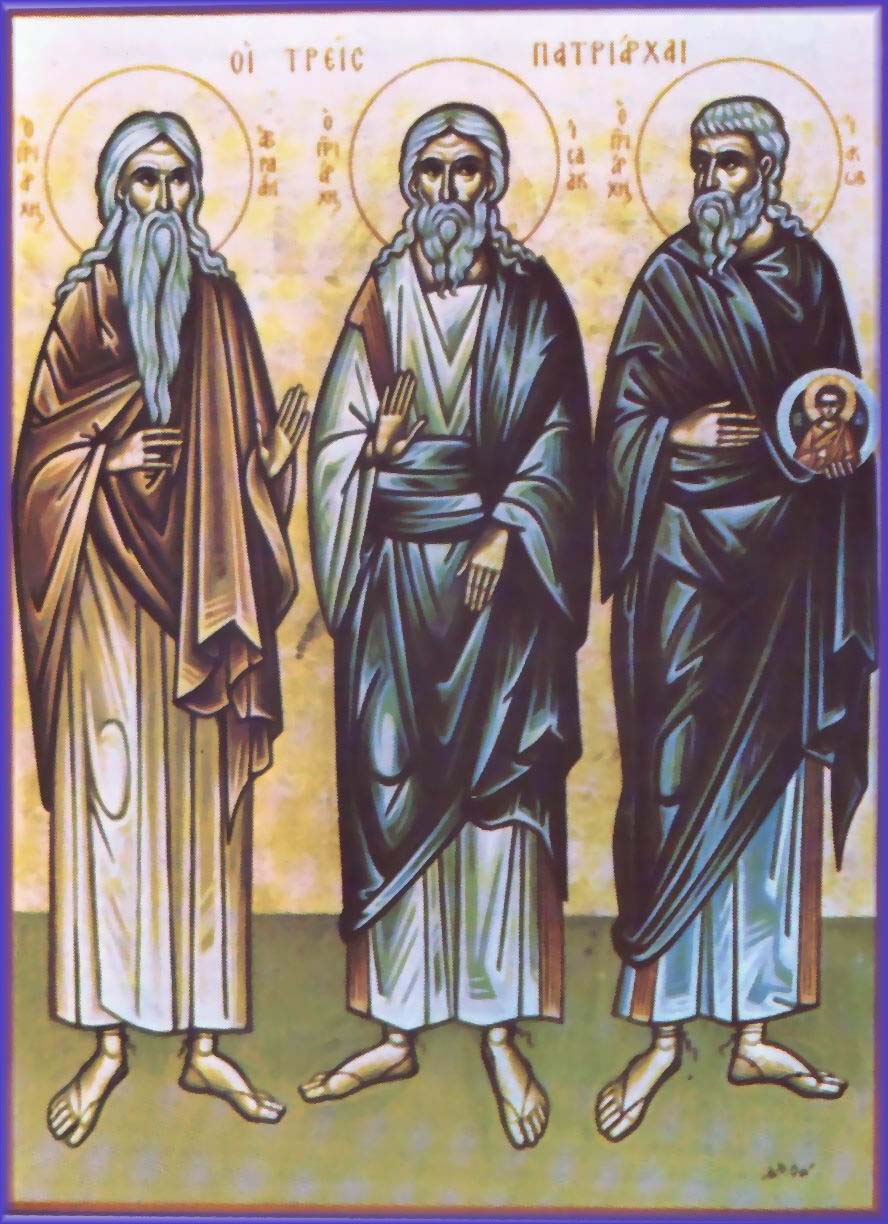
As luck would have it the Bible reading for this morning was Genesis (27&28)- exploring the world of Esau and Jacob (twins), Abraham, Rebecca and Isaac – with Laban thrown in for luck. Together Abraham, Isaac and Jacob are known as the “patriarchs”. Stories about all of them could have kept our tabloids going for years. Abraham passed his wife off as his sister (to Pharoah). Rebecca was a schemer. Jacob was a cheat. Esau was resentful. I could go on. Why did not the religious leaders hide the flaws of the patriarchs? I suggest that it was because they wanted to be realistic about human nature – saying “this is what we’re like – and it’s no good pretending otherwise”. It was to characters such as these (and such as ourselves) that God promises the earth – in spite of the scheming, deceit and betrayal. It is significant that the founding fathers of Judaism and Christianity could do nothing of themselves. The foundation of our faith is not that we all have to be good but that we have to depend on God to turn the tide of despair and bitterness.

On the same day as we scoff and mock our political leaders history has been turning in Northern Ireland. At last a peace settlement has been achieved for which our PM(flawed like the rest of our leaders) paid tribute to all those who had made the settlement possible. It is a magnificent achievement to have sworn enemies holding the reins of power together. Gordon Brown described it as “inspirational” and a lesson for the world that conflict resolution is possible. The peace has been won by courageous leadership. The architects of peace are flawed but courageous enough to know that history is flawed by conflict and transformed by compromise/forgiveness. There can be no forgiveness without flaws!