So late in the day – the parable of the labourers in the vineyard

So late in the day. This is a sermon on the parable of the labourers in the vineyard from Matthew 20:1-16 (text below). It’s for a small congregation in rural Warwickshire who only meet once a month and use the Book of Common Prayer for their worship. Interestingly there is a local landlord and the villagers are his tenants.

So late in the day I am realising how earth shattering Jesus’ teaching is, shaking us to our foundations. None more so than this parable of the labourers in the vineyard in which the time of the day is so important. It is late in the day.

Preparing this has shaken me up – me, now so long in the tooth and late in the day.

I am in my 70s. I’ve been preaching for 50 years. I am white, educated, male. I have been privileged, among the first chosen, and never short of work.

So, so, so late in the day I come to this parable and I am shaken to my core by Jesus’ teaching about the kingdom of heaven where the last come first and the first come last.

I realise that even so late in the day I have much work to do. At last I realise I am among the last. It has taken me so long.

The landowner in Jesus’s parable of the kingdom seems outrageously unfair and the labourers who have worked the longest hours are right to complain that they could have worked for just one hour for the same pay. They complain: “You have made us all equal”.

Imagine your local landowner doing something like that.

Now, remember the horrors of your school PE lessons when two people were chosen by the teacher to pick sides. You may have been one of the lucky ones to be amongst those picked first. You may have even been one of the gifted and talented privileged to choose the teams. Or you may have been the one picked last with your arm forlornly over your head the longest calling half-heartedly “pick me”. It was always humiliating to be amongst the last to be picked – to be one of the “also rans”.

We easily understood how those decisions and choices were made. Those who were “best” were chosen first because they were “winners”, or they had friends in high places. Those chosen last are the “losers”, who, because they are “losers” are the Billy-no-mates. If ever they complain they’re told to get over it, “life’s like that”, “get used to it”. Life isn’t fair, Everybody isn’t equal.

This parable uses the labour market as its backdrop. The labour market works pretty much the same way as teams are chosen in PE. The strong candidates, with their strong applications, with their right qualifications and their right experience are the ones chosen first. They’ve often been to the right schools and know the right people. Other candidates show their weaknesses and carry penalties such as their not-so-good education possibly because of the poverty of their childhood, or the way they talk, or look, or the colour of their skin, or their gender or their age. There will always be people who are chosen last, who might eventually be told that there is a little job they can do to help. That little job will keep the wolf from the door, but the gap between those who are chosen first (the well paid) and those chosen last (the poorly paid) gets wider and wider.

This is the economic order we live with in the kingdoms of this world. This is the rule: the first will be first and the last will be last.

In the parables treasured by the church, Jesus points us to a different kingdom – the kingdom of heaven. The kingdom of heaven is nothing like the kingdoms on earth because in the kingdom of heaven the rule is not that the first will be forever first and the last forever last. The rule of the kingdom of heaven puts the first last and the last first.

The landowner is strict in his instructions to the manager. He tells him to call the labourers and give them their pay. “Begin with the last, then go to the first.” This is how the last come to be first and the first come to be last. It is the deliberate choice of the landowner who, of course, is God.

Jesus’s teaching really does shake us to our foundations.

Here was something for them to really complain about – those complaining would have been those who were first – those who had lost out in the landowner’s deliberate discrimination in favour of those hired at last. It’s their complaint that makes them last. They complain “you have made us all equal”. That is a complaint against the landowner, against God and against the last. It’s a complaint that makes them unfit for the kingdom of heaven. Of course they will be last in that kingdom where the truth is that the first will be last and the last will be first.

It’s not the first time in Matthew’s gospel that we have heard that the first will be last and the last first. In the previous chapter (19:16-30), when Jesus is explaining to his followers how difficult it is for those who are rich to enter the kingdom of heaven (as hard as it is for a camel to climb through the eye of a needle!), he uses the same rule. “Many who are first will be last, and the last will be first.” And he says that this will happen “at the renewal of all things”.

What can we take from this?

The first thing is that there is hope for those who are last in the choices and power dynamics of the world and that they have every reason to fervently and faithfully pray for the “renewal of all things” because they are the first choice of God.

The second thing is that those who have been used to the privileges and power of being among the first have a choice to make. They (we?) can choose to complain or not complain. They (we?) can choose to join the complaints about the apparent injustice of the rule of the kingdom of heaven (which puts the last first), implying that they will have no part in such a rule or kingdom.

Or they (we?) can choose to celebrate with the last at the renewal of all things. They (we?) can help them (us?) to be first. They (we?) can take their side. Even so late in the day they (we?) can take the side of the refugee, the poor, the sick, the disabled, the weak, the voiceless, the excluded, the ridiculed, joining their prayer for the renewal of all things, joining God’s pleasure in those otherwise forgotten and often forsaken.

All of us have that choice to make – and we make that choice in our prayer. There are people who always come first in our way of thinking and there are people who always come last. If we pray as our Saviour taught us, for his kingdom to come on earth as it is in heaven, we will be praying for those who are the last or seldom chosen. When we make that choice we join Jesus and Mary in their prayer. 

Mary’s joy in God is captured in her song. Her soul rejoices that God has looked with favour on the lowliness of his servant, that he scatters the proud in the thoughts of their hearts, that he brings down the powerful from their thrones, lifting up the lowly, filling the hungry with good things and sending the rich away empty. (Luke 1:46-55)

These are the people Jesus has chosen to be uppermost in his mind. He names them in his teaching (Matthew 25: 31-46) in the parable of the sheep and the goats. Those chosen are the hungry, the thirsty, the stranger, the naked, the sick and the prisoner. These are the people who come first to Jesus and they are the ones who come first in the prayer of the church. Among them are those who want to join Jesus in his prayer for the renewal of all things.

It’s not that we don’t also pray for those who come first. We do pray for those who come first, our leaders. Our prayer for them is that the last will always be first for them, that everything will be for their sake. So we will pray this morning for King Charles and the government that their governance will be governed by the rule that the last come first and the first come last.

In the parable the landowner, the owner of all, gives very careful instructions to his “manager”. The instruction is: begin with the last then go to the first. The question for all those who hear the parable is CAN WE MANAGE THAT? Can we manage to do that and manage the complaints and grumbling that come our way for always beginning with those who come last in the kingdoms and empires on earth? It is, after all, teaching like this that crucified Jesus.

St John the Baptist, Lower Shuckburgh – September 24th 2023

Matthew 20:1-16
“For the kingdom of heaven is like a landowner who went out early in the morning to hire laborers for his vineyard. 2After agreeing with the laborers for the usual daily wage, he sent them into his vineyard. 3When he went out about nine o’clock, he saw others standing idle in the marketplace; 4and he said to them, ‘You also go into the vineyard, and I will pay you whatever is right.’ So they went. 5When he went out again about noon and about three o’clock, he did the same. 6And about five o’clock he went out and found others standing around; and he said to them, ‘Why are you standing here idle all day?’ 7They said to him, ‘Because no one has hired us.’ He said to them, ‘You also go into the vineyard.’ 8When evening came, the owner of the vineyard said to his manager, ‘Call the laborers and give them their pay, beginning with the last and then going to the first.’ 9When those hired about five o’clock came, each of them received the usual daily wage. 10Now when the first came, they thought they would receive more; but each of them also received the usual daily wage. 11And when they received it, they grumbled against the landowner, 12saying, ‘These last worked only one hour, and you have made them equal to us who have borne the burden of the day and the scorching heat.’ 13But he replied to one of them, ‘Friend, I am doing you no wrong; did you not agree with me for the usual daily wage? 14Take what belongs to you and go; I choose to give to this last the same as I give to you. 15Am I not allowed to do what I choose with what belongs to me? Or are you envious because I am generous?’ 16So the last will be first, and the first will be last.”
Crumbs, the Canaanite woman is a faith leader!

11th Sunday after Trinity

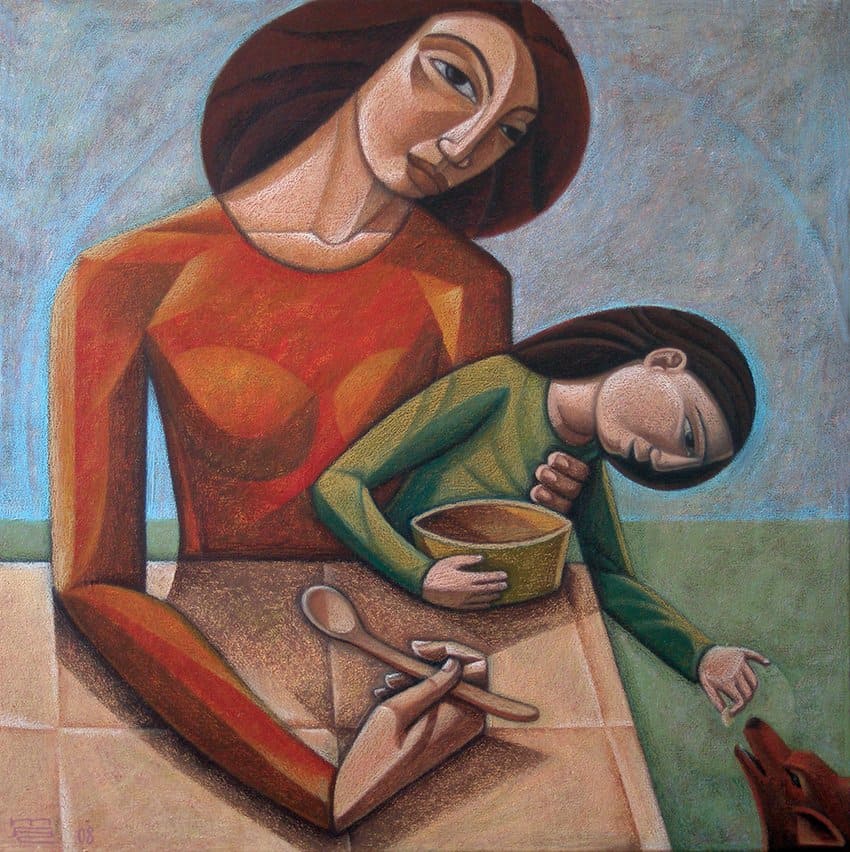
It’s the Canaanite woman who catches the eye of the church on the 11th Sunday after Trinity (A). “Crumbs!” was what I said when I read the story from Matthew 15 as if for the first time. So Crumbs remains the title for this reflection/sermon.

Crumbs

On the one hand there’s the bread from the feeding of the 5000 (12 baskets worth) and on the other hand there’s the bread from the feeding of the 4000 (7 baskets worth) and between there are the crumbs that are more than enough for the Canaanite woman in this morning’s gospel. 

Today’s gospel, showing the growing tension between Jesus and the Pharisees and the great faith of the Canaanite woman is sandwiched between the feeding of the 5000 and the feeding of the 4000.

“Woman, great is your faith” is what Jesus finally notices about the Canaanite woman the disciples wanted to silence, send away and have nothing to do with. She may have only been a dog in the pecking order but she knew that she would be satisfied with the crumbs that fell from the table. Great is her faith in any crumb that falls from the hand of Jesus.

In contrast the disciples thought that they would never have enough to feed the five thousand (as well as women and children) or the four thousand (as well as women and children). They say before the feeding of the 5000: “We have nothing here but five loaves and two fish”. And before the feeding of the 4000 they want to know “where are we to get enough bread in the desert to feed so great a crowd?” Jesus had to show them. They would never have believed that there would be 12 baskets left over from feeding 5000, or 7 baskets left over from feeding 4000.

I dare say that most of us fall into the same boat as those first disciples. Common sense is enough to know that five loaves and two fish are never going to be enough for 5000, and seven loaves and few small fish are never going to be enough for 4000. Can we ever believe that so little can go so far?

We perhaps have little faith in such miracles.

In the same boat, when the storm was blowing a gale, Jesus notes the “small faith” of his disciples. “Why are you afraid, you of little faith?” (Matthew 8:26).  Seemingly they had such little faith in him that they thought they were all going to drown together. It almost seems as if this is what Jesus called his disciples; “You of little faith”.

In the sermon on the mount, Jesus said “if God so clothes the grass of the field, which is alive today and tomorrow is thrown into the oven, will he not much more clothe you – you of little faith?” (Matthew 6:30)

When Peter realised he wasn’t walking on water Jesus reaching out to rescue him said, “You of little faith, why did you doubt?”

When the disciples were worried that they had forgotten to take bread with them Jesus said, “You of little faith, why are you talking about having no bread?” (Matthew 16:8)

You might expect those first disciples to have great faith but they remain the ones of little faith. They have “little faith” and are slow to understand. In today’s gospel Jesus asks Peter, “Are you still without understanding?

As for the religious leaders, it would be reasonable to expect that they would have great faith. These are the religious leaders of Israel we are talking about. But they have no faith in Jesus at all. “Blind guides” and “hypocrites” is what Jesus calls them. Their concern was the keeping of rules – all 613 of them were to be kept at any cost. They were offended by Jesus’ attitude toward washing hands before eating and were more concerned about what came out of people’s bottoms than mouths. (If everyone had to wash their hands before eating then the 5000, the 4000 (plus women and children) would have remained starving. The feeding would have been impossible.)

The only faith the Pharisees had was in a god who demanded obedience and required people to do x, y and z and follow every letter of the law. They had no faith in a gracious God. They looked for offences. Tragically there are still religious leaders who have no faith in a gracious God and who are looking for offences. They too are blind guides and hypocrites. And they are frightening.

Jesus had to go a long way to find great faith. He had to leave Israel. He left that place and went away to the district of Tyre and Sidon. Tyre and Sidon are a long way out. They’re in what is now known as Lebanon. They were beyond the pale. Jesus probably went there with his disciples to get away from the pressure building from the Pharisees – he was wanting some space.

And then this Canaanite woman came to him.
She knew precisely who he was and she knew exactly what he could do.
He was the Lord and son of David.
He was the one who would show her mercy.
He was the one to help her daughter.

But she was a woman.
She was a foreign woman, a despised Canaanite.

And she shouted.

The disciples wanted Jesus to send her away.
They didn’t want to hear anything from her. 

What a good job Jesus resisted, because otherwise he would never have discovered her great faith. 

And nor would we.

It was only through what some people now call “radical listening” that Jesus found what he probably wasn’t expecting to find. Radical listening is a discipline which allows the other person their say and hearing. The discipline involves removing our personal biases which bias us to listen to the people we are most used to hearing, and like hearing from. It’s about giving the mic to those who are often silenced and taking it away from those who jealously guard it.

Jesus allowed her the mic, and Matthew’s gospel provides the amplifier, amplifying her “great faith”. This Canaanite woman was a faith leader for Jesus and for Matthew. I wonder why she hasn’t remained so. Her “great faith” is what Jesus was working towards for his disciples as he continued to teach them about the way of faith and the graciousness of God.

Her “great faith” is such a contrast to those “of little faith” and those who had no faith in Jesus. She echoes the prophetic voice which insists that no faith is to be found where it is expected – for example, in the Temple, or the religious leaders, the Pharisees and scribes and the keepers of tradition. No “great faith” is to be found in Israel. Only some “little faith” – which little faith is carefully nurtured by Jesus.

Great faith is found elsewhere, where it is not expected, beyond the pale, in foreign bodies. It is found through radical listening which shushes our biases so that we hear the voice of others (perhaps for the first time), their stories, their journeys, their faith. We might be outraged like the disciples (those of little faith). That woman did SHOUT, but people need to shout if they’re not being heard, particularly when they so need help. They often need to get their rage out, which may come across as outrageous. 

At our moment in history it is refugees who are shouting and struggling to be heard. It is the planet which is shouting, struggling to be heard – their claims being too easily dismissed as outrageous, their voices being too easily silenced. We need to be disciplined to hear those made to suffer in silence.

The Canaanite woman, our great faith leader, is key to the door that opens up mission everywhere. Matthew lets his gospel rest with the great commission to go and make disciples of people everywhere, baptising them in the name of the Father, the Son and the Holy Spirit, and opening the way of faith to them. 

The mission of God has always been a mission to overcome boundaries. We’ve heard that this morning from our reading from the prophet Isaiah in the promise to bring all the foreigners who join themselves to the Lord to the holy mountain, to make them joyful in the house of prayer, which will be forever known as a house of prayer for all people, says the one who gathers those cast out by Israel.

The story of the Canaanite woman is sandwiched between the feeding of the 5000 and the feeding of the 4000, between the feeding of the 5000 tired, radical listeners and the crowd of 4000 including the lame, maimed, blind and mute on whom Jesus had compassion.
She was prepared to eat the crumbs which fell from the table.
In communion we join her, her great faith.
In communion we join her to the 5000 and the 4000.
In communion we join her great faith even with the little faith we may have in the gracious God Jesus is showing us.

Isaiah 56:1, 6-8
Thus says the Lord:
maintain justice, and do what is right,
for soon my salvation will come,
And my deliverance be revealed.
And the foreigners who join themselves to the Lord,
to minister to him, to love the name of the Lord,
and to be his servants,
all who keep the sabbath and do not profane it,
and hold fast my covenant –
these I will bring to my holy mountain,
and make them joyful in my house of prayer;
their burnt-offerings and their sacrifices
will be accepted on my altar;
for my house shall be called a house of prayer
for all peoples.
This says the Lord God,
who gathers the outcasts of Israel,
I will gather others to them
besides those already gathered.

Matthew 15:10-20, 21-28

Then he called the crowd to him and said to them, ‘Listen and understand. It is not what goes into the mouth that defiles a person, but it is what comes out the mouth that defiles.’ Then the disciples approached and said to him, ‘Do you know that the Pharisees took offence when they heard what you said?’ He answered, ‘Every plant that my heavenly Father has not planted will be uprooted. Let them alone; they are blind guides of the blind. And if one blind person guides another, both will fall into a pit.’ 
But Peter said to him, ‘Explain this parable to us.’
Then he said, ‘Are you still without understanding? Do you not see that whatever goes into the mouth enters the stomach, and goes into the sewer? But what comes out of the mouth proceeds from the heart, and this is what defiles. For out of the mouth come evil intentions, murder, adultery, fornication, theft, false witness, slander. These are what defile a person, but to eat with unwashed hands does not defile.’

Jesus left that place and went away to the district of Tyre and Sidon.
Just then a Canaanite woman from that region came out and started shouting, ‘Have mercy on me, Lord, Son of David, my daughter is tormented by a demon.’ But he did not answer her at all. And his disciples came and urged him, saying, ‘Send her away, for she keeps shouting after us.’ He answered, ‘I was sent only to the lost sheep of Israel.’ But she came and knelt before him, saying, ‘Lord, help me.’ He answered, ‘It is not fair to take the children’s food and throw it to the dogs.’ She said, ‘Yes, Lord, yet even the dogs eat the crumbs that fall from their master’s table.’ Then Jesus answered her, ‘Woman, great is your faith! Let it be done for you as you wish.’ And her daughter was healed instantly.

Image credit: Michael Cook, “Crumbs of Love” http://www.hallowed-art.co.uk/twelve-mysteries-2/

The thousands of deserted places: exploring the feeding of the 5000

The gospel for the 9th Sunday after Trinity is the Feeding of the 5000. It’s the only miracle that is in all four gospels. Today’s reading is from Matthew 14:13-21. I was taken by the references to the “deserted place” and the time and chose to explore the good news of these key features.

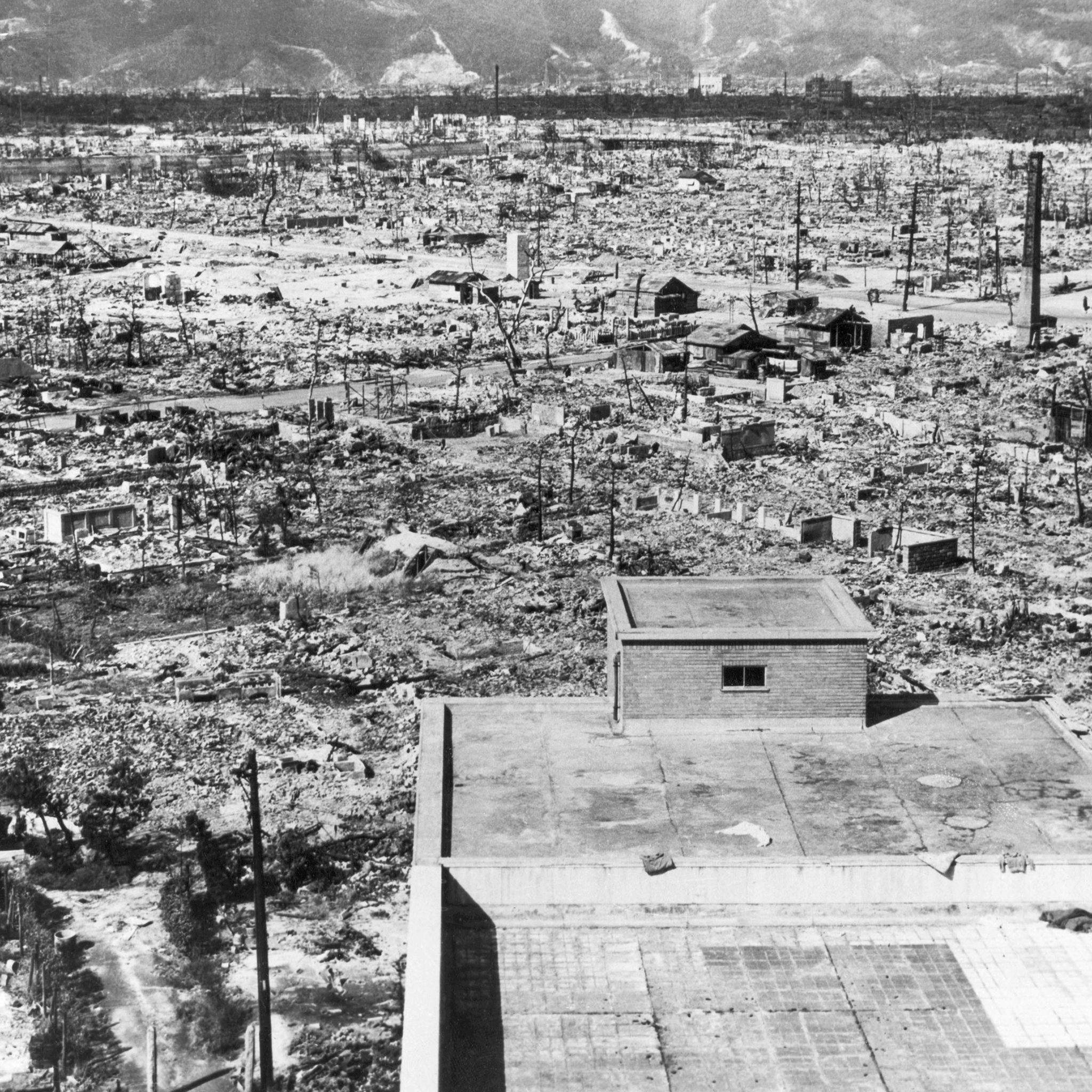
This deserted place is Hiroshima after the first atomic bomb was exploded on August 6th 1945. This deserted place stretched my imagination about deserted places God seeks out. This, and the writing of Belden Lane gave the energy for this sermon.

Reflection on the time and place

Today’s gospel follows a sequence of readings from Matthew’s gospel when so much is made with so little: the parable of the sower planting seed which crops an enormous yield, the parable of the good seed which withstands the weeds, the parable of the mustard seed which grows into a shelter for the birds, the parable of the leaven folded into the loaf – and here we have the feeding of thousands with just a couple of fish and a bag of loaves.

For our imagination I’m going to focus on the where and when of the story.

The place

It was a deserted place. It was a desert place. So many of the landscapes of the Bible are desert places, just as so much of Israel is desert and mountain, desolate, deserted. God seems to choose to make God-self known in such places. The landscapes of the Bible are barren, wild and fierce. 

This place is on the edge. Jesus got there by boat. It’s on the edge of water and on the edge of the town and villages. It’s on the edge of where people really want to go. Jesus sought this place out as a place he wanted to be. He wanted a retreat and somewhere to pray. This was where he wanted to recover and where he expected to be fed. 

Many of us search these places out and we make holiday of them, climbing mountains, challenging rivers, going “off grid”. There we often find out about ourselves, we feel invigorated and our souls get fed.

But we don’t live there. You might find a few eccentrics living in places like that. It’s OK going there if you have the right gear and have taken safety precautions.

David Douglas has this to say about desert places and barren landscapes where nothing seems to grow. He writes: “the crops of wilderness have always been its spiritual values – silence and solitude, a sense of awe and gratitude – able to be harvested by any traveller who visits.”

But there are many who are forced into such places. They haven’t chosen to be there. They’ve been driven there by the circumstances of their lives, driven to the edge. I’m thinking of refugees. Poet Warsan Shire points out in her poem called Home:

No-one leaves home unless
home is the mouth of a shark.

you only run for the border
when you see the whole city
running as well.

you have to understand,
no one puts their children in a boat
unless the water is safer than the land.

who would choose to spend days
and nights in the stomach of a truck
…….?

We may have come to such a desparate place as this in our own lives, or may know that we have been there in a place where no-one really wants to go. No one wants to go to the place of extreme pain, or the loss of a loved one. They are the dread-ful places we dread to go. It is because no-one wants to go there that makes the place deserted, and where the place is deserted there are no well-trodden paths to guide our way. There are no maps. We feel that we are on our own, deserted in desert places, helpless and hopeless.

It was in such a place that Jesus had compassion for the thousands, who like him, were living on the edge, those who had joined him in that deserted place, and those he had joined. It’s on the edge that we realise what little we have, what little we have in terms of hope or resources of resilience. We are hanging on.

Jesus had compassion on those thousands
– and the little that they had
became more than enough for all of them.
He took five loaves and two fish,
he looked up to heaven, blessed the bread,
broke the bread and shared the bread
and they ate and were satisfied. 

These are precisely the actions of the work of the church,
also known as “the liturgy”.
In our Communion we take bread,
bless it, break it and share it. 
Our very language is fed by the memory
of that miracle of multiplication in that deserted place.

It’s as if the bread we are given is meant for such a place,
a wedge in a thin place, raising the angle of hope.
It’s as if the desert place is the perfect place
for the work and liturgy of the church
for those on the edge, just hanging on,
for those deserted in love through loss or betrayal,
for those deserting homes through the cruelty of others,
refugees and all those seeking refuge (no one leaves home
for those straying paths of addiction, for those shamed
and those who are ashamed, for those who are bullied,
for whom the playground or workplace is a friendless desert,
for those who have little and those who think little of themselves.

The psalmist has it. “You make us lie down in green pastures. You join us even as we walk through the valley of the shadow of death. You prepare a table to feed us in the sight of our enemies.” (Psalm 23)

So we have established where this miracle took place. We also know the time. Matthew tells us that the time is ‘when Jesus heard this’ – “this’ being the news brought to him by John the Baptist’s disciples that John, Jesus’s cousin had been killed by Herod – and that he had been killed in the most barbaric way, by being beheaded. Jesus’ grief is written into the landscape he deliberately searched for as his sense of desolation and desertion are reflected in the desolate deserted landscape. The when and where come together at this deserted place at the time of Jesus’ grief.

We are also told that it’s the end of the day. 

It’s going dark. 
Shadows are lengthening.
Time is running out.
It’s closing time.
It’s time for Jesus to send the crowds away
(according to the disciples).
But this is precisely the time
when Jesus makes time.
Just when it’s going dark,
when time is running out,
at the end of the day,
Jesus bids them stay with him.

We know this time at the end of the day.
It may have been a good day for us,
a  time for us to rest on our laurels,
for a job well done, the promises kept,
We may sleep well tonight.

But we know of other times, 
this time in the desert place deserted,
when promises are broken,
when we are exhausted and tired,
when time runs out
and the darkness spooks us.

And we know that for thousands,
(make that millions), 
time has lost all meaning,
there is only darkness.
At the end of the day,
when the shadows are
so threatening,
when promises lie broken,
when luck’s run out
leaving no chances
when both health and hope
have run out,
when the food’s run out
when friends have run out
leaving them there deserted
at wit’s end,
Jesus had compassion.
Worn out, grief-stricken, Jesus
at the end of the day,
looked to heaven
with the little he had,
the loaves, the fish, the love,
enough for another day.

And so we have the time and the place – and it is a miracle that thousands were fed, and that there was still enough to fill 12 baskets with what was left over. Those twelve baskets symbolise the twelve tribes of Israel, underlining the fact that God’s people have their fill of daily bread through Jesus and his compassion.

This feeding of thousands is a foretaste of our Communion service and a signal for the work of the church day in and day out. We know it’s not bread and fish for Communion. But it’s still the little Jesus had: his body broken for us, and his blood shed for us. His body seen in the bread and his compassion and passion seen in the drop of wine.

We have the time and the place. The place deserted, the time getting on. And so we come to Communion. Never think we come alone. We can never duck the fact that Communion is a political act. The timing and the placing of Communion place the broken and wronged at the scene of their greatest hope. We never come alone. We come together and we come in our thousands.

When you come for Communion don’t think you stand alone. Think of who you stand with and think of who you take a stand for. It might be the people you are literally standing by – in which case, pray for them and any grief, pain or challenge they or their loved ones may be going through and pray for their feeding for another day. Or they may be on the mountain, trying to achieve great things for others – in which case pray for their success.

And/or, you might cast your mind and your compassion further afield to others deserted and others lost in deserts. Maybe you will have already begun to name them in your prayers and intercession: those lost in addictions of various kinds, those in prison or detention centres, those in care homes, those whose work in dangerous, those who are bullied and abused, those who have been forced out of home, those caught up in conflict of one kind or another.

At the end of the day, when all is said and done, we stand together in our thousands. Thank God that he finds us when we are on the edge, in wilderness, in desert and desertion, when there’s no map to guide us or any other way to find us.

Matthew 14:13-21

Now when Jesus heard this, he withdrew from there in a boat to a deserted place by himself. But when the crowds heard it, they followed him on foot from the towns. When he went ashore, he saw a great crowd, and he had compassion for them and cured their sick.. When it was evening, the disciples came to him and said, ‘This is a deserted place, and the hour is now late, send the crowds away so that they may go into the villages and buy food for themselves.’ Jesus said to them, ‘They need not go away; you give them something to eat.’ They replied, ‘We have nothing here but five loaves and two fish.’ And he said, ‘Bring them here to me.’ Then he ordered the crowds to sit down on the grass. Taking the five loaves and the two fish, he looked up to heaven, and blessed and broke the loaves, and gave them to the disciples, and the disciples gave them to the crowds. And all ate and were filled, and they took up what was left over of the broken pieces, twelve baskets full. And those who ate were about five thousand men, besides women and children.

Post script:
Belden C Lane makes much of the desert and mountain landscape of the Bible in his book The Solace of Fierce Landscapes: exploring desert and mountain spirituality.
There are so much good work to help us understand the dreadfulness of the experience of refugees. Here’s four books I’ve found helpful:
My Fourth Time, We Drowned by Sally Hayden (2022), winner of the 2022 Orwell Prize for Political Writing, looking at efforts by the rich world to keep refugees from seeking safety
The Lightless Sky by Gulwali Passarlay (2015) – an Afghan refugee boy’s journey of escape
The Beekeeper of Aleppo by Christy Lefteri (2019)
American Dirt by Jeanine Cummins (2020)

Dealing with weeds and digging the seeds of Jesus’s teaching

This is a sermon for the 7th Sunday after Trinity, inspired by Jesus’s so-called parable of the weeds, which is also his second parable of the sower. The text, Matthew 13:24-30, 36-43, is at the foot of this post.

The Sower at Sunset by Van Gogh. He painted over 30 pictures of The Sower. As a missionary he perhaps saw himself as a sower. He loved the land, its people and their commitment to their toil in soil. These parables meant a lot to him.

There isn’t a word of today’s gospel which is impossible for us to understand, is there? Jesus is talking to Jewish peasants as a Jewish peasant of things they knew well. This is the second parable of a sower and one of several parables about seeds. 

Last Sunday’s gospel was the parable of the sower who sowed seed – even as we heard the gospel, some of it will have fallen on stony ground, some among thorns, and some in good soil where it might have rooted through the week. Come next week and we will be celebrating the gospel where the kingdom of heaven is likened to a mustard seed, the smallest of all the seeds in the mind of Jesus. 

The language is simple, and the meaning is simple. Jesus explains: the sower is the Son of Man, the field is the world, the good seed are the people of the kingdom, the weeds are the people of the evil one and the evil one is the devil. That is how Jesus explained it then. 

Van Gogh’s Sower in the background. He painted over 30 pictures of The Sower. As a missionary he perhaps saw himself as a sower. He loved the land, its people and their commitment and love of the daily toil. These parables meant a lot to him.

These parables are simple – and small. They’re for us to dig into.

The sower might be anyone who sows the seeds of faith, hope and love. The field could be more specifically our field of work, or our field of study. The field could be anything, anything we are folded into, society, family etc (fold and field are the same word). 

The enemy could be anyone – even our very selves. Sometimes our biggest enemy is ourselves. We get the word enemy from a Latin root – the en of enemy means not, and the –emy ending is where we get the name Amy, meaning friend. So the enemy is anyone who is not friendly, the unfriendly

The weeds may be the enemies’ effect. Those weeds may be injustices, insults, prejudice, condemnation, curse – anything that nips hope in the bud. They may be temptations and cravings, or the unfriendly voices we replay in our minds, or the way of thinking we return to when we are tired or have worn ourselves out. It could be pain we suffer. It could be personal assault or it could be something more systemic and societal like the phobias such as xenophobia which affect our attitudes to the extent we become the un-friendly ones. The weeds may be so many things. They grow around us and they grow within us.

It is so hard living like this, particularly when we are hard pressed on every side, and particularly when so many weeds grow within us. There is never a time when we are not vulnerable. 

It is hard being, as it were, the seed planted by the sower in a field where the weeds threaten to overwhelm and throttle us. And it’s hard for any sower to see weeds growing where they have planted so carefully. So much so, that the perennial question is “what shall we do about the weeds?”.

The weeds are the big question at the heart of the parable. What are the weeds? Where did they come from? What should we do about them? This simple parable goes to the heart of what we find most difficult. How can we live with our enemies? How can we live with such unfriendliness? How can we live with these weeds?

This parable may be simple, but the challenge Jesus makes is so difficult and demanding and so countercultural.

What shall we do about the weeds? In our world, where nothing is perfect, where there is so much wrong, where we have so little control, where we are exhausted – how shall we live like this? What shall we do with the weeds to ensure a crop yield of hope, dignity and righteousness?

What is the gardener’s answer? It is interesting that our scriptures begin in a garden, and here we are in a garden with Jesus hearing the question, what shall we do with the weeds?

The gardener’s answer is surely, “get rid of them”, “pull them up”,  “poison them”, “cut them down”, “kill them”. Our default position is to cut the enemy out of our lives, to hate them and have nothing to do with them.

But Jesus’s answer is to leave them, because killing them may uproot the good seed. His concern is to protect the roots of the good seed, the people of the kingdom of heaven. If you listen carefully to the language of the gardener it is all violent – poison, cut, kill, eliminate.  It is actually the language and practice of the terrorist, and all those who want to make a short cut to their final solution. 

Jesus is teaching us to live with trouble, at a time we have little control, when we are surrounded by the effects of so much that is un-friendly. This has always been the way. God’s people, God’s seed, have always been in the world where there is so much wrong, cohabiting with weeds of unfriendliness. Sheep amongst wolves, Jesus described us. Jesus’s teaching was only ever for the poor and the poor in spirit – for the good seed planted in a field of unfriendliness and the effects of enmity.

And he wants to protect us, his seed, so that we develop strong roots of righteousness and grow a harvest of blessing. He is teaching us to live with enemies including the many times when the enemy turns out to be ourselves.

The violence of “poison, cut and kill” not only makes victims of our enemies, but also undermines the roots of righteousness. Jesus is teaching another way. That way he stated plainly in the Sermon on the Mount: “You have heard that it was said, ‘Love your neighbour and hate your enemy. But I tell you, love your enemies and pray for those who persecute you, that you may be children of your Father in heaven.” (Matthew 5:42-45). He exemplified it on the cross when he prayed for those who were killing him.

Jesus is teaching us a new way to live with our enemies.

Another teacher, and another example of the good seed planted in a field: 

Howard Thurman was a black American preacher born in Florida a year after Van Gogh painted The Sower – in the heyday of white supremacist rule. He had a profound effect in the civil rights movement. In that sense he was “good seed” – a person of the kingdom. He was brought up by his grandmother, Nancy Ambrose. She had been a slave on a plantation in Madison County, Florida. She was a woman of great faith and a member of Mount Bethel Baptist Church. Good seed again. But listen to how the seed was planted in her and how she planted the seed in her grandson – and listen to the language of farming in what Thurman wrote:

Thurman’s whole life was dedicated to those “whose backs were against the wall”, as one whose back was against the wall. He says that the question of all those whose backs are against the wall, whose life and identity has been stolen, is “Who am I? What am I?” His awareness of being a child of God was drilled into him (notice the language of seed drilling) by his grandmother. 

“The idea was given to her [planted] by a slave minister who held secret religious meetings with his fellow slaves. How everything quivered in me with the pulsing tremor of raw energy when, in her recital, she would come to the triumphant climax of the minister: “You – you are not niggers. You – you are not slaves. You are God’s children.”

That’s how that man found out who he truly was in the eyes of God. It was drilled into him by his grandmother who had the idea planted in her by other good seed in that slave plantation of hostile racial bigotry. And roots of righteousness grew, and spread through the words and teaching of Thurman, through the seeds he transplanted to the book I have just quoted – a book which Martin Luther King always carried with him because of the good seed it contained.

Who can measure whether the seed of the slave minister, Nancy Ambrose, Howard Thurman, Martin Luther King and all their seeding yielded a crop hundred times, sixty times or thirty times what was sown?

Have you noticed how small everything is that Jesus uses to teach his disciples? He keeps using seeds, which even by his own admission can be choked and lost, probably thinking all the time of his own life and the lives of his disciples which could at any time be choked and lost. He is simply teaching us the hardest lesson of all, about how to live with enemies.

And he uses seeds to do that. In a world ripping itself apart in an arms race, where we are dominated by size, Jesus is pointing us to a new way of being – small. That’s the way. It’s not by acting big. The people of God don’t kill their way out of trouble. They don’t do away with the enemy. They live vulnerably with the enemy, all the time growing roots of righteousness and discernment.

This parable is like a seed planted in a field. It has so much energy to grow. It’s not about weakness. It’s about strengthening disciples for their life in the field. It’s not about submission, but is preparation for mission of those, like good seed planted in a field.

Matthew 13:24-30, 36-43
Jesus told them another parable: “The kingdom of heaven is like a man who sowed good seed in his field. But while everyone was sleeping, his enemy came and sowed weeds among the wheat, and went away. When the wheat sprouted and formed heads, then the weeds also appeared.
“The owner’s servants came to him and said, ‘Sir, didn’t you sow good seed in your field? Where then did the weeds come from?’
“‘An enemy did this,’ he replied.
“The servants asked him, ‘Do you want us to go and pull them up?’
“‘No,’ he answered, ‘because while you are pulling the weeds, you may uproot the wheat with them. Let both grow together until the harvest. At that time I will tell the harvesters: First collect the weeds and tie them in bundles to be burned; then gather the wheat and bring it into my barn.’”
Then he left the crowd and went into the house. His disciples came to him and said, “Explain to us the parable of the weeds in the field.”
He answered, “The one who sowed the good seed is the Son of Man. The field is the world, and the good seed stands for the people of the kingdom. The weeds are the people of the evil one, and the enemy who sows them is the devil. The harvest is the end of the age, and the harvesters are angels. “As the weeds are pulled up and burned in the fire, so it will be at the end of the age. The Son of Man will send out his angels, and they will weed out of his kingdom everything that causes sin and all who do evil. They will throw them into the blazing furnace, where there will be weeping and gnashing of teeth. Then the righteous will shine like the sun in the kingdom of their Father. Whoever has ears, let them hear.

Taking up the cross. What on earth does that mean?

This is what I emerged with by way of a sermon for Trinity 3A. The gospel from Matthew 10:24-39 was a tricky one. The sparrows caught my eye when I was preparing. So often in his teaching Jesus picks up on what is seemingly worthless and what usually goes unnoticed by others. I wanted us to explore this in relation to Jesus’s mission and the way disciples join his mission by taking up the cross. My exploration took me to the heart of brokenness and all that is wrong in the world. The text of the gospel is at the foot of this page.

The Sermon:

Has anyone got a penny? Long gone is the penny bazaar. You can’t even spend a penny when you’re desperate, when you’ve got everything crossed. A penny for your thoughts. You wouldn’t even give me the time of day for a penny. What’s the point of a penny?

The point of a penny is that it is the price of worthlessness. Way back in the day, before even the pound in your pocket was something, Jesus took up worthlessness when he took up the cross.

Are not two sparrows sold for a penny?

I imagine Jesus at the market, casting his eyes around the stalls and finding someone so poor that all they had to sell was pairs of sparrows. Two-a-penny. You could get them anywhere – and who wants them anyway? 

Jesus here is talking poverty. His own family was poor. Tradition had it that after the birth of a first born the mother would offer a lamb to the priest as a burnt offering. This was the law, and it applied to both boys and girls. The exception was for those who couldn’t afford a sheep – then it was to be two turtle doves or two pigeons. That is what Mary offered when Jesus was born according to Luke’s gospel (Luke 2:24). They couldn’t afford a sheep.

Are not two sparrows sold for a penny? They’re ridiculously cheep! Put it another way. The cost of sparrows on the open market is nothing, zilch, nada. 

Jesus has an eye for the worthless, for what the world doesn’t even bother counting or noticing, and he uses that in his teaching, like in the parable of the mustard seed and the parable of the leaven. He also picks strands of hair. Nobody counts strands of hair unless they’re folically challenged. Even the hairs of your head are counted.

The point of this passage is not about how precious the sparrow is but about the importance to God of every part of creation, particularly those people overlooked by the powers that be. It’s about those who don’t fit in ……. It’s about those who become “lost” in the system, or the gas chamber, or at sea, those who get lost through the carelessness of others. Most particularly, in this passage, it is about “the lost sheep of Israelall those lost by the religious leaders who were supposed to be good shepherds loving everyone dear to God, but didn’t. It’s about those who count for nothing in the world.

And it’s about the disciples themselves. Jesus is aware of the cost of discipleship – that the disciples will be humiliated, flogged, imprisoned, betrayed (even by members of their families), even killed. This is what Jesus’ talk about the sparrows and the hair is leading up to – the encouragement to the disciples not to be afraid of the opposition which will want to discredit and reduce them to nothing.

Jesus stands at the heart of poverty and there gives his life. This becomes his mission and the consequences are the same for him as for those who live at the heart of poverty and brokenness: rejection, betrayal, humiliation and even death. This is the mission, (and the consequences), he is preparing the 12 for in this morning’s gospel, and this is the mission he would love us to join.

We can summarise the mission of Jesus (and the mission of God) as taking up the cross.

One of the questions that has bugged me while I was preparing this sermon is what this means for us. What does it mean for us to take up the cross? It sounds like it is a lot easier for us to be part of Jesus’ mission than it was for those first disciples, or for Christians who continue to live with the threat of persecution, humiliation and hatred. By and large, we live in a society where Christianity has been a dominating culture. I suspect that none of us imagine being persecuted, imprisoned or killed for joining Jesus’ mission taking up the cross.

So what does it mean for us to be taking up the cross in Jesus’ mission?

I played with the word “cross”. I discovered that it is “the cross” in our gospel this morning. It is not “your cross”. Reading “your cross” gives rise to the expression “everyone has their cross to bear”, which might not be true, and which might lead some to think that they’ve got enough to bear carrying their own cross that they’re not going to help carry anyone else’s. If it’s “your cross” it becomes your own bubble of trouble – individualised, almost self-centred. 

No, Jesus’ mission is to “take up the cross”, and anyone taking up the cross is worthy of him. Ever since God became the God of the Hebrew slaves in Egypt God has been “taking up the cross” – as it were.

So I played with the word cross. I did a word search of my imagination, and I remembered all the crosses marking my homework and the failure they denoted.

I thought about the crossings out we do and was reminded of those who are crossed out for being who they are, for being wrong – the wrong ethnicity, the wrong race, the wrong gender, the wrong sexuality. 

Probably because it was the 75th anniversary of the Windrush landing on Thursday, and probably because it was World Refugee Day on Tuesday, and probably because of the sinking of the boat carrying hundreds of refugees and migrants off the west coast of Greece, I thought of crossings – and the bravery, and the desperation and the exploitation of those who make dangerous crossings.

Already I see the wrong (and who says anyone is wrong?), the wronged, the displaced and the misplaced in the cross. And I see that there is not one cross, with one victim (the object of our worship), but that there are so many crosses and so many for whom Jesus dies to live for in this mission to “take up the cross”.

Black theologians are helping us to understand the folly of not using our imaginations when joining Jesus’ mission of taking up the cross. One of them, James Cone, an American, wonders how ever we managed to divorce the cross from the “lynching tree”. James Cone was a black American theologian. He died in 2018. 

It didn’t take much imagination for him to link the cross to the lynching tree. In the lynching era, between 1880 and 1940, white Christians lynched nearly 5000 black men and women in a manner with echoes of the Roman crucifixion of Jesus. Cone’s comment on this is that these white Christians didn’t see any irony or contradiction in what they were doing. 

Cone writes: “during the course of 2000 years of Christian history, this symbol of salvation [the cross] has been detached from any reference to the ongoing suffering and oppression of human beings – those whom Ignacio Ellacuria, the Salvadoran martyr, called “the crucified peoples of history””.

He continues: “The cross and the lynching tree interpret each other. Both were public spectacles, shameful events, instruments of punishment reserved for the most despised people in society. Any genuine theology and any genuine preaching of the Christian gospel must be measured against the test of the scandal of the cross and the lynching tree.”

I carried on with my wordsearch – my play with the word cross and I remembered that that is how we vote. We put a cross by what we are voting for. And I park that idea – the cross being election and choice. We are free to choose to take up the cross, or we can vote another way.

Then I got my sourdough out of the fridge and got it ready for baking in the oven. Those who have the sourdough baking bug know that you have to score the dough before putting it in the oven. If you don’t score the dough the steam will find the weakest point in the loaf to make its escape. The scoring provides a controlled escape for letting off steam. I score with the cross – and the cross-score becomes the way out, the release, the exodus, as well as the lines along which I would break the bread for sharing with those who are hungry.

And I remember the sign we use for kisses, the cross we choose to show our love for others, and how far we are prepared to go to honour the pledge of our commitment – even to the extent of taking up the cross in our love for them

So, what does it mean to “take up the cross”?  Is it something like this?

To choose (elect) to be at the heart of the age-old brokenness of the world with those bearing the burden of that brokenness? Is it to be there with long-suffering love? Is it to be at the broken heart of creation as typified by all Jesus predicted for the 12 (and suffered in his own person) – flogging, imprisonment, humiliation, betrayal?

This is where we’re at, in the midst of brokenness, grief, pain – at the heart of a poverty where life can be so cheap, and when not enough are held dear, where so many are undervalued and so much taken for granted. There is so much wrong. This is where God wants us to be – at the heart of this brokenness and the forefront of his mission.

But just being there is not enough, because those who follow Jesus in taking up the cross are taking up the cross of Jesus which becomes the gateway to resurrection and the new heart of life. Taking up the cross of Jesus is taking up the promise of deliverance – it is trusting that God is at the heart of brokenness, that he is always with us as light and love in the darkness, and that God gives God’s life in the mission he invites us to join. Taking up the cross means taking up the cross in faith, trusting God who sees his people through terrible times of trauma.

So, here we are, as “sheep among wolves”, just like Jesus called those first disciples. He refers to sheep again when he talks about a judgement (Matthew 25:31-46). He divides people into sheep and goats. The sheep are the righteous. They have fed the hungry, given water to the thirsty, welcomed the stranger, clothed the naked, taken care of the sick and visited the prisoner. 

The difference between sheep and goats is that goats go their own way, leading the goatherd. The sheep, on the other hand follow the shepherd, just as Jesus encourages his disciples to join him in giving their lives in the brokenness and wrong of the world.

Matthew 10:24-39
“A disciple is not above the teacher, nor a slave above the master. It is enough for the disciple to be like the teacher and the slave like the master. If they have called the master of the house Beelzebul, how much more will they malign those of his household! So have no fear of them, for nothing is covered up that will not be uncovered, and nothing secret that will not become known. What I say to you in the dark, tell in the light, and what you hear whispered, proclaim from the housetops. Do not fear those who kill the body but cannot kill the soul, rather fear him who can destroy both soul and body in hell.
Are not two sparrows sold for a penny? Yet not one of them will fall to the ground unperceived by your Father. And even the hairs of your head are all counted. So do not be afraid, you are of more value than many sparrows.
Everyone therefore who acknowledges me before others, I also will acknowledge before my Father in heaven, but whoever denies me before others, I also will deny before my Father in heaven.
Do not think that I have come to bring peace to the earth, I have not come to bring peace, but a sword.
For I have come to set a man against his father, and a daughter against her mother, and a daughter-in-law against her mother-in-law and one’s foes will be members of one’s own household.
Whoever loves father or mother more than me is not worthy of me, and whoever loves son or daughter more than me is not worthy of me, and whoever does not take up the cross and follow me is not worthy of me. Those who find their life will lose it and those who lose their life for my sake will find it.

Calling, names and insults – a homily on Matthew 5

I learned a lot doing this homily. The Gospel for the day was Matthew 5:20-26. The text that attracted me was:

You have heard that it was said to those of ancient times, “You shall not murder”, and “whoever murders shall be liable to judgement.” But I say to you that if you are angry with a brother or  sister, you will be liable to judgement, and if you insult a brother or sister, you will be liable to the council, and if you say “you fool” you will be liable to the hell of fire.

The homily follows:

Jesus says to us: that if we are angry with a brother or sister, or if we insult a brother or sister, or if we say “you fool” we will be liable to judgement and the hell of fire. Jesus speaks these words in the same breath as he repeats the commandment that we should not murder.

Being part of the kingdom of heaven depends on us following Jesus’ teaching on how we relate to one another, how we manage the anger which is at the heart of us, turning that to the purposes of righteousness, and how we manage our name calling.

If we say “you fool” or anything like it we are liable to judgement. The question that will be asked in court is what possible justification is there for such harsh judgements? 

What we say to people to their face matters. We know that. What we say to people behind their backs matters. We know that. What we call people under our breath matters. We’re inclined to forget that.

What we say to their face can be extremely hurtful and can leave scars that may never heal over. Those words can be premeditated or spoken in the heat of the moment – but they often go to the heart and cause great hurt. 

What we say behind people’s backs can damage a person’s reputation and will draw others into conspiracy and prejudice. We talk about getting “stabbed in the back” so maybe Jesus isn’t so far off the mark when he puts murder together with insults and name calling in the same sentence.

It matters greatly what we say to others, what we say to their face, and what we say behind their backs, and what we say under our breath – just as what has been said to us and about us through our lives has the effect of building or destroying confidence and self-esteem.

Some people can’t hear the voice of God above all the names they are being called. 

Imagine being hemmed in one of our hotels as an asylum seeker and listening to the angry name calling and abuse of protesters. Yet there is the still, small voice of God calling their blessing, even in the midst of the hatred they are facing.

In the story of creation, of all creatures we are the name-callers. Right from Eden God has wondered what we would call others.

The Lord God had formed out of the ground all the wild animals and all the birds in the sky. He brought them to the man to see what he would name them, and whatever the man called each living creature, that was its name. So the man gave names to all the livestock, the birds in the sky and all the wild animals.
But for Adam no suitable helper was found. So the Lord God caused the man to fall into a deep sleep, and while he was sleeping he took one of the man’s ribs and then closed up the place with flesh. Then the Lord God made a woman from the rib he had taken out of the man, and he brought her to the man.
The man said, “This is now bone of my bones and flesh of my flesh; she shall be called ‘woman’, for she was taken out of man.” Genesis 2:19-23

What was true in that first relationship and the first human experience has become true for all relationships and all human experience. We wouldn’t be able to communicate, have conversation or live together without calling one another names. It is how we make sense of one another. It is how we love one another.

But it is also what divides us and forces us apart – the careless word and the barbed insult, they fester and go viral. The abusive word reverberates in people’s lives, sometimes for generations and often hardening into enmity and breakdown.

How we name others, what we call them, reflects what’s going on in our hearts, the state of our own minds (which in turn are affected by what and how we are called and named). With humble and thankful hearts we call others with love. “Ah, he’s the one who sings” or “she’s the one we turn to” or “they’ve been through so much”. These are names of appreciation. Whereas the names we come up with when feeling afraid, tired or resentful are often demeaning and insulting.

God has a real stake in what we call one another and the name calling in our relationships. The naming he leaves to us, and the repairing of the damage of our naming he also leaves to us though he promises to be with us in our work of reconciliation. 

In the kingdom of heaven, in the rule of God, it matters what and how we call others, and it matters that we seek reconciliation with any brother or sister who may have something against us for how we may have dealt with them, including anything we may have done to give them a bad name.

In Matthew’s gospel, a fool is one who hears the call of Jesus but doesn’t put it into practice and becomes the one not prepared for the kingdom of heaven. So the one who doesn’t leave their gift before the altar while they make peace with the brother or sister who has something against them becomes “the fool” – so-called by God in his loving judgement, so-called by God who is far slower in condemning others than we are, so-called by God whose judgement is merciful.

Mission that ends ends: preaching from Ascension to Pentecost

This is a sermon preached at Holy Trinity, Leamington for Easter 7(A), the Sunday between Ascension and Pentecost. (I am hoping it will be the first in a series of reflections inspired by readings from the Book of Acts.)

The text is Acts 1:6-14.

When we were finding our way round, when we moved to Leamington nearly two years ago, people kept telling us, “you don’t want to go to Coventry”. 

Apologies to those of you who live in Coventry. Never mind. People will be flocking to Coventry if they beat Luton in the play off final next Saturday, possibly taking the place of my team in the Premier League.

It was a punishment to be “sent to Coventry*. Being sent to Coventry meant people turned their back on you, refused to talk to you, shunned you. 

The origin of the sentence probably dates back to the 1640’s to the English Civil War. Royalist troops captured in Birmingham were taken as prisoners to Coventry which was a parliamentarian stronghold. They were not received warmly by the locals. That’s what happened when they were sent to Coventry.

Samaria from this morning’s reading is the Coventry of its day. “You don’t want to go to Samaria” would have been the equivalent for the Jewish people who found a way round Samaria rather than going through it. Part of the power of the parable of the Good Samaritan is that the hero is a Samaritan and that there was a Samaritan that could be called good.

But Jesus puts Samaria on the mission map, along with everywhere else that was considered off limits.

According to Luke, these are the last words of Jesus before his ascension: You will receive power when the Holy Spirit comes on you; and you will be my witnesses in Jerusalem, and in all Judea and Samaria, and to the ends of the earth.

Yes – to Samaria, and to the ends of the earth!

Before this, the disciples ask Jesus this question: Lord, is this the time when you will restore the kingdom to Israel? Jesus refuses to give a direct answer. It was an old question, reflecting the old troubles of nationalism brought on by too narrow a view of God’s love. 

Instead of a direct answer to their question, Jesus gives them his last word: a promise of power as witnesses, not just in Jerusalem and Judea, but even in Samaria, and to the ends of the earth.

These last words of Jesus are the first words in the beginning of the church’s missionary journey, a journey which takes us further that we could ever imagine, and a journey which undermines any boundaries which prevent God’s love reaching where God desires, to the ends of the earth.

To the ends of the earth – that is beyond the boundaries, the borders and margins of our current imaginations, undermining any attachment to nationalism, undermining the certainties and conservatism of our belief systems. Guy Garvey of Elbow sings (in Come On, Blue), love transcends anything that ever ends. Love transcends anything that ever ends, including the ends, limits, boundaries set by our imaginations and culture. 

Jesus’s words, to the ends of the earth, would be far too one-dimensional if we were only to think geographically about the extent of God’s mission, as if the first disciples had a map of the world at their disposal.

To the ends of the earth is about love’s reach. Think sociologically, think psychologically, not just geographically, think musically, think any way you can – to the ends of the earth, as far as your eye can see, and further – that is where the love of God goes, that is where the love of God comes again and again.

Think psychologically about the ends of the earth, those who are on the very edge, those in the darkest places, those in self harm’s way, those bombarded with cruel internal voices – this is where God’s love goes.

Think as peacemakers – or, better, live as peacemakers. Who have we made enemies? This is where God’s love takes us.

Think socio-economically about the ends of the earth. Who are in the margins? Who’s all at sea unable to make safety on land? To the ends of the earth – encompassing all ages, including children and young people (and it was good to hear about our partnership with Thrive from Ryan last Sunday), including those in their dying days. To the ends of the earth – encompassing enemies, strangers and those we’ve thought beyond the pale. Think the extent from cradle to grave, from prison cell to hospice bed, from palace to hovel, this is where God’s love goes.

To the ends of the earth is the scope of God’s love and the measure of God’s desire. Love isn’t just for Israel but for everyone in God’s creation. Love reaches far beyond our borders and boundaries, undermining those borders and boundaries, challenging wherever we draw the line between who’s ruled in and who’s ruled out, who’s right and who’s wrong.

The Book of Acts is often described as a book of beginnings. Our reading comes from the beginning of this book of beginnings. They are Jesus’ last words which become the first words of mission. To the ends of the earth – anything less doesn’t do justice to the desire and power of God. These are Jesus’ last words which last till the end of time, to the ends of the earth.

Acts reports the early days of mission, on the troubles Jesus’ followers got into on this journey. In the beginnings of this mission Luke shows us all the old certainties being cast to the wind, to the violent wind of Pentecost. He excitedly shows us people of all sorts being joined by the Holy Spirit, their differences and disputes being resolved by the wisdom and love which constitute God’s mission. 

He shows us what these first words of mission means as he spotlights the boundaries undermined by God’s mission and those affected by them. These include boundaries of gender, sexuality, ethnicity, class and religion.

Love still struggles against the same borders and boundaries we see beginning to be undermined in Acts, which is why I suggest these days of our lives are still the first days of mission. 

This is the beginning where we have to cast our old certainties to the wind, one of the old certainties being that we aren’t fit for such a tall order of mission. Who am I for such a thing? We are bound by the voices which say we’re not good enough, we’re not clever enough and we know we’re not confident enough.

BUT. Luke tells the story of two men in white who ask the disciples, “why do you stand here looking at the sky”. The disciples had seen Jesus ascend, they’d seen him go. But they kept on looking where he’d gone, where he was no more. The two men in white redirect the gaze of the church. They’re saying, don’t look where he’s disappeared, look for where he comes again.

It’s seeing where he comes again which encourages us and heartens us. 

It is when we see him coming again as we break bread together, as we listen for his word in preaching, teaching and prayer, as we see the wonderful work of reconciliation that we become inspired for the joy of mission, and joined by

the Spirit who makes herself known as the strengthener, the encourager and the comforter, empowering us to reach beyond our comfort zone.

We never know how we are going to be turned out. There isn’t one way of joining mission. There’s no stereotype. 

Paraphrasing Paul, there’s a whole variety of gifts, there’s a whole variety of services, there’s a whole range of activities in the mission of God so some of us will turn out to be wise counsellors, others will become healers, others will have gifts for administration, some will become great encouragers, some will become teachers, or nurses, or the sort of heartening person we are always delighted to meet on our streets, or the shy person who thinks deeply and critically about the way things are. 

When praying in God’s mission none of us ever knows who we are going to turn out to be.

Going back to Coventry. The night of November 14th/15th 1940 must have seemed like the end of the world as 30,000 incendiary bombs were dropped on Coventry, destroying 43,000 homes, 71 factories, the city centre, 2 hospitals, 2 churches, killing 560 people and injuring over 1000 more. 

The Provost of the ruined cathedral, Richard Howard, witnessed Jesus’ words as he chalked his words Father, forgive them on the Cathedral’s sanctuary walls. 

He can’t have known how that would turn out to open up a whole ministry of reconciliation with what happened in Coventry as its capital. Nor could he have known that his words, (Jesus’ words) would be the first words of a missionary journey that has taken the Coventry Cross of Nails to the ends of the earth, to so many situations of conflict.

In those days, the days of prayer between Ascension and Pentecost, the disciples, the men and women gathered together, didn’t know how they were going to be turned out, and how their mission would turn out. Neither did Provost Howard. Neither do we as we wait and pray, with our eyes trained not on where Jesus has disappeared, but on where he comes again in the triumphs of love as well as our falls from grace.

Acts 1:6-14
So when they had come together, they asked him, “Lord, is this the time when you will restore the kingdom to Israel?” He replied, “It is not for you to know the times or periods that the Father has set by his own authority. But you will receive power when the Holy Spirit has come upon you, and you will be my witnesses in Jerusalem, in all Judea and Samaria, and to the ends of the earth.” When he had said this, as they were watching, he was lifted up, and a cloud took him out of their sight. 10 While he was going and they were gazing up toward heaven, suddenly two men in white robes stood by them. 11 They said, “Men of Galilee, why do you stand looking up toward heaven? This Jesus, who has been taken up from you into heaven, will come in the same way as you saw him go into heaven.”
12 Then they returned to Jerusalem from the mount called Olivet, which is near Jerusalem, a Sabbath day’s journey away. 13 When they had entered the city, they went to the room upstairs where they were staying: Peter, and John, and James, and Andrew, Philip and Thomas, Bartholomew and Matthew, James son of Alphaeus, and Simon the Zealot, and Judas son of[a] James. 14 All these were constantly devoting themselves to prayer, together with certain women, including Mary the mother of Jesus, as well as his brothers.

Note: Acts 1:1-11 is read in churches on Ascension Day and Acts 1:6-14 is read on the 7th Sunday of Easter (Year A)

Redressing the power of kings – a sermon for coronation weekend

A sermon for Easter 5 (A) for St Mark’s, Leamington. May 7th 2023.

The Gospel reading is John 14:1-14.

Who has seen the most coronations? (The maximum is going to be 3, dating back to 1936). I’ve seen two and remember just one. Like many families we got our first TV to watch Queen Elizabeth’s coronation.

Our scriptures are very sceptical about monarchy, probably because these scriptures come from the heart of a people who have been repeatedly traumatised by imperial power. There will be a whole range of positions on the monarchy represented here this morning, from those strongly in favour to those of you who would line up with the anti-monarchist protesters. That whole range of positions can be traced back as far as the time of the prophet Samuel.

The memory of the people of God always goes as far back as the time they were held in Egypt, to the prince known as Pharoah and the memory of how oppressed, exploited and persecuted they were by him. He was always demanding more from them. More bricks, more bricks, more bricks to build his pyramids of power. This Pharoah isn’t named but that doesn’t matter, because, as one wise scholar of these scriptures says, “when you’ve met one pharoah, you’ve met them all”.

The people of God remember injustice, their history of persecution, their repeated exile, their holocaust – and they/we rejoice that God joins them/us in their/our struggle.

There was a time when Israel was governed by prophecy. Israel wasn’t like the other nations, until the elders came to the prophet Samuel asking him to appoint a king because (and this sounds really childish) everyone else has one.

This is 1 Samuel 8

All the elders of Israel gathered together and came to Samuel saying: “you are old and your sons do not follow in your ways; appoint for us then, a king to govern us, like other nations.’

Samuel prayed about this, and he heard God saying, “don’t take this personally, they have not rejected you, they have rejected me from being king over them.” Then God told Samuel to warn the people about kings and their ways.

So Samuel warned Israel about kings – basically saying that they’re always on the take. “He will take your sons and appoint them to his chariots and be his horsemen … he will take your daughters to be perfumers, cooks and bakers. He will take the best of your fields, grain, vineyards and orchards. He’ll take 10% of your grain in tax. He will take your male and female slaves, and the best of your cattle and donkeys. He will always be on the take, and will always be taking the best.

“Never trust princes” says the psalmist in Psalm 146. Never trust princes, nor any human power, for there is no help in them, speaks the psalm. There are so many people across the world lost, displaced and hated by the powers that be who know the truth of the psalmist – who this morning, like us, on this 5th Sunday of Easter, will be breaking bread, defying their princes as they commit their lives, their trust and their hopes to God, simply because, in the words of Psalm 146, it is the Lord their God who:

  • gives justice to those who suffer wrong
  • Bread to those who hunger
  • Looses those who are bound
  • Opens the eyes of the blind
  • Lifts up those who are bowed down
  • Watches over the stranger in the land
  • Upholds the orphan and widow
  • Turns the way of the wicked upside down

These are all God’s people – those who suffer wrong, who are hungry, bound, blind, bowed down, strangers in the land, widows and orphans – learning from first hand experience, and guided by the wisdom of ages that princes can’t always be trusted even though they are often charming.

That is why what we saw in yesterday’s coronation was a redressing of the power of kings. We saw King Charles being undressed and then being dressed up with the regalia binding him to the kingship of God, and binding him (and us) to those who have been let down by kingdoms and empires.

Here’s how they hemmed him in, how they redressed his power with prayer.

First they gave him spurs, symbols of military honour and chivalry, praying that he may be a brave advocate for those in need.

Then they gave him the kingly sword that it be not a sign and symbol of judgement, but of justice, not of might but of mercy.

Then the bracelets of sincerity and truth, tokens of the Lord’s protection.

Then the robe, that he may be clothed in righteousness and garments of salvation.

Then the orb, set under the cross, that the kingdoms of the world may be seen under the rule of God in the cross.

Then the ring

Then the glove, praying that he will hold authority with gentleness and grace.

Then the royal sceptre

Then the crown that he may be crowned in gracious favour

The whole thing was a dressing prayer for the king, praying for the power of God in his life, so that he comes into his power not to be served but to serve.

The meaning of the word religion goes back to binding. Religion means to be bound. In the coronation service we saw the king being bound by those who are leaders of our religious communities. Our bishops and other faith leaders binded the monarch, as they have repeatedly done over the centuries.

I’m not a chess player but I know the rule of the game is that the king cis bound to only move one square at a time. In fact, he can’t even move as far as the lowly pawn. He relies on the defence of his queen, his castles, his knights, his pawns – and yes, his bishops. The game is set up with the bishops sandwiching the royal couple.

Bishops are anything but straightforward. The rule is that they move diagonally, criss-crossing the board. In yesterday’s service we didn’t see them moving diagonally, we saw them moving diaconally binding the king to the gospel, binding him and his kingdom to the broken hearted, captives, the bruised.

Today’s gospel hasn’t been chosen because it is coronation weekend, though it could well have been. It is the gospel appointed for this Sunday in Easter. In it Jesus addresses those troubled by the state of things and all that they are having to endure. He says, do not let your hearts be troubled, trust in me. He is not talking to the troublemakers. He’s talking to the troubled.

In my Father’s house, he says, there are many dwelling places. This he says to a people whose land is occupied and who have been continuously displaced by others who have wanted their lebensraum or living room. In my Father’s house there are many dwelling places. If it were not so, would I have told you that I go to prepare a place for you?

My Father’s house is the kingdom. It is the place of longing as we pray for the kingdom to come on earth, as it is in heaven, and it is the place where God longs for us, for our be-longing. Different versions of the Bible translate the many dwelling places as many rooms, or as many mansions. The meaning is the same – that there is so much room that has been prepared for the troubled in heart. It is positively palatial.

This is the metaphorical space we enter as soon as we submit to Jesus as the way, and the truth, and the life, when as his beloved disciples we lay ourselves close to his heart, when we join with him in communion. And this is the place we come to when we pray, when we are troubled by whatever is going on which has a different way, truth and life.

Just as they do in chess, so in yesterday’s service (and I presume in their daily prayer) the bishops were walking diaconally the many spaces, the many rooms, the many dwelling places made ready for us by Jesus for the broken-hearted, the wronged, the bruised.

Maybe one or two of you are more used to coronations then me but I admit to being very moved and surprised by the binding of the monarch, and I ask myself why I am so surprised.

Is it that we have neglected prayer for the queen or the king? Surely our scriptures teach us to pray for kings because their feet are feet of clay. It is because they can’t be trusted that we need to pray for them.

Have we neglected to pray for our bishops, to bind them to their diaconal ministry of gathering the prayers of the people, to hearing and resounding their cries?

Have we neglected to pray for others who have all the power in the world to ruin us? Have we become indifferent to the gross inequalities of this nation and kingdom, much of which is rather close to the home of our king and his family?

When we pray in Christ we pray in the dwelling places made ready for us by Christ. There we may know what is on the heart of the King of kings, what is the prayer of the King of kings. Surely it is this: that the only way, the only truth, the only life for any kingdom is the way of Jesus, and any other way, truth or life is a travesty of justice.

When we pray in Christ we build capacity and room for others to breathe. This is our service. When we serve one another we join with Christ who came to serve, not to be served. These are the very foundations of the royal house Jesus shows those who are troubled in today’s gospel: a palace fit for the King of kings and all those he loves, in which there is so much board, so many spaces, and more than enough room for everything except any other way, truth or life.

As in chess the king needs the binding protection of our prayer, so, for now and for as long as he reigns we pray for/with Charles, for/with his family, for/with his advisers and ministers, for/with those who suffer wrong, for /with those who go hungry, for/with those who are bowed down, for/with those who are refugees, that together we may be saved from the ways of the wicked and the wrongs of the kingdom.

Taking sides on the road to Emmaus

A sermon for the third Sunday of Easter (April 23rd 2023) for Holy Trinity, Leamington, based on the gospel for the day – Luke 24:13-35 (text below)

Lovers in Arles by Vincent van Gogh

When you walk through a storm
Hold your head up high
And don’t be afraid of the dark

At the end of a storm
There’s a golden sky
And the sweet silver song of a lark

Walk on through the wind
Walk on through the rain
For your dreams be tossed and blown

Walk on, walk on
With hope in your heart
And you’ll never walk alone
You’ll never walk alone.

This Rogers and Hammerstein song has stood the test of time. It was originally part of their 1945 musical, Carousel. It is the anthem of Liverpool. It is also the anthem for Celtic and Borussia Dortmund, several Dutch teams, a Belgian team, and also became the anthem of support for medical workers, first responders and those in quarantine during the pandemic.

It’s an anthem which has stood the test of time. It’s seen us through the pandemic and saw Liverpool fans through Hillsborough and other tragedies. It was sung as a tribute to the Busby Babes at Manchester United’s first home game after the Munich air disaster in 1958 and was also used to support those affected by the fire at Bradford City’s Valley Parade which killed 58. Some of you may have YNWA tattooed on your body somewhere.

This is a song with legs. Behind it is a truth with even longer legs. The last words of Matthew’s gospel are “Remember, I am with you to the end of time”. These are the words of the risen Jesus even though he has walked through the valley of the shadow of death. Remember, I am with you to the end of time. These are the daddy long legs behind the Liverpool anthem and all the songs of faith which have sustained so many on their long and difficult walks to freedom through storms of betrayal, injustice and pain.

In today’s gospel, Jesus, the I AM of “I am with you always”, joins two people on their way home from the festival in Jerusalem. He asked them what they were discussing, and Luke tells us “they stood still, looking sad”. They had reason to be sad. They had hoped that Jesus was the one to free Israel, but their own leaders and priests had handed Jesus over to be condemned to death by crucifixion

They walked on. They walked on with Jesus. They walked on, with Jesus listening to the hope that was in their heart and his response: his explanation of things in all the scriptures about him.

Here, as in other resurrection appearances, Jesus appears as stranger. They don’t know the one who has joined them is Jesus, and only discover his identity when he broke bread with them and reflected on the change of heart they felt as they walked with Jesus.

Jesus becomes known in the breaking of bread and through companionship. Companions are literally those we eat bread with. That is the meaning of the word companion.

When Jesus accepted the invitation of these two (Cleopas and the other whose name isn’t given) he joined them as companions, and they found him in the intimacy of companionship.

Was the revelation, and is the revelation, through the way the bread was taken, blessed, broken and shared? Was it, and is it, through the visibility of the scars and vulnerability. All of us will have our stories to tell about how Jesus has become known to us through the companionship of breaking bread together.

Through Ezekiel (Ezekiel 36:26) God promised God’s people a new heart – a heart of flesh instead of hearts of stone. When the penny drops, Cleopas and his companion say to each other with the benefit of hindsight, “Were not our hearts burning within while he was talking to us on the road?” Is this not the fulfilment of that promise? 

The road home from Jerusalem had been a road of desolation for the two of them – they shared their heartbreak with the one who joined them at their side and then found all the consolation they could ever have wished for, and more. It was with a fresh heart that they rushed back to Jerusalem and told the eleven what had happened to them on the road. We’re not told what happened next for them. We can only assume that their next steps were to walk on, with that fresh heart to their being, with hope at their heart.

I was leading worship in a strange church a couple of weeks ago. It was a service I had never led before. I sat in the church beforehand, on my own when someone joined me, sitting at my side. She was calm, a non-anxious presence, who quietly engaged me in conversation. I knew her slightly – enough for us to have a conversation about what matters to us. So it wasn’t small-talk. I immediately knew what she had done. Of all the things that she could have been doing, she had joined me, she had taken my side.

She will never know the effect of that simple action – taking my side. It was certainly heart-warming. It was immensely encouraging (encouraging literally means heartening). It gave me confidence. I knew I wasn’t on my own.

All of us, feeling vulnerable,
love it when others take our side,
when they sit with us, 
when they walk with us, 
when their heart goes out to us, 
when they make sure 
we never walk alone. 

When they join our side 
with a love that is patient and kind, 
that isn’t boastful or rude, 
that bears all things, 
believes all things, 
hopes all things, 
endures all things – 
well, (in the words of Andrew Lloyd Webber), 
that changes everything, 
doesn’t it? 

Is it not Christ
in such love
who takes our side
even as a stranger?

Isn’t it this love,
joining us at our side
who gives us new heart,
a heart-warming of flesh,
emboldened and encouraged?

Emboldened and encouraged
enough for us also 
through Christ and in Christ
to take the side of others
along their roads of sorrow,
even through the valley
of shadows marked Death

heartened to side with them
as part of the promise
“You’ll never walk alone”,
joined by the insistence of Jesus,
“I am with you always,
to the end of time.”

So, who is it  who has joined you on your journey, particularly when you have felt like Cleopas and his companion? Who has taken your side, particularly when you have felt forsaken? Who has stayed by your side through thick and thin? Who has loved with a love divine? These are the people who have encouraged us and given us fresh heart. These are the people through whom Christ lives his life in ways we often don’t recognise.

We give thanks for them and their presence in our lives – and we pray that we too may commit ourselves to Jesus’ risen life by siding with those Jesus sides with – those who are poor, or lost, or broken – in fact, everyone apart from the proud and self-satisfied – walking with them, standing up for them, taking their side, joining them.

Note: the information about YNWA is from https://en.wikipedia.org/wiki/You%27ll_Never_Walk_Alone

Luke 24:13-35

Now on that same day two of them were going to a village called Emmaus, about seven miles from Jerusalem, and talking with each other about all these things that had happened. While they were talking and discussing, Jesus himself came near and went with them, but their eyes were kept from recognising him. And he said to them, ‘What are you discussing with each other while you walk along? They stood still, looking sad. Then one of them, whose name was Cleopas, answered him, ‘Are you the only stranger in Jerusalem who does not know the things that have taken place there in these days?’ He asked them, ‘What things?’ They replied, ‘The things about Jesus of Nazareth, who was a prophet mighty in deed and word before God and all the people, and how our chief priests and leaders handed him over to be condemned to death and crucified him. But we had hoped that he was the one to redeem Israel. Yes, and besides all this, it s now the third day since these things took place. Moreover, some women of our group astounded us. They were at the tomb early this morning, and when they did not find his body there, they came back and told us that they indeed had seen a vision of angels who said that he was alive. Some of those who were with us went to the tomb and found it just as the women had said, but they did not see him.’ Then he said to them, ‘Oh, how foolish you are, and how slow of heart to believe all that the prophets have declared! Was it not necessary that the Messiah should suffer these things and then enter into his glory?’ Then beginning with Moses and all the prophets, he interpreted to them the things about himself in all the scriptures.

As they came near to the village to which they were going, he walked ahead as if he were going on. But they urged him strongly, saying, ‘stay with us because it is almost evening and the day in now nearly over.’ So he went in to stay with them. When he was at the table with them he took bread, blessed and broke it, and gave it to them. Then their eyes were opened and they recognised him; and he vanished from their sight. They said to each other, ‘Were not our hearts burning within us while he was talking to us on the road, while he was opening the scriptures to us?’ That same hour they got up and returned to Jerusalem; and they found the eleven and their companions gathered together. They were saying, “The Lord has risen indeed, and he has appeared to Simon!’ Then they told what had happened on the road, and how he had been made known to them in the breaking of the bread.

The shocking truth of my feet: a sermon for Maundy Thursday

We decided we wouldn’t stage a “foot-washing” as part of our service this evening.

If we had included a foot-washing I am sure that we would have prepared for it very well. We would have asked for volunteers last Sunday. Those volunteers will have made sure that their feet were in good shape for tonight. In other words, to save embarrassment, all would be well planned and totally expected.

Whereas in this evening’s gospel the foot washing comes as a total surprise to the disciples as we can see from Peter’s reaction. “Are you going to wash my feet? …. You will never wash my feet.”

In other words, we might miss the point of the gospel if we had staged a “foot-washing”.

This is a well known story. It’s a story that needs to be seen through Middle Eastern eyes because shoes and feet have very different meanings in the culture of Jesus, Peter and the Middle East (to this day).

I owe much to Ken Bailey for these insights. He has written a book called Jesus through Middle Eastern Eyes. Ken Bailey was brought up in the Middle East. He tells the story from his schooldays in an Egyptian boarding school when an American teacher threw a shoe at an Egyptian student because he wasn’t waking up. The student took it as an insult and reported it, and that resulted in the school being closed for two days. 

Shoes and feet are regarded as dirty and rude. Shoe and feet are four letter words in more senses than one. Some of those who hated Saddam Hussein and all he stood for pelted his fallen statue with their shoes as a way of registering their hatred and disgust. Shoes are shame. So those Saddam Hussein haters were in effect saying “shame on you” when they beat their shoes on the statue.

Worshippers leave their shoes outside the mosque when they go to pray because shoes are ritually unclean. They then bathe their feet and pray in long lines with the soles of their feet virtually in the face of those praying in the line behind them. 

Apparently you will be told to uncross your legs in some middle eastern churches – the reason being that you are bearing the sole of your shoe to others when you have your legs crossed, and that is considered rude and grossly disrespectful.

So perhaps you can see that performing a foot washing in any planned way tonight would scarcely be scratching the surface of what is going on in this passage.

The disciples didn’t have chance to pre-wash their feet, cut their nails or have a pedicure before Jesus was at their feet. Jesus got up from the table, took off his outer robe, and tied a towel around himself. He poured water into a basin and began to wash the disciples’ feet. Jesus takes the disciples by surprise and he is doing what no Jewish slave would be expected to do. Normally the Jewish slave would draw the water so that people could wash their own feet. 

This is humble service which would not have been expected from a servant. Jesus is going way above and beyond what a servant would do, and when he says to those who are disciples that he has set an example and that we should do as he has done for us. Jesus is not saying, “do for each other what is expected of service” – but go above and beyond what is expected.

This is a demonstration of costly, unexpected love.

It is no wonder that Jesus said to them “You do not know what I am doing, but later you will understand.” That is because it is all about tomorrow, Good Friday, and the costly, unexpected love which gives itself utterly and to the end by dying for us on the cross. 

As well as being the perfect sacrifice, Jesus is also the scapegoat. He is the scapegoat to end all scapegoats, taking on all the iniquities, all the transgressions, all the sins of the people of Israel, of the people of his church – making atonement and addressing all that shames us. That’s tomorrow. But we can see tomorrow today in Jesus’ demonstration of unexpected, costly love in the washing of the disciples’ feet.

Jesus’ behaviour would have been troubling for the disciples. He was doing what he wasn’t supposed to be doing. He was transgressing the cultural boundaries between clean and unclean. It’s Peter who expresses their concern when he tells Jesus “You will never wash my feet”. That wasn’t because Peter was embarrassed by the state of his feet but because his Lord and Teacher was stooping so low to attend to something so very shameful..

But Jesus insists, while still leaving the choice with Peter. “Unless I wash you, you have no part with me”. To be part with Jesus is about being part of the body of Christ and about being part of his mission and church. To have no part with Jesus is about the inevitable distance that would grow between Peter and Jesus if Peter doesn’t accept the shame that Jesus has taken in hand in the footwashing and events of tomorrow, Good Friday.

There is, of course, an elephant in the room. 

The elephant is Judas. Jesus washes Judas’s feet as well.
He knows that Judas hasn’t come clean and has already betrayed him.
But still Jesus washes Judas’s feet in the same demonstration of costly, unexpected love.
These are not the beautified feet of the ones who bring good news.
These are the feet which will march off to the Roman authorities and lead them to the Garden of Gethsemane so that he can point Jesus out to them.
Being good was not the qualification for having their feet washed. Being good enough has nothing to do with it. It is nothing to do with being Goody Goody Two Shoes.

Our shame is in all that we conceal and in the act of concealment and hiding. 

This is what we’re like and what we’ve always been like, ever since Adam and Eve discovered their private parts and hid them behind fig leaves, and Adam went into hiding from God. 

The shame, its concealment, our feet, our shoes is what Jesus takes in hand in tonight’s gospel and in the goodness of tomorrow. We will only be part of Jesus and all he dies for and lives for if we allow him to stoop as low as we go, to the ground of our being and the soles of our feet to take our shame in hand.

On this night, when the moon was full, Jesus gave us a new commandment – to love one another. “Just as I have loved, you also should love one another.” In that room those first disciples had seen how Jesus loved them through an unexpected and shocking act of footwashing that took shame in hand with love. 

All of this happened in one room – with the disciples. The example of footwashing and the commandment to love became theirs to follow. 

What happens next, in the Garden, on this night of the full moon, highlights the disciples’ failures. They fail to keep watch with Jesus. They went to sleep, they scattered, one denied him, another betrayed him. 

None of us are good enough a-part from Jesus. It is by being a part of him that we become good enough. We are bad enough that we need Jesus to stoop so shockingly low to us to deal with our shame. We are bad enough that we need that new commandment of Jesus – to deal with our shame by loving one another.

The only way to deal with shame, with shame as old as time is with costly love. And the only way to be part of Jesus is to love the way Jesus deals with shame.

Reference:
Ken Bailey, 2007, Jesus through Middle Eastern Eyes : Cultural Studies in the Gospels

PS. I’m wanting to also work in the idea that our feet turn once we are part of Jesus. Then our feet become beautiful. “How beautiful on the mountains are the feet of those who bring good news, who proclaim peace …” (Isaiah 52:7)