Lazarus Sunday

israel-125year-old-man-laughing
laughter of a 125 year old Israeli.
Source unknown.

Lazarus’s laughter brought a challenge to yesterday’s sermon (April 10th 2011). “Doesn’t God only laugh at the wicked?” was my tight-lipped challenger’s question.

According to the Lazarus’s post-mortem report I had picked up from Eugene O’Neill’s play, Lazarus LAUGHED. Lazarus had replied to his sisters’ question about what life was like after death by saying that God’s laughter resounded round heaven. Lazarus too in his post-mortem life could only laugh. That is how he came out of the tomb, with laughter welling up from his whole being.

I thought. Maybe God does laugh at the wicked (though I think he probably takes them more seriously than that), but I am sure he laughs along with the righteous (sorry, theological correction – those he has made righteous).

Two points intrigued me with the Lazarus’s story.

Firstly – it’s what’s in a name. Lazarus isn’t a name you hear much about – would his nickname be Laz-y (we often shorten names to the first syllable and then add a “y”). If we pronounce it Lazzy, his friends would be members of the Lazzy band. Lazarus means “God helps”. He’s from a village called Bethany. Bethany means “house of affliction”. So the story of “Lazarus in Bethany” is the story of “God helps in the house of affliction”.

Secondly, Lazarus stands for all of us. Laz ‘R’ Us. We can’t establish Lazarus’s cause of death for his post-mortem report from John’s gospel (11:1-45). But we know what causes ours – pick any from poverty, abuse, disease, anger, anxiety. We all get  bound up with these, with deadlines, with expectations of others. They all suck the life from us. When Jesus called “Lazarus, come out” he is calling us out of our bind, so that we can have post-mortem life. (How that phrase “coming out” has gained new liberative meaning in recent decades!) No longer bound by his ego, no longer with death on the horizon, Lazarus stands for all of us.

God helps Lazar/us in the house of affliction to laughter and life. When Lazarus laughs, he laughs with all who enjoy post-mortem life, whose date of death is not some time in the future, but a moment in the past.

I was struck by the beauty of this Lazarus blessing by Jan Richardson from her beautifully Painted Prayerbook.

The secret
of this blessing
is that it is written
on the back
of what binds you.

To read
this blessing,
you must take hold
of the end
of what
confines you,
must begin to tug
at the edge
of what wraps
you round.

It may take long
and long
for its length
to fall away,
for the words
of this blessing
to unwind
in folds
about your feet.

By then
you will no longer
need them.

By then this blessing
will have pressed itself
into your waking flesh,
will have passed
into your bones,
will have traveled
every vein

until it comes to rest
inside the chambers
of your heart
that beats to
the rhythm
of benediction

and the cadence
of release.

lop-sided truth


Channel 4’s drama series, The Promise, proved to be a powerful expose of the human cost of the protracted conflict on Palestinian soil. I was glad of the insight into this tragic (and for me, little understood) history spanning the last hundred years. (How is it so easy to remain ignorant of such significant events?). The story is based on a diary written by Len and held by Erin, his grandaughter. Len is a former British soldier who served both at the liberation of Bergen-Belsen and in Palestine, in the tense months before Israel declared itself a state in 1948 when the occupying British army was subject to a sustained and bloody terrorist campaign by Zionist groups. Besides portraying the cruel hard-heartedness of Jewish people trying to make room for themselves and the violent disruption to the loves and homes of the Palestinian people, the series brilliantly portrayed the plight of the professional soldier and his role at the complicated heart of conflict.

israel_wall
The size of the problem! Photo by Jim Forrest

In my enthusiasm for The Promise, I searched for reviews in the blogosphere – just to validate my enthusiasm. I found a review in the New Statesman, complete with outrageous and outraged comments. Comments include “inaccurate”, “anti-semitic” and “one-sided”. It made me wonder how The Promise (or any account) can be other than one-sided. Anyone who builds a bloody great wall – designed to prevent their neighbour seeing over – is destined to be victim of one-sided accounts of history. In conflict there is no middle ground. There is one side, or the other. There is no dis-passionate observer sitting on the fence with a view of both sides. There can be no balance.

There can, however, be peace process. Prophet (and Jew) Amos, centuries ago (a farmer from Tekoa – another Jewish settlement south of Bethlehem), proposed the “swords into ploughshares” policy – an early disarmament programme. “Swords” represent all the paraphernalia of war – its weaponry, its defences and its propaganda – upsetting the balance of truth and jeopardising peace for generations to come. Conflict creates its own insecurity and reverses common sense  – requisitioning the economic tools for prosperity, to melt them down for the savagery of war. We can, even with our one-sided truth, work for this disarmament. Even me, writing this, has declared my one-sided hand in conflict against those who were outraged by the pro-Palestinian stance of The Promise. But I didn’t see the series as an incendiary device lobbed over a great wall of conflict – but as an exercise to expose what is happening. Truth and plight can only be exposed one-sidedly. It is up to us to make it “sword” or “ploughshare”.

lashings from the milk demon

>

The Hideous Milk Demon

What do you do when things go wrong – when you get egg all over your face and mis-manage situations? I know what I do – I blame everyone in the search for a scapegoat – except myself. The Hideous Milk Demon (thank you Joseph O’Hughes for the picture) reminds us of the dangers of upset emotion. It is, after all, no good crying over spilt milk. And it’s no good lashing out at those who left the milk out.

Upsetting emotion can spill all over others and bring unintended ruin as a consequence. It is far better to build a good and safe container that doesn’t spill. That way we can look at ourselves, own up to the mistakes and, as friend Christopher counselled me, “do not be disheartened”.
Friend, Simon Marsh, reminds us of the importance of positive psychology. Positive psychology underlines the importance of positive emotions to help us become more creative and flexible, as well as becoming more optimistic, resilient and “socially connected”.  Positive emotions loosen the hold of negative emotions, and according to research reported by Barbara Fredrickson, help us to live up to ten years longer.
Prayer helps the positive emotions. Like this prayer picked up from this morning’s Daily Prayer:

Faithful God, let your word be the treasure of our hearts, that we may delight in your truth and walk in the glorious liberty of your Son Jesus Christ.

The spilt milk demon. I’ll get over it.

Ringing bells with our wishing wells


World Peace Bell
World Peace Bell – Newport, Kentucky

Dan Clenendin highlights in his post, the outrage of outsiders, repeats depressing research findings from America (Kinnaman 2007) showing how 16-29 year olds regard the church. Here are the percentages of people outside the church who think that the following words describe present-day Christianity:

antihomosexual 91%, judgmental 87%, hypocritical 85%, old-fashioned 78%, too political 75%, out of touch with reality 72%, insensitive to others 70%, boring 68%.

It would be hard to overestimate, says Kinnaman, “how firmly people reject — and feel rejected by — Christians” (19). Or think about it this way, he suggests: “When you introduce yourself as a Christian to a friend, neighbor, or business associate who is an outsider, you might as well have it tattooed on your arm: antihomosexual, gay-hater, homophobic. I doubt you think of yourself in these terms, but that’s what outsiders think of you” (93). This is a far cry from the reception of the first believers, who, according to Luke, “enjoyed the favour of all the people” (Luke 2:47). The church’s message isn’t ringing the right bells for generations of our people.

I wonder if we have forgotten to love our neighbour – that person who lives the other side of the fence with a different lifestyle and set of beliefs. In a fearful culture neighbours are suspect until they prove themselves otherwise  by “coming round” to our way of thinking. The first believers lived a different culture, being sent out to neighbours with the simplest of messages “peace to this house: peace to you” and with a love that was to overcome all sorts of barriers and offences. I wonder if we could ring more bells with more resounding wishing wells to those who now see themselves the other side of the wall – and the wrong side of-fence.

Twelfth Night Tense


Twelfth Night brings the Christmas tree, decorations and cards down, and the world seems to breathe a sigh of relief as life gets back to normal.  But let’s not be too hasty about dis-carding Christmas. Christmas isn’t just for retailers. Christmas is a revelation of our darkness, the depth of winter and the coldness of our hearts. Christmas presents us with guiding light, the promise of peace to thaw our bitterness and hearts that jump from fear to joy.

One last look at the Christmas tree celebrates an evergreen love of the three tenses captured by Dickens in the Christmas Carol. The light of God shone in the darkness (Genesis 1:3) long before there were sun, stars and moon. The light shone and shines in the darkness as our Lord is come. And before too long – just when the time is right – there will be no more darkness or night (Rev. 22:5).

Borg & Crossan, in their book, First Christmas, project a political context for the first Christmas. The darkness was the tyranny of empire with the background being “the day the Romans came” raping and killing in the villages around Sepphoris, including Nazareth. The light has not overcome the darkness. Borg and Crossan rightly point out that empire still exercises its dark powers “to shape the world as the empire sees fit”, achieving peace through war, violence, injustice and oppression. Christmas has its future in shalom – peace through justice, love – and US, because in the words of Augustine: “God without us will not; we without God cannot.”

Here is what Borg and Crossan write as they imagine Mary taking Jesus to the top of the Nazareth ridge:

“We knew they were coming”, Mary said, “but your father had not come home. So we waited after the others were gone. Then we heard the nose, and the earth trembled a little. We did too, but your father had still not come home. Finally we saw the dust and we had to flee, but your father never came home. I brought you up here today so you will always remember the day we lost him and what little else we had. We lived, yes, but with these questions. Why did God not defend those who defended God? Where was God that day the Romans came?” (p.78)

Chaplaincy

Poppies painted by Pam Kelly
Today is a day to remember.
 
They went with songs to the battle, they were young.
Straight of limb, true of eyes, steady and aglow.

They were staunch to the end against odds uncounted,They fell with their faces to the foe.We will remember them.
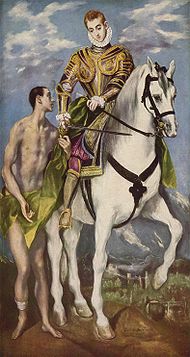
Also it is the day we celebrate St Martin of Tours – patron saint of France. Martin was a soldier who changed sides. He was a Roman soldier who became a “soldier of Christ” whereupon he declared, “I cannot fight”.Martin is famous for having halved his cloak to share it with a beggar. The cloak became an important relic which was specially cared by a priest in its reliquary. Wikipedia tells us that this priest was called “acappellanu” and “ultimately all priests who served the military were called cappellani. The French translation is chapelains, from which the English word chaplain is derived.”

St Martin and the Beggar by El Greco

This gives a fascinating insight into Christian ministry with “chaplaincy” grounded in this act of love – the sharing of the cloak. There is a further twist to the story in that Martin discovered his cloak restored when he woke one morning. Love defies the accountant and moves us into a world of magic and mystery. How can one cloak become one and a half cloaks, or even two cloaks? (Because I bet it wasn’t only Martin who was so blessed). Jesus defies accountancy logic when he declares that “whoever wants to save his life will lose it, but whoever loses his life me will find it” (Matt 16:25). This mystery means that those who are determined to give of themselves don’t need to count the cost.


Those who give their life for their friends have a love which is supreme. There is no greater love than this – and there is no waste in such love. Simon Marsh has a wonderful story on his blog about the war veteran being greeted by a grandchild from one of the villages he helped to liberate. Such stories highlight the life-giving commitment of people who share Martin’s vocation as soldiers and chaplains. But Martin’s declaration sounds a warning at a time when we tend to avoid the hard questions of war – when life is wasted and brutalised. “I am a soldier of Christ. I will not fight.”


The Realm of Possibility & the World of Accountancy

>I have just started reading a book called “The Art of Possibility” – which talks about us living in the “realms of possibility” as opposed to living at “Measurement central” governed by “survival thinking”. The authors, Zander and Zander write:

“In the realm of possibility we gain our knowledge by invention. We decide that the essence of a child is joy, and joy she is. Our small company attracts the label, “The Can-Do Company” … We speak with the awareness that language creates categories of meaning that open up new worlds to explore. Life appears as variety, pattern, and shimmering movement, inviting us in every moment to engage. The pie is enormous, and if you take a slice, the pie is whole again…

The action in a universe of possibility may be characterised as generative, or giving, in all senses of that world – producing new life, creating new ideas, consciously endowing with meaning, contributing, yielding to the power of contexts. The relationship between people and environments is highlighted, not the people and things themselves. Emotions that are often relegated to the special category of spirituality are abundant here: joy, grace, awe, wholeness, passion and compassion.”

People and things increasingly have price tags. They are entered on balance sheets and they are counted in and counted out. (Horrible thing the Government, when they talk about the “head count” being affected by the promised cuts (aka redundancy)). The accountants can’t get their hands on what happens between people. The generation of ideas and life defies logic. We are in the world of mystery rather than accountancy when we focus on the relationship between people and environments. It is sheer magic the way the pie becomes whole again.

>Knowledge is experience

>Great quotes on education, teaching and learning:

An Einstein maxim is ‘Knowledge is experience – everything else is just information.’ We are now in an age where information is more abundant than could ever have been imagined…..students may emerge from an hour’s session with several thousands of words on equivalent in handout materials, downloadable files from an intranet or web. But it is still just information until they have done things with it to turn it into the start of their own knowledge about the subject concerned, and link it up to other things they already know …….. Perhaps at one level the quest to make learning happen in post-compulsory education boils down to how best can we help our learners turn information into their own knowledge.

From Phil Race ‘Making Learning Happen’

and

A teacher ought to be a stranger to the desire for domination, vain-glory, and pride; one should not be able to fool him by flattery, nor blind him by gifts, nor conquer him by the stomach, nor dominate him by anger; but he should be patient, gentle, and humbler as far as possible; he must be tested and without partisanship, full of concern for people, and a lover of souls.

from Amma Theodora – who was one of the early Christian monastics who went into the Egyptian desert during the third and fourth centuries, to live a life of prayer and contemplation. She had been married to a Roman tribune, and following her husband’s death, she retired to the desert to pray. Her wisdom was much sought after and a number of her sayings have survived, including this one about Christian teachers.

The Long Walk to Freedom – still

>

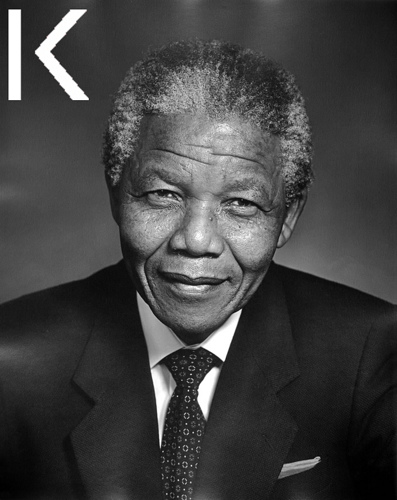
20 years ago ended a remarkable stretch as political prisoner for Nelson Mandela. The next stage of the journey is remembered with awe as Nelson continued his Long Walk to Freedom with such incredible resilience, commitment and dignity. He has been world leader for a generation leading the movement of South Africa from the dark ages of apartheid to freedom.

Astell Collins posted this tribute entitled “The Age of Grace and Timeless Wisdom”

Have you ever observed a lion bound?
Or witnessed the ants freely running around
Did you ever stop to ponder your destiny?
Journeying beyond your daily responsibility
What is the purpose of tomorrow?
If there is no comfort in times of sorrow
Could you clarify the functionality of masculinity?
And explain the multiplicity of femininity
Nelson Mandela, you have given us a proud legacy
Thus to future generations you are legendary
You have thought us your people to forgive
And have shown us that only in love can we live
Your life displayed the fundamentals of greatness
And uncovered the power of selflessness

We thank you for giving us back our home
A paradise where all of mankind has made their own
You have suffered inconceivable cruelty
To ensure the preservation of our humanity
As a people, our coming together in celebration
Demonstrates to you our sincere love and appreciation
We recognize the relevance and power of spirituality
While experiencing the beauty of our freedom in unity
Your life has become the essence of the human story
One of love and resolve, equality and destiny
You are a hero internationally and not only in Africa
So the world pauses to pay its respect to you, Madiba

And today’s prayer picks up the diversity theme:
Almighty God you have created the heavens and the earth and made us in your own image: teach us to discern your hand in all your works and your likeness in all your children ……

Member of the Board (of ironing)

>Thinking family – a domestic task which has spanned the years of our family has been the ironing. I have been the one who does the ironing – and it has been the mindless job I have been doing on Sunday evenings when I’ve been too tired to sit still. Seeing me through that job has been my i-pod, and before that CDs, and before that vinyl and before that those tapes that were forever getting tangled up. But the music doesn’t change. I wonder if it’s generally the case that the music we love in our (late) teens becomes the themes for our whole life. So for me James Taylor still puts a crease in the trousers. Paul Simon still gets the t-shirts ironed. Kirsty MacColl gets the socks paired. There are interruptions to the ironing routine. Old favourites produce new albums, so the steam of the iron has played percussion to Graceland since 1986. Presents provide interruption (this Christmas: Seasick Steve and Mumford & Sons) and new tracks get followed. Katie Melia smoothes, while ironing to the world music of Freshlyground, Orchestra Boabab and Youssou N’Dour seems positively exotic.

Ian Bradley
and David Adam (and many others)point out the prayer themes of Celtic spirituality. Such spirituality prays through all the domestic routine, including fire lighting, getting dressed (patrick) and milking the cow. I have to say that I have been so slow to realise the lost opportunities for prayer when ironing – prayer for the family and the occasions when they will wear the particular clothes – the meetings, the tests, the nights out, their friends, their confidence and their love. Never mind. There will be more ironing next weekend. (Thank you Natalie Maynor for the photo of Ironing Board Sam)