>Pause for Reflection

>
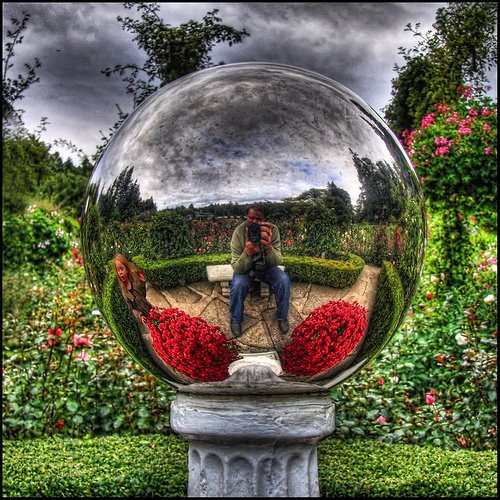
This picture is from Estaticist’s photostream and is from Butchart Gardens on Vancouver Island called Pause for Reflection.
Sam Wells refers to the way sherpas in the Himalayas will suddenly stop their climbing, put down their equipment and rest – as if waiting for shomething or somebody. This causes great consternation to westerners. “Why do you do that?” The sherpas’ reply is “We have travelled a long way; we are waiting for our souls to catch up with our bodies.”
This seems to represent an essential spiritual discipline – and we westerners need to learn that though we have moved on so fast, and been through so much change, we haven’t always given our souls time to catch up. It is the same principle as the sabbath – a regular time, once a week for us to catch up with ourselves. And for the same reason, we need family holidays and celebrations to allow ourselves to catch up with one another and to realise that we have missed each other in all the busyness.
Sometimes though, our soul is never going to catch up with us. We can wait until the snow melts, but our soul is never going to find us. Being lost like that signals the need for us to retreat – with retreat being another essential spiritual discipline, Retreating far enough helps us regain soul and and the location of what we value most. The story of the Prodigal Son is the classic tale of the retreat of a man who finds all that he ever wanted and all that he ever needed.

Strangers

We have heard it said “beware of strangers” – usually because of what they are liable to take – our jobs, our women, our money.

The Bible encourages us to welcome the stranger. Many are mentioned in the Bible as people who are welcomed as gifts from God (like Melchizedek, Pharoah, Ruth, Queen of Sheba, the Canaanite woman – and many others). Jesus himself is seen as a stranger and sees himself as a stranger – he sees himself in the outsider, the poor, the prisoner and the sick and teaches his disciples to recognise him in the stranger and outsider. (Matthew 25)

We have much to learn about entertaining strangers. Here’s one story which Sam Wells tells in his book, God’s Companions. It is about a couple who go on holiday and take a lift to a scenic viewpoint. They had a Muslim guide. They rushed off to take some photographs, and then realised that they had not seen their guide for some time. Walking around a corner they saw him, semi-prostrate, praying to God. They were humbled realising how they and he had spent the last 15 minutes. They talked about this when they got home and shared this prayer with their congregation:

“If I love thee for hope of heaven, then deny me heaven;
If I love thee for fear of hell, then deny me hell;
But if I love thee for thyself alone, then give me thyself alone.”

People were confused when they discovered it was a Muslim prayer, but the couple who had been on the holiday pointed out that just as the guide had been a gift to them in jolting their spiritual complacency, so this prayer could also be a gift – perhaps dispelling some ignorance and prejudice about Islam.

Spirituality

Spirituality “must now touch every area of human experience, the public and the social, the painful, negative, even pathological byways of the mind, the moral and relational world.”
Rowan Williams

“Spiritualities that are disengaged from the world, rather than committed to it and to its transformation, fail to reflect the irrevocable commitment of God to the world in Jesus Christ.”

Magic moments

Two chance encounters to report.

Shopping for food someone comes up to me and says “You married us 25 years ago today. We have just been out to lunch to celebrate”. He then brought his wife Julie over to say “hello”. They could have just passed me by and then dismissed the incident with a “isn’t that the bloke who married us?” Thank you Colin for stopping me and allowing me to be part of your celebration. It was one of yesterday’s highlights – and a eucharistic moment.

It was the second of the day. Halfway though our midweek Communion we were interrupted – at the exchange of the Peace – by one of (I presume) our refuse collectors who was asking to use our toilet. It was locked and we had to break from the service while I unlocked (I was the one who knew where the key was). We had as one of our readings a passage which included the words “practise hospitality”.

What was so special about that moment? It was the disruption made sacrament by a stranger who became a brother at that moment – whose work in many cultures and minds makes the likes of him “outcast”. (See Gehenna as example) Refuse collectors are part of our throw away world – what they collect is our refuse, collected into places we refuse to go to or think about. Heaven and earth came together in that moment and the Peace passed all previous understanding into a new realm of meaning. It was also a reminder that those who do rounds need toilet facilities!

[We] live after the central moment of history, the death and resurrection of Christ, which in turn came after creation, fall and the calling of Israel; but [we] live before the final moment of history. the full embrace of earth by heaven, the transformation of the whole earth into a Eucharist.
Sam Wells – God’s Companions p65

Giving

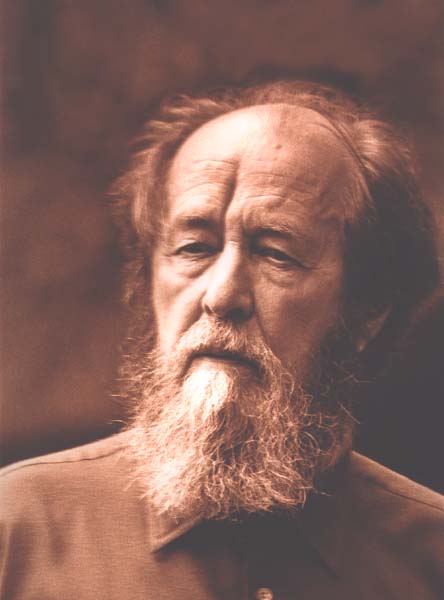
>Miroslav Volf refers to a story written by Alexander Solzhenitsyn in his book Free of Charge. That’s Solzhenitsyn’s picture.

In the story Matryona’s House an old woman “never tried to acquire things for herself. She wouldn’t struggle to buy things which would mean more to her than life itself. All her life she never tried to dress smartly in the kind of clothes which embellish cripples and disguise evildoers.” As the story unfolds she is misunderstood and abandoned, even by her husband. Six of her children die but she carries on giving.

“We all lived beside her”, Solzhenitsyn put in mouth of one of her fellow villagers, “and never understood that she was the righteous one without whom, according to the proverb, no village can stand. Nor any city. Nor our whole land.”

Volf comments a gift is an “event between people. Gifts serve “to create, nourish or re-create” social bonds.

I don’t think I am a good giver. According to Volf “ungracious and reluctant givers inspect the causes of a need and dole out the benefits in proportion to its legitimacy.” He refers to Nathan the Wise , a play by Lessing written in 1779, in which Sultan Saladin enlists a beggar to be his treasurer. The Sultan wanted to end begging by ensuring that beggars could afford not to beg. He wanted a beggar as his treasurer “because only a beggar knows how to give to beggars appropriately”. Of his previous treasurer Saladin said:”He gave so ungraciously when he gave; first inquired so vehemently into the situation of the receiver; never satisfied that he wa slacking, also wanted to know the cause of the lack, in order to measure the cause stingily against the offering.”

I wonder whether Christian teaching about giving has helped. Most sermons seem to be about persuading worshippers to hand over their cash to keep the show on the road. On the drain/radiator test, this sounds more like a drain and a far cry from God giving life to the world. (radiator!)

Faith

>
Miroslav Volf in Free of Charge (subtitled “Giving and Forgiving in a Culture Stripped of Grace” expands on the theme of God the Giver who continues to give in a world inclining towards “gracelessness”. He speaks of faith:

Faith is not something we give to God. In that case, faith would be a work, and a silly kind of work because it would be work we do even though it deosn’t benefit anyone. But exactly the opposite is true. To have faith in God is to be “without works” before God (Romans 4:5). Faith is the way we as receivers relate appropriately to God as the giver. It is empty hands held open for God to fill…. In contrast good works offered to God dishonour God; they tell a lie about God and our relation to the divine Giver, and they take away God’s due.

I remember David Lunn, on hearing of his appointment to be Bishop of Sheffield speaking of his surprise because he felt “he didn’t believe enough”. Who hasn’t thought that?
The faith that expresses itself with hands outstretched trustung God’s gifts is something of the heart. When I say something like “I’m not sure what I believe” part of that is to do with my head and perhaps is saying “there are loads of things I don’t understand”.
Being empty handed before God suddenly makes that not matter. There is nothing we can do to make God love us more, and there is nothing more we can say which will make him love us less. All we can give to God is delight or pain.
Rowan Williams likened the giving of God to the Niagara Falls. Love cascades to us – that’t the empty hands bit – but it’s only living water if we release the gifts to others. If we don’t the water stagnates and becomes poisonous.

Resurrection

Resurrection: Borgo San Sepolcro

Today it is time. Warm enough, finally,
to ease the lids apart, the wax lips of a breaking bud
defeated by their steady push, hour after hour,
opening to show wet and dark, a tongue exploring,
an eye shrinking against the dawn. Light
like a fishing line draws its catch straight up,
then slackens for a second. The flat foot drops,
the shoulders sag. Here is the world again, well-known,
the dawn greeted in snoring dreams of a familiar
winter everyone prefers. So the black eyes
fixed half-open, start to search, ravenous,
imperative, they look for pits, for hollow where
their flood can be decanted, look
for rooms ready for commandeering, ready
to be defeated by the push, the green implacable
rising. So he pauses, gathering the strength
in his flat foot, as the perspective buckles under him,
and the dreamers lean dangerously inwards. Contained,
exhausted, hungry, death running off his limbs like drops
from a shower, gathering himself. We wait,
paralysed as if in dreams, for his spring.

(Piero della Francesca’s Resurrection hangs in the
civic hall of Borgo San Sepolcro, Tuscany.)

>Blessing

>It is easy to believe we are ‘cursed’ – naturally, not supernaturally, I mean.

The media messages pick on our personal, social and institutional points of vulnerability. All these voices leave us with a deep sense of unease.

If we feel cursed ourselves the likelihood is that we will curse others.
However, if we know we are blessed the likelihood is that we will bless others. I know how much I curse others, and I know how much I bless others – and can draw my own conclusion that I haven’t been doing enough listening to the voices that call me blessed. I know I am not alone in finding it hard to accept blessing and to treasure the blessings people give.

Blessing comes from the Latin word “benediction” meaning “speaking well”. Jesus has a warning for us when too many speak well of us (Luke 6:26) that means we might have become too powerful, boastful and corruptible – but all of us need to be affirmed.

Nouwen points out that this is the way to “a sense of well-being and true belonging” and was moved by the blessing given to a 13 year old at his bar-mitzvah by his parents: “Son, whatever will happen to you in your life, whether you will have success or not, become important or not, will be healthy or not, always remember how much your mother and I love you.”

For Nouwen, prayer is about listening to that voice of blessing – to hear with the “ear of faith” the persistent voice of love saying “You are my beloved child – on you my favour rests.”

The blessings are there for us to receive.

“the blessings of the poor who stop us on the road, the blessings of the blossoming trees and fresh flowers that tell us about new life, the blessings of music, painting sculpture, and architecture – all of that – but most of all the blessings that come to us through words of gratitude, encouragement, affection and love. These many blessings do not have to be invented. They are there, surrounding us on all sides. But we have to be present to them and receive them. They don’t force themselves on us. They are gentle reminders of that beautiful, strong, but hidden voice of the one who calls us by name and speaks good things about us.”

>Being loved

>
We don’t hear much of what God (as Father) has to say in the gospels. He does say to Jesus “You are my beloved”, and then Jesus says to us “as the Father loves me so I love you”, so Jesus had the clear intention that we would know ourselves as “beloved”.
It is for us to hear this one voice above all the other voices that crowd our minds – all with the same basic message “Prove yourself. You are guilty until proved innocent” – so we try to prove ourselves through our image, through our hard work – and still those voices refuse to believe us, perhaps because in all our hearts of hearst we know that we are guilty. There’s always something of ourselves we need to hide away. “If they knew what I was really like they would never love me” – and so we bury our shame.
There is a beautiful story in Genesis of Adam hiding his shame. But God searches out Adam and his shame – and in the lovely story of the return of the prodigal the father embraces the shame of his son. (The picture is from the Poor Clare Colettine Community at Hawarden and shows the embrace of the prodigal)
When Jesus says “I love you” he means us to to know that God loves us. He knows that we all have a dark place in which we hide our shame. We do not have to prove ourselves before God loves us.
Henri Nouwen wrote of “being the beloved” and claimed that the greatest temptation is “self-rejection”, the flip side of which is “arrogance”. He wrote:

Both self-rejection and arrogance pull us out of the common reality of existence and make a gentle community of people extremely difficult, if not impossible, to attain.

This video is worth a watch/listen – a sermon from Henri Nouwen.

Likes and dislikes

> If “no man is an island” (John Donne) why are we so insular? I often hear people report back from their holidays on friends they made while away. “We had so much in common” and “we all had similar backgrounds/jobs”. I wonder if we like the people who are most like us.

I’ve enjoyed the work of many people who have highlighted the many different styles of personality and behaviours we have. This is how we have been made. Some of us are built for a quick sprint, others for the long haul. We are individuals who need to like those who aren’t quite like us. Practical people lose patience with visionaries. Visionaries may regard the practical people as a bit boring – but both need each other. Those who can crack the whip can move people forward but may be seen as insensitive by those who are conscious of the feelings of others. To get anything done we all need to work together and talk together.

This is not a new insight. God from the beginning of time said “it is not good for man to be alone”. The stories of Cain and Abel, and the Tower of Babylon are both examples of how difficult it is to come to terms with our differences. Centuries later St Paul was shocked by the divisions in the Corinthian Church. Members had taken sides liking those who were like them. Paul calls them to order encouraging them to think that they were members of one body and that they needed to get co-ordinated. Every part of the body has a different function – fingers, bowels and eyes. Each member is gifted differently and we need to learn to like what we’re not like – otherwise we can’t live together or work together for a better world.

Paul’s is a good lesson (as is Belbin, Myers-Briggs and all those working on similar lines) for the Lambeth Conference (coming soon), and any group of people. Paul insists that it is all possible if we have a mind on the bigger picture and allow God to do the knitting.

written for Grapevine June 2008