I’ve been thinking about the way, when you walk down a crowded aisle, people pull in their legs to let you by. Or how strangers still say “bless you” when someone sneezes, a leftover from the Bubonic plague. “Don’t die” we are saying. and sometimes, when you spill lemons from your grocery bag, someone else will help you pick them up. Mostly, we don’t want to harm each other. We want to be handed our cup of coffee hot, and to say thank you to the person handing it. To smile at them and for them to smile back. For the waitress to call us honey when she sets down the bowl of clam chowder and for the driver of the red pick up truck to let us pass. We have so little of each other, now. So far from tribe and fire. Only those brief moments of exchange. What if they are the true dwelling of the holy, these fleeting temples we make together when we say, “Here have my seat.” “Go ahead – you first.” “I like your hat.”
This is a poem by Danusha Laméris from her first collection, The Moons of August which was chosen by Naomi Shihab Nye as the winner of the 2013 Autumn House Press Poetry Prize. Naomi Shihab Nye has also written a remarkable poem on Kindness.
I like the language of kindness, of kith and kin, that in German children are kinder, that kindness is the making of humankind and that humankind should be qualified by kindness. By themselves small kindnesses are rarely remarkable in the sense that they are newsworthy, but they make our days and open the door to the greater kindnesses of friendship and community. Small kindnesses are usually intuitive, born by habits of the heart grown in rich cultures of difference and longing. In one place the bus stop is a silent waiting room of isolation, in another, like Glasgow, it’s a meeting place. Why the difference? What are the differences in the habits of the heart of both places?
Danusha Laméris asks the question, what if these small kindnesses are the true dwelling of the heart? Should we be surprised when everything about the kingdom of god is small? In two tiny parables Jesus explains the kingdom of God. “He said, ‘What is the kingdom of God like? And to what should I compare it? It is like a mustard seed that someone took and sowed in a garden; it grew and became a tree, and the birds of the air made nests in its branches.’ And again he said, ‘to what should I compare the kingdom of God? It is like yeast that a woman took and mixed in with three measures of flour until all of it was leavened.” (Luke 13:18-20)
So in a simple touch, a smile, a whisper or a word might be folded the holy – just a single seed planted in our lives. There probably isn’t anywhere else for the holy to dwell.
The Fool (1944) by Cecil Collins The Fool features in much of Collins’s art. The Fool represents saint, artist and poet – the saviours of life, according to Collins. He always portrays the fool as an innocent figure who, although finding no place in the modern world, has the vision to find fulfilment and eventual reward. Here the Fool is carrying a heart (for love) and an owl (for wisdom and freedom)
When it comes to power and leadership in the church are we confused by worldly perceptions of power and success?
Recently I have heard about arguments amongst leaders about who sits in the “best seats” in the chancel, and there’s real power politics at play in ecclesiastical processions!
If we are entitled (Rev, Reader etc) what are we entitled to? Cases of abuse show how wrong some of us so entitled have been.
What are the qualifications for leadership? And what is our unconscious bias about those qualifications – and how much potential is wasted by those biases?
Justin Lewis-Anthony makes the case that our understandings of leadership are qualified and conditioned by Hollywood and the leadership of those on the “wild frontier” as portrayed by decades of “westerns”. (Donald Trump fits that well.) Lewis-Anthony talks about “the myth of leadership” and describes the way the myth is told.
Someone comes from the outside, into our failing community. He is a man of mystery, with a barely suppressed air of danger about him. At first he refuses to use his skills to save our community, until there is no alternative, and then righteous violence rains down. The community is rescued from peril, but in doing so the stranger is mortally wounded. He leaves, his sacrifice unnoticed by all.
This is the plot of Shane, Triumph of the Will, Saving Private Ryan and practically every western every made. It is the founding myth of our politics and our society. It tells us that violence works, and that leadership only comes from the imposition of a superman’s will upon the masses, and preferably those masses “out there”, not us.
The Bible is very critical of worldly systems of power and leadership. Walter Brueggemann (in Truth Speaks to Power) makes the point that the pharoah is never named in Exodus, but that he is a metaphor representing “raw, absolute, worldly power”. He is never named “because he could have been any one of a number of candidates, or all of them. Because if you have seen one pharoah, you’ve seen them all. They all act in the same way in their greed, uncaring violent self-sufficiency.” Samuel is scathing about the Israelites’ insistence that they be led like the other nations. He knew (1 Samuel 8:11-17) that those sort of leaders are always on the take (sons, daughters, chariots, horses, fields and livestock – everything).
The ways of God are very different to the ways of preferment and career advancement. Paul is amazed when he surveys his fellow disciples. He wrote to the church of Corinth: “Consider your calling. Not many of you were wise according to worldly standards, not many were powerful, not many were of noble birth. But God chose what is foolish in the world to shame the wise. God chose what is weak in the world to shame the strong; God chose what is low and despised in the world, even things that are not, to bring to nothing things that are, so that no human being might boast in the presence of God.” (1 Corinthians 1:26-29).
Similarly Jesus praised God that she had hidden the things of heaven from the seemingly well qualified. “Jesus, full of joy through the Holy Spirit said, “I praise you Father, Lord of heaven and earth, because you have hidden these things from the wise and learned, and revealed them to little children.” (Luke 10:21).
What difference would it make to our CVs if we focused on our foolishness and our weakness? Would it prompt us to realise that power and leadership is found in some very strange places and surprising people? What difference does it make when we recognise that leadership qualifications are the gift of God and that the leadership qualities are love, joy, peace, forbearance, kindness, goodness, faithfulness, gentleness and self-control (Galatians 5:22-23) by which measures pharoahs look hopelessly unqualified.
I have recently had the privilege of reading The Bible and Disabilityedited by Sarah Melcher, Michael C Parsons and Amos Yong. I quickly realised how pervasive disability is and how important a lens it is to view Christian leadership. Under their prompt it is easy to see how “disabled” the people featured in scripture are. Moses was chosen in spite of his speech impediment. Jacob bore his limp with pride that he wrestled with God (and Israel takes its identity and name from that fight). Jesus’ crucifixion was the ultimate disability.
I asked the question on Twitter, “would it make a difference in leadership if we focused on disabilities and vulnerabilities rather than just abilities?” Friend Mark Bennett replied: “In Matthew’s gospel Jesus uses parables so that people hear, “see”, understand anew, overcoming disabilities of preconception, prejudice and fear.” Friend Jenny Bridgman replied: “”What are my blind spots?” is a tough but necessary #leadership question. Some more are: What can someone else do better that I can? How can I free them to do that well? Or even – how do my/our disabilities and vulnerabilities make my/our leadership more effective?”
I suspect that as long as we ignore these questions there will always be “us” and “them” – a few privileged by the powers-that-be working “for” (or even “against” as some sort of pharoah) rather than working and living “with” and in love with others.
PS. I didn’t include the title of Justin Lewis-Anthony’s book because it is so flippin’ long – It is You are the Messiah and I should know: Why Leadership is a Myth(and probably a Heresy) .
He Qi is a Chinese artist who spent the years of the Cultural Revolution painting pictures of Mao Tse Tung in the day time as an alternative to forced labour, and in the evening painting pictures of the Madonna inspired by his fascination with Raphael’s Madonna and Child.
He Qi’s Nativity is typical of his work in terms of colour and vibrancy. His painting resembles stained glass and always feel they have an element of fun. In this picture you can see the sheep virtually dancing in response to the angels. Listening is an important element of this piece. Of course, the sheep stand for all those who know the Lord as their shepherd.
The light in this Nativity comes from heaven and is far more intense than the light any of us can hold. The light Joseph holds is dim compared to the light that Mary holds. – but then Joseph is fading from the picture with his work well and faithfully done.
Mary is pictured in the pink. Normally Mary is dressed in blue, but here He Qi picks up pink as a symbol of marriage and shows Mary as the archetype of the church who holds and treasures Jesus. Jesus is offering a red apple to Mary and the church. This is a reference to the Garden of Eden signifying Jesus as a new Adam and Mary and the church as a new Eve. This is new creation.
The apple is blood red to indicate the nature of God’s offering. Is there also an ambiguity in the shape of the apple? Is it also heart shaped to indicate that this is the new heart promised by God to his disheartened people (Ezekiel 36)?
This is the Nativity. Christus natus est. This is Christmas. Happy Christmas.
“A formerly homeless theatre workshop participant searches out the right characters for his tableau; he scans the group, and points to me. He places me in the scene; he lifts my arms and shapes my hand into a dismissive wave; he adjusts my hips and torso; he sculpts my face with his fingers, gently, until I am scowling scornfully. He crouches low, cowering in front of where I stand, and we hold this image. I hold this stance, I become this character.
I feel in my body how he sees people like me, I feel in my body that I am this character. My arms begin to ache; I try to look for cracks in the mould to overwrite this position of scorn, but I am frozen in character before the group. I am implicated.”
That is from Emily Beausoleil’s book The Politics, Science and Art of Receptivity. It was brought to our attention by Al Barrett during a residential conference he facilitated exploring Theology post-Grenfell, post-Brexit (!).
Imagine that. Imagine being so contorted in the eyes of a brother or a sister – someone who is homeless. Imagine what we look like as we step aside, as we look the other way, as we pretend to search our pockets for “no change”. Imagine what we sound like with our feeble excuses and dismissive words. Imagine the ugliness of ignorance and arrogance. Imagine the ugliness of being too busy.
Imagine the hands sculpting our face into scowling impatience and our imposing presence towering over the cowering and crouching.
Then imagine those rough hands at our face again – this time taking our cheek for a kiss, and a “thank you, friend”. What change would there have been in our face, posture and behaviour?
Reservoir 13 by Jon McGregor is set in an unnamed village in Derbyshire’s Peak District. On the surface this is a story about what happens to a village community when tragedy strikes. Buried deep is the question of how a community can sustain a compassionate interest in the aftermath of tragedy.
Reservoir 13 opens with a search for a missing girl, Rebecca Shaw. It happened at least thirteen years ago. It’s a common enough tragedy, as evidenced by Jon McGregor’s careful punctuation of the story with reports of similar events on the television news. There are thirteen chapters – one for each of the years since the girl’s disappearance. Each chapter begins with the same words: “At midnight when the year turned there were fireworks” (including arson) and each chapter follows the same chronological formula. There are no paragraphs, just long lists of observations of events and relationships.
Life does go on. Weather happens, birds carry on nesting, children grow, relationships change, cleaning has to be done, bridges need mending, the reservoirs need maintaining and the cricket team keeps losing. People come and go.
Life goes on. Is that cliche, or is that proverb – wisdom hard won in the teeth of bitter experience? The author is omniscient. He sees it all. There is no moral judgement – except in his poetic retelling of this village life in details which are compellingly compassionate.
This is a book which focuses on what doesn’t happen, rather than what does. A girl goes missing. What are you supposed to do after the search party? This is a story where a girl goes missing twice: when she is on holiday with her parents and when she goes missing from the story.
I remember a similar search where I was living in the Manor estate in Sheffield. A boy had gone missing. Local residents wore themselves out for weeks, joining in search parties, day and night. I can’t remember what happened. I can’t remember whether the boy was found, whether he was dead or alive. I can’t remember his name. Is that to my shame, or is that what happens? Life goes on.
A boy or girl goes missing, but it is only those closest to them who will miss them. We barely remember. That is how we re-cover.
Reservoir13 was winner of the 2017 Costa Novel Award and was long-listed for the Man Booker Prize 2017. It was published by Fourth Estate in 2018.
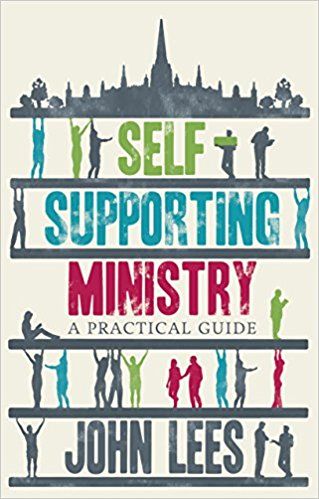
John Lees has written a truly practical guide to self-supporting ministry and here I am reviewing it as someone who sees himself far more clearly as a self-supporting minister after reading John’s challenging chapters. John Lees is Bishop’s Officer for Self-Supporting Ministry for the Diocese of Exeter. He has served as an SSM for fourteen years. He is a career coach well known for his books including How to Get a Job You Love and Secrets of Resilient People.
There is considerable lament in this guide for the ways in
which the energies and expectations of self-supporting ministers are
increasingly focused on the support that they give to local churches. Lees
explores what has happened in the twenty years since the publication of Tentmaking in 1998. The authors then,
Francis and Francis, focused on worker priests, MSEs (ministers in secular
employment) and bridge ministry. Lees traces these preoccupations of ministry
further back and leaves us with a sense that we have lost missional
opportunities as energy has focused on local churches rather than ministry
which is more liminal. He reminds us that self-supporting ministry is the New
Testament model, with Paul being the first self-supporting minister.
Lees reports on the findings of Teresa Morgan’s research[1] (2011). Part of her
summary states “few respondents [her sample of self-supporting ministers] saw
themselves as having much, if any ministry outside the formal structures of the
church”, (Lees, p39), yet “most SSMs spend much of the time outside formal
church structures. They are, together with lay people, the natural missionaries
to our society.” (p40). The case studies with which John concludes each chapter
are testimony to the enormous range of contexts of ministry, but also, there is
a unanimity that there is very little done to prepare or encourage SSMs and lay
people for this ministry.
Lees is particularly strong when he talks about ministry in
the world. His confidence in the world is borne from his ministry in the
secular. He writes: “We seem to have lost some of the eagerness of past
generations to find God in contemporary life, and we may have lost sight of the
way Church and society learn from one another.” (p59). We have become a
“frightened church”, an institution under stress, and institutions under stress
“respond like human beings, becoming more self-protecting”. (p59).
I was left wondering what the influence of Tentmaking was on John Lees’s call, theology and ministry and what the effect on vocations would be if we were to support, encourage and celebrate the ministries that so many tentmakers, teachers, hairdressers, bankers and waiters have. I was left feeling affirmed in my understanding of my own ministry as being “self-supporting” (albeit with many freedoms and privileges).
And I was left with a strong sense that the most common model of ministry is that of self-supporting ministry, and the context of that ministry being secular. Just a small proportion of those self-supporting ministers are licensed. An even smaller proportion of them are ordained. They represent 29% of licensed parochial clergy in the Church of England (2016). It seems a shame if ministry training, formation and deployment is seen to be organised around stipendiary clergy – a small part of the ministry of the church of God which by and large has to be “self-supporting”.
Arguably Lees should have had a wider focus on other forms of self-supporting ministry than those who are ordained, but John writes from the heart, from his experience as a coach and a priest, and his heart has gone out to his fellow priests who are often left unsupported. There is challenge, care and common sense suggestions that merit a reading for the sake of all those who are self-supporting ministers (often unrecognised) and particularly those who are ordained self-supporting ministers.
[1]Self-supporting ministry in the Church of
England and the Anglican churches of Wales, Scotland and Ireland: report of the
national survey 2010.Oxford: Teresa Morgan.
Is is 70 or 72, that is the question? I’m quite fascinated by numbers. Chapter’ 10 in Luke’s Gospel recounts the number Jesus sent out “like lambs in the midst of wolves” with “no purse, bag or sandals” with the greeting “peace to this house”.
Were there 70 or 72? I am just asking for a friend.
Of course, the answer begins with 7. Anything beginning with 7 is the right answer because 7 marks all our time. We have 7 days in a week – as God took 7 days for creation, 6 days work, then a day’s rest. 7 carries with it the meaning of perfection and completion.
According to some texts the answer is 70 – and there is good reason that there should be 70 because there were thought to be 70 nations – the descendants of Noah’s children who settled the earth after the flood. Is then the sending of the 70 the Godsend to all people who on earth do dwell? (And Jesus did send out the “70” two by two, didn’t he?)
According to other ancient texts the answer is 72. And there seems to be good reason for that as well. If there were 72 Luke 10 would read “after this the Lord appointed 72 others”. What is the “after this” referring to, andwho are the others? The previous chapter (Luke 9:1-6) recounts Jesus calling “the twelve” together and sending them out with no staff, bag, bread, money. I am putting 2 and 2 together here and thinking that Luke might have intended “72”, because 72 plus the others (12 of them) makes 84.
84=7×12. There is the 7 again, that number signifying completion and satisfaction. But there is also 12, the number of the apostles, the number of the tribes of Israel (because of the number of Jacob’s sons). 84 is mentioned elsewhere by Luke – as the age of Anna the prophetess, who prayed in the temple night and day and who spoke about the child Jesus “to all who were looking for the redemption of Jerusalem”. (Luke 2:36-40). Anna’s age adds further significance to the number 84. It becomes a number of wisdom and proclamation.
If 72+12 = all the people of God, this becomes a passage not just about the sending out of 72, but the sending out of the whole people of God, you and me, sent out two by two.
If the answer is 70 then this become a passage about the destiny of peace’s greeting. “Peace to this house” then becomes a greeting for the whole world.
Is it 70 or 72? I’m just asking for a friend (to whom it matters).
Or do we treasure the happy ambiguity presuming that Jesus and Luke meant both: that the good news of the coming of peace should and would be carried to all nations, and that all God’s people are commissioned to be bearers of peace, even as lambs amongst wolves, even eschewing all the usual self defences?
Refugees can be read two ways. Every refugee story can be read two ways. Usual media accounts tell the story such as “migrants have been prevented” – or, as here, “Illegals have landed”. Little is told of the desperate back stories of the refugees. Their voice is unheard.
Refugees can be read two ways. It can be read as if you don’t care. And it can be read as if you do. You can read it from top to bottom, or you can turn the world upside down and read it from bottom to top, depending on how you read the world. This poem can be read two ways. That is the way with this poem exploring two very different ways of reading the situation.
Brian Bilston is known as the Twitter Laureate. You can find more of his poems at his Poetry Laboetry
During Refugee Week I have been posting a poem a day. Today’s poem is one to watch. It highlights misleading promises, extreme dangers and dashed hopes than many refugees have to face.
Please click the image to see and hear North Star Fading – a zoom comic from PositiveNegatives who tell true stories drawn from life – this from the lives of Eritrean refugees.
Karrie Fransman did the visuals and Lula Mebrahtu was responsible for the words and sound. Interviewed about the work Karrie explained “I’m Jewish and my grandfather was a political refugee. Our festival Passover commemorates our history as refugees, so there is a personal link.”
Lula has this to say. “My own experiences play a big role when I am creating. I remember a few years back, I watched a news report about a ship that had caught on fire and sunk near the border of Italy. A lot of ‘illegal immigrants’ onboard died. There were no names, pictures or interviews with those who survived, just factual news, and the narrative was focused on the immigration crises. That same day, my mother got a phone call. It transpired that a family friend had a son on that ship, and he died. His mother didn’t even know he made the voyage. My mother had to break the news to her.”
Benjamin Zephaniah describes himself as a “Rasta Folkie”. He’s a well known British poet who plays the part of Jeremiah Jesus in Peaky Blinders(I love Peaky Blinders!). He comes from Wandsworth, Birmingham, which he describes as the “Jamaican capital of Europe”.
I am posting a poem a day for Refugee Week. This poem is called The British and is about what makes us tasty. I am from Leicester which has a long tradition of welcoming refugees (as in this welcome the city gave to Basque refugees in 1937). But even there, I remember signs in pub windows in the late 50’s and early 60’s which said “no blacks, no gypsies, no Irish”. Little did they know, and little did they understand that they were from a long standing melting pot with some good, hearty refugee stock.
Here’s the recipe:
The British
Take some Picts, Celts and Silures
And let them settle,
Then overrun them with Roman conquerors.
Remove the Romans after approximately 400 years
Add lots of Norman French to some
Angles, Saxons, Jutes and Vikings, then stir vigorously.
Mix some hot Chileans, cool Jamaicans, Dominicans,
Trinidadians and Bajans with some Ethiopians, Chinese,
Vietnamese and Sudanese.
Then take a blend of Somalians, Sri Lankans, Nigerians
And Pakistanis,
Combine with some Guyanese
And turn up the heat.
Sprinkle some fresh Indians, Malaysians, Bosnians,
Iraqis and Bangladeshis together with some
Afghans, Spanish, Turkish, Kurdish, Japanese
And Palestinians
Then add to the melting pot.
Leave the ingredients to simmer.
As they mix and blend allow their languages to flourish
Binding them together with English.
Allow time to be cool.
Add some unity, understanding, and respect for the future,
Serve with justice
And enjoy.
Note: All the ingredients are equally important. Treating one ingredient better than another will leave a bitter unpleasant taste. Warning: An unequal spread of justice will damage the people and cause pain. Give justice and equality to all.