>The Flaws of Leadership (2)

>Following the example of the patriarchs (see this post) is it fair to say that leaders aren’t born with wonderful personal qualities – but by guile they emerge as leaders?They are from the same cesspit as the rest of us, so we should have realistic expectations of them. I’m going to stop looking for perfection in them. Instead I expect leaders to emerge whose commitment is to turn life round in favour of justice – and whose commitment is to resist the tide of despair and bitterness. Such leaders inspire change for the good of others. I won’t look for perfection (anyway, perfection isn’t a verb – perfection doesn’t necessarily do anything). Instead I will look for people who do more and better than they might have done – and help us to be and do better.

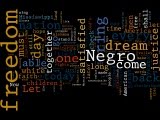
Here are some good clues about leadership – including this mindmap.

Nota Beans

>Nota bene from Rev Ruth’s blog about preaching:

The Church Times is talking about preaching this week. The College of Preachers (of which I am a paid-up member, don’t you know?) commissioned a study into preaching at various denominations.

17% said that they frequently heard sermons that made them change their lifestyles. In my humble experience, whenever one is tempted to have someone in mind when writing such a sermon they invariably don’t turn up that week.

97% said that they looked forward to the sermon each week and 84% agreed that they should be closely connected with the bible. 55% said their knowledge of Jesus was frequently improved by sermons. But only 16% said that sermons helped them to understand events in the news or controversial issues.

Looks like a case of great expectations to me – in spite of what we preachers are sometimes led to believe.

Nota Bene from Bishop Alan’s blog – this poem by Kaylin Haught:
God says Yes to Me

I asked God if it was okay to be melodramatic
and she said yes
I asked her if it was okay to be short
and she said it sure is
I asked her if I could wear nail polish
or not wear nail polish
and she said honey
she calls me that sometimes
she said you can do just exactly
what you want to
Thanks God I said
And is it even okay if I don’t paragraph
my letters
Sweetcakes God said
who knows where she picked that up
what I’m telling you is
Yes Yes Yes

which made me think who is right and who is wrong. God says “yes” to those who see him face to face, heart to heart and eye to eye. To others he says “look at me – through Jesus”. That’s the verdict we have to live with.

>The Flaws of Leadership

>Steve Bell draws attention to the “whited sepulchre” in his cartoon on MP’s expenses.
Matthew’s gospel has these words: “What sorrow awaits you teachers of religious law and you Pharisees. Hypocrites! For you are like whitewashed tombs–beautiful on the outside but filled on the inside with dead people’s bones and all sorts of impurity” (23:27). John’s gospel also has these words: “Let him who is without sin cast the first stone” (chapter 8)

I don’t know about you, but I’ve had enough from the lynch mob – and it is time to draw a line under the whole sorry affair. I don’t know why we should be so surprised when our leaders show themselves to have feet of clay. Out of some sort of idolatory we expect our leaders to be perfect – or is it that we think ourselves as perfect?

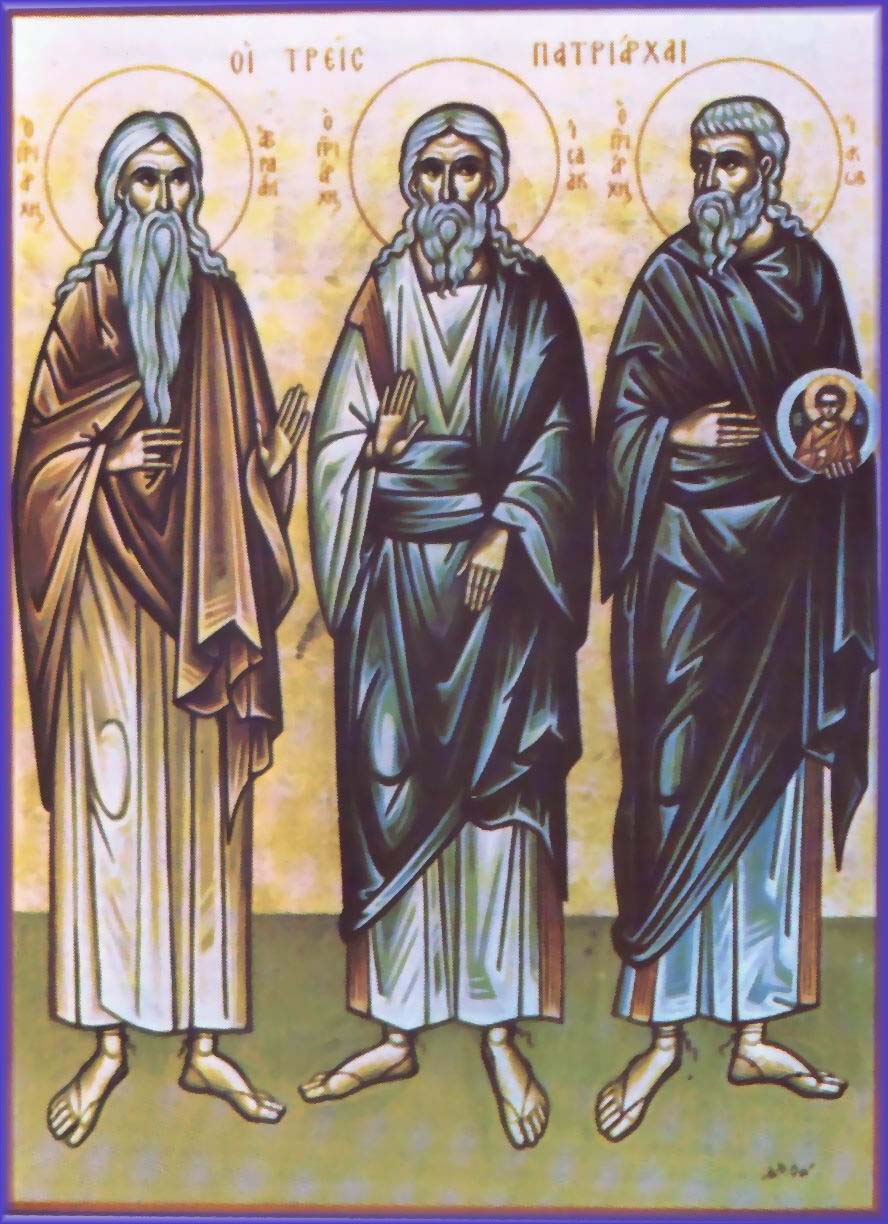
As luck would have it the Bible reading for this morning was Genesis (27&28)- exploring the world of Esau and Jacob (twins), Abraham, Rebecca and Isaac – with Laban thrown in for luck. Together Abraham, Isaac and Jacob are known as the “patriarchs”. Stories about all of them could have kept our tabloids going for years. Abraham passed his wife off as his sister (to Pharoah). Rebecca was a schemer. Jacob was a cheat. Esau was resentful. I could go on. Why did not the religious leaders hide the flaws of the patriarchs? I suggest that it was because they wanted to be realistic about human nature – saying “this is what we’re like – and it’s no good pretending otherwise”. It was to characters such as these (and such as ourselves) that God promises the earth – in spite of the scheming, deceit and betrayal. It is significant that the founding fathers of Judaism and Christianity could do nothing of themselves. The foundation of our faith is not that we all have to be good but that we have to depend on God to turn the tide of despair and bitterness.

On the same day as we scoff and mock our political leaders history has been turning in Northern Ireland. At last a peace settlement has been achieved for which our PM(flawed like the rest of our leaders) paid tribute to all those who had made the settlement possible. It is a magnificent achievement to have sworn enemies holding the reins of power together. Gordon Brown described it as “inspirational” and a lesson for the world that conflict resolution is possible. The peace has been won by courageous leadership. The architects of peace are flawed but courageous enough to know that history is flawed by conflict and transformed by compromise/forgiveness. There can be no forgiveness without flaws!

>Two wonderful people

> Easter Day at St Andrew’s Tarvin was “daffodil Sunday” – presumably because of the association between spring, new life and resurrection. It didn’t take us long to realise that the daffodil is the flower of the meadows of the Greek underworld. The asphodel (daffodil) meadows is the region where the dead were supposed to spend eternity. A river runs through these elysian meadows. To the far side of the river those whose lives were neither good not bad were ferried. In the crossing identity was drained away and they emerged into the meadows peopled by those who were neither one thing nor another. (A further place – Tartarus – was for the evil and treacherous.

Two wonderful people we know have died in the last week. Brenda Stride I did not know well. Jen Murray I have known for nearly 30 years. It was speaking to her family that prompted the thought on the daffodil and the elysian fields as the destination for both of them.

Both Jen and Brenda have been local heroes here in Ellesmere Port. Both have given their lives for children. Brenda has spent her life working with pre-school children: Jen’s teaching career has been in three local schools – John Street, Sutton Green and Stanlaw Abbey on Stanney Grange. She was Head at Stanlaw from 1974 to 1991 (I was working the same patch – a 70’s housing estate – ’83-’93). What was remarkable about Jen was her passion for life and for others. She was a wonderful host which showed itself in the school she helped to create at Stanlaw. Appreciating Jen’s work, her friend and advisor, Vernon Hale, commented on the beauty and optimism of the place (this was at a time of really high unemployment in the community). The school was a real oasis of calm (aka a “beacon”) in which, as Vernon wrote, the children had the opportunity to “experiment”, “speculate” and “create”.

The commitment of both Brenda and Jen spans many decades. They have loved hundreds of local children and had a real impact on their families. I wonder at the impact that these two lives have had on Ellesmere Port and the communities that make up this town so low on self-esteem. It would be good to know whether such passion does shape lives and inspire others. I am sure it has done for many. In the end we have to leave them to stroll the elysian fields – on the side of the river where everybody is somebody. For us, consolation is the satisfaction of having been entertained by hearts and minds big enough to embrace all those in their world with love, and the knowledge that they in turn are entertained at the heart of God’s glory.

We have David C Laurie to thank for the photo.

And here’s Sting singing of those elysian fields of gold:

>Listening

>
Joanna Cox does a great job for us in our Adult Education Friday Mailing. She always concludes with something quotable – this week it is Jenny Rogers on Adult Learning:

Many discussions in adult, further, or higher education and training are far from being as free or equal as they need to be because tutors, often unconsciously, guide, manipulate and dominate proceedings. …….It is hard discipline as a tutor to keep you mouth shut, to listen, and to show signs of listening instead of talking. Most of us are good at talking and especially enjoy talking about our subjects. Not talking can be exquisite agony, as any experienced tutor will know.

We don’t think much about lsitening. In our churches skills are developed using mouths rather than ears. We talk about “good preaching”, “good singing”, “leading prayers” and “reading well”. We don’t talk about “listening” and we don’t bother thinking that much about how we can improve our listening (turning up the volume and installing a loop is about hearing, not listening). What can be really annoying is listening to a preacher who doesn’t listen – to God or his brothers and sisters. It seems only fair to me that if a preacher is inviting us to listen to him/her, s/he should return the favour.
I came across “Nonviolent Communication” aka “Compassionate Communication Skills” the other day. Marshall Rosenberg created Nonviolent Communication and is Founder and Director of Educational Services for the Center for Nonviolent Communication. Here is a clip on nonviolent communication.

>Diversity Training

>Kirsty Young began a four-part history of the British Family from the end of WW2 to the present day last night. It’s a sign of old age when you see your own childhood as history. But that’s what it was and it was a fascinating insight into how families have changed and how my own family changed. The programme highlighted how the family was in crisis as a result of WW2 and how marriage came to be understood relationally rather than institutionally. The programme reminded me of the angst of the 50s and 60s as we discussed and argued (not very calmly because of the issues at stake). Shocking statistics revealed the amount of sexual ignorance and repression. There’s more to look forward as the series continues next week.

Running through my own mind at the same time were thoughts about how to facilitate “diversity training” – that’s part of my job. I had already read Donald Clark’s post about narrow minded (and patronising, frustrating and annoying) diversity training and was wondering what it is all about. Then, putting two and two together I realise how diversity training has developed in family life. The politics of home life has seen the emergence and emancipation of women, the development of companiable relationships between adults and a transformation in relationship with children – (or is that all still aspirational?)

And what has been the training programme? Has it been that through the developments in the media we have been able to be part of a very public debate about relationships and the family? Through the soap operas we have seen all sorts of relationships and sufferings modelled and entertained ideas about where we fit in our own behaviours. And doesn’t the training continue through “homework” and “exercises” – in which we exercise and practise love for others, including listening for their best interest and their frustrations.

Is this a clue for facilitating diversity training? What else is there?

There is also listening. Are there voices we can hear protesting their exclusion and their hurt? Hearing their cries prompts us to ask questions about how much they count as people and to challenge the systems that oppress and marginalise them. We do have a hearing problem though – because the voices of suffering are hard to hear. Their cries are muffled and smothered in so many cases. Careful listening becomes a requirement – listening that is full of care will prise off respectability’s veneer to investigate what is really happening and what people are really feeling. This is diversity training which is moved by compassion to diversify practice and thinking so that there is room for people. People suffer the world over because of their gender, their sexuality, their ethnicity, their nationality, their age, their class etc etc. They suffer personally in the details of their daily life (and often within their own living space/home) – and they suffer because of our narrow minded thinking.

But why do we need “diversity training” in the church? That’s my exercise – “to review continuing ministerial development in the area of diversity issues” – within the monochrome Diocese of Chester. For one thing we could refer to the experience of those who complain about being excluded (women clergy some of the time), or to the absence in our congregations of youngsters (and other groups) because our thinking and practice is not diverse enough to embrace them. Or we could refer to our scripture and Jesus’ ministry which has “diversity training” so much at its heart. Jesus’ life was with the marginalised. He taught us (Matthew 25) to recognise him in the prisoner, the naked, the asylum seeker, the scavenger and the homeless. He invited his followers to diversify their thinking to embrace a saviour who could be crucified as a common criminal. Those who accepted the invitation became a diverse family in which “there is neither Jew nor Greek, slave nor free, male nor female”. (Galatians 3:28)

As an enabled, white, English, straight, educated, male priest in the “established” Church of England in this skewed world I should have enough power to do something to diversify our world. I know it must start from where I am. I’m just off to the Post Office. Who knows – it could just start there.

Member of the Board (of ironing)

>Thinking family – a domestic task which has spanned the years of our family has been the ironing. I have been the one who does the ironing – and it has been the mindless job I have been doing on Sunday evenings when I’ve been too tired to sit still. Seeing me through that job has been my i-pod, and before that CDs, and before that vinyl and before that those tapes that were forever getting tangled up. But the music doesn’t change. I wonder if it’s generally the case that the music we love in our (late) teens becomes the themes for our whole life. So for me James Taylor still puts a crease in the trousers. Paul Simon still gets the t-shirts ironed. Kirsty MacColl gets the socks paired. There are interruptions to the ironing routine. Old favourites produce new albums, so the steam of the iron has played percussion to Graceland since 1986. Presents provide interruption (this Christmas: Seasick Steve and Mumford & Sons) and new tracks get followed. Katie Melia smoothes, while ironing to the world music of Freshlyground, Orchestra Boabab and Youssou N’Dour seems positively exotic.

Ian Bradley
and David Adam (and many others)point out the prayer themes of Celtic spirituality. Such spirituality prays through all the domestic routine, including fire lighting, getting dressed (patrick) and milking the cow. I have to say that I have been so slow to realise the lost opportunities for prayer when ironing – prayer for the family and the occasions when they will wear the particular clothes – the meetings, the tests, the nights out, their friends, their confidence and their love. Never mind. There will be more ironing next weekend. (Thank you Natalie Maynor for the photo of Ironing Board Sam)