>Learning Church

>Can the Church be anything other than a “Learning Organisation”? It would seem so as the metaphor of the “learning Church” is one that has become something of a buzz word – presumably because the Church was something other than a “learning church” – like a “teaching church”, or an organisation that had stopped learning.

Membership of the Church is called “discipleship” which has learning at its heart. We are disciples of Jesus – called to learn his way(s). Disco is the Latin for “I learn”.

It was Peter Senge who promoted the idea of “learning organisations” in the 90’s. He wrote of organisation “where people continually expand their capacity to create the results they truly desire, where new and expansive patterns of thinking are nurtured, where collective aspiration is set free, and where people are continually learning to learn together.” (Senge, 1990, p.3). Senge was writing as a generation was coming to terms with the accelerating pace of change which would leave the unlearning organisation extinct and the unlearning person behind.

George Lovell writes: “To be effective and to experience vocational fulfilment in this changing context, clergy … must reflect critically, imaginatively and systematically, on their own and with others, on the work, ministry and mission in which they are engaged or contemplating.”

In a really stimulating training session yesterday at Woodchurch High School, Andy referred to our age as the “exponential age” in which the pace of change virtually goes off the scale. We’ve seen nothing yet! He showed us the way technology is shaping change (shifthappens uk) and referred to some of the implications of the new technologies highlighted by Mark Pemsky.

Pemsky refers to students as “digital natives” who think and process information so fundamentally differently from ourselves. The way they relate to one another is fundamentally different and would have been seen as science fiction even 10 years ago. The way these digital natives think, and the way their brains have developed is likely to be different from us – born to a different age – and from virtually a different planet. We can enter their world but we enter as “digital immigrants”.

What has all this got to say about Church and about belonging? Digital natives do belong together – but not as we know it. They have a culture – but a culture that as cultural immigrants we find it hard to penetrate. What does it say about mission and how we might begin to bridge that generation gap? It brought to mind the beautiful work of Vincent Donovan who with tremendous love, humility and respect shared the gospel with the Masai thinking that the principles he adopted may have something to teach us about how we relate to this new age from which so many have become alienated. Interestingly Donovan, way back in 1972 – an age ago – wrote this:

“Never be afraid to ask questions about the work we have inherited or the work we are doing. There is no question that should not be asked or that is outlawed. The day we are completely satisfied with what we have been doing, the day we have found the perfect unchangeable system of work, the perfect answer, never in need of being corrected again, on that day we will know that we are wrong, that we have made the biggest mistake of all.” (p197)

The Winton Train


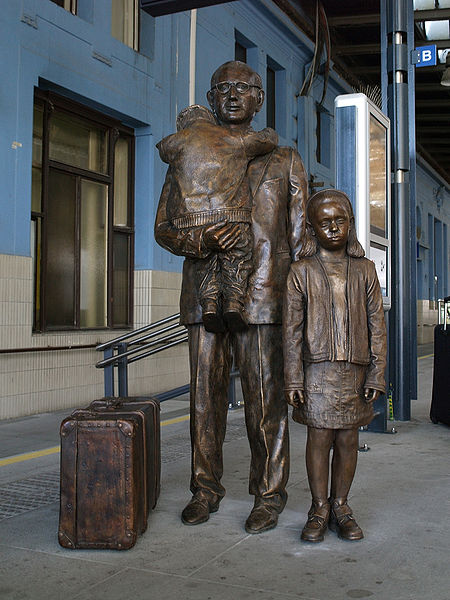
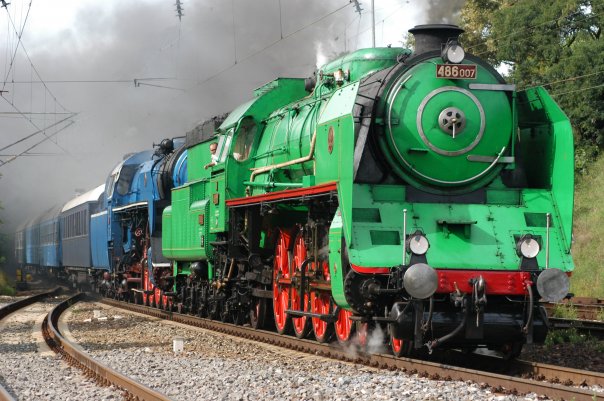
Wow. The Winton Train arrives at Liverpool Street Station today – with passengers rescued from Prague 70 years ago – the train will be met by the person who masterminded the rescue – Nicholas Winton (pictured). Nicholas Winton is 100 years old.


Altogether he managed to rescue 669 children transporting them by train from Prague to Lon don. Most of them were Jewish children who otherwise would have become victims of the holocaust. They have become known as the Winton Children – and that family of 669 has now become a family of 5000. This was part of the Kindertransport rescue mission which began a few days after Kristallnacht (1938) when some British Jewish leaders petitioned the Prime Minister, Neville Chamberlain, to accept unaccompanied Jewish children from Europe to protect them from Nazism. Six million Jews were killed in the holocaust. A quarter of them were children.

Dagmar Simova is one of the Winton Children on the train. Her response to the question of what it felt like to be once again being on a train from Prague is on the Winton Train Project’s blog: “My mother, father and grandfather came to the station with me. We all wept. This time my husband and daughter came to see me off. When we waved, suddenly it struck me. I was looking at them, but again I saw those three.”

Nicholas Winton never mentioned anything about this. It only became known 50 years later when his wife, Elizabeth, came across some papers when she was cleaning out their attic.

People like Nicholas Winton are honoured in a memorial park in Prague called the Orchard of Saviours. It celebrates all who helped Jewish children at great cost to themselves. Four types of apple trees have been planted and the refurbished fountain has been named after Sir Nicholas Winton.

The Winton Train Project hopes to despatch another Winton Train with young people and their artworks inspired by goodness bound for other European cities, and that it become a tradition to commemorate the resilient determination of people to believe in goodness and actively take part in a common future.

>St Augustine’s Day

>Paul Ballard and John Pritchard talk the work of the practical theologian in their book “Practical Theology in Action”. “The work of the practical theologian is to participate in and be a catalyst for the common life of the whole Christian community”.

They quote St Augustine:

When I am frightened by what I am to you then I am consoled by what I am with you. To you I am bishop, with you I am a Christian. The first is an office, the second a grace; the first a danger, the second salvation.

Ballard and Pritchard also write about the practical theologian:

The practical theologian strives to be a bridge across a divide; a catalyst sstimulating change and renewal; an enabler, who allows others to take up responsibilities; an educator who opens up the world to students within the community of shared learning. Of course there are set occasions and structured means to facilitate this process of theological reflection but it is essentially an ongoing process of shared living. It is always a vulnerable and exposed position appearing to have no status or substance other than the wisdom and the skills that are learned in the doing. (p37)

>Famous last words

>How do we end a letter? Or an email? How much thought goes into the words we will use? I know I spent quite some time coming to the decision that “best wishes” was the most appropriate for me. Some who write to me finish with “Yours in Christ” – that’s nice, but a bit cheesily religious. I’m not saying “best wishes” is good – it’s a cliche and I couldn’t possibly mean every word of that greeting for every person I write to because I would be emotionally exhausted by all that wishing.

I’ve served in two churches dedicated to St Andrew’s – one in Ellesmere Port (now demolished) and the other in Tarvin. Many of us finish our letters with the cross of St Andrew – we think of them as kisses. The same sign was used to seal agreements signifying that the bond would not be broken (as St Andrew’s discipleship led him to his cross). I suppose that the traditional endings of “yours faithfully” and “yours truly” can perhaps be traced back as translations of thast “kiss” and “cross”.

My mother – now quite frail – was talking about a letter from someone she seems to be regarded as a “surprising” friend. She reflected that she is at the stage of her life when people are telling her important things about what she has meant to them – sort of summaries. “I love you” wrote the surprising friend.

This is the bottom line. The last line. There needs to be space at the end of our correspondence for “what do I mean”, “what you have meant to me” – it’s a line to be timed as the truly heartfelt greeting between two people who, when all is said and done, mean the world to one another. “Best wishes” will do for all other correspondence.

St. Andrew’s Cross spider photgraphed in coastal NSW, Australia author – self, TTaylor date- 2005

>Go Between God

>We are used to referring to the Holy Spirit as the third person. By this we usually mean the third person of the Trinity. But John V Taylor, many years ago, drew attention to the Holy Spirit as the Go-Between God – who is the third person in a very different way. He writes; “the Holy Spirit is the invisible third party who stands between me and the other, making us mutually aware”.
He quotes Martin Buber who wrote: “We are waiting for a theophany about which we know nothing except its place, and that place is called community.”

Love

When one who professes love is wholly in control of the object of his love, then the falsity of love is exposed. Love ins the activity for the sake of an other: and where the object of love is wholly under the control of the one who loves, that object is no longer an other. It is a part or extension of the professed lover. Where the object of love is truly an other the activity of love is always precarious … it contains no assurance or certainty of completion: much may be expended and little achieved. the progress of love must always be by tentative and precarious steps: and each step that is taken, whether it “succeeds” or “fails”, becomes the basis for the next, and equally precarious, step which must follow. Love proceeds by no assured programme.

W.H. Vanstone; Love’s Endeavour, Love’s Expense p46

Give the kisses

>What can I give him, poor as I am?
This is the question at the heart of giving. And as we are crunched by the recession this becomes an ever more pressing question, particularly for a middle class which has come to treasure money so highly. It really dismays me when we hear in our churches about giving – and it is always centred on money (or so it seems). What can I give him, poor as I am?

Christina Rossetti discusses this in her poem “In the bleak midwinter“. For her money doesn’t enter into it – and in this recession all of us are questioning the worth of what money will buy (particulalry those of us on their third skip in the process of moving house). Take money out of the equation and what can we give? Those unable to buy off their giving with money perhaps know the answer best. They operate in an economy of gifts aware they can give “their heart”, that they can pay attention, that they can give themselves, that they can for-give, that they can give thanks.

And my own thanksgiving – a woman working on the platform at Crewe Station who was amazingly kind, patient, hospitable and gentle with my mother in helping her find the right train – someone bearing the fruits of the Spirit. British Rail won’t have been paying her for that but some gifts money cannot buy.

Miroslav Volf (in Free of Charge p116)describes the work of the Holy Spirit in terms of gifts. “The Spirit is the gift that gives spiritual gifts”. He writes; “the Spirit opens the doors of our hearts for Christ’s indwelling …. by the power of the Spirit we make ourselves available for Christ to be born in us … The Spirit is the gift that gives Christ”.
“Think of the Spirit as the arms of our hearts that embrace Christ and as the open doors of our energies and skills that welcome Christ in.”

Photo by Logan Antill.

Thomas

Two of our children bear Thomas in their name. Their grandfather was called Thomas. Thomas is highlighted in our Gospel today. What was he doing on this first day of the week when the other disciples were locked in in fear of the people’s anger? Did he not share the anxiety of the other disciples? Did he have more confidence?

Kate Huey, in the linked article, quotes Michael Williams’s comment about Thomas which contrasts with how Thomas is so often portrayed. He writes: “the only one amonmg the disciples who was not do filled with fear that he was unwilling to leave the disciples’ hiding place.” (see this Sunday’s gospel) Kate quotes Gail O’Day’s observation that “one week after the disciples have been visited by the risen jesus and received Jesuis’ peace and the Holy Spirit, they have once again locked themselves away behind closed doors.” Even after seeing the risen Jesus they still don’t live as an Easter people.

So was Thomas the one didn’t want to be locked away? Was he the one who wasn’t frightened? Was he the free spirit? Have we lost the truth by caricaturing him falsely as “the doubter”? And if he is the odd one out of the twelve? What does he have to say about the rest of them, and the rest of us who are similarly inclined to lock ourselves away (metaphorically) because we fear the people. What was Thomas doing?

Jan Richardson in the Painted Prayerbook has a different take on the locked room – the “secret room” as she calls this painting, and she suggests that every pilgrim needs a secret room.

She quotes Phil Cousineau’s The Art of Pilgrimage who writes this:

“Everywhere you go, there is a secret room. To discover it, you must knock on walls, as the detective does in mystery houses, and listen for the echo that protends the secret passage. You must pull books off shelves to see if the library shelf swings open to reveal the hidden room. I’ll say it again, everywhere has a secret room. You must find your own, in a small chapel, a tiny cafe, a quiet park, the home of a new firend, the pew wehere the light strikes the rose window just so. As a pilgrim you must find it or you will never understand the hidden reasons why you really left home.”

Here is sanctuary and indicates the need we all have for “retreat” for all the times when we have a choice of fight or flight and when fighting seems so hopeless. And does Jesus condemn us for locking oursleves away and trying to save our own skin? It appears not. Because to those first Christians locked in fear Jesus came with nothing other than peace. There were no recriminations for them running away or for their betrayal of his trust. All he does when he gets through their defences – past the locked doors is to “offer them greeting and gift” (Kate Huey) – “Peace be with you”.