LimpLight

This one’s for all who wrestle in the dark and rise, blessed but limping, inspired by reading Genesis 32:22-31 and Luke 18:1-8 – the Revised Common Lectionary readings for October 19th 2025.

How shall we describe the state of Israel today?

The state of Israel today begins with both our readings —
from Genesis 32, the story of Jacob whose name means twister;
and from Luke 18, the story of the widow struggling for justice.

The state of Israel begins at the end of a night of struggle for the twister,
a night of struggle in which Jacob never discovers
the name of the one he’s wrestling with,
but finds himself called by a new name — Israel.
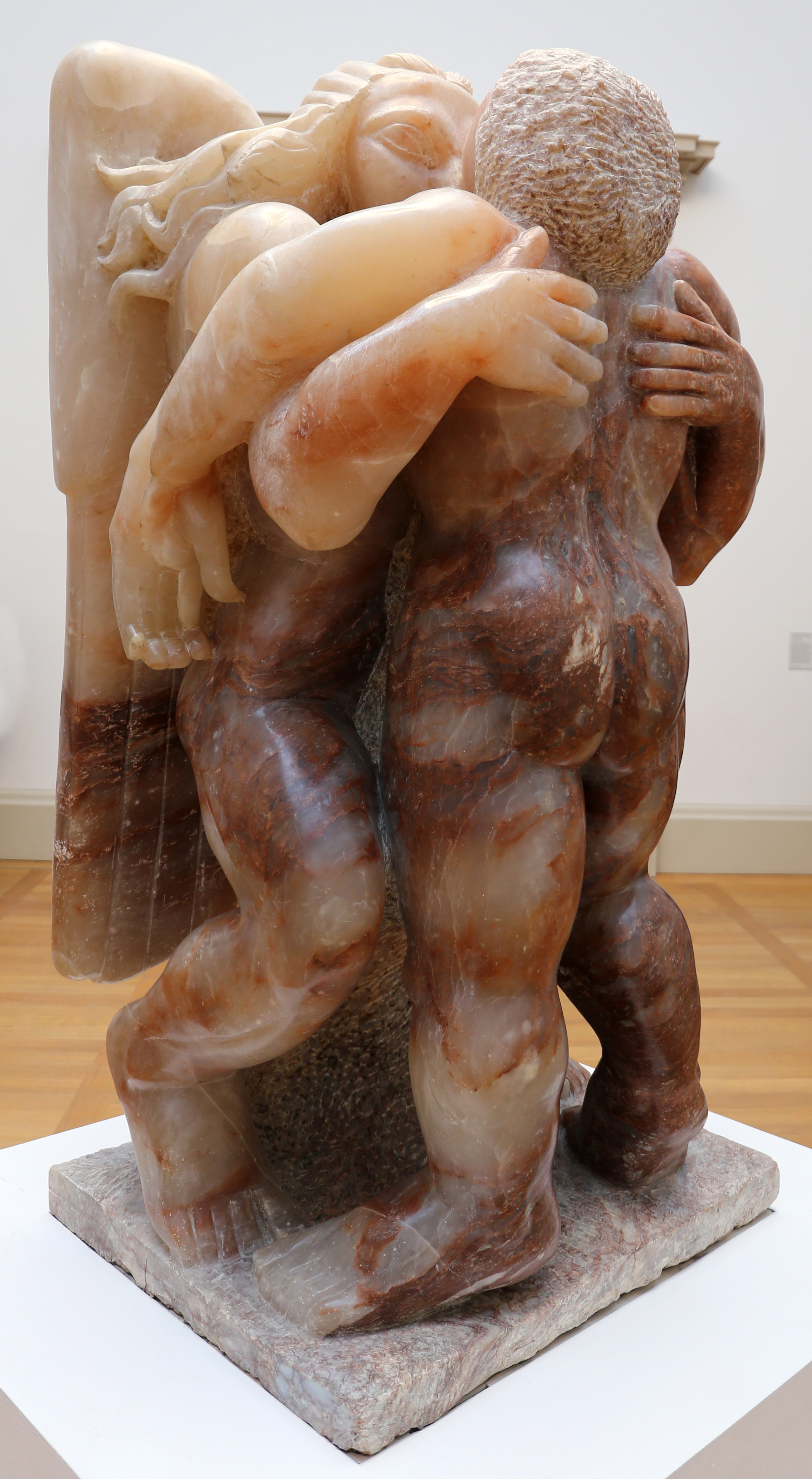
Jacob’s struggle as portrayed by Sir Jacob Epstein (shown in Tate Gallery, London)

Israel struggles with God,
and God struggles with Israel.
That is the very meaning of Israel.
If Israel means anything,
it means struggling with God.

Jacob is the first to be called Israel,
and he is called (renamed) that by the one he struggled with
because he “struggled with God and with people”
and withstood the whole night.

It is the calling of Israel to struggle faithfully through the night.

Jacob is the patriarch of Israel —
the patriarch of those who struggle with God and with people,
and who carry on wrestling through long nights and times of darkness
without being overcome,

people like the widow singled out by Jesus —
a victim of some injustice.
In the face of an utterly unjust justice system,
personified by a judge who neither feared God
nor cared what people thought,
she struggled.

For some time she struggled.
She kept coming at that lousy judge.
She wouldn’t let go until he gave in.

Those who struggle through the night,
with God and with people —
those who struggle to see the night through,
for whom the night is very dark,
and for whom there is little daylight,
those who won’t give up whatever the night brings —
they are the ones whose hope is rewarded.

They carry a blessing for all who wrestle with God
and with the wounds people inflict.

It’s the blessing of God
who himself wrestles through the darkness of the world,
who struggles with people and the suffering they cause,
but who, in spite of all that,
wrestles the whole night long.

This is the love that shines in the darkness
to the break of day.

And yet, the night is long.
Not just one night in Jacob’s life,
not just one night in ours,
but the long night of the world —
a night as long as history.

Through that long night we wrestle,
and God wrestles with us.

There are three struggles woven into this story,
and all three belong to Israel:

We struggle with God.
We struggle with people —
and people struggle with us.
And through it all,
God struggles with us.

That’s what it means to be called Israel:
to live the long night of wrestling,
and to trust that, at the end of it,
there will still be blessing.

The struggle with God

Sometimes it’s the long silence of prayer —
when we ask and wait and hear nothing.
Sometimes it’s the ache of loss,
or the questions that faith won’t easily answer.
We wrestle with God when life doesn’t fit the promise,
when love feels hidden,
when blessing comes only after a wound.

But still we hold on.
Faith is not certainty —
faith is the grip that will not let go until morning.

The struggle with people

And we wrestle with people too.
Not just those who hurt or wrong us,
but in all the difficult ways love tests us —
learning to forgive, to be patient,
to stay kind when we’d rather give up,
to bear with one another’s weakness.

People struggle with us too —
our faults, our sharp words, our stubbornness.
We are all part of each other’s wrestling.

These are the struggles that form the fruits of the Spirit —
the quiet strength that grows only in the dark:
patience, gentleness, self-control,
love that endures through the night.

The struggle with ourselves

And maybe there’s a fourth struggle too —
the one Jacob knew best —
the struggle with ourselves.
The fight to face what we’ve twisted,
to tell the truth about who we are,
and to accept the new name that grace gives us.

Before we can meet God face to face,
we have to face ourselves in the dark —
the parts we’d rather not see,
the wounds we’ve caused as well as borne.
Even that struggle can become blessing.

The struggle of God

And through it all, God struggles too —
not against us, but for us.
God wrestles through the night of the world,
bearing our pain,
refusing to give up on us.
The cross itself is the mark of that struggle —
God’s own wound,
the divine limp that still bears the weight of love.

This is the love that shines in the darkness
to the break of day.

Jacob wanted to know the man’s name,
but the man would not tell him.

Maybe that’s the mercy of God —
that we never get to hold the name too tightly.
The namelessness keeps the struggle open.
It reminds us that this wrestling is for everyone,
that God stands with all who struggle through the night —
beyond borders, beyond certainty, beyond control.

It was not for ease that prayer shall be.
The story of Israel is not the story of the untroubled.
The story of Israel is the story of the very troubled —
the story of slavery, exile, persecution,
the horrors of history, the nightmare.

Amos got it right three thousand years ago.
He condemned the complacent,
those who are at ease in Zion.
He said they put off the day of disaster
and bring near a reign of terror.
They are not fit to be called Israel.
They duck the fight and ignore the struggle.

But Jacob did not.
The widow did not.
And the God who wrestles through the night does not.

Jacob’s blessing comes with a wound.
He carries it into the dawn,
every step a reminder of the night he endured
and the God who would not let him go.

Perhaps this is the mark of the blessed —
not the ones who have had an easy time of it,
but the ones who have been wounded and changed.
The ones who know that life is not straightforward,
that faith is not certainty,
and that love costs something real.

Israel limps into the sunrise,
blessed and broken.

And still, the night is long —
as long as history,
as wide as the world.
Still, God wrestles with us,
still struggles with his people,
still bears our wounds,
and still blesses us.

And when the dawn comes —
as surely it will —
the blessing will not erase the limp,
but redeem it.

For the love that shines in the darkness
will shine until the whole world
limps into the light.

Afterthoughts
What might it mean for a people, or for a church, to be known by its limp – to be blessed not in strength but in struggle?
If God still wrestles through the long night of the world, where do you see that struggle – and that love – happening today?

From the Riverbank

– Sister Itchen and the River of Life
A sermon for Harvest Festival at St Lawrence’s Napton, inspired by St Francis’s Canticle of the Creatures, the Warwickshire River Itchen, artist Stephen Broadbent’s River of Life sculpture in Warrington, the writing of Robert Macfarlane and the indigenous wisdom represented by Robin Wall Kimmerer. It’s a thanksgiving for the quiet grace that still flows through creation, and a reminder that we are family with all that lives.


We are brothers and sisters together,
one family, caring for one another.
It’s 800 years this year since St Francis highlighted the interdependence of all things that have life,
and I thought it would be appropriate to have Francis helping us in our Harvest thanksgiving,
when we give thanks for the fruits of God’s creation.

Today we praise God for his creation,
for the nature given to us.

We would be mistaken to think we praise God alone.
For Francis, all creation sings God’s praise —
our whole family: Brothers Sun, Wind and Fire,
Sisters Moon and Water.

If St Francis had walked here,
I think he would have sung of Brother Itchen
the river that rises at Wormleighton and flows its way
past Priors Hardwick through here in Napton.

It seeps quietly through our fields,
watering crops and feeding wildlife,
joining its voice to the River Leam and the Avon beyond.

It’s not a mighty river like the Jordan or the Nile,
but a patient, life-giving one —
a reminder that the grace of God often flows quietly,
unnoticed, yet sustaining everything around it.

Robert Macfarlane asks in a book I’m reading,
“Is a river alive?”
I think the Itchen would answer yes.
It breathes, moves, nourishes —
and if we listen carefully, we can almost hear it praise.

Other songs of the church treasures spell this interdependence of praise out in more detail.
The Benedicite calls
the sun, moon and stars,
every shower of rain and fall of dew,
all winds, and fire and heat,
winter and summer,
the chill and cold,
frost and cold, ice and sleet,
mountains and hills,
everything that grows upon the earth,
springs of water, seas and streams,
whales and everything that moves in the water,
all the birds of the air, the beasts of the wild,
flocks and herds, men and women
all to praise and glorify God,
alongside those of upright spirit,
those who are holy and humble in heart.

Psalm 148 is a call to worship
for the angels, the sun, the moon and stars of light,
for the waters, sea monsters and all deeps,
for fire and hail, snow and mist,
for mountains and hills, fruit trees and cedars,
wild beasts, all cattle, creeping things, birds,
kings of the earth and all people,
men and women, boys and girls
to worship and praise together.

The prophet, Isaiah, anticipated the joy of creation.
He saw the mountains and the hills bursting into song
and the trees of the field clapping their hands.

And, of course, we know that the hills are alive with the sound of music.

This is ancient wisdom that is treasured in many indigenous cultures
but which has been forgotten over the years.
We forget we are called to worship with the whole of creation
and we presume we worship alone — homo sapiens.

Is that why our family ties with the rest of nature have broken?
We’ve stopped caring as brothers and sisters.
Instead, we’ve used our dominance for exploitation of our brothers and sisters.

Robert Macfarlane asks in a book I’m reading (and heartily recommend),
“Is a river alive?”
“Is a river alive?”
I think the Itchen would answer yes.
She breathes, she moves, she nourishes —
and if we listen carefully, we can almost hear her praise.

That same living flow runs through the Bible —
through the river that rises in Eden, watering the garden,
through the waters that break open in the desert,
through the River of Life that Ezekiel and John both saw,
flowing from the throne of God,
their trees bearing fruit each month,
and their leaves for the healing of the nations.

The artist Stephen Broadbent knows something of that healing power.
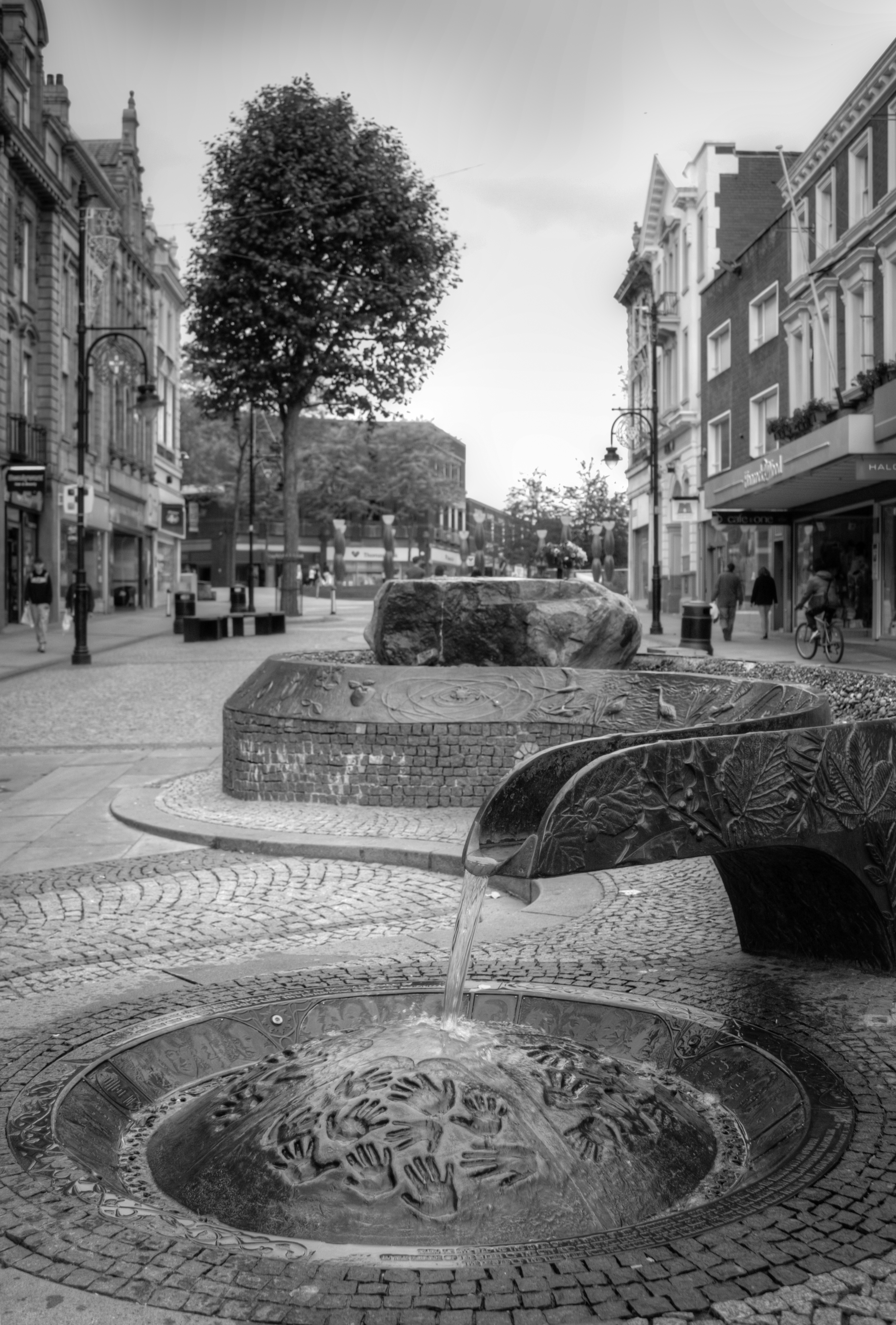
His River of Life sculpture in Warrington
was created after two boys were killed by a terrorist bomb there in 1993.
In that place of loss and grief,
Stephen imagined a river of life flowing through the heart of the town —
a river that gathers up pain and turns it into hope.

The bronze figures he shaped seem to rise from the water itself.
They are imprinted with the hands of children,
contemporaries of the boys killed,
their hands open in welcome and peace.

By the river are the leaves of trees – 12 of them,
one for each month of the year,
a monthly reminder that the river and her trees
are there for all time, even the worst of times,
always remembering, healing and renewing life.

That is what God’s river does —
whether in scripture, in the heart of a town like Warrington,
or in the quiet fields of Warwickshire.
She carries life wherever she goes.
She invites us to join her flow —
to live as people of blessing, healing, and renewal.

I’ve got an allotment this year.
I see something of that same grace there.

An allotment teaches you that nothing is wasted.
Weeds go on the compost, scraps rot down into soil,
and what looks like death becomes food for life.

The tiniest seed, almost too small to hold,
can multiply into a hundredfold abundance.
And if you care for the soil, safeguard the earth,
you discover her astonishing energy for renewal.

It changes the way you look at things.
You learn the value of everything,
you learn to work with the grain of creation, not against it.
And you discover joy in being part of that family again —
brother soil, sister seed, mother earth,
working alongside us in God’s garden.

So today, at Harvest, our thanksgiving is not a private prayer.
It is part of a chorus with the sun, the moon, the wind, the water —
with rivers that sing and trees that clap their hands,
with a creation that still waits for healing,
yet never stops praising.

St Francis knew it 800 years ago.
The Bible has sung it for thousands of years.
Artists and poets remind us in scarred places.
And even the humble allotment teaches us:
we are family with all creation.

Our calling is to live as grateful brothers and sisters,
giving thanks, safeguarding the earth,
and letting the river of life flow through us
for the healing of the world

Safeguarding is the Mission of God

I had thought that this Sunday was Safeguarding Sunday. It’s not.
That’s November 16th.
But shouldn’t every Sunday be Safeguarding Sunday?
When we look at our readings for the day, (Amos 8:4-7 & Luke 16:1-13),
they are all about safeguarding,
and they expose our current safeguarding focus as hopelessly inadequate.

Safeguarding isn’t just reacting to scandals of abuse,
but is the mission of the church.
Our calling is to protect the vulnerable,
to care for creation and to defend the excluded.

And safeguarding begins with the little things.
The soil beneath our feet.
The worm in the allotment.
The bee that pollinates our food.
The sparrow that falls unnoticed to the ground.
Creation itself is vulnerable,
and safeguarding must mean cherishing the earth, not exploiting it.

If we cannot be faithful with the earth — the very ground of our life —
how can we expect to be trusted with the riches of the kingdom?

Safeguarding has a political edge which is being overlooked.

We are in the Season of Creation,
a season for highlighting the needs of the earth and the environment
and our responsibilities for safeguarding the planet.

And we are in the season of disenchantment and political turmoil
when we are seeing thousands of people taking to the streets
to protest against immigration,
who want to turn the clock back
to make Britain Great again,
or America great again,
or make themselves great again.

There are safeguarding issues here as well,
challenges to safeguard those who are vulnerable,
those in the firing line, those claiming asylum,
those terrified in the targeted hotels,
those who are scared to be seen in public.

My son told us of his experience last weekend.
He was in London during the protests.
Protesters surrounded the Uber they were in,
banging the windows, shaking the car
and shouting to the driver, “GO HOME”.
He was a Bangladeshi who has lived here for twelve years.
His home is here. That requires safeguarding.

And there is the other side.
Those protesting aren’t all fascist or racist.
They are people who feel they don’t belong,
who feel they’ve been left behind
by a society which has put financial gain above everything,
where the gap between rich and poor has grown ever wider.
It is hard for me to speak for them,
but have they had enough of “rip off Britain”,
have they lost hope? Have they been safeguarded?
Is what we are seeing on the streets a consequence
of the lack of safeguarding for these least and last,
with a poverty of opportunity?
I will not demean these people as racists or fascists.
I have lived in their communities.
Most of them have just reached the end of their tether.

They become easy prey for those who would exploit them for their own ends,
false shepherds who would mislead them with false promises.
You know who I mean.

And into this world — our world — comes the voice of Amos (Amos 8:4-7 – printed below),
eight centuries before Christ.
Because his scripture has been treasured,
we have been hearing Amos for nearly 3000 years!
He names what safeguarding failure looks like in his time:
people trampling on the needy, treating the poor as expendable,
twisting religion to cover up exploitation.
Are we any different now?
He cries out against a society where profit matters more than people,
and where the very ones who most need protection are sold for a pair of sandals.
Amos is God’s safeguarding officer, raising the alarm.

And then Jesus, in Luke’s gospel, gives us this line:

Whoever is faithful in very little is faithful also in much.

It’s a complicated parable, but this is the heart of it: the little matters.
Whoever is faithful in very little is faithful also in much.
The small ones matter.
The least matter.
The soil matters.
The worm matters.
The daily, unnoticed acts of honesty and care matter.
Because in the little, the kingdom begins.

Being faithful in the little means safeguarding creation itself:
tending the soil, honouring the creatures that work unseen,
the worms, the insects, the birds —
each one part of God’s great economy of life,
the web of life that holds us.

Being faithful in the little means safeguarding people:
the child, the refugee, the neighbour
who feels they don’t belong.

Being faithful in the little means safeguarding our choices,
managing ourselves in those moments
which could turn into flash points when we fly off the handle.

Being faithful in the little means safeguarding our community:
choosing honesty when it would be easier to cut corners,
choosing care when it would be easier to look away.

The little matters – because in the little the kingdom begins.

Jesus speaks of being our shepherd,
the true shepherd
who safeguards the last, the least and the lost.
That must include those who have been misled
by opportunistic shepherds who trade in fear.
They, too, are vulnerable, though they don’t always see it.
They are last and least in ways that make them lash out.
But they are still little ones Jesus longs to safeguard.
So safeguarding is not just paperwork or policy.
It is the mission of God, entrusted to us:
to safeguard the earth, to safeguard the poor,
(and protest against the causes of poverty and exclusion).
It is the mission of God
to safeguard even those who have lost their way.

Every time we join this mission,
we are being faithful in the little,
and the little is what God treasures.
The little are the treasures of the kingdom.

Our commonwealth is woven together
from moments of safeguarding the vulnerable,
moments of honouring the smallest,
moments of choosing care over indifference.

This is what God entrusts to us.
This is what it means to live for the kingdom.

The little matters,
because in the little, the kingdom begins.


Amos 8:4-7

Hear this, you that trample on the needy,
  and bring to ruin the poor of the land,
saying, ‘When will the new moon be over
  so that we may sell grain;
and the sabbath,
  so that we may offer wheat for sale?
We will make the ephah small and the shekel great,
  and practise deceit with false balances,
buying the poor for silver
  and the needy for a pair of sandals,
  and selling the sweepings of the wheat.’

The Lord has sworn by the pride of Jacob:
Surely I will never forget any of their deeds

Stressed? Just one thing’s needed

This sermon explores why Luke tell us the story of Martha and Mary. Why did he think it was important for his readers? I always begin my sermon these days by saying how I love preaching that brings scripture back to life, and that I assume those who are listening do too. The gospel for the day is Luke 10:38-42: it’s about Martha’s resentment (and, maybe, our resentments too).

The question I have reading the gospel set for today is: why did Luke think it was so important to tell this  story? It is, after all, a minor incident – the day that Martha had a strop. What is it that Luke wanted his readers to hear? It’s certainly a story that has taken off. Everyone knows about Martha and Mary – even though some of us can’t remember which is which. None of us would be any the wiser were it not for Luke.

It is a small, everyday story that I think we can all relate to.
Who hasn’t invited people into their home only to feel stressed by the so many things that need to be done—getting the meal ready on time, setting the table just so—and then having to hide all that stress, frustration, and tension behind a smiling welcome?

This is a story of two sisters. But really, is Luke telling the story because it is the story of us?

Martha is the older sister.
She’s the one who opens her home to Jesus—not just Jesus, but also his twelve disciples.
That in itself would have raised eyebrows: a household of women welcoming in a group of men.
Where’s the risk assessment for that?
Where’s the safeguarding policy?

There would have been a lot to do to make these guests welcome.
And it seems Martha was the one doing it all.
Luke says she was “distracted with much serving.”
The literal meaning of the Greek is that she was “dragged around”—pulled this way and that by all the tasks.

Meanwhile, Mary is just sitting there, listening to Jesus.

The two sisters are both followers of Jesus. They’re both his friends.
But they are very different.
Martha is a “doer.” Mary is a “listener,” a “dreamer.” The church is made up of both.
If we drew a Venn diagram of this congregation, we’d see some who are hands-on people and others who are heads-in-the-clouds people—and many who are a bit of both.
One isn’t better than the other.

Except when one gets distracted.

And that’s Martha’s problem.
It’s not that her work is unimportant or that her hospitality is wrong.
It’s that she has lost her focus. She’s no longer attending to her guest.
Instead, her gaze has shifted to her sister’s shortcomings.
Instead of speaking to Mary, she complains to Jesus about Mary.

“Lord, don’t you care that my sister has left me to do all the work by myself? Tell her to help me!”

Martha’s serving has become all about her—her effort, her stress, her sense of injustice. She’s been “dragged around” by her tasks and “put herself in an uproar” (as the Greek word for “troubled” suggests).

The story of Martha and Mary echoes other sibling rivalries in Scripture.
In Genesis, Cain and Abel both make offerings to God, but it’s the younger brother’s offering that’s accepted.
Cain puts himself in such an uproar over the seeming injustice that he murders his brother.

In Jesus’ parable of the prodigal son, it’s the older brother who refuses to join the party when his younger sibling comes home. He too is dragged around by resentment. He can only see the injustice of it all—how hard he’s worked, how little he’s been appreciated.

This is a pattern in Scripture. The first becoming last, the last becoming first. The kingdom of God upending the old order. And here, it’s the younger sister, Mary, who has chosen “the better part.”

Isn’t that how it often is with us? When we get upset, it’s so often because we’ve put ourselves first. Our effort. Our fairness. Our feelings. When that happens, we lose sight of Jesus. We lose sight of the guest.

This isn’t a story about pitting action against contemplation. The church needs both. The problem isn’t Martha’s serving. It’s her distraction.

We’ve all been in Martha’s shoes, trying to do the right thing in the wrong frame of mind. We’ve probably seen it being played out in our church politics, when, for example, a meeting gets distracted, dragged off track by our focus on the shortcomings of others, where we’ve “put ourselves in an uproar”.

Is this why Luke wanted his readers to know this particular story? So that they would hear Jesus’ response.

This is how Jesus responds:

“Martha, Martha…”

When Jesus uses a name twice in Scripture—“Martha, Martha… Saul, Saul… Jerusalem, Jerusalem…”—it’s never in anger. It’s in love, in compassion. Martha has worked herself into an inner storm, and Jesus does what he always does with storms:

“Peace. Be still.”
“You are worried and upset about many things. But only one thing is needed.”

This is a word Martha needed to hear, and it’s a word that’s been needed ever since—by every one of us who’s let worries, distractions, and resentments drown out the voice of Jesus.

The good news is Jesus doesn’t withdraw from Martha because of her distraction. He speaks to her lovingly, inviting her back to the one thing that matters: attending to him.

In Revelation 3:20, we hear Jesus say:

“Behold, I stand at the door and knock. If anyone hears my voice and opens the door, I will come in and eat with them, and they with me.”

Jesus never forces his way in. He waits for us to open the door. That is how he calls on us.

The question for Luke may be how we are when we answer Jesus’s call, when we open our lives to him and make him our guest.
How do we welcome him?
Will we listen, like Mary, who chose the one thing needed?
Or will we get distracted, dragged around by many worries and upset by the shortcomings of others?
In which case, will we listen, like Martha, and hear Jesus’s words to us – words spoken to us in love and compassion, words to calm the storm?

I assume that is what Luke wanted us to hear from his gospel today.

Closing Prayer
Lord Jesus Christ, you stood at the door and knocked,
and we welcomed you in.
Calm the storms of our hearts, still our anxious minds,
and free us from the distractions that drag us away from you,
so we may serve you with joy and without anxiety or resentment.

A Call to Worship and Defiance

A sermon for Trinity Sunday.

I love preaching that brings Scripture to life and that brings Scripture back to life, and I hope you do too. I begin this way as a reminder that when we open scripture together we are not just reading words from the past; we are bringing it back to life. What matters today is what happens to us when we worship God.

I take us back to the words of Mary, and the words Jesus would have heard her sing, and the song which has become a heritage track for Christians down the ages: 

My soul does magnify the Lord, and my spirit rejoices in God my Saviour,
for he has seen the lowliness of his handmaiden.
He that is mighty has magnified me and holy is his name.
He has shown strength with his arm, scattering the proud in the imagination of their hearts.
He has put down the mighty from their seat and has lifted up the humble and meek.
He has filled the hungry with good things and sent the rich away empty.

When we worship, we join Mary – and every other worshipper – in magnifying the Lord, until the name of God takes on a rich texture full of the meaning of life.

There are those who take the name of God in vain—using it without meaning, without reverence, without love. “Jesus Christ” is what they sday when they hit their thumb with the hammer. “God Almighty” – but not to worship, only to swear.

But when we magnify the name of God in worship, we are not just saying it louder—we are seeing it deeper. And what comes into view is the mystery at the heart of God: not a solitary ruler, but a communion of persons—Father, Son, and Holy Spirit.

When we worship God, we magnify God until we see God in three persons: Father, Son and Holy Spirit, perfectly united in love and purpose – a community of love giving everything for the sake of the world. —a community revealing the nature of relationships and the purpose of love and being alive for others.

What the magnification reveals to the worshipper remains hidden to those who never stop to magnify: the relational depth of God, the joy of divine communion, the living mystery of Father, Son, and Spirit, woven into the very fabric of creation.

When we join this worshiping community we join in this magnifying – seeing more, knowing deeper, loving wider.
We don’t change the size of God but through magnifying we begin to see God in the smallest things: in the still, small voice of calm; in the broken bread; in the least, the last, the lost.

The magnification of the Lord is an act of defiance.

When we magnify the Lord, when we consider the heavens, the work of his fingers, when we realise that we are the ones sought after by God, when we know our place in the created order – no more than a little lower than the angels, then we realise our responsibility for all creatures: animals, birds, fish and the very state of our oceans.

We are responsible for the state of things.
And when things fall apart, it’s not because God has forgotten us- but because we have forgotten who we are.
Made a little lower than the angels, yes – but crowned with glory and honour, and called to care.

There is a call to worship, to give worth to God, to magnify the Lord.
It is a call to wake ourselves to the beauty of a God who is Father, Son and Spirit, Creator, Wisdom and Breath of life.

Worship is a defiance of our worst selves and a remembrance of our true vocation: the call of God which crowns us with glory and honour and calls us beloved.

And it is an act of defiance against those who disrupt and spoil the very nature of human being, being human – those who abuse and neglect their neighbour and their responsibility for all that God has made.

Our worship is defiance.
According to the Psalmist, even the praise that comes from the mouths of babes at the breast becomes part of the stronghold of God –
the strong hold of God on the world – against the enemy and the forces of chaos and destruction.

And our worship is God’s creation.
Our worship would be empty, foolish and mis-directed were it not for the fact of God’s majesty – if not for the fact that there is something – Someone – worthy of magnification. Our worship is a consequence of the worth of God, when we magnify the Lord.

That’s Psalm 8: awe and vocation, majesty and meaning.

But now we listen for another voice—one that calls not from the stars, but from the street where the paths meet.
In Proverbs 8, Wisdom raises her voice.
She calls out at the crossroads, beside the gates, where life happens. And her voice is not new.

She was there from the beginning—before the mountains were shaped, before the depth of the oceans was established.

Wisdom is the voice of God’s delight—
the artisan at the Creator’s side, rejoicing always, delighting in the world, delighting in us.

Christians have long heard here the echo of the Son, the Word through whom all things were made.
And the Spirit – Hovering, present, giving breath.

This is the dance of Proverbs 8: not a cold blueprint for the universe, but a joyful choreography of divine relationship.
This is Trinity: not abstract doctrine, but the lived heartbeat of God – Creator, Word, and Breath in motion, in joy, in love.

Wisdom’s call is a call to worship.
This has always been her call, from the very beginning, when the world came to be – because as soon as the world came to be, there was the need to defy our worst selves, to resist the enemies of God,
and to magnify God until we see God –
not as remote, above the heavens, pie in the sky –
but as here and now, a stronghold of love, poured out from the whole being of God.

And so, like Mary,
our souls magnify the Lord.
Not because we make God larger,
but because in worship, we finally see.

Nostalgia never wins the day: there’s fights to fight and victories still to win

A reflection for VE Day for the 3rd Sunday of Easter. Readings for the day: Acts 9:1-6, Psalm 30 and John 21:1-19

I love preaching that brings Scripture to life—and that brings Scripture back to life, and I hope you do too. That’s a reminder that every time we open scripture together we are bringing it back to life.

Our readings today are those appointed for the 3rd Sunday of Easter (year C) – and they’re a perfect fit for this week when we celebrate the 80th anniversary of VE Day on Thursday, May 8th. How do these readings, Acts 9:1-6, Psalm 30 and John 21:1-19 reflect the experience of victory in Europe, what it meant then in 1945 and what it means now in 2025?

Psalm 30 may well be a reflection on war – and more specifically, a reflection on surviving and winning a war.
You didn’t let my foes triumph over me …
You brought me up from the dead … from among those who go down to the Pit.”

That was God’s doing.
But how many have gone through the hell of war and not survived?
How many were herded into the hell of concentration camps?
How many Jews, Roma, LGBTQ+ people?
How many people were killed resisting evil?
How many families shattered, communities broken, bodies and spirits scarred for life?

And yet …
“You have turned my mourning into dancing;
you have taken off my sackcloth and clothed me with joy.” (verse 11)

Verse 5 may say it best:
Heaviness may endure for a night,
But joy comes in the morning.

That was VE Day – a dawn after a long, dark night.

Then we heard what scripture has to say about Saul before he became Paul (Acts 9:1-6).
Make no mistake. Saul was an absolute tyrant “breathing out murderous threats” against Jesus’s followers.
He was an architect of hell.
He had legal letters giving him power to arrest followers of Jesus.
Earlier in Acts (8:1-4) we are told that after Saul’s involvement in Stephen’s martyrdom Saul ravaged the church, going house after house, dragging men and women off to.
Here was a tyrant, a religious stormtrooper.
He needed to be stopped.
It was a light from heaven that flashed around him that did it.
It blinded him. He was never able to see the same way again.
When he got his sight back, he saw the world completely differently.

In our gospel reading (John 21:1-19) six disciples fished all night and caught nothing.
Then –  “early in the morning”, a stranger stood on the shore.
They didn’t know it was Jesus.
But when they followed his call to cast their net on the other side of the boat, they caught a huge haul of fish.
Only then did they recognise him.
This is the third time, John tells us, that the risen Jesus appeared to his disciples – and he always tells us what time it was.
In our Easter gospel, it was “early on the first day of the week” (John 20:1)
In last Sunday’s gospel, it was “in the evening” (John 20:19),
Today it’s “early in the morning”, the first light at the end of a dismal night.
just as May 8th 1945 must have seemed – the first light after long nights of total blackouts.

It’s breakfast time.
We’re gathering around the table to eat and drink together, just like those first disciples overjoyed with their catch and their rediscovery of Jesus.
This is the breakfast table too.
We gather round to bring the scriptures back to life.

The question is, what does Victory in Europe really mean, not just 80 years ago in 1945, but for us now.
For many in 1945 it meant the end of unimaginable suffering, the fall of a monstrous regime and a return to peace.
But for others, especially in countries like Germany VE Day was the Day of Defeat.
And yet, 40 years later, German President Richard von Weizsacker called it something else.
He called it a “Day of Liberation” – liberation from tyranny, from lies, from fear, from a system that devoured its own people.

Germany was beaten.
But our scriptures have a lot to say about those who are beaten – as we discover in today’s readings.
Those beaten are given a second life.
Think about Jesus, crucified, dead and buried – utterly beaten by the authorities, and still appearing on the seashore.
Think about the disciples defeated by a night of failure, turned around by morning..
Think about the psalmist whose mourning was turned to dancing.
Think about Saul/Paul – persecuted, transformed into the missionary of grace.
Post-war Germany was not just a defeated enemy but a mission field for reconciliation and rebuilding and we should be joining German Christians in giving thanks for all of that.

There was a victory – declared on May 8th 1945.
A huge victory.
But we can’t settle for nostalgia.
There are many more victories yet to be won.
New nationalisms are emerging here and abroad which are undermining the truth of others, of those desperate for refuge.
There are still people who are hungry, broken and forgotten. 

We sing the hymn Peace, perfect peace is the gift of Christ the Lord.
It reminds us that there is such a thing as imperfect peace, and then there is perfect peace.

The perfect peace of the Lord is, as we say, a peace which passes all understanding.
It’s the peace that met Peter and the others on the beach,
the peace that transformed Saul on the road,
and the peace that raised up the psalmist from the pit.
It’s the peace that tends to the hungry, beaten and forgotten,
a peace that puts the last, least and lost first.

In our gospel reading Jesus told the disciples to cast their nets the other way – to try the other side.
As we move beyond VE Day let’s seek the peace of Christ,
casting our nets in a new way
that tells the truth,
that seeks the lost,
that reconciles enemies
and that turns mourning into the scenes of dancing and revelry we remember from VE Day 1945.

So may we, like those disciples, recognise the risen Christ on the shore,
and with joy cast our nets in new ways,
seeking not only peace,
but peace that restores,
peace that heals,
and sets the world dancing once more.

The blessing of being alongsides

A reflection on Psalm 1 and Luke 6:17-26 for two small congregations in a group of parishes in vacancy.
The 3rd Sunday before Lent – Year C

In last week’s gospel (Luke 5:1-11) crowds surrounded Jesus so much that to find space for himself Jesus needed to get into a boat on the lake as crowds gathered around Him to hear His teachings.

We have another crowd in today’s gospel (Luke 6:17-26). There’s a large crowd of his disciples (including the twelve he called “apostles”), and “a great number of people from all over Judea, from Jerusalem, from the coastal region around Tyre and Sidon” who had come to hear him and be healed of their diseases.

In the context of safeguarding we need to note that Luke has underlined where Jesus was in relation to the crowd. He is not “high up”, over others. 

In the boat on the lake he would have been lower than his hearers. 

And in today’s gospel Luke paints a different picture to Matthew’s Sermon on the Mount. Luke has them all on a level place – Jesus on the level with all the people. 

In this, and so many other ways, Luke is wanting to show how Jesus stands in relation to others – never overbearing, never patronising, always side by side – as typified by walking incognito with disciples to Emmaus. 

There is no distance between Jesus and the people. He was there with them, eye to eye, shoulder to shoulder, side by side, valuing relationship over hierarchy.

That’s the position you’re hoping to fill, isn’t it? You’re hoping for a priest who will ask your permission to come alongside, as your helper. It’s probably also the position we long to be ourselves, alongside others with others alongside us.

None of us are ever safe when people look down on us, and nobody is safe from us as long we look down on them. Jesus’ physical positioning in relation to others guarantees safety. He is the good shepherd.

That’s how Jesus positioned himself, alongside us, always on the side of those he blesses. What is our position? Where do we stand?

The psalmist points to those who take a very different position. They “walk in the counsel of the wicked”, “linger in the way of sinners” and join “the assembly of the scornful”. They’re condemned. They won’t stand the judgement of the law of the Lord or stand in the “congregation of the righteous”.

There is another way. That is the way of Jesus and all those who delight in the law of the Lord, meditating on his law day and night. They’re the ones blessed and the psalmist sees them like trees “planted by streams of water, bearing fruit in due season”.

There is a clear choice: the way of the wicked, or the way of the Lord. It’s either blessings or curse.

I had to go to a two column format to get our two readings on one sheet of paper. But in so doing I have shown the pairings: 

Blessed are all you who are poor, but woe to you who are rich
Blessed are you who hunger now, but woe to you who are well fed now
Blessed are you who weep now, but woe to you who laugh now
Blessed are you when people hate you, exclude you and insult you, and woe to you when everyone speaks well of you

This is the law of the Lord. This is Jesus’ teaching. This is the law of the Lord according to Luke who has already given us Mary’s song celebrating the ways of God in scattering the proud, toppling rulers from their thrones, raising the humble and humiliated, filling the hungry with good things and sending the rich empty away. This is the law of the Lord. (Luke 1:46-53).

This is the law of the Lord brought to us by Luke who has already told us how Jesus preached in the synagogue about the law of the Lord being good news for the poor: freedom for prisoners, recovery of sight for the blind and liberation for the oppressed. (Luke 4:18-19).

This is the law of the Lord our scriptures describe as blessed. This is the law that delights the blessed but which the wicked, the sinners and the scornful scorn. This is the law that those who are blessed think on day and night, according to Psalm 1.

They are like a tree planted by streams of water, bearing fruit in due season, with leaves that do not wither.

When I read that verse this week my mind went to a sculpture called The River of Life which runs down the main shopping street in Warrington. The sculpture was built by Warrington Council after two bombs were detonated by the IRA, killing 3 year old Johnathan Ball and 12 year old Tim Parry and injuring 56 others. It was the day before Mothering Sunday, March 20th, 1993.

The city council turned to a sculptor to discuss a memorial. Stephen Broadbent was the sculptor. He saw that the street was not just physically broken, but spiritually broken as well. He wanted to design something that would be “a symbol of renewal and faith in the power of the human spirit to triumph over adversity and to invest the future with hope.”

His inspiration was the image of the river of life in Revelation 22.
The angel showed me the river of the water of life, as clear as crystal, flowing out from the throne of God and of the Lamb down the middle of the great street of the city. On each side of the river stood the tree of life, bearing twelve crops of fruit, yielding its fruit every month. And the leaves of the tree are here for the healing of the nations.

And so it is. Now, flowing down that street is the River of Life  he made and on either side of the streaming water are trees, one for each month, each bearing fruits of the Spirit for the healing of the nations, for all times and seasons.

And so it is in Psalm 1 where the blessed are like a tree planted by streams of water bearing fruit in due season. I wonder that Stephen Broadbent himself is one of those trees, planted by the stream of tragedy and violence, leaving blessings of hope and healing through the season of trauma and grief.

I’ve seen photocards with these verses from Psalm 1. In them the stream is picturesque with sunlight reflecting from its gentle flow. The psalm doesn’t say the water is safe. 

The stream may be dangerous, fast flowing floodwater, a tidal wave, or deep or toxic. 

Or with a stretch of the imagination, the waters could be the waters that have to break for us to be born or baptised. 

Or the stream and the metaphor may be a metaphor for life.

Does the law of the Lord raise up people who delight in the law that there should be people by all the rough waters of life, that there should be lifesavers of healing, hope and blessing bearing fruit for all seasons of difficulty and danger?

It’s worth visiting that sculpture in Warrington. It’s on Bridge Street. It was always Bridge Street. The street hasn’t been renamed because of the sculpture and its intention to bridge the awful violence that tore people’s lives apart.

And here we are. The Bridges Group of Parishes – so called because of the bridges of the villages that make up the group of parishes. And the bridges are there to bridge the waterways that cut through the landscape.

We’ve reflected on Jesus’ position in relation to the crowds that streamed to him. We’ve reflected on the Psalmist’s position on those who delight in the law of the Lord.
We’ve reflected on the sculptor’s position in relation to the trauma of a community.
What about our own position?

Are we bridge builders and lifesavers? Do we delight in the law of the Lord, meditating on his law day and night? Are we blessed as agents of blessing, healing and hope? Or are we a curse on the poor, the stranger, the refugee, and all those vulnerable to losing their life at sea because we take our cues from the scornful, lingering in the way of sinners, taking the counsel of sinners?

Where are we as the river of life flows through our lives? Are we bridgebuilders offering healing where there has been division, hope where there has been despair? Are we like trees that bear the fruits of God’s Spirit, the fruits of love, joy, peace, forbearance, kindness, goodness, faithfulness, gentleness and self-control (against which no other law can stand) (Galatians 5:22f)? 

What is our position in relation to those Jesus blesses? Are we on their side, or are we on the side condemned by Jesus, with those who’ve grown rich at the expense of the poor, those who have stuffed themselves while so many go hungry, those who can afford to laugh while the rest of the world is in bits, those who walk the corridors of powers and still exclude, insult and reject others?

For as long as we delight in the law of the Lord, for as long as we seek to understand it, we will be on the side of those in the roughest of waters.

Finding Unity in January’s Gloom

2nd Sunday of Epiphany (C) – part of the Week of Prayer for Christian Unity. The readings for the day are 1 Corinthians 12:1-11 and John 2:1-11.
January 18th 2025

How’s your January going?

I’ve heard January described as “one long Monday”.

Dare I ask, how are the new year’s resolutions going? Are you keeping them, have you lapsed or have you forgotten what they even were?

We’re quite self-centred in our resolutions aren’t we? They tend to be centred on what we are going to do for ourselves and on our own. We tend to set the resolutions on our own. On our own we tend to set personal goals without deeper reflection on the greater needs around us. Our resolutions can be shockingly disconnected from our shared reality, such as the climate crisis, the migration crisis and the cost of living crisis.

And we make the resolutions at the time of the year we’re in the worst shape to keep them, in the gloom of January, when we’re often under the weather, whether the “weather” be the worst cold of the year, or whether “the weather” be our personal health, suffering flu or the worst cold of the year. Our resolutions are fragile. Our resolutions, if they could choose, would appreciate a February start, not a January one!

Tomorrow is Blue Monday, supposedly the most depressing day of the year. I wonder whether the likely failure of our resolution is a factor in this, alongside the cold, the credit card bills, the dark nights etc etc.

Our Sunday worship is our opportunity to reorientate ourselves in these days of darkness. The season of Epiphany takes us through January to February 2nd and gives us one epiphany after another, to help us to find our way and strengthen our resolve. There is one revelation after another.

Last Sunday it was the voice of revelation from the heavens when Jesus was baptised. Today it’s the changing of the water into wine and Mary’s instruction to the stewards to do what Jesus tells them that is the revelation. John writes: “What Jesus did here in Cana of Galilee was the first of the signs through which he revealed his glory.” These signs are revelations of God’s glory in the world – a new way of seeing and being in the world.

And, in our reading from Paul’s letter to the Corinthians, all the gifts of the Spirit to a troubled community are a manifestation of the Holy Spirit of God working through that community for the common good. “There are different kinds of service but the same Lord. There are different kinds of working, but in all of them and in everyone it is the same God [we see] at work”.

Paul sets out his reason for writing to the Corinthians (in 1:10). His purpose was “to appeal to you, brothers and sisters, by the name of our Lord Jesus Christ, that all of you be in agreement and that there be no divisions among you, but that you be united in the same mind and the same purpose. Paul’s appeal for unity isn’t just a call for believers to find agreement, but for them to see beyond their own individual desires and divisions. 

The gifts of the Spirit Paul talks about are not meant to isolate or empower individuals but to strengthen the body of Christ. The gifts of the Spirit are for the common good. Paul’s list reminds us that unity is not about sameness, but about recognising and celebrating the diversity of God’s work in us. Seeing that is a revelation of God’s glory in the church. Not seeing that reveals God’s powerlessness, even in the church where Jesus is supposedly lord.

Yesterday marked the beginning of the Week of Prayer for Christian Unity, a week of prayer when we pray that we will pray along with Jesus for all who believe in him that they (we) may be one and that they (we) “may be brought to complete unity”. That was Jesus’s prayer that we are called to join this week in particular. It’s a prayer to withstand our horrible histories and to find resolutions to all that divides us. It’s not a prayer for doctrinal unity but is a practical commitment to reconciliation and understanding. The prayer for unity which we are called to join Jesus in is prayer for the kind of unity which reveals God’s love to the world, a unity which transcends the personal, political, racial and denominational divisions of our horrible histories.

Jesus knew that then, when his prayer for unity was answered that that would be epiphany and revelation. “Then the world will know that you sent me and have loved them even as you have loved me.” (John 17:20-23)

The Roman Catholic Church are keeping 2025 as a Jubilee year. It sounds notes of joy and jubilation in our calendar. Every 25th year is kept in jubilee picking up on Jubilees referred to in Leviticus when the 50th year became a time for putting the economy right. Indentured servants were released from servitude, debts were forgiven and everyone was returned to their property. Imagine the jubilation!

This 2025 Jubilee was proclaimed in the papal bull, the title of which translates as “Hope does not disappoint”.  The motto for the year is “Pilgrims of Hope”. That is to be their resolution. Jubilee begins with the opening of the doors of the basilica in the Vatican. On Christmas Eve, Pope Francis knocked on the holy door of St Peter’s basilica. The door was swung open and Francis rolled through in his wheelchair.. There are four such doors in the Vatican. On the Feast of Stephen, December 26th, a fifth door was opened. This was the door of the prison in Rebibbia in Rome and this was intended to serve as a symbol “inviting all prisoners to look to the future with hope and a renewed sense of confidence”. In other words, this was another epiphany – a revelation of how the prisoners, and ourselves, can see ourselves and one another differently because of the glory of God in the world.

I have included their logo of the Jubilee on the sheet of readings. The four figures come from all corners of the world. They represent all people that on earth do dwell. They embrace each other as they hold on to the cross which anchors them in hope as they (we) navigate rough seas as pilgrims of hope.

Is this an image we can take with us into this special week of prayer and even, with fresh resolution, into the rest of the year? How will we embody the unity which Jesus prayed for? How can we be signs of his love? How can we resolve our differences and conflicts? How can we align ourselves with God’s greater purpose? It won’t be in our own strength. None of us are resolute enough for that. To change the world God’s Spirit wants to work through us, strengthening our resolve to do his will.

What should we do? Everybody’s asking according to Luke

This sermon is for the 3rd Sunday in Advent (C) prompted by a question everyone seems to be asking in Luke. The question being what should we do? It’s prepared for two small churches I’m helping out in a vacancy. The gospel reading is Luke 3:7-18 (the text is at the end of the post).
December 15th 2024

What should we do? That question keeps cropping up.

Three times we hear that question in today’s reading. Luke pictures three audiences of John the Baptist. There’s the “the crowds”, there’s the “tax collectors” and there’s “the soldiers”. Each of those audiences ask the same question. “What should we do?”

Before being specific John had already told them to bear fruits worthy of repentance while also saying they couldn’t take their place in God’s kingdom for granted just because they had Abraham as their ancestor. They needed to repent.

“What should we do?” It’s a question which keeps cropping up in Luke/Acts. As well as the crowd, the tax collectors and the soldiers featured in today’s gospel, it’s a question asked by:

  • A lawyer asking “what must I do to inherit eternal life?” (Luke 10:25)
  • A rich man worrying about his abundant crops, “what should I do, for I have no place to store my crops?” (Luke 12:17)
  • An unscrupulous agent  getting sacked: “what will I do, now that my master is taking the position from me?” (Luke 16:3)
  • A rich ruler asking Jesus “what must I do to inherit eternal life?” (Luke 18:18)
  • The owner of the vineyard asks “what shall I do?” (Luke 20:13)
  • The Jews in Jerusalem for Pentecost asking the disciples “what shall we do?” (Acts 2:37)
  • A jailer asking Paul and Silas (what must I do to be saved?” (Acts 16:30)
  • Saul (aka Paul) asking Jesus “What am I to do Lord” (Acts 22:10)

I list these examples to highlight how important this question is to the people of God. The same question asked time and again through Luke/Acts: “What should I do?” And every time the answer comes back that they have to do things differently, and radically so. 

Significantly the question crops up at the beginning of both volumes of Luke’s work. It’s there in today’s gospel, and it’s there at the beginning of Acts. John the Baptist answers the question in the gospel. Peter answers the question in Acts.

John’s answer is that they should bear fruits worthy of repentance. Peter’s answer is that they should be baptised, and that day, 3,000 were, and they devoted themselves to the apostles’ teaching and fellowship. Luke comments: “all who believed were together and had all things in common; they would sell their possessions and goods and distribute the proceeds to all, as any had need.” In other words, here were people bearing fruits worthy of repentance.

I’m sure that Luke wanted this question to hang over all his readers. Why else would he keep repeating it? What should we do?

What should we do to count in the kingdom of God where the rule is to love God wholeheartedly, to love our neighbour as ourselves (whether we are like them or not) and to realise that those who come last in the ways of the world, and those who are counted least come first, and those usually first, come last?

Repentance means that we make a turn in our lives, that we turn ourselves round from self-ishness, self-satisfaction, self-absorption and self indulgence so that we see God and our neighbours face to face. Repentance means turning back, re-turning to where we started – loved by God from the beginning. Repentance means we change our ways and our minds with the result that we will do things very differently and see one another very differently.

I was saying last week that we might have focused so much on our forgiveness that we don’t see anything wrong with us. We might feel that we have done little wrong. But there are those we’ve wronged, those we’ve hurt, those we’ve taken advantage of, those we’ve demeaned and those we’ve neglected – and those who are frightened of us. Yes, the question is for us too. What are we to do?

I’ve looked at the three groups of people featured in today’s gospel. They have something in common. They are all potentially menacing, dangerous and harmful. The soldiers were obviously in a position where they could extort money by threats, could take backhanders and could blackmail people – and many probably did. Woe betide their vulnerable victims. John tells them to be satisfied with their wages and not to extort money from anyone by threats or false accusation.

The tax-collectors were obviously in a position where they could collect more in tax and make money for themselves at the expense of people who were reduced to poverty by the excessive triple tax demands of empire, state and temple. Woe betide you if you were on the wrong side of the tax-collector. Remember Zacchaeus. He admitted to Jesus that he’d wronged people – and in penitence offered to repay what he’d wrongly taken four times over. John tells the tax-collectors to collect no more than is their due.

Then there’s the crowd. How menacing is the crowd. How quickly can a crowd turn nasty by a single word, or a rumour? How toxic can groupthink be – how fearful it can be – and how demeaning and controlling the supposed crowd can be. You know when you’re told “everyone is saying”, “everyone thinks”, “everyone knows” that the virtual crowd has your back against the wall. Even when Christians say “Christians believe in x, y or z” when they know not all Christians do – that is crowd behaviour designed to intimidate and control others into conformity.

The crowd is the place to hide in. The crowd is what we follow so often. The crowd is what condemned Jesus – one day praising him and the next cursing him. The way John tells them to change is to be kind and generous: “whoever has two coats must share with anyone who has none; and whoever has food must do likewise”.

So, what should we do? What does repentance mean for us? It means we have to keep changing, changing our minds, our attitudes and our behaviours. And there is no place better to start than with our gospel reading.

We’ve noted how dangerous and harmful those three groups are – and why. The crowd, the tax-collectors, the soldiers were all people that those who come first in the kingdom of God – the last and the least – the most vulnerable are the most likely to be a major cause of their suffering. In other words, they were their enemies.

But watch what Luke does with them in the telling of his gospel. He shows that they’re not written off. He shows that they are capable of repentance. He shows them redeemed. They (at least some of them) come to be saved and become “true children of Abraham”. 

Here is one of the “enemy”.

Several soldiers feature in Luke’s writing. There was the centurion who asked Jesus for help whose faith, Jesus said, was like the faith he’d ever seen in Israel. It was one of the centurions at the crucifixion who stood out from the crowd  who praised God for Jesus believing “certainly this man was innocent.” (23:47) And right at the end of Luke’s work it was a soldier who stood up against his fellow soldiers to spare Paul’s life after their ship had run aground off the shores of Malta. (Acts 27:42, 43).

Here are some of the enemy.

Luke can even demonstrate the repentance of the crowd, those thousands who heard the word from Peter at Pentecost. They repented and produced fruits worthy of repentance. They devoted themselves to the apostles’ teaching and fellowship. They were united and held everything in common. They would sell their possessions and goods and share the proceeds as any had need.

Here was a crowd to love. And Luke comments that they had “the goodwill of all the people”. The gospel of Luke is so inclusive. There is good news especially for our enemies. 

For that very reason we need to change the way we see our enemies.

What shall we do?

Here’s something we can do.
Those who can harm us,
those who can exploit us,
do not condemn them
with our fearful judgement
(dangerous though those enemies are).

Instead, leave a window open
for the word of God
which from the beginning
spreads the table
even with my enemies present
so making all things possible.

Yes, we’ve been drilled
to hate our enemies,
but don’t let that fool us
or crowd our minds
so we can’t see
the possibility of change.

The word made flesh
suffered all his enemies
could throw at him.
Every stone became a prayer
as the word of God

came near for us to hear
that word “Repent” and change.
It’s our turn to turn Jesus’ way.
That’s what we can do this day
love the enemies that come our way
till some turn the kingdom way, the only way
to save ourselves from ourselves.

Luke 3.7-18
7   John said to the crowds that came out to be baptized by him, ‘You brood of vipers! Who warned you to flee from the wrath to come?
8  Bear fruits worthy of repentance. Do not begin to say to yourselves, “We have Abraham as our ancestor”; for I tell you, God is able from these stones to raise up children to Abraham.
9  Even now the axe is lying at the root of the trees; every tree therefore that does not bear good fruit is cut down and thrown into the fire.’
10   And the crowds asked him, ‘What then should we do?’
11  In reply he said to them, ‘Whoever has two coats must share with anyone who has none; and whoever has food must do likewise.’
12  Even tax-collectors came to be baptized, and they asked him, ‘Teacher, what should we do?’
13  He said to them, ‘Collect no more than the amount prescribed for you.’
14  Soldiers also asked him, ‘And we, what should we do?’ He said to them, ‘Do not extort money from anyone by threats or false accusation, and be satisfied with your wages.’
15   As the people were filled with expectation, and all were questioning in their hearts concerning John, whether he might be the Messiah,
16  John answered all of them by saying, ‘I baptize you with water; but one who is more powerful than I is coming; I am not worthy to untie the thong of his sandals. He will baptize you with the Holy Spirit and fire.
17  His winnowing-fork is in his hand, to clear his threshing-floor and to gather the wheat into his granary; but the chaff he will burn with unquenchable fire.’
18   So, with many other exhortations, he proclaimed the good news to the people.

With our ear to the ground – down to earth preaching for the Season of Creation

This sermon was written for the 3rd Sunday in the Season of Creation and is dedicated to Earth and those who suffer along with her. Genesis 2:4b-23 and Romans 8:19-23 were the chosen readings.

September 15th 2024

It’s not all about us. Sometimes it seems like it is, either about the congregation or about people in general. We may be forgiven for thinking its all about us. But it isn’t.

Psalm 148 calls the whole creation to praise the Lord – the sun and moon, the stars, sea monsters and the deeps, fire and hail, snow and frost, stormy wind, mountains and hills, fruit trees and cedars, wild animals and all cattle, creeping things and flying birds, kings of the earth, princes and rulers, young men and women, old and young together – let them all praise the Lord.

It’s not all about us. The whole creation is called to praise the Lord together. Its all about us being joined in praise together.

Today is the 3rd Sunday of the Season of Creation. This Season of Creation is a reminder of our joint vocation; that It’s not all about us, but is for the whole of God’s creation. It’s a reminder of our separation, egocentricity, selfishness and sin.

The Season of Creation is a relatively new variation to the liturgical year, dating back to 1989 when Patriarch Demetrios (of the Orthodox Church) invited all people of goodwill to dedicate September 1st as a special day of prayer for the preservation of the natural environment. It became an ecumenical project backed by the World Council of Churches, the Roman Catholic Church and the Anglican Communion and turned into a season beginning on September 1st and ending on the Feast of St Francis of Assisi – October 4th.

You will see that this sermon sticks out like a sore thumb from today’s liturgy. And we’ve changed the readings so that they fit the Season of Creation better than the ones we are supposed to be reading today. There is a lot of work to be done to develop theological and liturgical resources to respond to the crises we see all around us, and the cries which come from the heart of creation. It’s not something I’ve done before either – it’s all new to me – but I do feel a strong sense of vocation to make this start – including penance for our neglect of the subject.

We have to begin somewhere. Your Harvest festivals and Pet Services are something of a start and echo the faith of the psalmist in Psalm 148.

I suggest we begin by putting our ear to the ground. Hebrew is the language of most of our scriptures. Adamah is the Hebrew for ground/earth. Adam bears that image in his name. God planted a garden.

We may have the Monty Python question. What has the earth ever done for us?

It was from the ground of the garden that God grew “every tree that is pleasant to the sight and good for food” (Genesis 2:9). From the ground God formed every animal of the field and every bird of the air. (Genesis 2:19). From the dust of the earth God made humanity. There is no other way. Earth is the mother of all living creatures. Everything comes from the earth – except woman. The Genesis tradition has it that she was formed from the rib of the one born of earth.

Those who play with words will know that HEART is an anagram of EARTH. Earth is the heart of creation..

Aboriginal poet Mary Duroux laments:

My mother, my mother,
what have they done?
Crucified you
like the Only Son?
Murder committed
by mortal hand!
I weep, my mother,
my mother, the land. 

The primitive and aboriginal understanding of the elements of creation is that we are caretakers of them. But over the centuries earth has become an increasingly abused and exploited partner, subject to human violence and carelessness. 

We’ve denuded her. We’ve stripped her, scarred her and left her exposed to the elements. We have fought over her and left her covered with blood. We have dug into her and taken her jewels, mining her with human greed. Mine, mine, mine! People fighting over her coal, gold and diamonds, pulling her one way and another – land grabbing. She’s mine, mine, mine.

If we put our ear to the ground we will hear her deep sigh of suffering.

The story of the Fall in Genesis is also the story of Earth. God said ‘because you … have eaten of the tree which I commanded you ‘You shall not eat,’ cursed is the ground because of you’ The curse on the ground may strike us as grossly unjust. What has earth done wrong. But the story of the Fall tells the deep truth that earth is cursed because of us, because of our disobedience, because of our greed, because of our abusive behaviours. Earth bears her curse like so many mothers bear the curse brought on them by their children.

We live in the midst of beautiful countryside. We enjoy looking over it. Our ear to the ground may be deceived by the restfulness of this patch of earth. But don’t be deceived. I bet the politics of the land round here is as contested here as anywhere – planning permissions, boundary disputes – not to mention the ripping apart of the earth to make way for HS2. Earth is cursed because of us – and Earth hasn’t been given her say. The voice of Earth in pain has been suppressed – just as the voices of so many exploited and abused remain suppressed.

When we have our ear to the ground we hear the Earth. She has her say. It’s not a human voice. She screams and groans her own way – and many of her groans and screams will be joining the groans and screams of others. Very often people are suffering grave injustice in those places where Earth hurts. People are hurt most where Earth hurts most, and Earth is hurt most where people hurt most because of the extremes of injustice, poverty and war. Think Ukraine. Think Holy Land. Think fire and flood where Earth and human life are cursed together, crying and screaming together in their own ways.

The prophets of the Old Testament had their ear to the ground. Jeremiah understood her desolation and heard her mourning and crying. Isaiah sees Earth “languishing”. Joel hears the groaning of the animals after fire has devoured Earth’s pasture and burned all the trees of the field.

Paul has his ear to the ground in the passage we’ve listened to from his letter to the Romans. He knows that creation has been subjected to futility and that the whole creation has been groaning … not only creation but we ourselves, who have the fruits of the Spirit, groan inwardly. This Season of Creation takes us down to Earth. As the Earth groans, we groan as the Spirit of God groans within us to urgently pray for God’s kingdom to come on earth as it is in heaven.

Faith takes our ear to the ground. She keeps us down to earth. Humility is a word which finds its meaning from humus, the soil. The rule of God is that the humble are blessed. How blessed are the humble. They shall inherit the earth. (Matthew 5:5). In their care Earth will find her peace. Her curse will be lifted and with all the redeemed her voice will be full of praise.

Note: The poem by Mary Duroux appears in her collection Dirge for Hidden Art