>Manarchy

>According to today’s news it looks like the days of the British manarchy are over. The first born child, male or female, is to be the heir to the throne – and a new question will be introduced into our language. “Is the Queen a Catholic” may stand legitimately alongside the question “Is the Pope a Catholic?”
If monarchy is to be a treasured institution it seems obvious that it should reflect the view that every person matters. As things stand qualifications include being male, not being Catholic, and being born in the right family. Monarchy still seems a funny old thing but at least the proposed changes mean that sexism and religious bigotry will not be enshrined in the monarchy.

Strangers

We have heard it said “beware of strangers” – usually because of what they are liable to take – our jobs, our women, our money.

The Bible encourages us to welcome the stranger. Many are mentioned in the Bible as people who are welcomed as gifts from God (like Melchizedek, Pharoah, Ruth, Queen of Sheba, the Canaanite woman – and many others). Jesus himself is seen as a stranger and sees himself as a stranger – he sees himself in the outsider, the poor, the prisoner and the sick and teaches his disciples to recognise him in the stranger and outsider. (Matthew 25)

We have much to learn about entertaining strangers. Here’s one story which Sam Wells tells in his book, God’s Companions. It is about a couple who go on holiday and take a lift to a scenic viewpoint. They had a Muslim guide. They rushed off to take some photographs, and then realised that they had not seen their guide for some time. Walking around a corner they saw him, semi-prostrate, praying to God. They were humbled realising how they and he had spent the last 15 minutes. They talked about this when they got home and shared this prayer with their congregation:

“If I love thee for hope of heaven, then deny me heaven;
If I love thee for fear of hell, then deny me hell;
But if I love thee for thyself alone, then give me thyself alone.”

People were confused when they discovered it was a Muslim prayer, but the couple who had been on the holiday pointed out that just as the guide had been a gift to them in jolting their spiritual complacency, so this prayer could also be a gift – perhaps dispelling some ignorance and prejudice about Islam.

>7 Up Sunday

> I am intrigued by the question asked in this week’s gospel – Matthew 18:21. “If another member of the church sins against me, how often should I forgive?” Jesus comes back with the answer – not just seven times, but seventy seven times or seventy times seven.

The number 7 might refer to the days of the week – so if seven times isn’t enough then “everyday” forgiveness isn’t enough. 77 times – or 490 times would suggest that it’s to be a lifetime discuipline and that forgiveness should never be exhausted.
Jesus seems to have in the background the story of Cain and Abel (Genesis 4 and 5)- because again we seem to have all the 7s.

The story first – and then the numbers.

Cain and Abel were the sons of Mr and Mrs First who got done for disobedience. Both of them make their offerings – Abel’s was a good one because he gave the best. Cain’s was less than good because (like most of us) he gave what he could get away with. God showed favour towards Abel, and Cain became so jealous of his brother that he killed him – is Genesis arranged to make the point that it doesn’t take long before we start killing one another? Here’s a moving picture by Leon J.F. Bonnat (French 1834-1923) showing Adam with the body of his son in his arms.  Tracey Clarke shows the horror of the first murder as something that had never entered God’s mind.

God comes calling. But he doesn’t curse Cain, though Cain acts as if he has. It’s the earth beneath his feet that curses him. Cain is a frightened man but God promises his protection – and here’s where the 7s start. God says: “Whoever kills Cain will suffer a seven-fold vengeance.”

That’s not the end of it. Cain has family – and the 6th generation – his gt, gt, gt, gt garndson is called Lamech. There is a puzzling reference to Lamech also killing someone. Lamech had a son – his name is NOAH (the 7th generation) – and the rainbow of his story is to be a sign of God’s forgiveness for ever – perhaps 70 times 7 generations having forgiveness overarching their whole existence. Noah was the start of something big – and Lamech had one enormous birthday cake. We are told that (pre-viagra) he was 182 when Noah was born – and that he lived for another 595 years. That is one hell of a lot of candles – 777 in all (182+595).

The magnificence of God’s forgiveness is well captured in the Psalm (103) with such phrases as “the Lord is full of compassion and mercy”, “as the heavens are high above the earth, so great is his mercy upon those who fear him.” “As fas as the east is from the west, so far has he ste our sins from us.”

>Reading Postures

>How do you read?

R.S. Sugirtharajah in Post-Colonial Reconfigurations suggests “post-colonialism” as a reading posture – more a mental attitude than a method and “a process of cultural and discursive emancipation from all dominant structures, whether they be political, linguistic or ideological”.

Resting from my reading posture I met – by chance – someone who is producing a paper to challenge art colleges to think through their procedures which admit predominantly white (upper) middle class students.

So that’s what I call “writing with a post-colonial posture”. According to R.S. Sugirtharajah “the task of post-colonialism is to ensure that the yearnings of the poor take precedence over the interests of the affluent … and that the participation of the marginalised takes priority over the perpetuation of a system which systematically excludes them.”

Writing post-colonially from the context of Church – it means looking at Church and how the dominant structures and thinking have marginalised so many and reflecting on why it is that we are so slow in following Jesus’s “post-colonial” ministry turning his back on the dominant structures to face those cast out. When he said “You have heard it said (bad news), but I say to you (good news, alleluia!)” he was good news to the poor and the colonised.

Spirituality

Spirituality “must now touch every area of human experience, the public and the social, the painful, negative, even pathological byways of the mind, the moral and relational world.”
Rowan Williams

“Spiritualities that are disengaged from the world, rather than committed to it and to its transformation, fail to reflect the irrevocable commitment of God to the world in Jesus Christ.”

Magic moments

Two chance encounters to report.

Shopping for food someone comes up to me and says “You married us 25 years ago today. We have just been out to lunch to celebrate”. He then brought his wife Julie over to say “hello”. They could have just passed me by and then dismissed the incident with a “isn’t that the bloke who married us?” Thank you Colin for stopping me and allowing me to be part of your celebration. It was one of yesterday’s highlights – and a eucharistic moment.

It was the second of the day. Halfway though our midweek Communion we were interrupted – at the exchange of the Peace – by one of (I presume) our refuse collectors who was asking to use our toilet. It was locked and we had to break from the service while I unlocked (I was the one who knew where the key was). We had as one of our readings a passage which included the words “practise hospitality”.

What was so special about that moment? It was the disruption made sacrament by a stranger who became a brother at that moment – whose work in many cultures and minds makes the likes of him “outcast”. (See Gehenna as example) Refuse collectors are part of our throw away world – what they collect is our refuse, collected into places we refuse to go to or think about. Heaven and earth came together in that moment and the Peace passed all previous understanding into a new realm of meaning. It was also a reminder that those who do rounds need toilet facilities!

[We] live after the central moment of history, the death and resurrection of Christ, which in turn came after creation, fall and the calling of Israel; but [we] live before the final moment of history. the full embrace of earth by heaven, the transformation of the whole earth into a Eucharist.
Sam Wells – God’s Companions p65

Giving

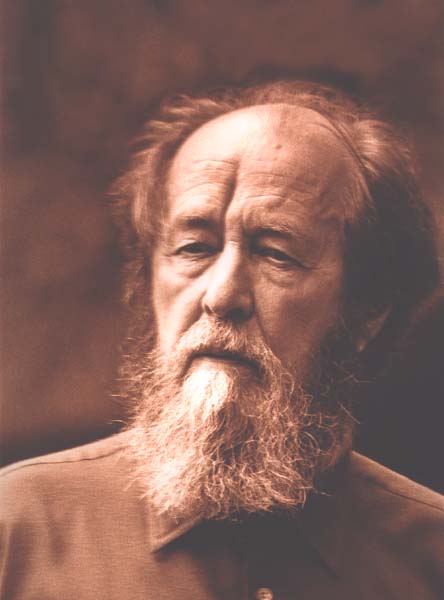
>Miroslav Volf refers to a story written by Alexander Solzhenitsyn in his book Free of Charge. That’s Solzhenitsyn’s picture.

In the story Matryona’s House an old woman “never tried to acquire things for herself. She wouldn’t struggle to buy things which would mean more to her than life itself. All her life she never tried to dress smartly in the kind of clothes which embellish cripples and disguise evildoers.” As the story unfolds she is misunderstood and abandoned, even by her husband. Six of her children die but she carries on giving.

“We all lived beside her”, Solzhenitsyn put in mouth of one of her fellow villagers, “and never understood that she was the righteous one without whom, according to the proverb, no village can stand. Nor any city. Nor our whole land.”

Volf comments a gift is an “event between people. Gifts serve “to create, nourish or re-create” social bonds.

I don’t think I am a good giver. According to Volf “ungracious and reluctant givers inspect the causes of a need and dole out the benefits in proportion to its legitimacy.” He refers to Nathan the Wise , a play by Lessing written in 1779, in which Sultan Saladin enlists a beggar to be his treasurer. The Sultan wanted to end begging by ensuring that beggars could afford not to beg. He wanted a beggar as his treasurer “because only a beggar knows how to give to beggars appropriately”. Of his previous treasurer Saladin said:”He gave so ungraciously when he gave; first inquired so vehemently into the situation of the receiver; never satisfied that he wa slacking, also wanted to know the cause of the lack, in order to measure the cause stingily against the offering.”

I wonder whether Christian teaching about giving has helped. Most sermons seem to be about persuading worshippers to hand over their cash to keep the show on the road. On the drain/radiator test, this sounds more like a drain and a far cry from God giving life to the world. (radiator!)

>The Curious Incident of the Painted Cows

>
For some reason local p**s artists painted local cows! Their work shows a distinct lack of imagination using only white paint (will it be magnolia next time?) and showing nothing of the flair of Banksy’s work. An advertising slogan could be “Milk is good for you” – but then, on the other flank (as suggested by friend Ceri) – “but Guinness is better”.

The Empty Hands of Faith


“And so we put out empty hands and bread and wine are put into them which we eat and drink in communion with his body and blood, for we have no other offering with which to draw near to God but that one offering which is identical with Jesus Christ himself, through whom, with whom, and in whom we glorify the Father” (T.F. Torrance)
Thanks to Two Empty Hands for this quote.javascript:void(0)