Man is not born evil. Why then are some of them infected with this plague of malevolence? It’s because those who are at their head have the malady and communicate it to the rest of mankind.
Voltaire
a ministry scrapbook
Man is not born evil. Why then are some of them infected with this plague of malevolence? It’s because those who are at their head have the malady and communicate it to the rest of mankind.
Voltaire
Heaven is purpose, principle and people.
Purgatory is paper and procedure.
Hell is rules and regulations.
Dee Hock describing his theology of chaordic organisation in Birth of the Chaordic Age (p146)
>
What about these words of Dee Hock?
True power is never used. If you use power you never really have it.
The words stand relatively unconnected in a box on page 140 of Birth of the Chaordic Age as a mini maxim.
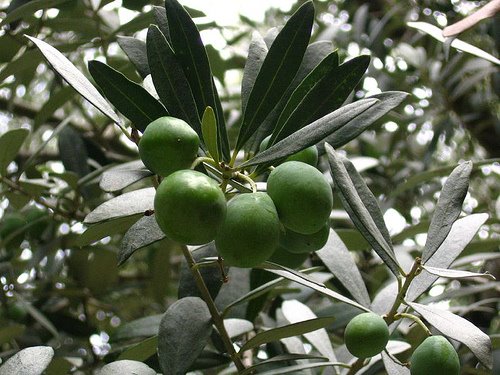
Half an hour later I am confronted with Jotham’s Parable of the Trees from Judges 9 who uses his tree watching to reflect on the political power struggle which saw Abimelech wanting to snatch power. The trees refused to be made king. The olive tree, the fig tree and the vine didn’t want to give up the goodness of what they were producing. It was the bramble who accepted the invitation with the words “If in good faith you are anointing me king over you, then come and take refuge in my shade; but if not, let fire come out of the bramble and devour the cedars of Lebanon.”
I speak from bitter experience that brambles take over gardens. The invitation to seek shelter is an invitation to be throttled – and the threat of fire just clears the ground for the bramble to spread. (One test of the character of a man is to see how he treats those who disagree with him. If his only desire is to destroy those who disagree, then he is much like the bramble – plenty of good points, but no real substance for good.[from David Guzik])
So “Bramble King” is how Jotham thought of his brother. He was violent as was the rule of many of Israel’s kings. The experience of monarchy was not good. People looked back with nostalgia to a time when “there was no king in Israel, when all the people did what was right in their own eyes.” and I look forward to Dee Hock’s mini-maxim:
True power is never used. If you use power you never really have it.
and then I think of Robert Mugabe and the dictators who cause so much suffering because of their clinging to power. Is that what defines a dictator – “someone who clings to power”?

>Today is Environment Sunday – because it’s the Sunday nearest World Environment Day (June 5th). I don’t hear much about Environment Sunday even though
“To strive to safeguard the integrity of creation and sustain and renew the life of the earth”
is one of the Five Marks of Mission. Friend Barbara sent me a video of a 12 year old Canadian girl pleading to adults to do something about the environment. It’s a powerful and well-spoken plea.
In the House of Lords recently, friend and Bishop, Peter Forster gave waht was a cautionary take on environmental concern. Speaking against the tide “as a scientist in a previous incarnation” he said there was no consensus among climate scientists that “carbon dioxide levels are the key determinant” and that “Climate science is a notoriously imprecise area, because the phenomena under investigation are so large.That makes precision difficult to achieve.”
Friends of the Earth has condemned +Peter’s comments but is he not simply saying that we jump to conclusions and all we are working on is hypotheses.
However, whether we are with +Peter, or with Friends of the Earth (and how many of us know enough to take sides?) – our personal courses of action need to be the same (and we need to co-ordinate our efforts in local communities) – which is to reduce the wastefulness of earth’s resouces on the basis that consumption and waste do have an environmental impact and those most likely to suffer are the world’s poorest people.
Here we are hoping to develop a local action group and have invited friends from a neighbouring village to tell us about their success in becoming the first carbon neutral small community. That meeting is on June 24th at Tarvin Methodist Church.

[Faith] is not a well-fluffed nest, or a well-defended castle high on a hill. It is more like a rope bridge over a scenic gorge, sturdy but swinging back and forth, with plenty of light and plenty of air but precious little to hang on to except the stories you have heard…All you have to do is believe in the bridge more than you believe in the gorge.
Barbara Taylor Bradford
Lord, the fullness that our lives long for
depends on us being as open and vulnerable to you
as you were to us,
when you came,
wearing no more than nappies ,
and trusting human hands
to hold their maker
– John Bell
> Well, I guess you couldn’t have the challenge of Jesus “to love our enemies” more starkly put than in this cartoon – (apart from the cross perhaps!) What do you make of it? How much thought do we give to Jesus’s teaching on this? I found the cartoon on Intentional Christian’s site with a good response to it from someone serving in the US military in Iraq. If we love our enemies do we decide which of them to love—thereby putting some enemies off limits? Do we love only those who we can cope with? Where do we draw the line? Where did Jesus draw the line? Intentional Christian points out: “Jesus loved those who held the hammers that drove the nails into his hands and feet.”
It’s a tall order isn’t it? And we are taught to do all of that on top of loving our neighbour ….! Is Jesus joking?

> Doing a bit reflecting in the shower I concluded that books no longer are my main source of learning. It’s probably debatable whether they ever were but the assumption was that a student needs books if s/he is going to learn. I would have to say that significant turning points – things that have set me thinking have been articles I have stumbled across on the internet and chance encounters and experiences. But books are easier to categorise – they are there on the shelf as visible reminders, and if I was to stack the ten which I think had had the most impact on me over the last ten years, these would be them:
These are books which have been memorable. Of course there are others – and I didn’t give it a great deal of thought – and I haven’t included any read in the last 12 months because it’s easy to be enthusiastic about what I’ve just read. None of them have been particulalry authoritative as once they might have been which leads me to conclude that the way we learn has changed so much and reflects our networked society – with one thing leading to another and learning being practical and contextual. Perhaps more relevant to me would be to list the 10 theories, or the ten thinkers, which have had the most impact on me – but that’s another post altogether.
Image is be Faeryan http://www.flickr.com/photos/faeryan/289547369/

Smooth roads never make good drivers
Smooth sea never makes good sailors
Clear Skies never makes good Pilots .
Problem and hassle free life never makes a strong person.
>
 Thank you friend Alan for sending this photo


