Let people be

> “The beginning of love is to let those we love be perfectly themselves, and not to twist them to fit our own image. Otherwise we love only the reflection of ourselves we find in them.”
~ Thomas Merton
The biggest temptation comes with our children. Their birth becomes even more miraculous when we realise how different they are from us. When we respond to questions about which parent they got this that or the other quality or characteristic from with “they didn’t get it from either of us” we are admitting our wonder at creation.
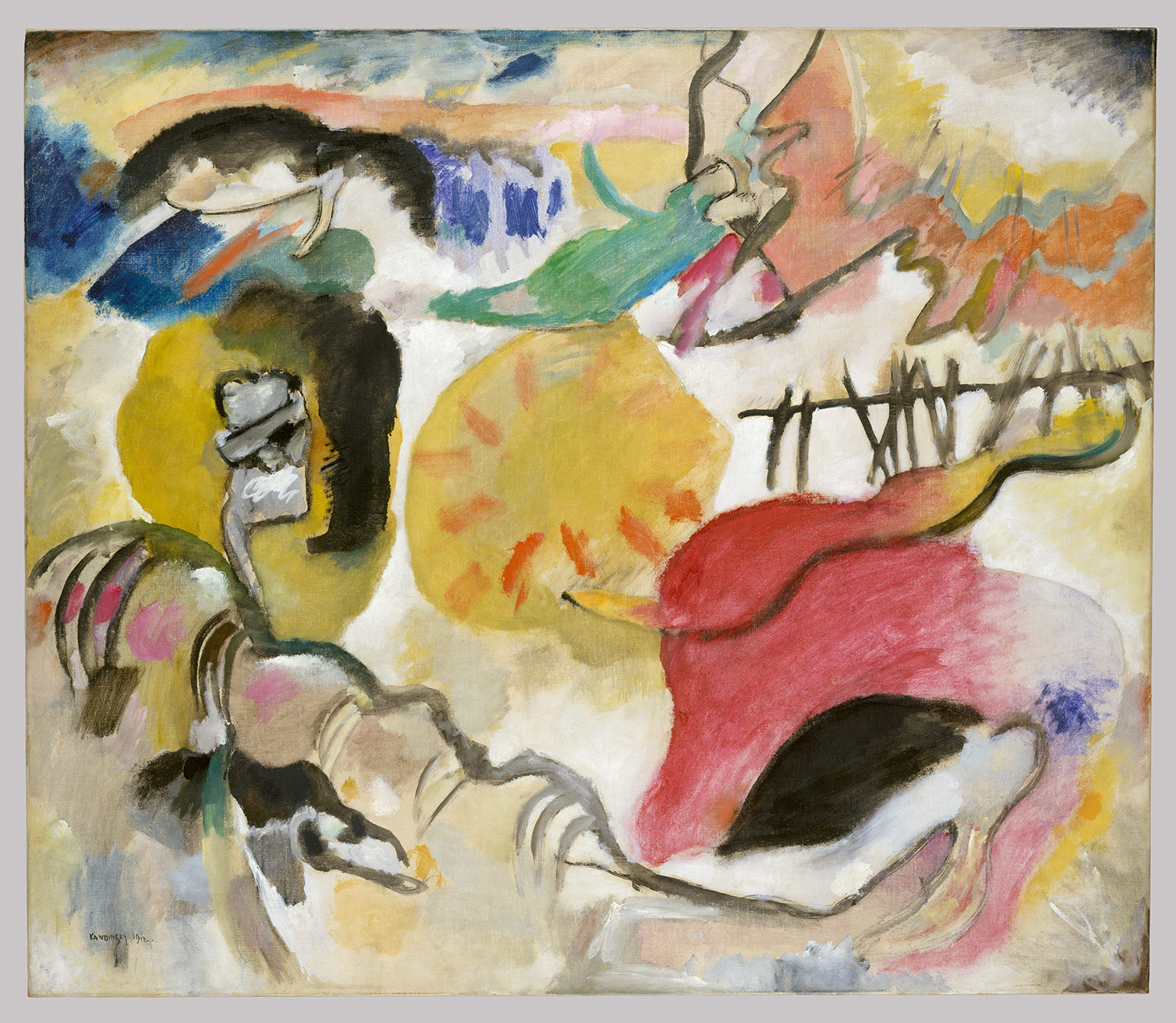
The myth of Narcissus illustrates the tragedy of self-love. Waterhouse’s painting (from the Walker Gallery) shows Narcissus helplessly in love with himself and totally oblivious of Echo’s desire.

>Leadership Style

> I have to talk with other clergy about collaborative ministry. It begs the question about my leadership style.

According to http://www.teamtechnology.co.uk/leadership-styles.html because I am – in Myers Briggs terms – a campaigner (INFP for those who like the letters) – which means I have a strong sense of value, a passion for issues and champion the cause. According to that my leadership style ought to be very useful where a group has lost its sense of identity or is doing too many unimportant things. Apparently it’s not a good idea to ask me to lead where there is a problem “which needs to be solved with dispassionate objectivity” – but I think most people have discovered that already!

The logic of this is that different personality types have different leadership styles, and that different styles are necessary in different situations. Does that sound obvious? Doesn’t it then become obvious that leadership needs to be exercised collaboratively and that leadership team members need to complement one another, so that there is a range of styles.

>Singing Lessons

>

Great experience on Saturday – a Singing Workshop!

Not something I would normally do, especially on a Saturday. we were lucky enough to have Sue Perkes with us – all the way from Tewkesbury.

Apparently singing is as good for you as a workout at the gym, and makes you feel happy because of funny things it does in your brain which are far too complicated for me to understand.

jasmine came with her clarinet. Sue had her getting it out of the box, getting it aligned and cleaning its inside as an illustration of what we need to do when we sing. we get the instrument out (our voice). The inside cleaning job is getting our hearts right, destressing etc.

Made me think of the value of a cantor in worship, particularly one who has the permission to be impromptu in leading the praise.

Another spectacular sight was our organist improvising around Sue’s improvised singing. That was WOW.

Peace process

>

Bishop Alan draws attention to the procedures of the forthcoming Lambeth Conference.

“Indaba” is Zulu/ Xhosa thing — the IzinDuna come together to do mutual business in a way which enables each to be heard, and wisdom to emerge from the group. It’s rather like a monastic chapter. It’s radically different from either Institutionalism, where people pretend to agree to save public face, Imperialism, where Billy the Bully rules OK, or Fascism, where you leave your brain at the door and the Führer tells you what to do because he’s always right.Indaba is a noble ideal. It’s how the early Churches worked, often amidst bitter controversy, as every Patristics student is amazed to discover. Then, slowly, between the fourth and eleventh centuries, like formaldehyde, institutionalism and Roman imperialism seeped in. The reformation was a reaction to all that. Indaba is a gloriously messy concept. It annoys Anal Retentives, Bullies and Fascists, as well as lazy journos who can only understand punchups.It’s counterintuitive, but indaba, if you stick with it, raises spirits and offers hope to the world.

This reminds me of the padare tradition used during the World Council of Churches Assembly in Zimbabwe.
The Padare “is a style of dialogue and consultation which includes more rather than fewer people. It stresses the dignity and equality of all within the assembled company, and affirms unequivocally that, in the search for unity and understanding, the journey is as important as the destination, and the exploration and dialogue as vital as any decisions or conclusions.” The hallmarks of padare are equality, concensus and community.
The Dare is the place (as in Dar es Salaam?) where all participants became equals. There was never a rush to reach decisions, for that would have prevented the building of community.

>Lonely Heart

>

Isolated Christian
57
Pew 5, seat D
St Peter’s Church
Duddon
Tarvin Parish
Deanery of Chester
Chester Diocese
York Province
Church of England
Anglican Communion
21st century
Church of Christ
in the world

seeks playful companions
to take me out of myself
to discuss past differences
and future hopes
with view to long lasting friendship
GSOH
absolutely essential

Hobbies and sexuality totally irrelevant!
Smokers also waiting to be embraced
So that our prayers may join
and rise like incense
and we, at last,
shall be
ONE

>A green place in a burnt land

> Tomorrow’s the begining of what is called “The Week of Prayer for Christian Unity” when we take up Jesus’s prayer that God’s people should be one. I discovered in my run the other day that when we see how far we still have to run to reach our goal that we may be tempted to step on the gas and rush, failing to take care of each step taken, finishing up getting nowhere. Maybe that’s what I have felt about the quest for Christian unity – that we are getting nowhere. It becomes frustrating – and frustration leads to anger, and we all know that anger is no good for any sort of unity.

Perhaps it is better to recognise the small steps we take, and to celebrate them – to take care over each step taken.

Timothy Radcliffe (in What is the Point of Being a Christian?) mentions a convent in Burundi. Six of the nuns are Tutsis and six are Hutu. All lost their families in the fighting between the two ethnic groups. Radcliffe asked how they managed to live in peace with each other. They replied that besides their common prayer, they always listened to the nes together believing that nobody should be alone in their grief. Radcliffe writes: “slowly people from all the ethnic groups learned that the monastery grounds were a safe place, and gathered in their church to pray and grow their crops. It was a green place in a burnt land.”