>I bean a-countin’

>I have been guilty of disparaging accountancy. (For example, see here). I know I am not alone! Ever since Monty Python we have suspected that accountants all need a humerus implant. But, not so. Leicester accountants, Mark J Rees, have their own accountantjokesite with jokes such as:


The doctor comes to see his heart transplant patient. “There is good news. It is very unusual but we have two donors to choose form for your new heart.” The patient is pleased. He asks, “What were their jobs?” “One was a teacher and the other was an accountant.”
“I’ll take the accountant’s heart,” says the patient. “I want one that hasn’t been used.”


I’ve been reminded by Dee Hock this morning that accountancy is an old and honourable profession. In ‘Birth of the Chaordic Age‘ Hock traces the phenomenon of accounting to the tribal storyteller whose role was to accurately portray “their tribe as it was, as it is, as it might become, and as it ought to be”. Unfortunately, the primary language used for accounting for present day community is the language of mathematics and number. Consequently, the story is made up of measurements of what was, what is, and what might happen. The really important issues of what we ought to be is beyond the reach of accountancy speaking only the language of numbers.

Hock quotes H. Thomas Johnson, an economic historian, CPA, and former president of the Academy of Accounting Historians: 

“The language of financial accounting merely asserts answers, it does not invite inquiry. In particular it leaves unchallenged the worldview that underlies the way organisations operate. Thus, management accounting has serbved as a barrier to genuine organisational learning… Never again should management accounting be seen as a tool to drive people with measures. Its purpose must be to promote inquiry into the relationships, patterns and processes that give rise to accounting measures.”

Sorry accountants.

>Fabio Capello and leadership

>

The latest Belbin newsletter focuses on the management of our national football team and Fabio Capello’s capacity for leadership. It’s a fun article and worth a read. Capello is contrasted with Maradonna and suggestions made about the leadership qualities (Belbin style) needed for the next manager – maybe needed sooner than we think if we lose tonight’s game against Bulgaria.

Belbin does draw the distinction between qualifications (looking backwards – and referring to a different context) and suitability (looking forward and relating to present context). The suggestion is to recruit on the basis of suitability rather than eligibility/qualification. There’s one for the FA!

Borderlands

>

For the first time in a long time I have been having to stand my ground. This is because of an inter-personal, intra-departmental boundary dispute. In other words, we are not sure what we are each doing. This is not a major international incident, though there are significant tensions at the border. We don’t know where the boundaries are supposed to be, and because of that we haven’t worked out how we live together at the boundary.
The damage of borderlands is beautifully brought out in a poem I have just read by Gloria Anzaldua – who describes herself as a “chicana dyke-feminist, tejana patlache poet, writer, and cultural theorist” and “as a border woman [who] grew up between two cultures, the Mexican (with a heavy Indian influence) and the Anglo (as a member of a colonised people in our own territory). I have been straddling that tejas-mexican border, and others, all my life It’s not a comfortable place to live in, this place of contradictions. hatred, anger and exploitation are the prominent features of this landscape”. (The photo is by Brian Auer)
Here’s the poem – as I read it in Edward Soja’s book, Thirdspace:
                         I press my hand to the steel curtain – 
               chainlink fence crowned with rolled barbed wire –
        rippling from the sea where Tijuana touches San Diego
unrolling over mountains
     and plains
              and deserts,
this “Tortilla Curtain” turning into el rio Grande
      flowing down to the flatlands
           of the Magic Valley of South Texas
      its mouth emptying into the Gulf.
1,950 mile-long open wound
                     dividing a pueblo, a culture,
                     running down the length of my body,
                         staking fence rods in my flesh,
                         splits me   splits me
                         me raja   me raja
                                                                               This is my home
                                                                               this thin edge of
                                 barbwire.
                       But the skin of the earth is seamless.
                       The sea cannot be fenced,
             el mar does not stop at borders.
       To show the white man what she thought of his 
                           arrogance,
                   Yemaya blew that wire fence down.
                     The land was Mexican once,
                          was Indian always
                              and is.
                         And   will be again.

>The Flaws of Leadership (2)

>Following the example of the patriarchs (see this post) is it fair to say that leaders aren’t born with wonderful personal qualities – but by guile they emerge as leaders?They are from the same cesspit as the rest of us, so we should have realistic expectations of them. I’m going to stop looking for perfection in them. Instead I expect leaders to emerge whose commitment is to turn life round in favour of justice – and whose commitment is to resist the tide of despair and bitterness. Such leaders inspire change for the good of others. I won’t look for perfection (anyway, perfection isn’t a verb – perfection doesn’t necessarily do anything). Instead I will look for people who do more and better than they might have done – and help us to be and do better.

Here are some good clues about leadership – including this mindmap.

>The Flaws of Leadership

>Steve Bell draws attention to the “whited sepulchre” in his cartoon on MP’s expenses.
Matthew’s gospel has these words: “What sorrow awaits you teachers of religious law and you Pharisees. Hypocrites! For you are like whitewashed tombs–beautiful on the outside but filled on the inside with dead people’s bones and all sorts of impurity” (23:27). John’s gospel also has these words: “Let him who is without sin cast the first stone” (chapter 8)

I don’t know about you, but I’ve had enough from the lynch mob – and it is time to draw a line under the whole sorry affair. I don’t know why we should be so surprised when our leaders show themselves to have feet of clay. Out of some sort of idolatory we expect our leaders to be perfect – or is it that we think ourselves as perfect?

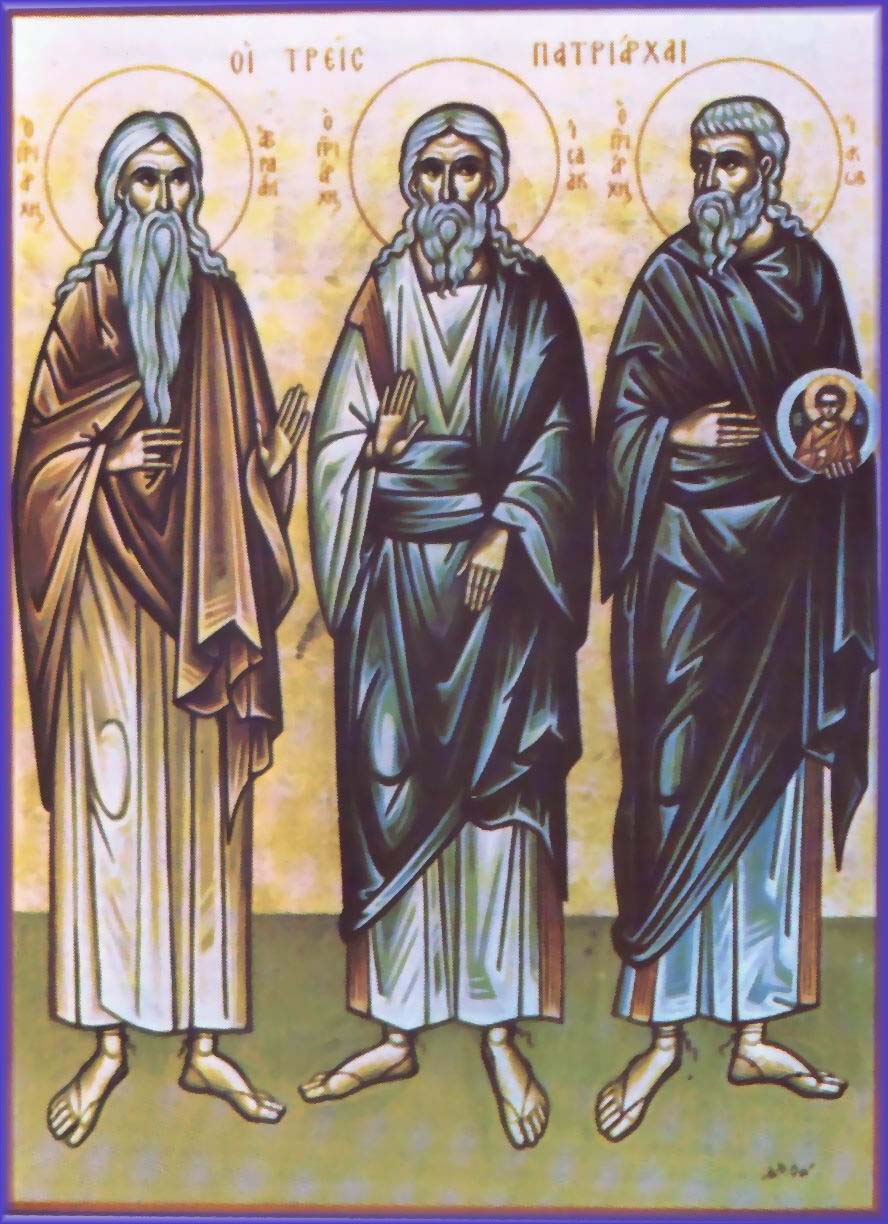
As luck would have it the Bible reading for this morning was Genesis (27&28)- exploring the world of Esau and Jacob (twins), Abraham, Rebecca and Isaac – with Laban thrown in for luck. Together Abraham, Isaac and Jacob are known as the “patriarchs”. Stories about all of them could have kept our tabloids going for years. Abraham passed his wife off as his sister (to Pharoah). Rebecca was a schemer. Jacob was a cheat. Esau was resentful. I could go on. Why did not the religious leaders hide the flaws of the patriarchs? I suggest that it was because they wanted to be realistic about human nature – saying “this is what we’re like – and it’s no good pretending otherwise”. It was to characters such as these (and such as ourselves) that God promises the earth – in spite of the scheming, deceit and betrayal. It is significant that the founding fathers of Judaism and Christianity could do nothing of themselves. The foundation of our faith is not that we all have to be good but that we have to depend on God to turn the tide of despair and bitterness.

On the same day as we scoff and mock our political leaders history has been turning in Northern Ireland. At last a peace settlement has been achieved for which our PM(flawed like the rest of our leaders) paid tribute to all those who had made the settlement possible. It is a magnificent achievement to have sworn enemies holding the reins of power together. Gordon Brown described it as “inspirational” and a lesson for the world that conflict resolution is possible. The peace has been won by courageous leadership. The architects of peace are flawed but courageous enough to know that history is flawed by conflict and transformed by compromise/forgiveness. There can be no forgiveness without flaws!

>Desks against the wall

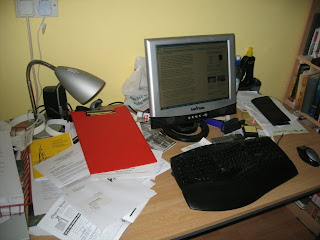
>It is not good for man to work alone – especially when the desk is piled high with paperwork (see Genesis). Friend Simon led an excellent session on delegation yesterday on our leadership programme – going through the continuum of leadership styles – tell, sell, consult and share and sharing the grid of confidence and competence.

One phrase that keeps cropping up in relation to delegation is “letting go“. It’s a funny expression but indicates the difficulties of delegation and that it involves grief.

Just wondering.

Just wondering whether better words might be “letting in” – then delegation becomes an issue of hospitality, celebration and fun.

It also gives a eucharistic reference to delegation – as this icon by Rublev of the Trinity shows. God is letting/inviting us in in the ultimate act of delegation and self-giving. His mission/work is placed in our hands and on our lips as he trusts us with his work. He doesn’t “let go” in the sense of leaving us to it but “lets in” as he promises constant companionship (bread sharing).
“Letting in” sounds as if it could be so much more fun than “letting go”. It sounds as if there is more room for celebration – and more chance of continuing relationship. There is nothing worse than letting go of something important and not knowing what on earth has happened.

So what are we saying when we have our desks against the wall? The Lord does indeed prepare a table before us, and that table often looks very like a desk of paperwork. How hospitable are we with our work? Shall we let people in? Shall we keep it to ourselves?

>It ain’t what you say, it’s the way that you say it

>During face-to-face contact, body language and tone of voice determine 85-90% of the impact. That’s the result of research apparently.
There has to be an integrity of what you say and the way that you say it – a bit like the old Fun Boy Three song – “it ain’t what you do it’s the way that you do it”.
One of my favourite verses is from Isaiah (chapter 42).

Here is my servant whom I uphold,
my chosen one in whom I delight;
I will put my spirit on him and he will bring justice to the nations.
He will not shout or cry out, or raise his voice in the streets.
A bruised reed he will not break,
and a smouldering wick he will not snuff out.

Gentleness, humility, patience are fruits of the Spirit – these fruits are evident in what we say and the way that we say it. Without them we will sound in-credible. What is true of individual communication is also true of organisations. What is the body language of government, our bank, our school/college, our church? What is its tone of voice?
Reviewing a book by Stephen Denning on Amazon, Robert Morris points to Howard Gardner’s book Five Minds for the Future, in which Gardner suggests that, to thrive in the world during eras to come, there are five cognitive abilities that need to be developed. Gardner refers to them as “minds” but they are really mindsets.

1. The disciplined mind enables us to know how to work steadily over time to improve skill and understanding;
2. The synthesizing mind enables us to take information from disparate sources and make sense of it by understanding and evaluating that information objectively;
3. By building on discipline and synthesis, the creating mind enables us to break new ground;
4. By “recognizing that nowadays one can no longer remain within one’s shell or one’s home territory,” the respectful mind enables us to note and welcome differences between human individuals and between human groups so as to understand them and work effectively with them;
5. and finally, “proceeding on a level more abstract than the respectful mind,” the ethical mind to reflect on the nature of one’s work and the needs and desires of the society in which one lives

>It ain’t what you say, it’s the way that you say it

>During face-to-face contact, body language and tone of voice determine 85-90% of the impact. That’s the result of research apparently.
There has to be an integrity of what you say and the way that you say it – a bit like the old Fun Boy Three song – “it ain’t what you do it’s the way that you do it”.
One of my favourite verses is from Isaiah (chapter 42).

Here is my servant whom I uphold,
my chosen one in whom I delight;
I will put my spirit on him and he will bring justice to the nations.
He will not shout or cry out, or raise his voice in the streets.
A bruised reed he will not break,
and a smouldering wick he will not snuff out.

Gentleness, humility, patience are fruits of the Spirit – these fruits are evident in what we say and the way that we say it. Without them we will sound in-credible. What is true of individual communication is also true of organisations. What is the body language of government, our bank, our school/college, our church? What is its tone of voice?
Reviewing a book by Stephen Denning on Amazon, Robert Morris points to Howard Gardner’s book Five Minds for the Future, in which Gardner suggests that, to thrive in the world during eras to come, there are five cognitive abilities that need to be developed. Gardner refers to them as “minds” but they are really mindsets.

1. The disciplined mind enables us to know how to work steadily over time to improve skill and understanding;
2. The synthesizing mind enables us to take information from disparate sources and make sense of it by understanding and evaluating that information objectively;
3. By building on discipline and synthesis, the creating mind enables us to break new ground;
4. By “recognizing that nowadays one can no longer remain within one’s shell or one’s home territory,” the respectful mind enables us to note and welcome differences between human individuals and between human groups so as to understand them and work effectively with them;
5. and finally, “proceeding on a level more abstract than the respectful mind,” the ethical mind to reflect on the nature of one’s work and the needs and desires of the society in which one lives