Extra time and the end of BST

This is a sermon prepared for some of the good people of Guilden Sutton and Plemstall for the end of British Summer Time.
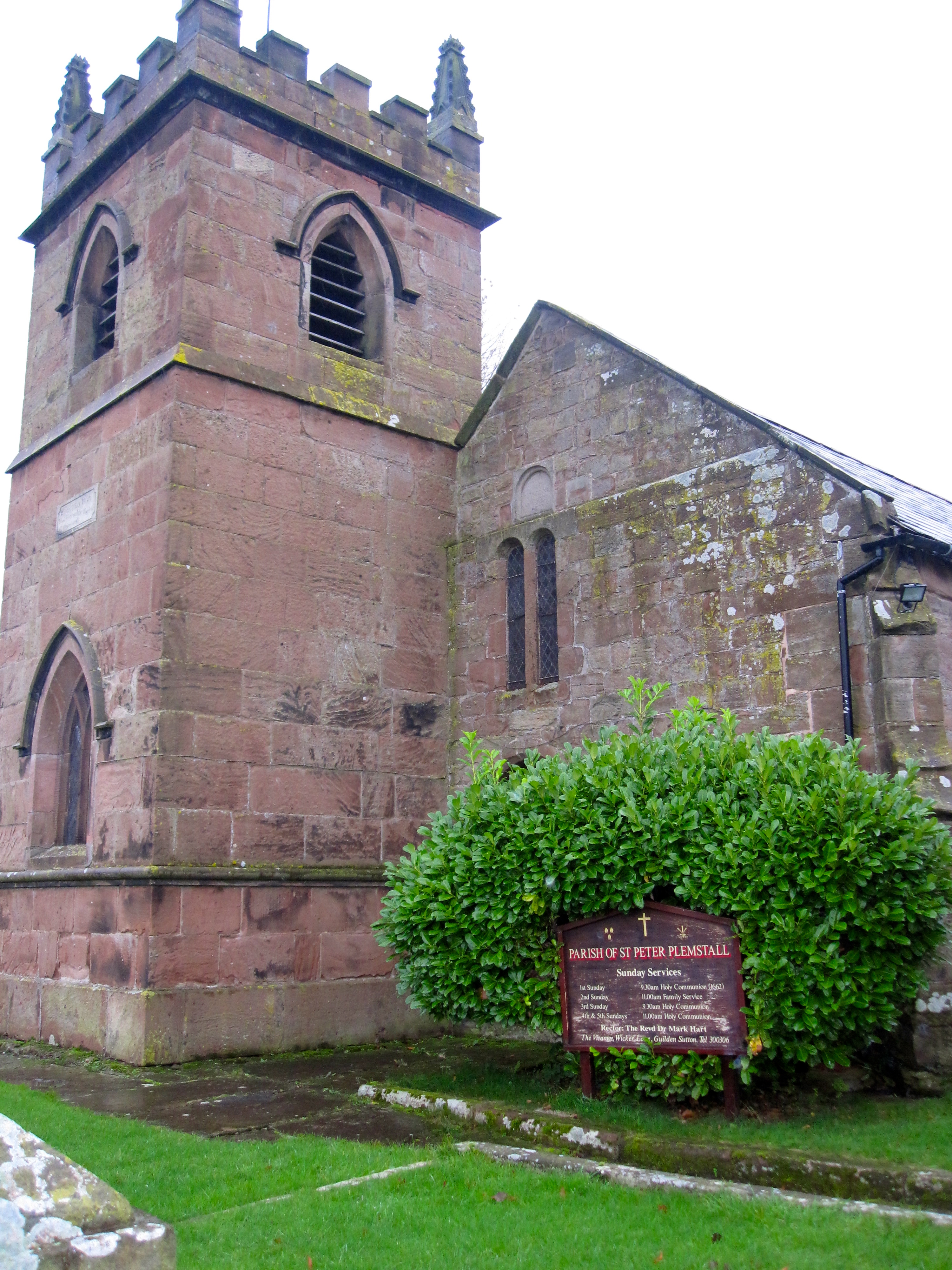
SS Simon and Jude – Sermon for October 28th 2012.

Well done for remembering to change your clocks!

The question we ask when the clocks change is “Do we gain an hour, or do we lose it?”

Well, this time, we “gain” an hour. We have an extra hour.

What have you done with it?

The same question was raised about the Leap Day earlier this year. February 29th. We got an extra “day”. Many people spotted the opportunity and planned extra events – I finished up with three competing commitments that day. One man used the day creatively. He had lost contact with his brother. He hadn’t seen him for over 30 years. He used the Leap Day as a day for the work of reconciliation.

What have you done with the extra hour?

I hope that some of you managed an extra hour of sleep – after all so many of us are suffering from having too much to do and handle. Phrases that we hear of time and time again are “work-life balance” and “time management”. We find it so difficult to manage time. We are stressed by it – I really do hope that some of you managed to get your own back on time by stealing another hour of sleep.

What do we do with time, and what does time do with us? These are questions I want to focus on.

Firstly, what does time do to us?

The short answer is that he terrifies us. Old Father Time, the Grim Reaper, terrifies us. Change and decay in all around I see.

Time is always running away with us and with our loved ones.

Time, like an ever rolling stream,
Bears all its sons away;
They fly, forgotten, as a dream
Dies at the opening day.

The clock is ticking, and we know that there is a countdown for our last chance, whether on the TV quiz show, or the science fiction that the earth is going to be destroyed, unless the superhero manages to “beat the clock”. Wasn’t there a TV programme called “Beat the Clock”?

Time stresses us out. We race against time. Time robs us of our youth, innocence and health and we are left wondering whether there is any point. Try as we like, we can’t manage time and we are left feeling that time is managing us. We are in his hands, and in his hands many are really anxious. What if, all the time, our lives count for nothing?

So, what do we make of time?

Actually, as Christians, we make a lot of Time.

In the Eucharist, in the end, through our faith, in our practice we trust that the One “who changest not” abides with us, even though it is often only change and decay that we see all around.

Our biblical myths of time confront the despair that grips so many. I have been reading a book written in the year I was born – an old book, by Rabbi Abraham Heschel. His view was that Judaism is a religion of time, aiming at the sanctification of time. That view spans both Testaments.

This holiness of time is expressed in the story of creation. Each day is a day because God says so. There is this present moment because God is present.

The work of creation did not finish after the sixth day. The work of creation goes on. Every moment is an act of creation and a new beginning. Heschel writes: “there are no two hours alike. Every hour is unique and the only one given at the moment, exclusively and endlessly precious”. This is such a contrast to the way in which time is something just to be killed by those who see no quality time, and who are simply bored by the flatline of time.

Our story of time encourages us to see every moment as significant. But our story of time also gives us the means to survive the times of our life when there is evil, violence, suffering, pain and crying. The Bible begins at Day One. It ends with the Last Day, when, in the end, there will be Shalom, and all will cry glory.

I mentioned the six days of creation. There is also the 7th day which God called holy, and which we are commanded to call holy. This is how we are called to tell the time. Observing the Sabbath is a resistance to the powers of the world, the powers that be, our business and the things that rule our lives “Monday to Friday”. It is a breathing space with strict rules for its protection. There is no work to be done (for some even flicking a switch is too much). One rule is “ye shall kindle no fire” – applied by Heschel to also not kindling the fire of righteous indignation. Sabbath observance demands great disciplines which build up through generations.

Heschel writes: “With the Sabbath comes a miracle: the soul is resurrected.” For him “the world’s survival depends on the holiness of the Sabbath”. The task is how to convert time into eternity, how to fill our time with spirit.

As Christians, we have a different story to tell. We see two different hands on the clock. The hands of Christ crucified, the hands of Jesus risen from the dead.

For us the holy day of Sabbath becomes the holy Day of Resurrection. Each week begins with holiday of the new creation by which all our days are numbered.

The discipline of people like yourselves coming together to celebrate resurrection is making something of time and resisting a tide of hopelessness. By celebrating the Day of Resurrection, by remembering all God’s works of redemption, we make something of time for ourselves and alternative calendar for the world, which can only be good news for all those who have grown tired, or bored, or who are oppressed day by day.

The Bible is more concerned with time than space. It pays attention to generations and events. We follow that tradition. Our year is full of grace as we move from one great celebration to another. This week we celebrate all the saints. Today we celebrate Saints Simon and Jude. We don’t know much about them. We know that Jude write one of the epistles, and that he is patron saint of hospitals, hospital workers, desparate situations and forgotten, impossible and lost causes.

There are many who feel desparate in their battle against Time. They feel overwhelmed and exhausted. They fear the end. They worry they are a waste of time, and feel that time has wasted them. All of us, from time to time, have shared the same despair – but we know there is another way of telling time.

That way is made through the resurrection, through faith, hope and love, and through the practice and devotion of local communities of Christians who tell the time differently – who manage time not by months and minutes, but by eternity and a love that never dies.

The last word belongs to the patron saint of desparate situations and forgotten, impossible and lost causes. In his epistle, Jude addresses people like ourselves – inclined to anxiety and desperation in the passage of time. He writes: “Dear friends, build yourselves up in your most holy faith and pray in the Holy Spirit. Keep yourselves in God’s love as you wait for the mercy of our Lord Jesus Christ to bring you to eternal life.”

All tweets great and small

bagels
“Best bagel ever this morning” (via Twitter).

That sums up a recent conversation thread I was involved with. There is a lot of chatter about the ratio of noise to significance in our social media.  The criticism behind the bagel reference was there being such little significance and too much noise in that sort of conversation. That was their excuse not to tweet. (Is it their excuse not to talk, as well?) It is strange how one tweet a winter of discontent makes.

Refuseniks are missing the party. Here are some of my (not by me) top tweets. @nancyWhite collected some from the Applied Improvisation Network Conference in a post that make me wish I had been there:

  • #AIN12 @brentdarnell Traditional training is a conspiracy create by sellers of 3 ring binders
  • #ain12 Matt Smith: “do what you can to get into a sense of gratitude before you perform” … or teach, or host, or lead, or ….
  • “You have to find people who are broken and help them heal. Laughter is my weapon of mass construction.” Genie Joseph #AIN12

Others are funny, like this from @theMiltonJones: Roman numerals to be phased out – not on my watch. (Retweeted 1467 times!)

Favourites showing when I wrote this:

  • From @alaindebotton: People who want to be famous generally had parents who took the media a bit too seriously
  • Again from@alaindebotton: How needlessly mean to buy only as many books as one actually has time to read

Without a tweet from @theosoc I would not have been alert to it being World Mental Health Day today, and there being a global crisis of depression affecting >350 million people. Without @first4LCFC I wouldn’t get score updates for my team.

Some tweets are profound and stimulating. They are clever. Other tweets are delivered without such pretension.

The taste of my bagel (in less than 140 characters) is not insignificant. It is a fact of life that some people do record their bagel consumption as a “status update” on Facebook. It is another fact of life that others give them their thumbs up because they care. Many do. They “like” it.

I wonder what it was like when there were other technological breakthroughs in social media. There have been famous letters. Some letters were kept, some thrown straight on the fire. But the triviality of some didn’t prevent people replying with “it was lovely to hear from you” and “please write back”.

We don’t always have something of earth shattering importance. I wonder, with the development of speech (early social media), whether Adam and Eve really did turn to each other and say “Just listen to you. All you go on about is your bagels. Can’t we talk about something more important? Just tell me, do I look big in this? And, how about this big apple?”

Conversations great and small build community and relationships. One of the reasons we go back to Patara for our holidays (maybe you’re not interested in that!) is the way everyone greets us with “gunaydin” (good morning). I would rather walk a street where people say “Hi” than walk a street where there is no expression because people think such apparently meaningless banter is beneath them. I am likely to go back to a cafe with waiting staff anxious to know whether I was pleased with their bagel.

One day we will be open hearted

From today’s reading, Parker Palmer‘s Healing the Heart of Democracy: the Courage to Create a Politics Worthy of the Human Spirit . Palmer repeats this Hasidic tale:

A disciple asks the rebbe: “Why does Torah tell us to ‘place these words upon your hearts’? Why does it not tell us to place these holy words in our hearts?”

The rebbe answers: “It is because as we are, our hearts are closed, and we cannot place the holy words in our hearts. So we place them on top of our hearts. And there they stay until, one day, the heart breaks and the words fall in.”

Group size to the power of one

Nancy White’s post drew my attention to the important points that Chris Corrigan makes about group size.

He  suggests that groups should be made up of one, three of five people for creative purposes (odd numbers), and made up of two or four people for “settling” purposes (even numbers). There should never be more than six people in a small group because  introverts begin to withdraw when groups get to that size and the group then begins to lose the benefits of diversity.

According to Chris, the reason smaller groups work well is because there are more “edges”. The more edges you have, the more diversity you create. The more diversity you create the more resourcefulness and sources you have. This is a principle from nature about how things combine better “when we have more ways of offering ourselves to each other”.

The concept of a group of one sounds odd in our world governed by groupthink. But it does seem reasonable to start counting group size with the number “1”. Not only does that include those who work best alone in the common enterprise, but it also acknowledges the creative tensions of intra-personal interaction. The pendulum is swinging back to recognise that “groups of one are the best way to innovate” and that larger groups are not a “good place for generating innovation”.

I often hear fellow ministers talking about the power of small groups. What we forget is that groups can be as small as one. Already congregations and organisations are made up of small groups without anyone having to try to engineer them. Rarely do the groups of one have their voice heard which means that they may not realise their responsibility or potential.

Extraversion has been the order of the day and the assumption is that we get our creative energy “out there”, through collaboration and with developed “people skills”. But, according to research by psychologists Mihaly Csikszentmihalyi (you’d have to be broad shouldered to have that name on the back of your football shirt!) and Gregory Feist, most creative people in many fields are often introverted. They need solitude as a catalyst to innovation.

Susan Cain is critical of “groupthink” in a New York Times article. She quotes Eysenk’s observation that introversion fosters creativity by “concentrating the mind on the tasks in hand, and preventing the dissipation of energy on social and sexual matters unrelated to work”.  She refers to research which suggests that group performance gets worse as group size increases and quotes organisational psychologist Adrian Furnham. “Evidence from science suggests that business people must be insane to use brainstorming groups. If you have talented and motivated people, they should be encouraged to work alone when creativity or efficiency is the highest priority.” Picasso’s take on it was that “without great solitude, no serious work is possible”.

PS Susan Cain is author of Quiet: The power of introverts in a world that can’t stop talking

Hope springs …

We celebrated our wedding anniversary by going to watch the film Hope springs … It is a touching story about a couple who have been married nearly as long as we have. Their relationship has become stale. The couple have lost touch with each other. There is no contact apart from the mindless peck on the cheek. They sleep in separate rooms. The film follows Kay’s (played by Meryl Streep) attempt to reconnect with her husband (played by Tommy Lee Jones).

It’s not a great film by any stretch of the imagination – (74% on the tomatometer at Rotten Tomatoes) but this (non) touching story reminds me that there needs to be routines and structures for us to keep in touch with each other. This is true of marriage and any community. There comes a time when we can no longer say that we are in touch if our relationships are starved of physical expression.

I love  The Touching Place  by John Bell and Graham Maule. It is a beautiful song set to the tune Dream Angus.

Christ’s is the world in which we move.
Christ’s are the folk we’re summoned to love,
Christ’s is the voice which calls us to care,
and Christ is the One who meets us here.

To the lost Christ shows his face;
to the unloved He gives His embrace;
to those who cry in pain or disgrace,
Christ, makes, with His friends, a touching place.

Feel for the people we most avoid.
Strange or bereaved or never employed;
Feel for the women, and feel for the men
who hear that their living is all in vain.

Feel for the parents who lost their child,
feel for the woman whom men have defiled.
Feel for the baby for whom there’s no breast,
and feel for the weary who find no rest.

Feel for the lives by life confused.
Riddled with doubt, in loving abused;
Feel for the lonely heart, conscious of sin,
which longs to be pure but fears to begin.

Without physical expression feelings become empty. Our feelings get blown away with the wind without physical routines and structures. Community is made of touching places.

I have posted a reflection on the importance of touch by John Hull from his account of the onset of his blindness.

Touching rock

This is from an earlier post I wrote after reading John Hull‘s incredibly moving and honest account of the onset of his blindness, Touching the Rock. He refers to the “thousands of tiny accidental happenings” which led him along the path to blindness. According to Hull, faith transforms such accidental happenings into the “signs of our destiny” by “retrovidence” rather than “providence”.

He describes his stumbling on the altar at Iona Abbey during his stay there in 1986, through which he became a WBS a “whole-body-seer”. Here he sees things for himself, sees through his blindness, and discovers how he can see things through. His seeing is full of feeling and emotion as he touches the rock.

Altar at the Iona abbey
Altar at Iona photo by Calypso Orchid

“After several nights, I discovered the main altar. I had been told about this, and I easily recognised it from the description. It was a single block of marble. Finding one corner, I ran my fingers along the edge, only to find that I could not reach the other. I worked my way along the front and was amazed at its size. The front was carved with hard, cold letters. They stood out baldly, but I could not be bothered reading. The top was as smooth as silk, but how far back did it go? I stretched my arms out over it but could not reach the back. This was incredible. It must have a back somewhere. Pushing myself upon to it, my feet hanging out over the front, I could reach the back. I did this again and again, measuring it with my body, till at last I began to have some idea of its proportions. It was bigger than me and much older. There were several places on the polished surface which were marked with a long, rather irregular indentations, not cracks, but imperfections of some kind. Could it have been dropped? These marks felt like the result of impact. The contrast between the rough depressions and the huge polished areas was extra ordinary. Here was the work of people, grinding this thing, smoothing it to an almost greasy, slightly dusty finish which went slippery when I licked it. Here were these abrasions, something more primitive, the naked heart of the rock.” (P 163).

As a post-script, he writes: “God is many and yet one, and in God there are many worlds yet one. God does not abolish darkness; God is the Lord of both light and darkness. If in God’s light we see light, then in God’s darkness we see darkness. If a journey into light is a journey into God, then a journey into darkness is a journey into God. That is why I go on journeying, not through, but into.” (p165)

Now quoting

Like many I like to include a bon mot  at the bottom of my emails. Currently I am quoting Janice Price from World-Shaped MissionShe writes:

It is important to make ‘difference’ the beginning of the conversation not the end.

I like quotes but can never remember them (or jokes). Hence The Jog – so named originally because my running was its inspiration. Now it is more of a jog to my memory.

I like this quote about quotes from Havelock Ellis (great for student feedback, I think):

It is the little writer rather than the great writer who seems never to quote, and the reason is that he is never really doing anything else.