I have a bee in my bonnet about learning leadership from nature. Here is someone who says it so well …..
Goblin Market
Goblin Market, Goblin Market.
Goblin Market is a remarkable poem by Christina Rossetti. I love this video version because of its pace, images and soundtrack. The words are here. Christina Rossetti was a volunteer worker for over ten years at a refuge for former prostitutes (St Mary Magdalene “house of charity” in Highgate, London), and this experience pulses through the poem.
Rossetti is also well known for writing the words of the Christmas carol, In the bleak Midwinter, (here sung by Alison Crowe). The carol ends with the question “what can I give him, poor as I am?” This is a profound and everyday question. What can we give when we think we have nothing to give? Gift shops have ideas with price tags for those not so poor. Their buyers may wonder what they can get away with. The receivers of such gifts may pass them on to others as something unwanted. What they wanted was something of themselves. Something that comes from the heart: something that is wholehearted.
What can I give him, poor as I am? If I were a shepherd, I would bring a lamb; If I were a wise man, I would play my part; Yet what I can, I give him: give my heart.
For posing the question and for her wholehearted responses – we give thanks today, a feast day for Christina Rossetti.
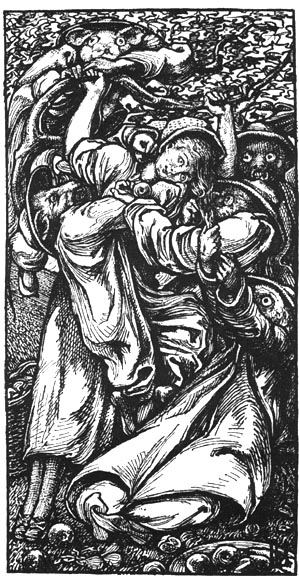
The image is Come Buy, a wood engraving by Laurence Housman (1892) scanned by George Landow.
So, what about truth?
I share Simon Marsh’s reservations about those who insist on the authority of truth. I am not sure that the question of “what is truth?” is on many people’s minds (contrary to what some think). Pontius Pilate is an exception: he couldn’t see truth when he was staring him in the face (John 18:38). We are all too preoccupied for such philosophical discussion that the question of truth is left as a luxury for a small elite. The rest of us know when our interactions ring true.
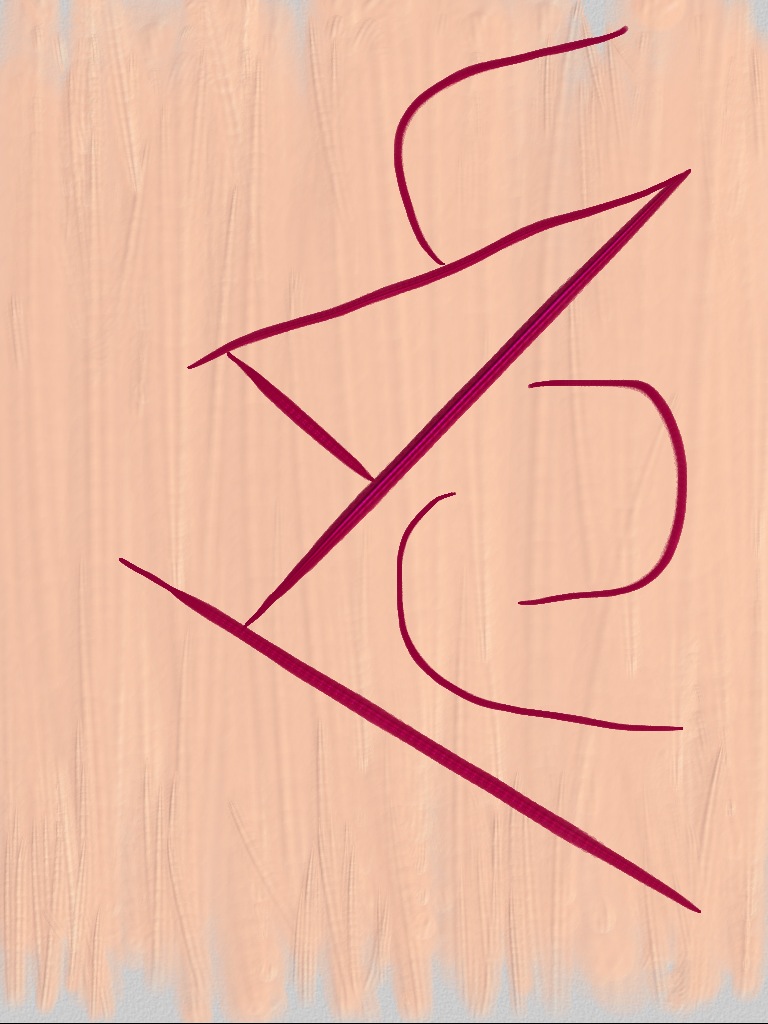 I have been playing round with my new ArtSet app. Collapsing truth, as some people suggest is happening, I came up with a very different picture of truth. It is a picture which asks the question of whether my truth hurts – funny how we have that expression “truth hurts”. It’s a picture which raises the question about the quality of shelter, about whether there is hospitable space and about whether u r cared for.
It’s a picture which presents us with Ruth as well as truth. The book of Ruth is a story of loving-kindness. Ruth shows herself to be full of loving kindness to Naomi, her grief-stricken mother in law, and Ruth receives the loving kindness of Boaz who becomes her kinsman-redeemer. Ruth means compassion and pity. (Ruthlessness describes the absence of those qualities.) Boaz and Ruth are counted as sowing the seed of Jesus. Even though she was a Moabitess, and therefore foreigner, she is Jesus’ great (times many) grandmother – according to Matthew. It’s Ruth’s story which is often chosen by couples getting married. Ruth “plights her troth” to her mother in law:
Where you go, I will go; where you lodge, I will lodge; your people shall be my people, and your God my God. Where you die, I will die …
Truth is questionable. Just like Saint Paul, “we now see, only dimly in a mirror. As yet, we only partially know.” (1 Corinthians 13:12). We have only one pair of eyes and limited perspective. That is something that is factually true. But the truth that ignores the perspective of others, that hurts, that welcomes no stranger, that cares for no-one, is blatantly false. Truth is measured by what we do.
Signed: Yours truly
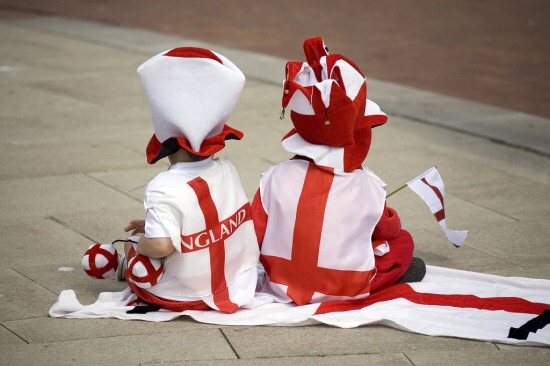
St George’s international holiday
Overcommitment
To allow oneself to be carried away by a multitude of conflicting concerns, to surrender to too many demands, to commit oneself to too many projects, to want to help everyone in everything is to succumb to violence. More than that, it is cooperation in violence. The frenzy of the activist neutralises his work for peace. It destroys his own inner capacity for peace. It destroys the fruitfulness of his own work, because it kills the root of inner wisdom which makes work fruitful.
Thomas Merton in Confessions of a Guilty Bystander
Great Orme Outlook

Crossing a path on Palm Sunday
 |
| It’s only a donkey! There was no horsepower to Jesus’ entry to Jerusalem. Photo from the World Bank Photo Collection |
In his excellent book Barefoot Disciple, Stephen Cherry reminds us that we have misunderstood Jesus’ “triumphal” entry into Jerusalem and suggests that we should not be celebrating a triumphal entry on Palm Sunday but a “humble entry”. That is what Matthew makes of it. Matthew cuts the “triumphant and victorious” reference of Zechariah’s prophecy and simply says, “Look your king is coming to you, humble, and mounted on a donkey.” (21:5). The crowd wanted a triumphal entry of a Saviour to please them. Jesus’ humble entry led to a humble end. He refused to play to the crowd (his last temptation?) who expected him to turn the tables on their occupiers, and then they turned the tables on him.
Like many Christians I joined the Palm Sunday procession yesterday. I was at Chester Cathedral. We went into the city. I have seen many processions, including many I dare not and could not cross. They were triumphal processions. They were pompous processions. Yesterday several people crossed our path. This was an unpretentious procession. This was a procession you could touch (and the children loved petting the donkey!) I appreciated the soft edge of our procession and the hospitality of the ground that was given to all who passed by. If that’s the way of the cross, that’s the way to go.
How Jesus entered Jerusalem challenges our rather grand entrances. Don’t we like to wade in? Don’t we like to look big? Don’t we try to impress? I followed the humble procession yesterday. I’m not so sure how much I fit with my other interventions, my entries into conversations, rooms and situations. There’s a way to go: a way that is far more compassionate.
Stephen Cherry blogs at Another Angle

The Bigger Picture
 |
| Photo of Kilham “tunnel” with permission. http://www.yocc.co.uk |
David Hockney certainly provides the Bigger Picture at the Royal Academy of Arts. Increasingly he has rejected the viewfinder of the camera. The viewfinder of his most recent work is his own eyes and the imagination of his mind’s eye.
What Hockney sees is amazing the rest of us who haven’t practiced the art of seeing. The colours he sees in a field, a tree trunk or a forest floor are not far-fetched but are already hinted at in the subject. Many of the subjects are from his own homeland of East Yorkshire, including “the tunnel” near Kilham. The tunnel is an ordinary farm track with trees, hedgerow and tractor track, with the tunnel being formed by the trees that overarch the track.
It is a track which most of would take for granted, which we would pass by without noticing it. But Hockney treats us to his own views which he lays out on canvases that fill the room. Each view is different. He steps to one side and then another to give himself yet another point of view. He steps forward and he steps backwards. He sees it in the morning light and the evening light, when wet and when dry, in spring through to winter. He sees it in relaxed mood and when stressed and tired. There is the one scene, but so many views. There is one pair of eyes, but so many perspectives. There is the partiality of personal insight but still such wonder. Even Hockney “only sees dimly”, because that is the human condition (1 Cor 13).
There is only so much that can go into one exhibition room. The exhibition is a sell out, even though it is open till midnight on some evenings. The rooms are crowded with people who have come to see. We are given a bigger picture which we see with our own eyes. Excitedly, many take the time to try to share what they see but it is each to their own. There is the one scene, and through one pair of eyes so many views. There is one room and so many pairs of eyes, each drawing their own conclusions.
Realising the many perspectives gives us the bigger picture. Is this the prescription that helps us see better? It is, so long as we can reconcile our views. In any room full of people there is a whole variety of views. But no bigger picture emerges if those views can’t be reconciled to each other. If our views are diametrically opposed to each other we become uncomfortable and we don’t know where to look.

Changing the order of things
It is a privilege to be supporting newly ordained ministers: a group of people in short-term posts on their way to taking on posts of greater responsibility. They are a people in transition who manage remarkably well to avoid being anxious about what might or might not happen to them. They are going through the appointment process, which is also, of course, often a disappointment process. The process of appointment and disappointment is a confusing one. There is not always an apparent justice.
I have always been intrigued by the element of surprise in (dis)appointments and the more exciting appointments I have been involved with have had an element of surprise. Ruth was overwhelmingly surprised when she was appointed churchwarden. Jack was surprised when he wasn’t, though to his credit, he came to terms with his disappointment with great grace.
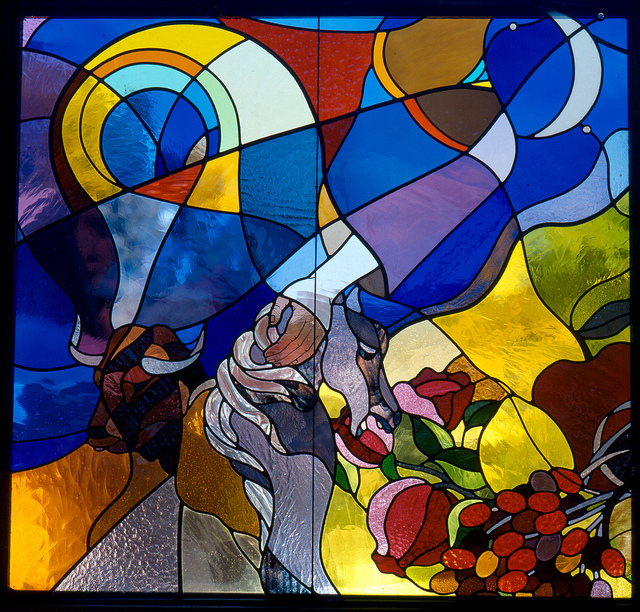
Ordinarily, there should be justice in appointments, and succession planning should follow well understood procedures. But there needs to be processes of disruption. I have been reading the story of Jacob’s blessing of Joseph’s two sons Manasseh and Ephraim (Genesis 48). They were born in that order and should, by rights, have been blessed in that order. Jacob himself “stole” his father’s blessing from his older twin Esau. Of Jacob’s twelve sons, Joseph was the last in line, inspiring murderous resentment amongst his brothers. (The stained glass pictured above shows Joseph’s blessing). Disappointments abound in the Bible. The choice of David by the prophet Samuel was a surprise to David’s father. David was not the first-born, but the last-born – and still so young. Each of his older brothers was presented to Samuel. Each was dis-appointed as Samuel turned the line of succession on its head (1 Samuel 16:1-13).
The New Testament takes up the theme. Everything is in the wrong order. Even the birth of Jesus is in the wrong place. The wise ones went for Jerusalem and finished up nine miles wide of the mark. (Matthew 2). Jesus, himself set the cat among the pigeons by describing the disappointment process. He said “The last will be first, and the first will be last” (Matthew 20:16) before being challenged by the Mum who claimed her two sons had the right to the best seats in the house (Matthew 20:20-24).
All these stories are a reminder that there has to be room for manoeuvre and that there have to be processes of disruption. Prayer before appointments is an invitation for the Holy Spirit to confirm or disrupt the natural order of things. Sometimes the order of things has to change if things are going to change. The story of Manasseh and Ephraim, (or is it Ephraim and Manasseh?) is a reminder of that. It represents the hope of a new order, in which those whose appointment comes as a surprise live for the sake of others and not for themselves. That is why the order is changed.
A new order is one in which all those who come last in things come first – a great disappointing for some.
The stained glass is by Maria Stolz of Renaissance Glassworks Howard Lake, MN 55349
Here is another post on the theme of disappointment and leadership.

Measuring sympathy
 I have come across a lot of recipes recently where ingredients are measured in cups. This is frustratingly imprecise to someone who has to follow recipes line by line. I bought the measures, only to discover that they deliver a chilli which knocks your socks off. I still don’t know the cup size.
Measurements are part of everyday behaviour. I was disturbed yesterday by someone saying “I haven’t got a lot of sympathy for …” It’s as if we have a cup-board possession with a measure of sympathy. Put differently, only being able to spare a pinch of sympathy indicates the meanness of our disposition and behaviour.
How do we measure sympathy? Sometimes sympathy is measured in tea cups. “Tea and sympathy” never amounts to much and describes a limited attention of a duty call. I suggest that there is a more effective simple formula:
sympathy = knowledge x patience
Sympathy grows as we grow in understanding of the other point of view, the other’s position and all the systems that make their life what it is. Then that sympathy is magnified by the gift of patience. Personally I’ve not got a lot of sympathy for those who say they haven’t got a lot of sympathy for … More fool me.


 Grits and Grains
