Extra time and the end of BST

This is a sermon prepared for some of the good people of Guilden Sutton and Plemstall for the end of British Summer Time.
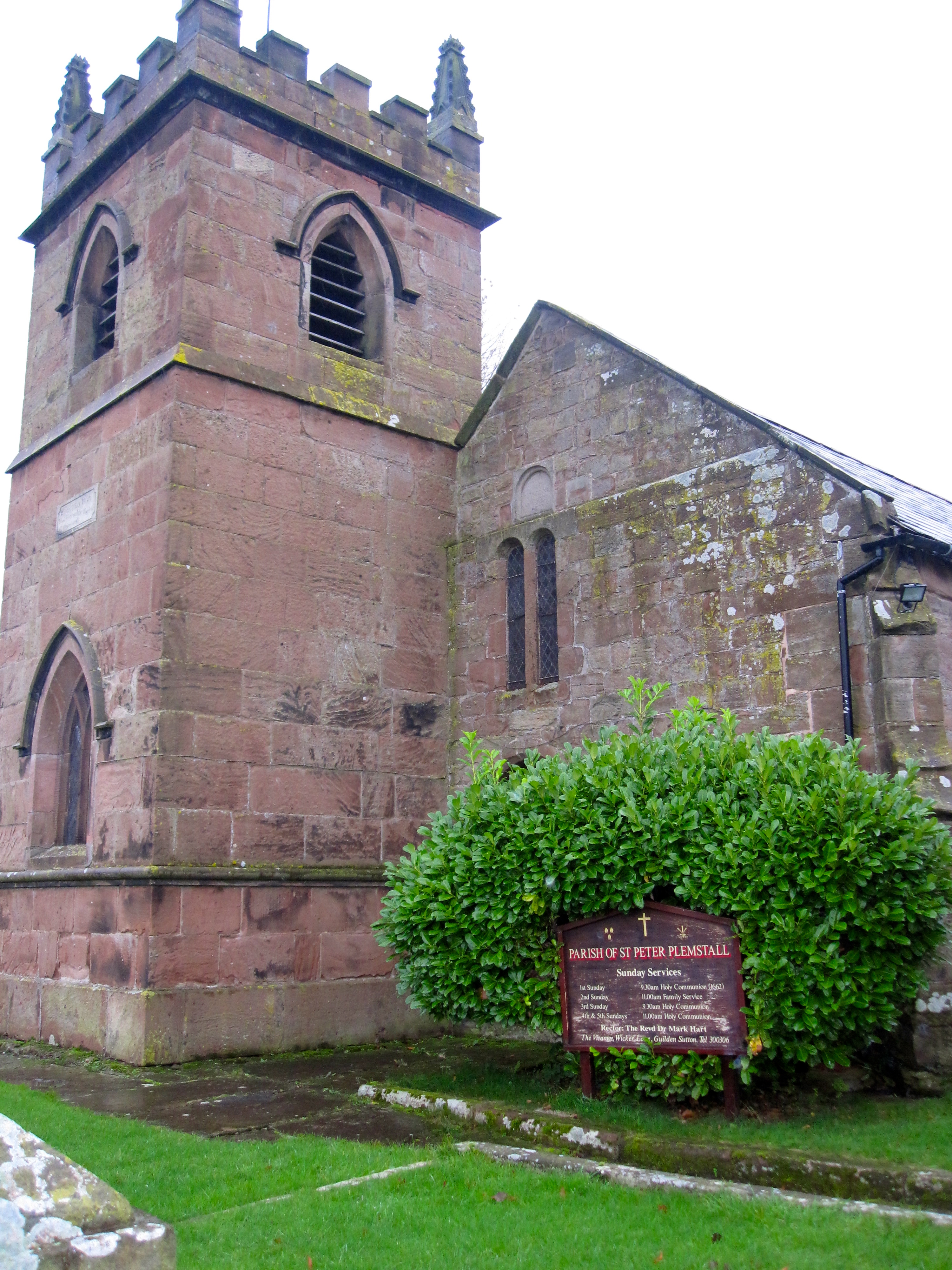
SS Simon and Jude – Sermon for October 28th 2012.

Well done for remembering to change your clocks!

The question we ask when the clocks change is “Do we gain an hour, or do we lose it?”

Well, this time, we “gain” an hour. We have an extra hour.

What have you done with it?

The same question was raised about the Leap Day earlier this year. February 29th. We got an extra “day”. Many people spotted the opportunity and planned extra events – I finished up with three competing commitments that day. One man used the day creatively. He had lost contact with his brother. He hadn’t seen him for over 30 years. He used the Leap Day as a day for the work of reconciliation.

What have you done with the extra hour?

I hope that some of you managed an extra hour of sleep – after all so many of us are suffering from having too much to do and handle. Phrases that we hear of time and time again are “work-life balance” and “time management”. We find it so difficult to manage time. We are stressed by it – I really do hope that some of you managed to get your own back on time by stealing another hour of sleep.

What do we do with time, and what does time do with us? These are questions I want to focus on.

Firstly, what does time do to us?

The short answer is that he terrifies us. Old Father Time, the Grim Reaper, terrifies us. Change and decay in all around I see.

Time is always running away with us and with our loved ones.

Time, like an ever rolling stream,
Bears all its sons away;
They fly, forgotten, as a dream
Dies at the opening day.

The clock is ticking, and we know that there is a countdown for our last chance, whether on the TV quiz show, or the science fiction that the earth is going to be destroyed, unless the superhero manages to “beat the clock”. Wasn’t there a TV programme called “Beat the Clock”?

Time stresses us out. We race against time. Time robs us of our youth, innocence and health and we are left wondering whether there is any point. Try as we like, we can’t manage time and we are left feeling that time is managing us. We are in his hands, and in his hands many are really anxious. What if, all the time, our lives count for nothing?

So, what do we make of time?

Actually, as Christians, we make a lot of Time.

In the Eucharist, in the end, through our faith, in our practice we trust that the One “who changest not” abides with us, even though it is often only change and decay that we see all around.

Our biblical myths of time confront the despair that grips so many. I have been reading a book written in the year I was born – an old book, by Rabbi Abraham Heschel. His view was that Judaism is a religion of time, aiming at the sanctification of time. That view spans both Testaments.

This holiness of time is expressed in the story of creation. Each day is a day because God says so. There is this present moment because God is present.

The work of creation did not finish after the sixth day. The work of creation goes on. Every moment is an act of creation and a new beginning. Heschel writes: “there are no two hours alike. Every hour is unique and the only one given at the moment, exclusively and endlessly precious”. This is such a contrast to the way in which time is something just to be killed by those who see no quality time, and who are simply bored by the flatline of time.

Our story of time encourages us to see every moment as significant. But our story of time also gives us the means to survive the times of our life when there is evil, violence, suffering, pain and crying. The Bible begins at Day One. It ends with the Last Day, when, in the end, there will be Shalom, and all will cry glory.

I mentioned the six days of creation. There is also the 7th day which God called holy, and which we are commanded to call holy. This is how we are called to tell the time. Observing the Sabbath is a resistance to the powers of the world, the powers that be, our business and the things that rule our lives “Monday to Friday”. It is a breathing space with strict rules for its protection. There is no work to be done (for some even flicking a switch is too much). One rule is “ye shall kindle no fire” – applied by Heschel to also not kindling the fire of righteous indignation. Sabbath observance demands great disciplines which build up through generations.

Heschel writes: “With the Sabbath comes a miracle: the soul is resurrected.” For him “the world’s survival depends on the holiness of the Sabbath”. The task is how to convert time into eternity, how to fill our time with spirit.

As Christians, we have a different story to tell. We see two different hands on the clock. The hands of Christ crucified, the hands of Jesus risen from the dead.

For us the holy day of Sabbath becomes the holy Day of Resurrection. Each week begins with holiday of the new creation by which all our days are numbered.

The discipline of people like yourselves coming together to celebrate resurrection is making something of time and resisting a tide of hopelessness. By celebrating the Day of Resurrection, by remembering all God’s works of redemption, we make something of time for ourselves and alternative calendar for the world, which can only be good news for all those who have grown tired, or bored, or who are oppressed day by day.

The Bible is more concerned with time than space. It pays attention to generations and events. We follow that tradition. Our year is full of grace as we move from one great celebration to another. This week we celebrate all the saints. Today we celebrate Saints Simon and Jude. We don’t know much about them. We know that Jude write one of the epistles, and that he is patron saint of hospitals, hospital workers, desparate situations and forgotten, impossible and lost causes.

There are many who feel desparate in their battle against Time. They feel overwhelmed and exhausted. They fear the end. They worry they are a waste of time, and feel that time has wasted them. All of us, from time to time, have shared the same despair – but we know there is another way of telling time.

That way is made through the resurrection, through faith, hope and love, and through the practice and devotion of local communities of Christians who tell the time differently – who manage time not by months and minutes, but by eternity and a love that never dies.

The last word belongs to the patron saint of desparate situations and forgotten, impossible and lost causes. In his epistle, Jude addresses people like ourselves – inclined to anxiety and desperation in the passage of time. He writes: “Dear friends, build yourselves up in your most holy faith and pray in the Holy Spirit. Keep yourselves in God’s love as you wait for the mercy of our Lord Jesus Christ to bring you to eternal life.”

One day we will be open hearted

From today’s reading, Parker Palmer‘s Healing the Heart of Democracy: the Courage to Create a Politics Worthy of the Human Spirit . Palmer repeats this Hasidic tale:

A disciple asks the rebbe: “Why does Torah tell us to ‘place these words upon your hearts’? Why does it not tell us to place these holy words in our hearts?”

The rebbe answers: “It is because as we are, our hearts are closed, and we cannot place the holy words in our hearts. So we place them on top of our hearts. And there they stay until, one day, the heart breaks and the words fall in.”

Hope springs …

We celebrated our wedding anniversary by going to watch the film Hope springs … It is a touching story about a couple who have been married nearly as long as we have. Their relationship has become stale. The couple have lost touch with each other. There is no contact apart from the mindless peck on the cheek. They sleep in separate rooms. The film follows Kay’s (played by Meryl Streep) attempt to reconnect with her husband (played by Tommy Lee Jones).

It’s not a great film by any stretch of the imagination – (74% on the tomatometer at Rotten Tomatoes) but this (non) touching story reminds me that there needs to be routines and structures for us to keep in touch with each other. This is true of marriage and any community. There comes a time when we can no longer say that we are in touch if our relationships are starved of physical expression.

I love  The Touching Place  by John Bell and Graham Maule. It is a beautiful song set to the tune Dream Angus.

Christ’s is the world in which we move.
Christ’s are the folk we’re summoned to love,
Christ’s is the voice which calls us to care,
and Christ is the One who meets us here.

To the lost Christ shows his face;
to the unloved He gives His embrace;
to those who cry in pain or disgrace,
Christ, makes, with His friends, a touching place.

Feel for the people we most avoid.
Strange or bereaved or never employed;
Feel for the women, and feel for the men
who hear that their living is all in vain.

Feel for the parents who lost their child,
feel for the woman whom men have defiled.
Feel for the baby for whom there’s no breast,
and feel for the weary who find no rest.

Feel for the lives by life confused.
Riddled with doubt, in loving abused;
Feel for the lonely heart, conscious of sin,
which longs to be pure but fears to begin.

Without physical expression feelings become empty. Our feelings get blown away with the wind without physical routines and structures. Community is made of touching places.

I have posted a reflection on the importance of touch by John Hull from his account of the onset of his blindness.

Touching rock

This is from an earlier post I wrote after reading John Hull‘s incredibly moving and honest account of the onset of his blindness, Touching the Rock. He refers to the “thousands of tiny accidental happenings” which led him along the path to blindness. According to Hull, faith transforms such accidental happenings into the “signs of our destiny” by “retrovidence” rather than “providence”.

He describes his stumbling on the altar at Iona Abbey during his stay there in 1986, through which he became a WBS a “whole-body-seer”. Here he sees things for himself, sees through his blindness, and discovers how he can see things through. His seeing is full of feeling and emotion as he touches the rock.

Altar at the Iona abbey
Altar at Iona photo by Calypso Orchid

“After several nights, I discovered the main altar. I had been told about this, and I easily recognised it from the description. It was a single block of marble. Finding one corner, I ran my fingers along the edge, only to find that I could not reach the other. I worked my way along the front and was amazed at its size. The front was carved with hard, cold letters. They stood out baldly, but I could not be bothered reading. The top was as smooth as silk, but how far back did it go? I stretched my arms out over it but could not reach the back. This was incredible. It must have a back somewhere. Pushing myself upon to it, my feet hanging out over the front, I could reach the back. I did this again and again, measuring it with my body, till at last I began to have some idea of its proportions. It was bigger than me and much older. There were several places on the polished surface which were marked with a long, rather irregular indentations, not cracks, but imperfections of some kind. Could it have been dropped? These marks felt like the result of impact. The contrast between the rough depressions and the huge polished areas was extra ordinary. Here was the work of people, grinding this thing, smoothing it to an almost greasy, slightly dusty finish which went slippery when I licked it. Here were these abrasions, something more primitive, the naked heart of the rock.” (P 163).

As a post-script, he writes: “God is many and yet one, and in God there are many worlds yet one. God does not abolish darkness; God is the Lord of both light and darkness. If in God’s light we see light, then in God’s darkness we see darkness. If a journey into light is a journey into God, then a journey into darkness is a journey into God. That is why I go on journeying, not through, but into.” (p165)

Turning stones

Stone Tower III

How far skims the stone on the water?
big bounces, many bounces,
final skip
each stone weighed with outstretched arm
for howls of laughter
for cries of pain.
How deep gashes the body with violent pelt?
Turning stones on the one hand
to the other
(weaker)
turns random stones
from arsenal to cairn no stone unturned

Richard Beck posts a quote from a recent interview given by Sr Joan Chittister for the Jackson Free Press. The question was:

“So, as a woman of faith, as a monastic, how do you see your role and the role of other people of faith in the world?”

Sister Joan’s reply:

It’s a simple one: To see injustice and say so, to find the truth and proclaim it, to allow no stone to be unturned when it is a stone that will be cast at anyone else. It’s just that simple. There is nothing institutional, organizational, political about it. It says: “Where I am, you may not harm these people. You may not deride them; you may not reject them; you may not sneer at them, and you certainly cannot blame them for their own existence.”

Shard Villa (1872-1874) - stone megaphone detail

Photos by Keith Bloomfield and Don Shall

Measurement by story

Measurement is part and parcel of the recent Olympic Games. The fastest, highest or most guarantees Gold. But measurement by number isn’t what makes life count.

I am enjoying Organic Community by Joseph Myers. He reminds us of the place of “story”. “Story is the universal measurement of life” and “reducing living organisms to a census count demeans the way we were created.”

Conversations #3

Myers reminds us that “life is not measured by the number of breaths we take, but by the number of moments that take our breath away.” He quotes Peter Block, from The Answer to How is Yes:

The quality of our experience is not measured by the seconds on the clock, but by the timelessness of our experience. We fool ourselves if we ask how long it will take before we know we are, become conscious, identify with our purpose, or remember our own history in  a more forgiving way.

The things that matter to us are measured by depth. Would you assess your humanity by its pace? When I view myself as a time-sensitive product, valued for what I produce, then I have made depth, extended thought, and the inward journey marginal indulgences.

But stories represent a problem for managers. Stories can’t be managed, but numbers can. Myers again: “Churches don’t become legendary in the community grapevine via reporting of numbers. They become legendary through the sharing of their story of mission within the community.”

The photo is from  “camera baba” aka Udit Kulshrastha 

The Fourth of July

There are already “safe spaces for respectful conversations across partisan divides” which have been developed with great care through community development. They are shockingly liberal and discomforting, but need treasuring and multiplying. The above sign is from St James’ Church, Piccadilly in which rough sleepers mix (and sleep) with other worshippers (gathering from across many partisan divides) under one roof.

Parker J Palmer, in the Huffington Post draws attention to a project organised by the Wisconsin Council of Churches (with backing from Baha’i, Buddhist, Christian, Muslim and Jewish communities) initiated by a call from thirty-six religious leaders from across the state have called for “a Season of Civility“. Amidst “partisan rancour” they realise that they “must create ‘safe spaces’ for respectful conversations across the partisan divides. And we must move beyond the walls of our congregations to include everyone in our local communities in this dialogue.” They are using Parker Palmer’s Healing the Heart of Democracy to help guide their thinking, focusing on five “habits of the heart”:

  • understanding that we are all in this together (where have we heard that before?)
  • an appreciation of the value of “otherness”
  • an ability to hold tension in life-giving ways
  • a sense of personal voice and agency
  • a capacity to create community

Palmer’s Huffington Post article is written with American civility (or, lack of) in mind, but the issues he faces are universal. They transgress partisan divides. “The powers” have ways of discouraging us from rattling cages and discouraging conflict. In workshops (safe spaces?) I have seen that conflict has negative connotations for most people. But Palmer reminds us that conflict has a real place in the development of civility, community and society. “America was founded on the historically novel and radical premise that conflict and tension, rightly held, are the engine, not the enemy, of a better social order.” “The civility we need will come not from watching our tongues, but from valuing our diferences and the creativity that can come when we hold them well.”

Get me crying again

Crying Giant

The Old Testament book of Deuteronomy reminds us, “Open your hand to the poor and needy neighbour in your land”. The reading community is told “If there is anyone of you in need, a member of your community in any of your towns within the land that the Lord your God is giving you, do not be hard-hearted or tight-fisted towards your needy neighbour. You should rather open your hand, willingly lending enough to meet the need, whatever it may be.”

This remarkable passage (Deut 15:1-11) adds a further twist implying that it’s worth keeping on the right side of your neighbour in case “your neighbour might cry to the Lord against you.” I may not have noticed this had I not read Psalm 56 alongside the Deuteronomy passage. There the Psalmist says “”You have counted up my groaning; put my tears into your bottle.” Tears count for God and he favours the one who cries.

David Runcorn reminded a group of us this week that tears count, and that they should be regarded as a spiritual gift. For Orthodox Christians they are a gift as important as the ability to speak in tongues. Bishop Kallistos Ware, in a chapter in Holy Tears: Weeping in the Religious Imaginationrefers to Abba Makarios beginning an address with “Brethren, let us weep”. For Bishop Kallistos, it is only tears that count at the Last Judgement. (We can weep inwardly).

Dominus Flevit Church

Hezekiah, king of Judah, prayed with tears. God prompts Isaiah to respond to Hezekiah’s prayer. He says, “I have heard your prayer, I have seen your tears; I will heal you”. Jesus wept over Lazarus and Jerusalem, and one of Jerusalem’s sacred sites, the church of Dominus flevit (Jesus wept) treasures that moment. There is a time to cry, and that is this time. The Psalmist says “those who sow in tears will reap with songs of joy” (Ps 126:5) and it is only in the fullness of time that God will wipe every tear from every eye (only those who are crying?), and “there will be no more death or mourning or crying or pain.” (Rev. 21:4)

My own concern is my own increasing difficulty to cry. I am not easily enough moved to tears. Have my tears stopped because I have been used to managing grief and to managing lament and complaint? Have I preferred a quiet life? Have I changed sides? Do I side with the oppressor? And, as a society, have we put our fingers in our ears against the cries of the poor? Have we justified our tight-fistedness by austerity measures? The counting of tears doesn’t seem to be part of the economic measures we adopt, in stark contrast to the measures outlined in Deuteronomy, the Psalms and throughout scripture. Sadly, in our culture, crying is a shame.

I think I am ready, for the moment at least, to pray. “O Lord, hear our prayer, and let our cry come to you.”

PS. The photo of the church of Dominus Flevit is by Gashwin and shows clearly the tear bottles on the corners of the building used for measuring and treasuring tears. The photo of the Crying Giant is by Chris Murphy.

Parable

I love this poem/parable of Jan Dean’s and the way she/kingdom undermine the man made house building enterprise.

Jan Dean's avatarshinystuff

the kingdom of God is like
a man who buys a bargain basement shrub
and plants it in his garden
and when it grows
it is not a small and tidy thing
it is horse chestnut
alive with lime green leaves
and tall pink candle flowers
its roots will wreck the footings
of his house
and when he sees this great tree
shoot into the air
a solid fountain
pouring shushing foliage
and sparking blossom flames
the man’s eyes widen
and he roars with laughter
such is the kingdom of God

View original post

Harrowing

Harrowing experience !
There are some words you just want to roll around in your mind isn’t there? “Harrowing” did its work on me when I saw this poem by Parker Palmer, which he describes as “taking form” within him.

Harrowing

The plow has savaged this sweet field
Misshapen clods of earth kicked up
rocks and twisted roots exposed to view
last year’s growth demolished by the blade.
I have plowed my life this way
turned over a whole history
looking for the roots of what went wrong
until my face is ravaged, furrowed, scarred.

Enough. The job is done.
Whatever’s been uprooted, let it be
seedbed for the growing that’s to come.
I plowed to unearth last year’s reasons –
The farmer plows to plant a gleaning season.

This poem from Let your life speak by Parker J Palmer.

The photo is from Biltho’s photostream