Faith

>
Miroslav Volf in Free of Charge (subtitled “Giving and Forgiving in a Culture Stripped of Grace” expands on the theme of God the Giver who continues to give in a world inclining towards “gracelessness”. He speaks of faith:

Faith is not something we give to God. In that case, faith would be a work, and a silly kind of work because it would be work we do even though it deosn’t benefit anyone. But exactly the opposite is true. To have faith in God is to be “without works” before God (Romans 4:5). Faith is the way we as receivers relate appropriately to God as the giver. It is empty hands held open for God to fill…. In contrast good works offered to God dishonour God; they tell a lie about God and our relation to the divine Giver, and they take away God’s due.

I remember David Lunn, on hearing of his appointment to be Bishop of Sheffield speaking of his surprise because he felt “he didn’t believe enough”. Who hasn’t thought that?
The faith that expresses itself with hands outstretched trustung God’s gifts is something of the heart. When I say something like “I’m not sure what I believe” part of that is to do with my head and perhaps is saying “there are loads of things I don’t understand”.
Being empty handed before God suddenly makes that not matter. There is nothing we can do to make God love us more, and there is nothing more we can say which will make him love us less. All we can give to God is delight or pain.
Rowan Williams likened the giving of God to the Niagara Falls. Love cascades to us – that’t the empty hands bit – but it’s only living water if we release the gifts to others. If we don’t the water stagnates and becomes poisonous.

>Awards

>For a bit of fun, every month we publish the “Editor’s Award” in our parish magazine. I am puzzled this month and can’t decide. I think I will spray the awards round.
So – drum roll –

The prize goes to all those who are highly regarded in their communities – for all the integrity and service of their lives, because rarely is such regard given for nothing.

But the more than equal first prize goes to those who in spite of great integrity and service are dis-regarded and unnoticed. Their communities and families would be much the poorer without them.

 
And the prize for creative prayer goes to friend Jenny – who rarely attends public worship – for her presentation of bouquets to brothers and sisters at a recent healing service. By binding sprigs of lavender (for healing) and rosemary (for remembrance) she captured the essence of intercessory prayer with one simple twist of rafia binding.

Posted by Picasa

>Bank charge (or stampede)

>For my son being between a rock and a hard place is very painful, especially being ricocheted from one to the other. Recently graduated he starts to make his way in the world. We will call the rock “T-Mobile” and the hard place “NatWest”. T-Mobile try to collect payment. Can’t. Why? Because bank has levied whopping charges. Pattern is set. Charges – refused payment – charges. Agreements. Terms. Conditions. But only one way.
For the rock an agreement is an agreement. At the hard place – resistance with the only give being the offer of a loan at a whopping rate of interest. First they charge, and then they charge again. They seem to know just how to make the credit crunch!
Apparently it’s a hard time for banks – but they shouldn’t be making their life easier by screwing their customers. Or is that why they “value” their customers?
I suspect the story will end happily. Either the bank which boasts a “better way” will see the absurdity and viciousness of the circle my son is in and refund the charges, or the court will have to decide. Banks seem very keen to get students to open accounts – they need to do a lot more in the transition between uni and settling in employment.

Feeding the Church


As Christians we gather at the table and remember what Jesus did with bread on that hillside. The words used by Matthew here are familiar from the Last Supper account and from our own celebration of the Eucharist as well: the verbs–take, bless, break and give–are simple but powerful, and apply to our lives just as they apply to the bread we share with one another and with the world. In fact, this work of the church goes on in every age and every wilderness. Thomas Long writes: “the church is always in the desert, the place where it cannot rely upon its own resources, which are few. The church is hungry itself and is surrounded by a world of deep cravings….” 

from Kate Huey with reference to the Feeding of the 5000
Picture is by Eularia Clarke

>We believe in a Jam Jar God

>
A bit of fun in preparing next Sunday’s sermon. With the passage being the invitation by Jesus to Peter to walk on water I looked at what it could possible mean and come to the conclusion that we believe in a Jam Jar – or should that be Yamm-Yah?
Not a lot of people know this (myself included) but Luke and Johjn in their telling of the story use the same Greek word for water as the Greek word for sea in Job who recognises God as the one who “alone stretched out the heavens and
treads on the waters of the Sea” (Job 9:8)
That word is Yam. God is Yah. So we have Yam Yah – God is a Jam Jar. Discuss.

Great video clip here of Jesus walking on water.

Job wasn’t the first to see God walking on water. In the beginning – “the earth was barren with no form of life. It was under a roaring ocean covered with darkness. But the Spirit of God was moving over the water.” (Genesis 1:2)
And then we have the gospel story of Jesus walking on water – and, in only Matthew’s gospel, Peter walking on water proving the point that rocks do float.

Is it just a stunt? Look at me – I can walk on water!
There has to be more to it than that – and the answer to that is in the Yam.

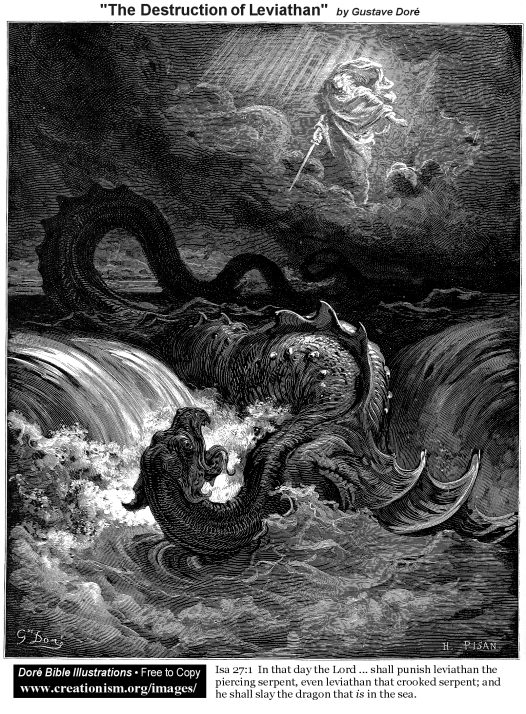
Apparently the Hebrews didn’t believe in sea monsters, but used the image of a sea monster to symbolise evil – referred to as Leviathan. The Canaanites – early settlers of the Promised Land – had a god called Yam – deity of the primordial chaos and representing the power of the sea untamed and raging.

I wonder whether people attributed the storms of the lakes and seas to Yam – evil or whatever name evil goes by. Walking on water then becomes not some super stunt, but a sign of Jesus’s power over the force of evil. When he invites Peter to walk on water he is inviting him to trust that the Spirit of God within him has power over evil.

We translate storms and turbulence psychologically. We know when we are upset, when we are overwhelmed – and when we feel we are drowning. We say we feel “all at sea” – but then we have Jesus who knows that we can walk on water – our Yam-Yah God.

Is that why Jesus washed his disciples’ feet – because they would walk on the water. When he washes the feet of the disciples, is it to admire them. Paul writes: “how beautiful are the feet of those who bring good news!” (Romans 10:5-15) Does Jesus admire the feet of those who by walking on water so declare the good news about the power of love?

>We believe in a Jam Jar God

>
A bit of fun in preparing next Sunday’s sermon. With the passage being the invitation by Jesus to Peter to walk on water I looked at what it could possible mean and come to the conclusion that we believe in a Jam Jar – or should that be Yamm-Yah?
Not a lot of people know this (myself included) but Luke and Johjn in their telling of the story use the same Greek word for water as the Greek word for sea in Job who recognises God as the one who “alone stretched out the heavens and
treads on the waters of the Sea” (Job 9:8)
That word is Yam. God is Yah. So we have Yam Yah – God is a Jam Jar. Discuss.

Great video clip here of Jesus walking on water.

Job wasn’t the first to see God walking on water. In the beginning – “the earth was barren with no form of life. It was under a roaring ocean covered with darkness. But the Spirit of God was moving over the water.” (Genesis 1:2)
And then we have the gospel story of Jesus walking on water – and, in only Matthew’s gospel, Peter walking on water proving the point that rocks do float.

Is it just a stunt? Look at me – I can walk on water!
There has to be more to it than that – and the answer to that is in the Yam.

Apparently the Hebrews didn’t believe in sea monsters, but used the image of a sea monster to symbolise evil – referred to as Leviathan. The Canaanites – early settlers of the Promised Land – had a god called Yam – deity of the primordial chaos and representing the power of the sea untamed and raging.

I wonder whether people attributed the storms of the lakes and seas to Yam – evil or whatever name evil goes by. Walking on water then becomes not some super stunt, but a sign of Jesus’s power over the force of evil. When he invites Peter to walk on water he is inviting him to trust that the Spirit of God within him has power over evil.

We translate storms and turbulence psychologically. We know when we are upset, when we are overwhelmed – and when we feel we are drowning. We say we feel “all at sea” – but then we have Jesus who knows that we can walk on water – our Yam-Yah God.

Is that why Jesus washed his disciples’ feet – because they would walk on the water. When he washes the feet of the disciples, is it to admire them. Paul writes: “how beautiful are the feet of those who bring good news!” (Romans 10:5-15) Does Jesus admire the feet of those who by walking on water so declare the good news about the power of love?

>It ain’t what you say, it’s the way that you say it

>During face-to-face contact, body language and tone of voice determine 85-90% of the impact. That’s the result of research apparently.
There has to be an integrity of what you say and the way that you say it – a bit like the old Fun Boy Three song – “it ain’t what you do it’s the way that you do it”.
One of my favourite verses is from Isaiah (chapter 42).

Here is my servant whom I uphold,
my chosen one in whom I delight;
I will put my spirit on him and he will bring justice to the nations.
He will not shout or cry out, or raise his voice in the streets.
A bruised reed he will not break,
and a smouldering wick he will not snuff out.

Gentleness, humility, patience are fruits of the Spirit – these fruits are evident in what we say and the way that we say it. Without them we will sound in-credible. What is true of individual communication is also true of organisations. What is the body language of government, our bank, our school/college, our church? What is its tone of voice?
Reviewing a book by Stephen Denning on Amazon, Robert Morris points to Howard Gardner’s book Five Minds for the Future, in which Gardner suggests that, to thrive in the world during eras to come, there are five cognitive abilities that need to be developed. Gardner refers to them as “minds” but they are really mindsets.

1. The disciplined mind enables us to know how to work steadily over time to improve skill and understanding;
2. The synthesizing mind enables us to take information from disparate sources and make sense of it by understanding and evaluating that information objectively;
3. By building on discipline and synthesis, the creating mind enables us to break new ground;
4. By “recognizing that nowadays one can no longer remain within one’s shell or one’s home territory,” the respectful mind enables us to note and welcome differences between human individuals and between human groups so as to understand them and work effectively with them;
5. and finally, “proceeding on a level more abstract than the respectful mind,” the ethical mind to reflect on the nature of one’s work and the needs and desires of the society in which one lives

>It ain’t what you say, it’s the way that you say it

>During face-to-face contact, body language and tone of voice determine 85-90% of the impact. That’s the result of research apparently.
There has to be an integrity of what you say and the way that you say it – a bit like the old Fun Boy Three song – “it ain’t what you do it’s the way that you do it”.
One of my favourite verses is from Isaiah (chapter 42).

Here is my servant whom I uphold,
my chosen one in whom I delight;
I will put my spirit on him and he will bring justice to the nations.
He will not shout or cry out, or raise his voice in the streets.
A bruised reed he will not break,
and a smouldering wick he will not snuff out.

Gentleness, humility, patience are fruits of the Spirit – these fruits are evident in what we say and the way that we say it. Without them we will sound in-credible. What is true of individual communication is also true of organisations. What is the body language of government, our bank, our school/college, our church? What is its tone of voice?
Reviewing a book by Stephen Denning on Amazon, Robert Morris points to Howard Gardner’s book Five Minds for the Future, in which Gardner suggests that, to thrive in the world during eras to come, there are five cognitive abilities that need to be developed. Gardner refers to them as “minds” but they are really mindsets.

1. The disciplined mind enables us to know how to work steadily over time to improve skill and understanding;
2. The synthesizing mind enables us to take information from disparate sources and make sense of it by understanding and evaluating that information objectively;
3. By building on discipline and synthesis, the creating mind enables us to break new ground;
4. By “recognizing that nowadays one can no longer remain within one’s shell or one’s home territory,” the respectful mind enables us to note and welcome differences between human individuals and between human groups so as to understand them and work effectively with them;
5. and finally, “proceeding on a level more abstract than the respectful mind,” the ethical mind to reflect on the nature of one’s work and the needs and desires of the society in which one lives

Resurrection

Resurrection: Borgo San Sepolcro

Today it is time. Warm enough, finally,
to ease the lids apart, the wax lips of a breaking bud
defeated by their steady push, hour after hour,
opening to show wet and dark, a tongue exploring,
an eye shrinking against the dawn. Light
like a fishing line draws its catch straight up,
then slackens for a second. The flat foot drops,
the shoulders sag. Here is the world again, well-known,
the dawn greeted in snoring dreams of a familiar
winter everyone prefers. So the black eyes
fixed half-open, start to search, ravenous,
imperative, they look for pits, for hollow where
their flood can be decanted, look
for rooms ready for commandeering, ready
to be defeated by the push, the green implacable
rising. So he pauses, gathering the strength
in his flat foot, as the perspective buckles under him,
and the dreamers lean dangerously inwards. Contained,
exhausted, hungry, death running off his limbs like drops
from a shower, gathering himself. We wait,
paralysed as if in dreams, for his spring.

(Piero della Francesca’s Resurrection hangs in the
civic hall of Borgo San Sepolcro, Tuscany.)