We’ve stayed up!
We’ve stayed awake
to make this night,
this night above all nights, holy.
And we’ve sung praise to this holy night.
Perhaps for the first time tonight in this church
have we sung congregationally the lovely carol, Cantique de Noel.
Noel is a word from Anglo-Norman French. It means birthday.
So when we sing Noel, we are singing a birthday song to the world –
a new beginning sung into the night.
This holy night we see God
as light, forever a-light in our darkness,
a light in our fears, aloneness and confusion.
Tonight we see night as the time God acts.
God’s creation begins in darkness.
That’s our Genesis.
The Exodus began in the dark.
The resurrection begins “while it was still dark”.
God works the night shift.
Tonight we see God –
the very nature of God,
seen and worshipped
as the smallest,
the most vulnerable of life.
This is how we see God,
in a stable, in the busyness
of a crowd of people, in a state
preoccupied by the presence of enemy power.
We see God in that darkness,
and we begin to love the name of that baby,
Jesus, the one who saves us
by joining our darkness with the lightness of love.
As night follows day, he is with us
in the darkness of hurt and disappointment,
rejection, betrayal, the loss of loved ones,
the anxiety of making ends meet,
in a world of war, and a world in flight –
he is with us, our boy, Emmanuel.
Grace doesn’t come with a sword
to overcome the darkness with a spectacular blow.
Instead God illuminates the darkness
with everlasting companionship.
And in this new light, we see ourselves again
as the very image of God.
This holy night, God appears small,
and that smallness reveals what God is always like.
The manger isn’t camouflage, it is revelation.
The manger is our mirror image.
We are made in the image of God,
not born to be high and mighty, first and foremost,
but born into smallness – humble at heart.
And this is the best possible light,
this night, to see one another.
Even though we are in the dark
God helps us see his work begin in smallness,
even with the least, the last and the lost.
God imagines us all worth visiting,
all worth illuminating, all worth saving.
And perhaps, finally,
this holy night invites us
not only to consider how we see God,
or how we see ourselves,
or how we see one another –
but how God sees us.
God does not look for the impressive,
the sorted, the strong.
God looks with delight
upon those awake in the night,
those keeping watch,
those doing their best to get through.
This is the light God shines upon us:
not a searching light,
not a judging light,
but a warming one.
A light that says,
You are worth visiting.
You are worth staying with.
You are worth saving.
This holy night,
God sees us as beloved.
And that is blessing enough
to carry us back into the dark,
Unafraid.
Good night.
Author: David Herbert
My name is David Herbert. I started growing up in Leicester. I’m currently growing up in Ellesmere Port. I am a priest in the Church of England. I was ordained in Sheffield in 1974. I have been privileged to serve in communities in Sheffield (Manor and Gleadless Valley) and communities near to Chester (Ellesmere Port and Tarvin). I am a keeper of learning spaces and support continuing ministerial/professional development in the Diocese of Chester.
This Is How It Began – in the middle of winter
Preached on the Fourth Sunday of Advent, this sermon sits with Matthew’s telling of Jesus’ birth at midwinter — when the light is weakest and hope can feel thin. It explores how God chooses to begin again not in tidiness or certainty, but in the mess, risk, and vulnerability of ordinary human lives.
This is how the birth of Jesus the Messiah came about.
These are the words Matthew uses to describe the birth of Jesus.
This is how it happened.
This is how it began.
When I say,
“these are the words Matthew uses,”
what I really mean is,
“this is how we have translated the words Matthew wrote.”
Matthew wrote in Greek,
and the key word in that opening sentence is a Greek word we know very well, the word genesis.
Τοῦ δὲ Ἰησοῦ Χριστοῦ ἡ γένεσις οὕτως ἦν· μνηστευθείσης γὰρ τῆς μητρὸς αὐτοῦ Μαρίας τῷ Ἰωσήφ, πρὶν ἢ συνελθεῖν αὐτοὺς εὑρέθη ἐν γαστρὶ ἔχουσα ἐκ πνεύματος ἁγίου
Genesis.
Beginning.
Origin.
The start of something that will change everything.
Matthew is not just telling us how a baby was born.
He is taking us back to the very beginning.
Back to the beginning of the world.
Back to the beginning of God’s work with humanity.
Back to what begins with Jesus.
It is no accident that we hear this reading now
— on the shortest day of the year,
at midwinter,
when the light is at its thinnest and the night feels longest.
Because beginnings often come like that.
Quietly. In the dark.
When the ground looks bare and the fields seem empty.
When nothing much appears to be happening at all.
This is when God makes his presence felt.
Matthew takes us back to a beginning that looks very small.
Just as in Genesis, there is a young boy and a young girl.
But they’re not Adam and Eve. They are Joseph and Mary.
Ordinary people with complicated lives.
Adam and Eve walked freely with God.
They had no backstory.
No reputation to protect.
No neighbours to worry about.
But Joseph and Mary live in a world where things are already tangled.
Mary is pledged to be married, but not yet married.
Joseph is a good man, but suddenly faced with a situation that could cost him his standing, his future, his place in the community.
This is not a beginning without consequences.
This is a beginning that arrives already burdened.
And God does not wait for a cleaner moment.
God begins again here — not in freedom, but in constraint;
not in clarity, but in confusion;
not in daylight, but in the deepening darkness.
This is how the birth of Jesus comes about.
Not by sweeping the mess away, but by entering it.
Not by restoring the world to how it once was,
but by beginning something new within the world as it is.
in a teenage love story,
in the vulnerability of these two youngsters.
Both are vulnerable.
Mary is pledged to Joseph but not living with him.
She’s pregnant. People are going to talk.
If she’s not been with Joseph, who has she been with?
She is at risk of being shamed, isolated and abandoned –
a public disgrace.
Joseph is vulnerable too.
He has the reputation of being a righteous man
because he tries to do the right thing.
If he stays with Mary he risks his reputation
(costly to his business and his standing).
If he leaves her she is exposed.
There is no clear path.
And here God begins.
In this mess framed by confusion, risk and fear.
God begins again by stepping into lives that are already complicated
— and trusting them with something holy.
Genesis does not wait for spring.
It begins when the light is weakest
in the midst of winter,
and slowly grows from there.
When God begins here, it is not with explanations.
Matthew tells us that Joseph makes up his mind.
He decided what he will do.
And then God speaks.
Not in public,
not with spectacle,
but in the dark night,
In a dream.
The angel does not tidy the situation.
He does not remove the risk.
He does not promise that everything will be all right.
He says only this:
Do not be afraid to take Mary as your wife.
Do not be afraid to stay.
Do not be afraid to be seen.
Do not be afraid to let your life be changed.
And then Matthew gives the child a name.
Emmanuel.
God with us.
Not God with us when the mess is sorted.
Not God with us when the rumours stop.
Not God with us when life feels safe again.
But God with us, here,
in confusion,
in vulnerability,
in teenage love that chooses faithfulness over self-protection.
When Joseph wakes up,
he does what the angel has told him.
And that is how the story moves forward.
Not through certainty.
Not through control.
But through trust.
And this is the genesis Matthew chose to share with his readers,
how God begins his work
these days that are long with darkness.
He begins with a boy and a girl,
with ordinary people inspired to trust.
Slowly, quietly, faithfully the light begins to grow.
This is how the birth of Jesus comes about.
God begins again –
with us –
in the dark.
NOTE
I make no secret of the fact that I’m greatly helped by AI when preparing sermons. Used well, it doesn’t write sermons for me, but helps me listen more closely — to Scripture, to season, and to the lives of the people I’m preaching among. This sermon is better than it would otherwise have been, and I’m grateful for the help.
Hope Before Dawn: An Advent Imagination
Live for that day when God’s peace is all in all.
Love for that day when God’s light leaves no shadows.
These are the darkest days of our lives.
December draws a long shadow,
and we find ourselves longing for light.
These days seem to go on without end.
These are the days Isaiah fought through and hoped through
3000 years ago:
the same old, the same old.
the dark ages all over again.
This is the mean time.
This is the time to cherish those who’ve kindled hope,
those we’ve bound in scripture
who hoped in God when the world felt just as heavy as ours.
This is the time to pray.
This is the time to keep watch.
This is the time to live for another day,
to love towards another day
when the times will finally be a-changing.
These are very mean days
when nations make war on nations,
There may be no world war,
But there are too many wars
for us to call this peace.
The world is at war,
and we are all caught up
in a global propaganda war.
These are very mean days when dark forces
create a hostile environment for those seeking asylum and sanctuary,
days which leave so many children hungry
and too many families poor,
when budget after budget
miss the opportunity to make things better.
These days, however bright the weather may be,
are dark days to too many people.
And so –
these are the very days to keep hope alive,
to pray for the day when God’s kingdom comes on earth, as it is in heaven,
to live for the day when God’s word settles disputes;
to love for the day when nation will not take up sword against nation,
and nor will we need to train for war any more.
Imagine that.
Imagine the difference
when the weapons of war,
the resources of war,
become tools for farming and feeding and healing.
Imagine the difference
if the resources of war were turned to farming.
Not just in the fields of our own villages,
but in Gaza’s broken orchards,
in Ukraine’s shelled wheatlands,
in every place where the soil has been scorched,
and the hands that sow can no longer harvest.
Isaiah’s dream has dirt under its nails.
It is a farmer’s dream,
a peacemaker’s dream –
swords hammered into ploughshares,
spears repurposed as pruning hooks,
the earth tended again.
And here’s another theme none of us can avoid,
if we care about justice and peace:
we need to be prepared in these days of darkness.
Advent comes with a wake up call.
The time has come for us to wake up, says Paul, (Romans 13)
and be ready for the Day of the Lord –
the day we live for,
the day we pray for,
the day we love for.
For Advent I’ve downloaded an app which notifies me of Fajr –
the prayer Muslims offer from dawn to sunrise.
So, this morning, at 6.05,
my phone buzzed to tell me it was time to pray,
and I was reminded of all those
who rise while the world is still dark
to end the night and hope for the day.
First they wash,
then raise their hands to acknowledge the greatness of God.
They then recite the Surah:
In the name of Allah – the Most Compassionate, Most Merciful.
All praise is for Allah – Lord of all worlds.
the Most Compassionate, Most Merciful,
Master of the Day of Judgment.
You ‘alone’ we worship and You ‘alone’ we ask for help.
Guide us along the Straight Path
the Path of those you have blessed
– not those You are displeased with, or those who are astray.
Then they bow
They stand and say, “God hears the one who praises him.”
They prostrate themselves, grounding their forehead, palms, knees and toes on the earth –
and from the ground they praise God.
They finish by turning their head
to the right and to the left
with a prayer of peace in both directions.
Then they are ready for the day
(and, dare I say, they’ve given themselves a good work out!).
There is something holy about any people
who pray before the sun comes up.
They remind us what Advent is for:
ending the night,
and hoping for the day.
And we are among those holy people
imagining that day which will end all days of wrongdoing,
when God’s word is truly heard.
That is why our time of prayer
is taken up with praying for the coming of God’s kingdom,
on earth, as it is in heaven.
Christians will always use their prayer time for that –
It’s what Jesus taught us.
It is a prayer of imagination.
It is a prayer for dawn in the dark.
It is a prayer for the day when ….
the day God’s peace is all in all,
the day God’s light leaves no shadows.
And so we live for that day —
when, as Revelation imagines,
there will be no more mourning, crying or pain,
the day that will see an end to night.
Until that day
we keep watch,
keep warm,
and keep hope alive
these dark days.
Luke’s Last Surprise: One Condemned Man Joining Another as the First in Paradise
This Sunday marks the end of the Christian year.
Next Sunday we hop on the next liturgical cycle of readings – it will be Year A.
Each year focuses on a particular gospel. Next year it will be Matthew’s. This year it has been Luke’s.
When I began this preaching year, I wondered what Luke would offer us.
I wondered how he might inspire us, challenge us, lead us.
And now, at the end of the year, I find myself saying one thing above all: WOW.
Luke has surprised us. Luke has stretched us.
Luke has shown us the kingdom of God in places we would never have thought to look.
This Sunday is a WOW moment,
a hinge on which we hang our wonder,
before the new year opens again.
Next week we begin again,
not from cold, not from scratch,
but already warmed by hope,
already knowing what God’s kingdom looks like
in the dominion of darkness.
We will return to the manger
knowing now what Luke has shown us all year –
that God’s kingdom begins with the smallest,
with the least, with the last instead of the first,
in a vulnerable baby held by exhausted parents
on the edges of empire.
These are the readings (Colossians 1:11-20 and Luke 23:33-43) that crown our year.
And this is where Luke has been leading us all along:
not to a palace, but to the place of the skull,
Not to a gold throne, but to a wooden cross.
A king.
A sign nailed above his head.
And a thief beside him.
That’s the gospel picture.
That’s where Luke brings us when the year ends and we crown Christ our King.
Our other reading, from Colossians, may seem difficult at first –
until we recognise it as a hymn.
A hymn praising the God who rescues us from the dominion of darkness,
who strengthens us with endurance,
who qualifies us for the kingdom of his beloved Son –
the kingdom of light,
the kingdom where Christ is King.
Luke paints the scene.
It is the “dominion of darkness” (to use the phrase from Colossians).
The place is the place of the skull,
Death Row in the Dominion of Darkness:
there is the smell of death
and the overpowering smell
of cruelty, injustice and wrongdoing.
There are three crosses.
One is for Jesus, the others for two criminals crucified either side of him.
Luke gives them very different voices.
One sneers – placing him with those who mock, jeer and insult Jesus.
“He saved others, let him save himself if he is who he says he is.”
(In other words, he isn’t who he says he is.)
“Aren’t you the Messiah? Save yourself and us!”
The other criminal rebukes him, saying the two of them deserve their punishment.
Then he protests Jesus’ innocence. “This man has done nothing wrong.”
And in that moment he is just right.
He is right to defend the defenceless
against the forces which have conspired against Jesus.
“This man has done nothing wrong,”
and yet he is facing the same sentence, only worse,
because insult is added to injury.
Then he turns to Jesus.
“Jesus, remember me when you come into your kingdom”
This criminal is the first to defend Jesus publicly.
He is the first to take his stand with Jesus.
And Luke wants us to see him.
This figure.
This last, least, condemned man
who becomes the first to declare Jesus innocent
and the first to receive a royal promise.
He is the last person in the world you’d expect
to be the first to defend Jesus –
(we are led to believe that there is no honour amongst thieves),
but here he is in the picture of paradise – alongside Jesus.
The last becomes the first in paradise,
that kingdom of love –
a relationship, not a place.
And here – right here – you can almost see it happen:
And perhaps this is Luke’s final surprise for us:
that the first to enter paradise with the King is not a saint or a scholar or a faithful disciple,
but a criminal who can offer Jesus nothing but honesty and trust.
He offers no record of virtue.
No proof of goodness.
No last-minute achievements.
He can’t even lift his hands in prayer.
All he can do is speak the truth —
about himself, about Jesus, about the kingdom.
And Jesus takes that truth, that tiny seed of faith,
and makes it bloom.
“Today you will be with me in paradise.”
And that paradise begins there,
in the dominion of darkness,
with a king crowned not with gold but with thorns,
and a wrongdoer who sees more clearly than anyone else.
The only crown Jesus could ever wear is a crown of thorns.
They’re the thorns of scorn, the barbs of bitterness.
They’re our failures, our wounds, our complicity,
our inability to rule even ourselves.
But the kingdom Luke has been showing us week after week
is a kingdom where the last come first,
the lost are found
and where the crucified King gathers in his arms
those the world’s unjust powers condemn.
This is the WOW moment.
Everything has led to this,
when the thorns begin to flower.
This is what Luke is intent on showing us.
His sequel, Acts,becomes the story
of the cross in bloom.
The frightened disciples become bold and generous.
The failures become witnesses.
A crippled beggar stands up and walks.
An Ethiopian outsider becomes the first fully Gentile convert.
A persecutor becomes an apostle.
Prisoners sing hymns; jailers are baptised;
enemies share bread.
Again and again the thorns flower.
Again and again the barren places bear fruit.
Again and again the last become first.
This is where the King of Love leads us:
into a rule of life that puts the last first
and sees thorns flower with grace.
All year long Luke has shown us a kingdom that grows in unlikely places,
and now at the last,
he shows us the unlikeliest place of all,
the place of the skull, Death Row.
Yet even here, if we look through Luke’s eyes,
Something ]begins to bloom.
At the place of the Skull grows the tree of life.
The crown of thorns flowers with grace.
The King of Love
and the convicted criminal
become the first couple in the new creation –
the first to walk the way of mercy,
the first to step into the garden of God’s future.
This is how the Christian year ends:
not with worldly triumph,
but with this strange, saving beauty –
a King who makes the last first,
who turns a place of execution into a place of promise,
who opens paradise to the least likely of all.
This is the kingdom of God and the gentle thorn-crowned rule of Jesus.
Luke 23:33-43
When they came to the place called the Skull, they crucified him there, along with the criminals – one on his right, the other on his left. Jesus said, ‘Father, forgive them, for they do not know what they are doing.’ And they divided up his clothes by casting lots.
The people stood watching, and the rulers even sneered at him. They said, ‘He saved others; let him save himself if he is God’s Messiah, the Chosen One.’
The soldiers also came up and mocked him. They offered him wine vinegar and said, ‘If you are the king of the Jews, save yourself.’
There was a written notice above him, which read: this is the king of the jews.
One of the criminals who hung there hurled insults at him: ‘Aren’t you the Messiah? Save yourself and us!’
But the other criminal rebuked him. ‘Don’t you fear God,’ he said, ‘since you are under the same sentence? We are punished justly, for we are getting what our deeds deserve. But this man has done nothing wrong.’
Then he said, ‘Jesus, remember me when you come into your kingdom.’
Jesus answered him, ‘Truly I tell you, today you will be with me in paradise.’
Hope Has Hooves: Keeping Faith When the World Feels Mean
This sermon was preached for the Second Sunday before Advent — sometimes called Kingdom Sunday, and this year also marked as Safeguarding Sunday.
It begins with the prophet Malachi’s vision of a day when “the sun of righteousness will rise with healing in its wings,” and when God’s people “will go out and frolic like well-fed calves.”
It’s a vivid, earthy picture of freedom — hope that doesn’t float above the world but thunders joyfully across it.
Hope, as it turns out, has hooves.
‘Surely the day is coming; it will burn like a furnace.
All the arrogant and every evildoer will be stubble,
and that day that is coming will set them on fire,’ says the Lord Almighty.
‘Not a root or a branch will be left to them.
But for you who revere my name,
the sun of righteousness will rise with healing in its rays.
And you will go out and frolic like well-fed calves.’ (Malachi 4:1-2a)
I thought I’d let Malachi do the talking this morning.
He did his talking 450 years before Christ after the Jewish community had returned from exile.
They thought everything was going to be hunky-dory.
The Temple had been restored, the worship re-established,
and people hoped – and expected – that Israel would be great again.
But the glorious renewal never materialised. It rarely does.
The community Malachi is speaking to is one that had expected to be spared the ways of the arrogant and the evildoers.
Instead they found themselves small, struggling and disillusioned.
They are weary. They are disappointed. They’ve had enough.
And into that discouragement, Malachi tells them not to give up.
In my last parish we lived next door to a dairy farm.
The farmer knew how much we loved the moment when the cows were released into the fields after winter – those first few minutes when they leap and dance and frolic before settling down to graze away their days.
On our final day there, as a goodbye, he freed the cows (earlier than he normally would) just so we could watch them. A little gesture of joy and encouragement.
This is the kind of hope we’re talking about — wild, earthy, triumphant (From the Funky Farmer)
That’s the image Malachi gives us: “You will go out and frolic like well-fed calves.”
Imagine that, he implies.
Feel it.
Let that joy into your bones.
The day is coming,
the day to end all days,
the day we’ve prayed for,
the end of wrongdoing, the end of misery, the end of oppression,
the end of the arrogant, the end of the evildoer.
But between the promise and its fulfilment, they still had to live through some very tough times indeed.
They still lived between a rock and a hard place.
He’s speaking to a community who’ve given up waiting for times to change,
who’ve lost hope.
And he may as well be speaking to us.
Things haven’t changed that much. His times are still our times.
The arrogant and the evildoers still seem to carry the day,
and we too can feel like a struggling and disillusioned generation.
We get weary. We get disappointed.
This is one of the readings appointed for today.
And its words speak, with beautiful conciseness and clarity, of the day we all pray for –
the day when everything broken will finally be set right.
And what Malachi offers is not a vague or floaty hope.
Not a “pie in the sky when you die” kind of hope.
Not the sort of hope that shrugs and says,
“Well, it won’t happen in my lifetime—maybe someday, somewhere else.”
No.
Malachi’s hope is earthed.
It has muscle and movement.
It has sun-warmed skin and strong legs.
It leaps. It runs. It frolics.
Hope, in Malachi’s vision, is not an idea.
It’s an animal set free.
Hope has hooves.
And because hope has hooves, it doesn’t wait politely for the world to improve.
It doesn’t sit still until things get better.
It doesn’t retreat into a dream or escape into the clouds.
Hope is not about leaving this world behind;
it’s about this world being set right.
The freedom Malachi imagines does not happen “up there” or “somewhere else”
but here—in the fields of our own lives,
in the soil beneath our feet,
in the communities that have grown tired and heavy with disappointment.
Hope is grounded.
Hope is embodied.
Hope is movement.
And that is why those who have given up hope
so often spiritualise it, soften it, postpone it.
They make it so distant that it no longer touches the earth.
They reduce it to wishful thinking or to a future reward
instead of a promise that breaks into the present.
But real biblical hope always has dirt on its feet.
It always has skin in the game.
It always demands something of us.
It is a hope with hooves—
a hope that will not stand still
because God will not stand still.
And so we pray for that day.
Every time we say the Lord’s Prayer — “your kingdom come” — we are praying Malachi’s prayer.
We’re praying for the day when wrong is ended, when justice rises,
when the oppressed stand tall,
when the broken are made whole,
when healing breaks out like sunlight over a cold field.
But praying for that day is not passive.
It is not waiting-room spirituality.
It is preparation.
It is participation.
It is permission for God to rearrange our lives as well as the world.
Paul, writing to the Thessalonians, puts it plainly:
“Never tire of doing good.”
Never tire.
Not when we get weary.
Not when hope feels heavy.
Not when the world seems to resist every effort toward kindness, justice, truth.
Because if hope has hooves, we need to keep ours moving.
Doing good is not an extra.
It is not the garnish on Christian faith.
It is the shape of hope lived out.
It is the daily, steady work of aligning our lives with the world God is bringing into being.
And Jesus, in the Gospel reading, speaks of upheaval—
nations in uproar,
wars and rumours of wars,
the ground trembling beneath our certainties.
But then he says something deeply strengthening:
“Do not be afraid.”
Not because everything is fine — it isn’t.
Not because everything will suddenly get better — it may not.
But because God is with us in the meantime,
and it is precisely in these mean times
that our hope matters most.
The world being turned the right way up is bound to be unsettling.
Those who profit from cruelty won’t like it.
Those who cling to power will resist it.
Those who prefer darkness will fear the light.
But discipleship has always been lived with courage.
Courage to do good when others give up.
Courage to tell the truth when lying is easier.
Courage to protect the vulnerable when it costs something.
Courage to embody hope when cynicism is fashionable.
And that brings us to Safeguarding Sunday.
We haven’t mentioned it until now —
and that’s intentional —
because safeguarding isn’t a special theme for one Sunday,
or a box to tick,
or a duty we dust off once a year.
Safeguarding is simply hope in practice.
It is the grounded hope Malachi speaks of,
the persevering hope Paul commends,
the courageous hope Jesus prepares us for.
Safeguarding says:
in this community,
in this place,
every person matters.
The vulnerable are protected.
The wounded are listened to.
The frightened are safe.
This is a place where harm is named, not hidden,
and where healing is made possible.
Safeguarding is part of the way we pray “your kingdom come.”
It is part of the way we “never tire of doing good.”
It is part of the way we “do not be afraid.”
It is hope with hooves —
hope that moves,
hope that watches over,
hope that makes room,
hope that keeps all God’s people safe
until that promised day dawns
and we go out and frolic like well-fed calves.
So today we keep our hope alive,
we keep our feet moving,
and we keep one another safe.
Hope doesn’t just have feathers,
as Emily Dickinson writes in her poetry.
Hope has hooves.
The calling of God’s people in every generation
is to keep faith in these mean times,
to never give up hope in these mean times,
to never stop loving in these mean times.
These are the things we need to keep going forever,
faith, hope and love,
until the day comes which sees the end of the arrogant and the evildoer,
the day the sun of righteousness will rise
with healing in its wings.
Until then, we keep faith.
We keep hope.
We keep love.
Our call is to live for that day.
The stolen blessing: giving the word back to the poor
When the rich say they’re “feeling blessed”, the poor lose a word that was meant for them. Here I take my stand as a preacher – outraged and hopeful that the word “blessed” might yet be given back to those Jesus called “blessed”. It’s All Saints Sunday. I’m at Napton in Warwickshire.
In Luke 6, Jesus stands among the poor, the hungry, the grieving, and the hated — and he calls them blessed. He doesn’t bless success or security; he blesses need, honesty, and hope.
This sermon began with a niggle about that phrase, “feeling blessed,” and grew into outrage that such a word — once full of mercy — has been stolen by privilege.
Here’s my attempt to give it back to Jesus, and to those he named as saints.
Last Sunday I said this, and it’s niggled me ever since:
It strikes me that the Pharisee, in his way,
is saying what we so often hear today —
“I’m feeling blessed.”
Blessed that life’s gone well,
blessed that I’m not struggling,
blessed that I’m not like those who’ve fallen on hard times.
But the tax collector doesn’t say that.
He doesn’t feel blessed —
he only feels the weight of mercy.
And yet he’s the one who goes home justified,
seen, forgiven, restored.
Maybe that’s what blessing really looks like —
not success, but mercy meeting us
when we’ve nothing left to boast about.
Having heard this back in conversation with Angie,
I don’t think I was quite right.
It is true that it bugs me when I hear the phrase “feeling blessed”,
or when I see it as a caption on social media
under someone’s post showing how well life is going.
But I want to dig a bit deeper into this.
Angie was telling me about a conversation she’d had,
and that she left that conversation “feeling blessed.”
That seemed an entirely appropriate thing to say,
because the person she’d spoken to had truly blessed her.
He’d listened, encouraged, lifted her.
Perhaps all of us have had moments like that —
moments when the poverty of our nature is met by grace,
when we’ve made ourselves vulnerable,
when we’ve needed help, to be heard, to be understood —
and someone has met us there with words or deeds
that feel like they’ve come straight from the heart of heaven.
Then, yes — we can say we’ve been blessed.
The story of the Pharisee and the tax collector
was the context for what I said last week.
The Pharisee put me in mind of those who say “feeling blessed,”
because when he prayed, he thanked God
that he wasn’t like other people —
robbers, evildoers, adulterers.
Jesus, in effect, posted on social media
a snapshot of the Pharisee “feeling blessed” —
“me tithing,” “me fasting,” “me succeeding.”
But the Pharisee wasn’t blessed by God.
The one blessed by God was the tax collector
who prayed in shame and hope —
“God, be merciful to me, a sinner.”
So, those social media posts captioned “feeling blessed” —
what’s wrong with them is that they can seem boastful and proud.
They often show an exotic holiday, a trophy spouse, an obedient child.
It’s blessing as a lifestyle accessory.
But maybe there’s something deeper going on.
Maybe the word itself has been stolen.
Somewhere along the way, the word blessed slipped its moorings.
In the early Church, to be blessed was to be close to Christ in suffering —
to be touched by mercy in the midst of need.
By the Middle Ages, blessing had become
the Church’s way of naming holiness —
attached to the saints, the sacraments, the sacred.
Then, in the modern world —
especially in the language of empire, commerce, and the prosperity gospel —
blessing became confused with success.
The word that once described God’s nearness to the poor
was slowly recruited to congratulate the comfortable.
It drifted from the margins to the centre,
from the hungry to the well-fed,
from the grieving to the gratified.
And that’s why we need to give the word back —
to let it find its way home to mercy again.
[Four readers speak these “impact statements,” one by one — slowly and simply.]
1. I used to think I was blessed — until my job disappeared.
Now I know what it feels like to be forgotten while others boast of favour.
2. I pray for food and work and a home for my children,
while my feed is full of people posting pictures of dinners and holidays,
captioned “feeling blessed.”
It feels like the word was never meant for me.
3. I came here from another country,
fleeing violence and fear.
They call me an asylum seeker,
but I’m seeking only safety, belonging,
a place where I might be seen as blessed too.
4. I live with grief every day.
People avoid me because my sadness unsettles them.
But if Jesus is to be believed,
it’s people like me who are blessed —
the ones who weep now, and will laugh again someday.
Because when Jesus opens his mouth to bless,
he doesn’t bless the powerful.
He blesses the poor, the hungry, the weeping, the hated.
Blessed are you who are poor,
for yours is the kingdom of God.
Blessed are you who hunger now,
for you will be filled.
Blessed are you who weep now,
for you will laugh.
Blessed are you when people hate you,
when they exclude you, insult you, reject your name as evil.
But woe to you who are rich…
woe to you who are well fed now…
woe to you who laugh now…
This is the same train of thought that sees the tax collector blessed
and the Pharisee left outside the circle of mercy.
When those who are rich, those who are well fed,
those who are having such a good time,
those receiving yet another honour —
when they say, like the Pharisee, “I’m feeling blessed,”
they are really rubbing salt into the wounds of the world.
What they should be saying is “I’m lucky,” not “blessed.”
Because it is the penitent sinner who is blessed.
It is the poor who are blessed because the kingdom of God works for them.
It is the hungry who are blessed — as in the feeding of the five thousand.
It is the heartbroken who are blessed.
It is the hated who are blessed —
the excluded, the insulted, the rejected,
the refugee and the asylum seeker.
They come first in the kingdom of God.
Please note: these are the only people Jesus calls blessed.
The proud, the self-satisfied, those who look good in their own eyes —
they should just count themselves lucky.
They put themselves first, better than all the rest —
but they come last in the kingdom of God,
because they give blessing a bad name.
They confuse blessing with comfort,
they preach a distorted prosperity gospel,
and in doing so they deprive the poor, the hungry, the heartbroken, and the hated
of the blessing that is rightfully theirs.
They exclude them, insult them,
and reject them from the realm of blessing,
pretending that the blessing is theirs alone.
So, today — on All Saints Sunday —
we remember not those who had it easy,
but those who kept faith when life was hard.
The saints are those who lived the Beatitudes —
the ones who gave the word blessed its meaning back
by how they lived.
And maybe that’s our calling too —
to speak and live in such a way
that the poor hear again that they are blessed,
that the hungry are satisfied,
that the grieving are comforted,
that the hated and the displaced are received as beloved.To give the word blessed back to Jesus —
and to those he never stopped blessing.
Luke 6:20-31
Looking at his disciples, Jesus said:
‘Blessed are you who are poor,
for yours is the kingdom of God.
Blessed are you who hunger now,
for you will be satisfied.
Blessed are you who weep now,
for you will laugh.
Blessed are you when people hate you,
when they exclude you and insult you
and reject your name as evil,
because of the Son of Man.
‘Rejoice in that day and leap for joy, because great is your reward in heaven. For that is how their ancestors treated the prophets.
‘But woe to you who are rich,
for you have already received your comfort.
Woe to you who are well fed now,
for you will go hungry.
Woe to you who laugh now,
for you will mourn and weep.
Woe to you when everyone speaks well of you,
for that is how their ancestors treated the false prophets.
‘But to you who are listening I say: love your enemies, do good to those who hate you, bless those who curse you, pray for those who ill-treat you. If someone slaps you on one cheek, turn to them the other also. If someone takes your coat, do not withhold your shirt from them. Give to everyone who asks you, and if anyone takes what belongs to you, do not demand it back. Do to others as you would have them do to you.
Today
For one day only – my poem Today
Here is a play on words,
a fundamental question.
Is the I a number that marks a beginning,
or, is that I me with rather less feeling,
as in number with a silent b?
Is this a play on words,
or, a play on numbers with words,
a play for today, November 1st?
Here it is: 1 11, 11/1 or 1/11 –
depending whether you’re American
or not, All Saints Day,
when the air’s cleaned of mischief
when the I’s come out to play,
1 11, the first eleven, the perfect team.
The play goes on.
Picture that All, for all the saints,
its two ll’s standing as one,
seeing as one, holding hands,
a love’s embrace.
Or is it illness we see
under the spill and spell
of numbers – III, iIIness –
to make a season to remember
the dark days of the fall,
when another I joins the ranks
of the ones of one and eleven
to make 11/11 a day when the evil of war
became an anvil
for the forging of peace?
Is this a play on numbers,
or a poem that builds today?
There are other acts, other dates,
nothing ever begins with the first.
Take, for example, 911, our 11/9
which we’ll call 9/11
for its hallowing of American soil.
911, the emergency number,
our 999. The 9 followed by the twin towers,
all the ones destroyed
when the ground reduced to zero.
Picture those 1s
and you’lll see there’s never one alone.
Ceiling to floor, ceiling to floor,
each 1 towering,
one copying another,
each office a cell
a spreadsheet of humanity,
each one working part of their lives,
one of a family,
one of a community of so many other ones.
And then came Hamas on a day
which belongs to the same season of war.
Did that mark a beginning?
Was that the start of things
as the Israeli right claims?
Or was it just
the extreme one
in a string of grievance and reprisals?
7/10 we’d call it,
a high mark of history,
possibly the end of a nation.
Israel has always known its numbers,
the seven days of creation,
the ten, the measure of God’s authority.
They multiply those numbers
to sum up the fullness and perfection of life
or to ask the question of the times –
how many times must we forgive?
Is it 70?
Is it just 70?
Good news responds:
It’s not just 70. It’s 7 times that.
It’s so many times we’re bound to lose count.
There’s no going back to number 1
and whatever its cause.
No one ever started it.
© David Herbert
1/11/25
This is where mercy takes her stand: far off, in the distance
Readings: Luke 18:9–14; Ecclesiasticus 35:12–17
The clocks have changed. The weather’s changed.
And we stand now on the bridge between seasons.
Today is the last Sunday after Trinity.
Next Sunday is the first in the new Kingdom season –
when we see the darkness of the kingdoms of this world,
and pray again for the world to be turned the right way up
with the rule of God’s Kingdom founded in heaven.
As the light shortens and we cross that bridge between seasons,
it feels right to pause and ask what endures –
what stands firm when the world tilts and turns.
And Jesus gives us this story;
a parable about where mercy truly stands.
This is where mercy takes her stand: far off, in the distance.
I want us to notice this morning
the two men Jesus talks about in the parable –
a story he addressed to some
who were confident of their own righteousness
and looked down on everyone else.
Notice how the Pharisee did what was expected of him,
just as he was supposed to,
obedient to the teachings of his religion.
He tithed and he fasted.
He did just what was right.
He was a religious success –
the sort of success to make a temple proud.
He stood confidently still,
as if he owned the place –
the temple where he was the perfect fit,
And he smugly gave thanks
that he wasn’t like the others:
robbers, evildoers, and adulterers.
In fact, he put himself first,
the best he could be,
better than all the rest,
better than the tax collector they all despised,
standing over there, at a distance.
He gave himself the prize,
he was the pride of the temple –
the one to catch the eye
of those like him on centre stage:
the success stories,
the ones who come first in their own eyes
and the eyes of the world,
those who are proud of their achievement,
who look down on those who can’t match them.
But he’s not the one who catches Jesus’ eye.
Mercy’s gaze has turned elsewhere.
This is where mercy takes her stand —
not in the proud posture of the Pharisee,
but with the one who stands at a distance,
head bowed, heart open,
praying only, “God, be merciful to me, a sinner.”
The tax collector hasn’t much to commend him.
He’s made a living making compromises,
lining his own pocket when he must,
doing the bidding of an empire,
taxing his people, cheating his people,
keeping them poor.
He too has come to pray.
He stands apart.
He knows he’s not fit
to join those who look down on him.
He knows the weight of those eyes
and their condemnation, surely justified.
But still he prays where he’s been pushed aside –
in that low place, in that honest place –
and he finds the only prayer he can manage:
“God, be merciful to me, a sinner.”
That’s all.
There are people good at praying, like the Pharisee.
It comes easy to them.
But this tax collector has nothing to claim.
He can’t make comparisons; he can’t claim to be good.
He has no list of good intentions.
All he has are these few words –
and that’s enough for Jesus.
Jesus has highlighted two men –
two types, one self-righteous and sure of himself,
the other “worse” by some distance.
There’s only one who goes home justified,
and it’s not the one we expected,
the one who thanks God he’s better than all the rest,
the one who thinks he’s the best he can be.
It’s the other one, the one on the edge,
the one in the distance, going home justified
(whatever “going home” might mean).
That’s quite some punchline from Jesus,
punching the pride of the temple,
and those confident in their own goodness,
who look down on everyone else.
“All who exalt themselves will be humbled,
and those who humble themselves will be exalted.”
That’s turning the world upside down,
and the truth inside out.
And it still happens today,
whenever we’re brave enough to look beyond ourselves.
There’s a man who sits under the bridge in our town.
I’ve passed him many times,
hesitating, not sure what to say,
worried about what it might cost to engage.
But this week, I stopped.
I’d found my opening line.
We talked.
He had plenty to say.
I found him articulate, intelligent, resilient,
unhealthy, unlucky.
I went away thankful.
I wasn’t thankful I wasn’t like him –
God forbid.
Rather, I was thankful that I am.
Thankful that mercy makes us kin,
that empathy builds bridges and common ground.
I had stood my distance – the shame was all mine.
The shame that it’s taken me so long
to learn how to join those down and those out.
This is where mercy takes her stand —
on the bridges, in the margins,
in the hearts of those who stand at a distance.
And maybe this is a small thing to notice,
but it strikes me that the Pharisee, in his way,
is saying what we so often hear today —
“I’m feeling blessed.”
Blessed that life’s gone well,
blessed that I’m not struggling,
blessed that I’m not like those who’ve fallen on hard times.
But the tax collector doesn’t say that.
He doesn’t feel blessed —
he only feels the weight of mercy.
And yet he’s the one who goes home justified,
seen, forgiven, restored.
Maybe that’s what blessing really looks like —
not success, but mercy meeting us
when we’ve nothing left to boast about.
Today is Bible Sunday,
a reminder that Scripture isn’t just something we read —
it’s something that reads us.
The Pharisee knew his Bible well,
but he used it to build himself up.
The tax collector may not have known a verse,
yet he lived the truth of one we’ve heard this morning:
“The prayer of the humble pierces the clouds” (Ecclesiasticus 35).
God’s Word lands where mercy already waits.
And that is what this parable shows us —
the way God’s kingdom comes:
not through pride or perfection,
but through mercy that stoops low
and finds us where we are.
For God sides with the penitent sinner,
with the humble, with the broken,
with those the world overlooks.
And when we begin to see as God sees —
when we recognise the brother under the bridge,
the sister on the edge —
we discover that the kingdom has already drawn near.
This is where mercy takes her stand:
far off, in the distance,
on the edge where humility meets hope,
and where God is already at work,
turning the world the right way up.
All who exalt themselves will be humbled,
and all who humble themselves will be exalted.
That’s not a threat.
That’s a promise.
That’s the way the world is set right.
Luke 18:9-14
To some who were confident of their own righteousness and looked down on everyone else, Jesus told this parable: ‘Two men went up to the temple to pray, one a Pharisee and the other a tax collector. The Pharisee stood by himself and prayed: “God, I thank you that I am not like other people – robbers, evildoers, adulterers – or even like this tax collector. I fast twice a week and give a tenth of all I get.”
‘But the tax collector stood at a distance. He would not even look up to heaven, but beat his breast and said, “God, have mercy on me, a sinner.”
‘I tell you that this man, rather than the other, went home justified before God. For all those who exalt themselves will be humbled, and those who humble themselves will be exalted.
LimpLight
This one’s for all who wrestle in the dark and rise, blessed but limping, inspired by reading Genesis 32:22-31 and Luke 18:1-8 – the Revised Common Lectionary readings for October 19th 2025.
How shall we describe the state of Israel today?
The state of Israel today begins with both our readings —
from Genesis 32, the story of Jacob whose name means twister;
and from Luke 18, the story of the widow struggling for justice.
The state of Israel begins at the end of a night of struggle for the twister,
a night of struggle in which Jacob never discovers
the name of the one he’s wrestling with,
but finds himself called by a new name — Israel.
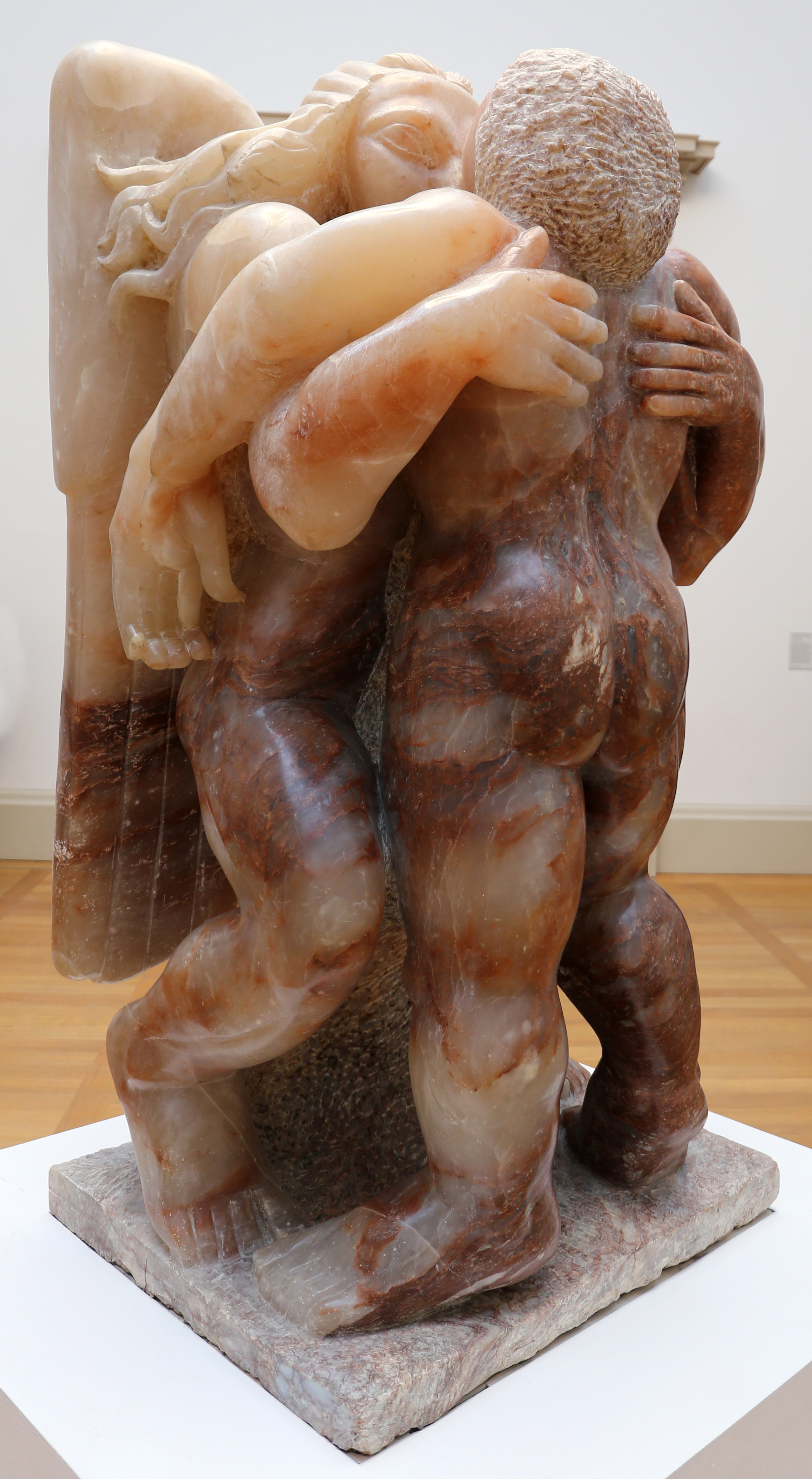
Israel struggles with God,
and God struggles with Israel.
That is the very meaning of Israel.
If Israel means anything,
it means struggling with God.
Jacob is the first to be called Israel,
and he is called (renamed) that by the one he struggled with
because he “struggled with God and with people”
and withstood the whole night.
It is the calling of Israel to struggle faithfully through the night.
Jacob is the patriarch of Israel —
the patriarch of those who struggle with God and with people,
and who carry on wrestling through long nights and times of darkness
without being overcome,
people like the widow singled out by Jesus —
a victim of some injustice.
In the face of an utterly unjust justice system,
personified by a judge who neither feared God
nor cared what people thought,
she struggled.
For some time she struggled.
She kept coming at that lousy judge.
She wouldn’t let go until he gave in.
Those who struggle through the night,
with God and with people —
those who struggle to see the night through,
for whom the night is very dark,
and for whom there is little daylight,
those who won’t give up whatever the night brings —
they are the ones whose hope is rewarded.
They carry a blessing for all who wrestle with God
and with the wounds people inflict.
It’s the blessing of God
who himself wrestles through the darkness of the world,
who struggles with people and the suffering they cause,
but who, in spite of all that,
wrestles the whole night long.
This is the love that shines in the darkness
to the break of day.
And yet, the night is long.
Not just one night in Jacob’s life,
not just one night in ours,
but the long night of the world —
a night as long as history.
Through that long night we wrestle,
and God wrestles with us.
There are three struggles woven into this story,
and all three belong to Israel:
We struggle with God.
We struggle with people —
and people struggle with us.
And through it all,
God struggles with us.
That’s what it means to be called Israel:
to live the long night of wrestling,
and to trust that, at the end of it,
there will still be blessing.
The struggle with God
Sometimes it’s the long silence of prayer —
when we ask and wait and hear nothing.
Sometimes it’s the ache of loss,
or the questions that faith won’t easily answer.
We wrestle with God when life doesn’t fit the promise,
when love feels hidden,
when blessing comes only after a wound.
But still we hold on.
Faith is not certainty —
faith is the grip that will not let go until morning.
The struggle with people
And we wrestle with people too.
Not just those who hurt or wrong us,
but in all the difficult ways love tests us —
learning to forgive, to be patient,
to stay kind when we’d rather give up,
to bear with one another’s weakness.
People struggle with us too —
our faults, our sharp words, our stubbornness.
We are all part of each other’s wrestling.
These are the struggles that form the fruits of the Spirit —
the quiet strength that grows only in the dark:
patience, gentleness, self-control,
love that endures through the night.
The struggle with ourselves
And maybe there’s a fourth struggle too —
the one Jacob knew best —
the struggle with ourselves.
The fight to face what we’ve twisted,
to tell the truth about who we are,
and to accept the new name that grace gives us.
Before we can meet God face to face,
we have to face ourselves in the dark —
the parts we’d rather not see,
the wounds we’ve caused as well as borne.
Even that struggle can become blessing.
The struggle of God
And through it all, God struggles too —
not against us, but for us.
God wrestles through the night of the world,
bearing our pain,
refusing to give up on us.
The cross itself is the mark of that struggle —
God’s own wound,
the divine limp that still bears the weight of love.
This is the love that shines in the darkness
to the break of day.
Jacob wanted to know the man’s name,
but the man would not tell him.
Maybe that’s the mercy of God —
that we never get to hold the name too tightly.
The namelessness keeps the struggle open.
It reminds us that this wrestling is for everyone,
that God stands with all who struggle through the night —
beyond borders, beyond certainty, beyond control.
It was not for ease that prayer shall be.
The story of Israel is not the story of the untroubled.
The story of Israel is the story of the very troubled —
the story of slavery, exile, persecution,
the horrors of history, the nightmare.
Amos got it right three thousand years ago.
He condemned the complacent,
those who are at ease in Zion.
He said they put off the day of disaster
and bring near a reign of terror.
They are not fit to be called Israel.
They duck the fight and ignore the struggle.
But Jacob did not.
The widow did not.
And the God who wrestles through the night does not.
Jacob’s blessing comes with a wound.
He carries it into the dawn,
every step a reminder of the night he endured
and the God who would not let him go.
Perhaps this is the mark of the blessed —
not the ones who have had an easy time of it,
but the ones who have been wounded and changed.
The ones who know that life is not straightforward,
that faith is not certainty,
and that love costs something real.
Israel limps into the sunrise,
blessed and broken.
And still, the night is long —
as long as history,
as wide as the world.
Still, God wrestles with us,
still struggles with his people,
still bears our wounds,
and still blesses us.
And when the dawn comes —
as surely it will —
the blessing will not erase the limp,
but redeem it.
For the love that shines in the darkness
will shine until the whole world
limps into the light.
Afterthoughts
What might it mean for a people, or for a church, to be known by its limp – to be blessed not in strength but in struggle?
If God still wrestles through the long night of the world, where do you see that struggle – and that love – happening today?
Border Crossing: the dangerous way of grace
Our politics, like our hearts, are haunted by borders and fear. But Luke’s gospel shows Jesus walking the edge — not to keep people out, but to draw them in. Preached in a week when fragile talk of a ceasefire in Gaza flickers across the news, this reflection on Luke 17:11–19 and 2 Timothy 2:8–15 explores what happens when the unchained word of God crosses the lines we draw, healing what fear divides.
Jesus is on his way to Jerusalem, travelling along the border between Samaria and Galilee.
This is what Luke wants us to notice —
that Jesus is on the edge, not in the middle.
He’s on the edge where belonging is uncertain.
In nature, the edge is often where life is richest.
When two landscapes meet — forest and field, land and river —
there’s a place called an ecotone.
It’s a place of tension, yes,
but also of surprising life,
where species from both sides mingle
and new life appears.
Perhaps that’s why Jesus walks the edge —
because that’s where new life is breaking out.
We’ve all walked that edge:
in the playground,
the first days in a new job,
moving into a new community —
will we be included, will we settle?
Luke introduces us to ten lepers,
forced to live on that edge
by their communities who have wrenched them from home,
from all they’ve ever known, by one word — Unclean.
They are the wrong side of the border,
cast over the edge —
and that’s why they have to shout to Jesus.
They have to get their word across that boundary.
This is how Jesus gets to Jerusalem —
by walking the edge,
the dangerous way,
where grace and fear meet,
where the kingdom begins to break through.
But not every edge is walked the same way.
Our leaders keep pointing us to the edge too —
the edge of our borders, our safety, our identity.
They edge us with fear.
They tell us who to blame, who not to trust,
who belongs, and who should stay outside.
And we see again what happens
when fear builds its own borders.
Across the news this week —
the fragile talk of ceasefire,
the first steps toward peace in Gaza —
we glimpse what it costs to live so long
behind walls of pain and suspicion.
Every side has its wounds,
every border its fear.
And yet even there,
the smallest word of peace,
the tiniest crossing of compassion,
is a holy thing.
It’s where grace dares to walk the edge again.
And that’s the challenge for us, too.
Because we all have borders of our own —
those quiet lines we draw in our hearts,
between those we find easy to love
and those we keep at a distance.
The question is:
whose edge are we walking?
The one that fear builds,
or the one Jesus blesses —
the edge where healing begins?
Fear has its own language,
and it spreads easily.
You can hear it in the way people talk,
the way headlines shout,
the way words build walls
long before bricks ever do.
That’s what happened to the ten lepers.
They were pushed to the edge by words —
words that said Unclean,
words that exiled them from home,
from family, from touch.
And now they have to shout from a distance,
just to be heard —
their voices straining across the border,
trying to bridge the gap
that other people’s words created.
And Jesus sends a word back.
No touch, no ceremony —
just a word that crosses the border:
“Go, show yourselves to the priests.”
And as they go, they are made clean.
The word runs free.
It doesn’t stop at the boundary;
it heals as it goes.
Paul once wrote, chained in a prison cell:
“I may be in chains,
but the word of God is not chained.”
It’s the same truth here.
The unchained word runs ahead of Jesus,
crossing the lines that fear has drawn,
healing what twisted speech has broken.
This isn’t the first time Luke shows us Jesus on the edge.
From the very beginning, his gospel has been about
the outsiders God draws in.
It’s Luke who tells of the shepherds —
night workers, unclean in their own way —
hearing angels sing of peace on earth.
Luke remembers the woman who wept on Jesus’ feet,
the prodigal welcomed home,
the beggar Lazarus lifted up,
and another Samaritan —
the one who stopped on the roadside to bind up wounds.
In Luke’s world,
the people we push aside
become the very ones who show us what mercy looks like.
And here again, it’s the Samaritan —
the one no one expected —
who becomes the model of faith,
the first to come home to God.
But one turns back.
One crosses the border again.
He’s the foreigner —
the one who, by every rule, should have stayed outside.
Yet he comes closer,
falls at Jesus’ feet,
and his first word isn’t a cry for help,
but a word of thanks.
Ten were made clean —
but only this one is made whole.
Because healing isn’t complete
until it finds its voice in thanksgiving.
That’s the word Jesus has been waiting for —
not Unclean, not Go away,
but Thank you.
A word that restores relationship,
that binds what fear has torn apart.
The Samaritan becomes the first citizen
of this new borderland kingdom —
a kingdom without fences,
where mercy is the mother tongue.
And maybe this is what it means
to follow Jesus on his way to Jerusalem —
to walk the edge,
not the safe, well-marked path,
but the dangerous way,
where love meets fear
and refuses to turn back.
Because that’s where the unchained word still runs free —
crossing borders,
breaking through divisions,
making strangers into neighbours,
and outcasts into brothers and sisters.
Prayer
May the Christ who walks the edges
find us there —
where fear builds walls
and grace dares to cross.
May his word set us free
to speak peace,
to live thanks,
and to walk the dangerous way of grace.
 Grits and Grains