Eternity

The grave of William Blake (on St George's Day) Approximately 0.87 miles from Haggerston in Hackney, Greater London · © ceridwen Photos kindly supplied by Geograph, and may be reused subject to this creative commons usage licence.

He who binds to himself a joy
does the winged life destroy;
But he who kisses the joy as it flies
lives in eternity’s sunrise.

William Blake

William Blake died on August 12th 1827. The grave of William Blake (on St George’s Day) is at Bunhill Fields Burial ground in Hackney, Greater London. Photo © ceridwen kindly supplied by Geograph, and may be reused subject to this creative commons usage licence.

The freedom of all the children of God

Today we celebrate the anti-slave campaigners, William Wilberforce, Olaudah Equiano and Thomas Clarkson. It’s today because it’s the anniversary of William Wilberforce’s death.

Campaigns against slavery, human trafficking and child labour continue, as do campaigns  for a living wage. They must. We pray this prayer;

God our deliverer, who sent your Son Jesus Christ to set your people free from the slavery of sin:
grant that, as your servants William Wilberforce, Olaudah Equiano and Thomas Clarkson toiled against the sin of slavery,
so we may bring compassion to all and work for the freedom of all the children of God, through Jesus Christ your Son our Lord.

“No man is good enough to govern another man, without that other’s consent.” Abraham Lincoln

Getting good reception

Reception area at Premier Inn, Heathley Park, Leicester

It was a good day because we had a good reception.

It was a day in which we went from one organisation to another and were well received. Starting with the Premier Inn with staging posts at solicitors, Waitrose, funeral directors (Adkinsons), the local church (Oadby), The Curry House and Tesco Express (above Conduit Street, Leicester) we got the sort of reception that we wanted and which helped to turn what could have been a difficult day into an occasion of thanksgiving.

The person who meets our enquiry is crucial to reception. This is the person who meets us at the door. I suggest that each organisation considers the strategic importance of the person “on the door” and the “welcome on the mat” and that there is an underlying question for them to bear in mind. That question is “what sort of reception am I giving?”

Many organisations are able to set aside a dedicated physical space for Reception. But the question of what sort of reception am I giving makes me realise that my own personal organisation (ie ME) needs to give some thought to the development of space in which others may find good reception.

I suggest five rules of engagement:

  1. Provide a cheerful reception – that makes us pleased to move into the space
  2. Avoid confusion – we are often confused when we move into a space that is not ours. Whether it is by email, phone or in person I need to know where I am and who I am dealing with. A good receptionist will put my mind at rest. When I make a phone call, I will be greeted (cheerfully), reassured I have rung the right place and told who I am speaking to. It can be done (and should be done) economically and efficiently.  For example, a typically good reception would be “Good morning. This is [name of organisation]. My name is David. How can I help you?”
  3. Acknowledge and appreciate – whether I am engaging for quick enquiry or whether I am spending longer, for example, a meal, for that moment I am expecting to be acknowledged and appreciated. We normally call this “service” but it really is about reception and respect. I need acknowledging whether I present myself via email, phone call or physically
  4. Offer to help – it is such a relief to be unburdened whether the burden is a deep sadness or a basket of shopping.
  5. Never ever ever EVER give the impression of being too busy to help – that speaks for itself.

Have you got other suggestions borne from experience of getting good reception (or bad)?

Fruit for all seasons

January

Why would anyone come to Kelsall?
I know they come for the steam fair and the folk festival. But most come to Kelsall for the fruit, from Windsors Fruit Farm at Willington and Eddisbury Fruit Farm on the Yeld.
One of the greatest pleasures of my childhood was picking fruit – picking our own strawberries from the field, scrumping apples and gathering conkers. What added to the pleasure was the sight of the fruit – the colour of the apples, the texture and coating of the conker and the size and softness of the strawberry the ones that were just ripe enough.
No home is complete without its basket of fruit. Albert Einstein said: A table, a chair, a bowl of fruit and a violin; what else does a man need to be happy?
Well times have changed. Now it’s an ipad, an iphone and anything else apple!
But for the sick, one of the go to gifts is a basket of fruit. It is healthy, it is cheerful, it is thoughtful and it is tempting.
Paul (Galatians 5) presents us with two baskets of fruit this morning. One basket is full of rotten fruit: strife, jealousy, anger, quarrels, dissension, factions, envy … and things like these. This is an everyday diet – many people only have bitter fruits which leave a nasty taste in the mouth.
The other basket is filled with good fruit: love, joy, peace, patience, kindness, generosity, faithfulness, gentleness and self-control.

These are of course metaphorical fruits. They are the fruits of people’s lives – what people have to offer through their seasonal cycle of being planted, born, growing, fruiting and going to seed.
The two baskets represent the harvest of two very different people – a good basket which anyone who is sick, or who needs encouragement would welcome. The one is the harvest of lifestyles which are self seeking: the other is a range of gifts to enrich relationships with real human quality that affects reactions and responses. They are the fruits of the very Spirit of God.
The Bible begins with fruit trees and ends with fruit trees.
There will be a time when the fruitfulness of God’s creation will sustain people in all the seasons of their lives. Revelation 22, the last chapter of the Bible, refers to the fullness of time with the river of the water of life flowing from the throne of God through the middle of the street of the city. On either side of the river, as at the beginning, so at the end, is the tree of life with its twelve kinds of fruit, producing its each month, for all the seasons of life. And the leaves of the trees will be for the healing of the nations.

A sculpture was offered as consolation to the grieving, shell shocked people of Warrington after the IRA bombings that killed two young boys. It is by Stephen Broadbent and is at the scene of the litter bin outside Boots where the bomb was placed. It is the retelling of this vision of the work of God’s Spirit. The river flows through the middle of the street of the city, and on either side there are bronze plaques planted wither side of the river – twelve in all, each with their fruit to sustain people through all the seasons of their life, including the times when they even walk through the valley of the shadow of death. The one shown is for January, for a cold, dark, depressing and lonely time. The fruit offered for the season is JOY – and underneath the month Stephen has written the words “and the leaves of the trees will be healing of the nations” – every month, for all the seasons of our lives.
The Warrington sculpture, the hope and consolation that it represents, is the there and then of the promise found in Revelation in the here and now of violence, enmity and strife. It is a basket of spiritual fruit offered to a world that is feeling very sick.
Another basket of fruit was offered to a world of bitterness and anxiety by a mosque in York recently. Well it wasn’t so much a basket of fruit so much as the offer of a cup of tea and a game of football.

Apparently members of the Mosque heard that the English Defence League were gathering for a protest outside their Mosque – members of the mosque retaliated by putting the kettle on, invited the protesters inside, drank tea together and played football together.

But how does such fruit grow? How are some people able to offer such good fruit when everyone else seems only able to respond with anger, cynicism and despair?
The Bible is full of talk about fruitfulness. It begins at a fruit tree in the garden of Eden, and it ends with a fruit tree
Psalm 1 describes the process:
Blessed are they that have not walked in the way of the wicked,
Nor lingered in the way of sinners,
Nor sat in the assembly of the scornful.

Their delight is in the law of the Lord
And they meditate on this day and night.
Like a tree planted by streams of water
Bearing fruit in due season, with leaves that do not wither,
Whatever they do, it shall prosper.

Similarly Psalm 92. There the Psalmist suggests that
It is a good thing to give thanks to the Lord
and to sing praises to your name, O Most High.
To tell of your love early in the morning
and of your faithfulness in the night-time.
…… The righteous shall flourish like a palm tree,
and shall spread abroad like a cedar of Lebanon.
Such as are planted in the house of the Lord shall flourish in the courts of our God.
They shall still bear fruit in old age; they shall be vigorous and in full leaf.

For the writer of John’s Gospel it is about being born again
The fruit of our lives can be the work and creation of the Spirit of God. It is the Spirit of God which helps us respond, react and hope with love. It is the Spirit of God which helps us to bear fruit in all the seasons of life, when faced with sorrow, disappointment, betrayal, enmity, jealousy. It is the Spirit of God which helps us to speak, act and think with love, joy, peace, patience, kindness, generosity, faithfulness, gentleness and self control. It is through the Spirit of God we have a basket of fruit for a world that craves fruit – five a day – our neighbours, family, community and enemies.
Isn’t that a healthy lifestyle? Isn’t that a winning way?
How many pray for more strife, more jealousy, more quarrels, more factions? Haven’t we got enough of them?
How many pray for more patience, more kindness, more generosity, more gentleness and more self-control in their homes, workplace and community? My guess is that we may have an answer to their prayer: a basket of fruit for all tastes.

A sermon preached at St Philip’s Kelsall on June 30th 2013

Grotesque nature

The Two-Headed Calf

Tomorrow when the farm boy find this
freak of nature, they will wrap his body
in newspaper and carry him to the museum.

But tonight he is alive and in the north
field with his mother. It is a perfect
summer evening: the moon rising over
the orchard, the wind in the grass. And
as he stares into the skies, there are
twice as many stars as usual.

Laura Gilpin in The Hocus-Pocus of the Universe

Belden Lane refers to this poem in a chapter called Grace and the Grotesque in his book The Solace of Fierce Landscapes He writes: “The paradox of the grotesque is that it summons those who are whole to be broken and longs for those who are broken to be made whole.”

Listful parading – a sermon for Pentecost

Love the Olympic cauldron. Well done Danny Boyle, well done London. What an opening ceremony.
In our worship we are joined by Christians from around the globe: Nigerian, French, Swedish, Canadians, Chinese. Our Diocese has links with the Melanesian Church and the Congolese Church. Your parish may have other links with churches as well. Some of you may have personal links. The Anglican cycle of Prayer invites us to join other Anglicans around the world in praying for the Dioceses of North Dakota and South Dakota, and their Bishops Michael Smith and John Tarrant.

In worship of our God we are as one. We are brothers and sisters, children of our heavenly father. Thanks be to God, through his work as father, Son and Holy Spirit.

That is the thrust of our reading from Acts as its author Luke recalls the power of God poured out by Jesus from the right hand of God as Holy Spirit on that Harvest festival in Jerusalem.

It was a power so powerful that about 3000 people were added to the other 120 disciples.

It was a power so transformative that “all the believers were together and had everything in common. Selling their possessions they gave to anyone who had need. Every day they continued to meet together in the temple courts. They broke bread in their homes and ate together with glad and sincere hearts, praising God and enjoying the favour of all people.” (Acts 2)

The prophet Joel looked forward to the day when God would pour out his Spirit on all people, young and old, men and women. He knew then that the young would see visions and the old would dream dreams.

I wonder whether the disciples’ commune was one of those dreams, one of those visions.

I wonder if the spirit of Luke’s writing is not wanting us to read this passage as a one-off day in history – for us many centuries ago, but as “today, of all days”, and “today and everyday”.

God showers (that’s the meaning of the Greek word behind out word “baptism”) people with his love, today of all days, and today and everyday.

And then he wants to help us to dream dreams about what is possible, to envision the world in which God’s kingdom comes, on earth, as in heaven. It’s about the future, not the past.

Our news headlines are grim aren’t they? Particularly for the poor.

This week’s news featured a grandmother who committed suicide because of the new bedroom tax, and welfare workers have been trained to recognize suicide risk.

The plight of vulnerable children was highlighted by the Oxfordshire rape case. There was a body discovered buried in a garden in Ellesmere Port. Violence in Iraq has escalated with days of bombings between Sunni and Shia.

Luke’s world was no less divisive. We know there were divisions between oppressed and free, colonized and colonizer, rich and poor, Jew and Greek, men and women.

Luke parades the differences before our very eyes.

In the gospel, he parades the poor, the blind, the prisoners, the lame and the oppressed.

Here, in this reading from Acts, he parades the nations represented at the Pentecost festival.

I’ve heard readers get to that list of nationalities that Luke has measured out for us. Instead of reading the list, they said “Parthians, Medes and Elamites etc etc” which totally misses Luke’s point.

We enjoyed the parade of athletes at the opening ceremony of the Olympics – we discovered countries we never knew existed, like Micronesia. What would it have been like if we were just shown the first three – Team GB, USA and China – with the rest reduced to a blur, as etcetera, while we fast forwarded to something more interesting, like the Queen sky-diving?

No, the list of nations is meant to be long. That is the point. All those people gathered on one place, and in spite of their differences, and their border conflicts, they all heard in their own language what the disciples were saying as they spoke in tongues.

And 3000 of them came together, sold everything, shared everything, met everyday, and enjoyed the favour of all people.

Is it a tall story, a vision or a dream?
Heatherwick's Petals
You saw the Parade of Athletes at the Olympics last year. For a moment I want you to use your imagination. I want you to parade Luke’s people before your eyes, to see their flags, and to also notice the petal each group is carrying.

Here come the (fanfare, dancing, drums, cheering and applause)

Parthians

The Medes

The Elamites

The residents of Mesopotamia

The Judeans

The Cappadocians

People from Pontus,

Phrygia

Pamphilia

Egyptians (why do they walk like that?)

Libyans from the region of Cyrene

Romans

Cretans

Arabs

They parade around, stake their flag in front of our eyes and place their petal in a stand.

Then come seven young boys and girls. They represent the promise of the future. They go to the petals, and they breathe fire on to them. One by one the petals catch a light until they are all ablaze. The flames come together as one cauldron.

Wasn’t it an amazing sight that Danny Boyle offered us? Isn’t it an amazing sight that Luke shows us.

In spite of our differences, all of us understood in our own heart of hearts the Olympic dream.

For the Dean of Durham we saw what we can be.

He wrote: “We saw some important things that spoke about Britishness in the 21st century … like care and compassion, inclusivity and diversity, flair and creativity, modesty and understatement, the confidence to be at ease with ourselves, our ability to question ourselves, our enjoyment of life.”

Likewise, Luke’s parade needs no interpretation and no explanation. Each of them knew the meaning of what was being said in tongues from within the tongues of flame.

We hear of people speaking in tongues and wonder what all that’s about.

But the message of these 120 men and women speaking in tongues was immediately understandable.

Nothing was lost in translation, because although they were speaking in tongues, they were speaking the Mother Tongue, the tongue of the Holy Spirit.

The Mother Tongue is not a difficult language. In the Mother Tongue there is only one word, which was in the very beginning and which will be spoken for ever.

Some chose to think that the disciples were drunk.

But others, 3000 of them, chose to see the power that is God’s, that overcomes difference, that reconciles enemies, that made one community of many interests.

We call that community “the church”.

This is the community that believes in the power of God to turn the world upside down.

This is the community in which members see a chaotic world before their eyes, but they realise their own responsibility to revert to the Mother Tongue in all their interactions.

This is the community which prays for the ending of division and the repair of broken relationships, which prays for Sunni and Shia in Baghdad, slaves, the poor, the abused and their abusers because we know what is possible, today and all days.

This is the community of men and women who dare to dream dreams and who see visions of kingdom come, on earth as it is in heaven.

This is the community that is being constantly licked into shape by the Mother Tongue. Today of all days, and today and every day.

This sermon was preached at Christ Church, Higher Bebington on May 19th 2013.

The photo of the Olympic Cauldreon is by Paul Watson. The Cauldron was designed by Heatherwick.

Professionally speaking

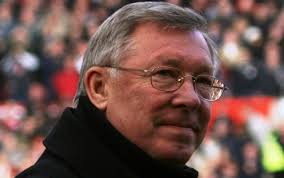
Sir Alex Ferguson: the consummate professional?

Professionally speaking: is that speaking well, or is that being paid for speaking?

Speaking well: is that speaking without hesitation, notes or blasphemy, or is it speaking truthfully?

In what sense has Sir Alex Ferguson been a professional football manager?

There is a sense of professionalism which comes from a realisation which is personally transformative and attitudinal. This is the sense which is behind the religious profession through which a person gives themselves utterly because of that realisation and profession. Here’s my starter for eight about such a professional life. Can anyone help me to make it a starter for ten?

  1. Professionals are driven by values that go to the core of their being. Their motivation comes from this inner sense of values.
  2. Professionals profess those values in their practice.
  3. Professionals enjoy their busyness when they can profess their faith, but become anxious when they lose sight of these guiding principles in their busyness – when practice prevents profession.
  4. Professionals are preoccupied by their profession at all times. They occasionally switch off when fully engaged by something else.
  5. Professionals choose an enabling lifestyle.
  6. Professionals develop disciplines to make themselves resourceful and effective.
  7. Professionals don’t count working hours or kill time. They are intrigued by opportunities. Kairos beats Chronos every time.
  8. Professionals cultivate their values as best friends. Continuing professional development is not an option but a natural course of action.

The ins and outs of learning

It is important to recognize that mastering any of the disciplines requires effort on both the levels of understanding the principles and following the practices, It is tempting to think that just because one understands certain principles one has “learned” about the discipline. This is the familiar trap of confusing intellectual understanding with learning. Learning always involves new understanding and new behaviours, “thinking” and “doing”. This is the reason for distinguishing principles from practices. Both are vital.

Peter Senge, The Fifth Discipline p 384. This quote from Peter Senge (picked up from Friday mailing) emphasises the ins and outs of learning. We can indeed take in many things in terms of understanding, but there needs to be outcome in terms of disciplined practice, through which we learn more and better.