Borderlands

>

For the first time in a long time I have been having to stand my ground. This is because of an inter-personal, intra-departmental boundary dispute. In other words, we are not sure what we are each doing. This is not a major international incident, though there are significant tensions at the border. We don’t know where the boundaries are supposed to be, and because of that we haven’t worked out how we live together at the boundary.
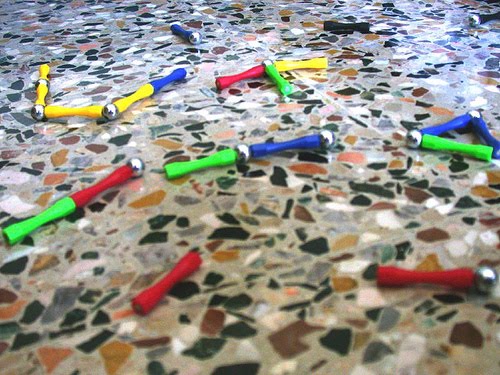
The damage of borderlands is beautifully brought out in a poem I have just read by Gloria Anzaldua – who describes herself as a “chicana dyke-feminist, tejana patlache poet, writer, and cultural theorist” and “as a border woman [who] grew up between two cultures, the Mexican (with a heavy Indian influence) and the Anglo (as a member of a colonised people in our own territory). I have been straddling that tejas-mexican border, and others, all my life It’s not a comfortable place to live in, this place of contradictions. hatred, anger and exploitation are the prominent features of this landscape”. (The photo is by Brian Auer)
Here’s the poem – as I read it in Edward Soja’s book, Thirdspace:
                         I press my hand to the steel curtain – 
               chainlink fence crowned with rolled barbed wire –
        rippling from the sea where Tijuana touches San Diego
unrolling over mountains
     and plains
              and deserts,
this “Tortilla Curtain” turning into el rio Grande
      flowing down to the flatlands
           of the Magic Valley of South Texas
      its mouth emptying into the Gulf.
1,950 mile-long open wound
                     dividing a pueblo, a culture,
                     running down the length of my body,
                         staking fence rods in my flesh,
                         splits me   splits me
                         me raja   me raja
                                                                               This is my home
                                                                               this thin edge of
                                 barbwire.
                       But the skin of the earth is seamless.
                       The sea cannot be fenced,
             el mar does not stop at borders.
       To show the white man what she thought of his 
                           arrogance,
                   Yemaya blew that wire fence down.
                     The land was Mexican once,
                          was Indian always
                              and is.
                         And   will be again.

>Small pieces loosely joined

>

Eavesdropping a conversation between Bishop Alan and Euan Semple I notice agreement between them about the strength of “small pieces loosely joined” (the title of a book by David Weinberger). They talked about the nature of churches and the degree of structure and institution needed to hold them together and that “dogma and rules are vehicles for power rather than entirely necessary for collective understanding”.
The “dramatic” viewpoint takes the standpoint of a participant in the drama while the “epic standpoint” is that of the external spectator able to see the whole play. Western Christendom has usually taken the “epic viewpoint” which has resulted in totalising and patronising theories of what is right and what is wrong. Hans Urs von Balthasar uses the dramatic viewpoint to look at what the church is. His dramatic theory is that there is no “external spectator”, and that in the “everyman” theatre even the audience is caught up in the drama as they see their own condition and dilemnas played out on the stage. They are caught up in the drama. There is only one “external spectator”, who is God. His is the epic viewpoint – though  there are other pretenders pretending they know what it’s all about.

Balthasar’s image is rather powerful when applied to what the church is. We don’t know what the church is. The church is there to find – to be received and not pre-conceived. For Balthasar the stage is set in Christ. From this viewpoint we all become players – church and non-church, caught in the act of being human, in  inter-play and the inter-action with all the other characters. Small pieces loosely joined sounds about right from this dramatic point of view where what is expected in terms of fruit is love, joy, peace, patience, kindness ….. (Galatians 5:22) 

The Realm of Possibility & the World of Accountancy

>I have just started reading a book called “The Art of Possibility” – which talks about us living in the “realms of possibility” as opposed to living at “Measurement central” governed by “survival thinking”. The authors, Zander and Zander write:

“In the realm of possibility we gain our knowledge by invention. We decide that the essence of a child is joy, and joy she is. Our small company attracts the label, “The Can-Do Company” … We speak with the awareness that language creates categories of meaning that open up new worlds to explore. Life appears as variety, pattern, and shimmering movement, inviting us in every moment to engage. The pie is enormous, and if you take a slice, the pie is whole again…

The action in a universe of possibility may be characterised as generative, or giving, in all senses of that world – producing new life, creating new ideas, consciously endowing with meaning, contributing, yielding to the power of contexts. The relationship between people and environments is highlighted, not the people and things themselves. Emotions that are often relegated to the special category of spirituality are abundant here: joy, grace, awe, wholeness, passion and compassion.”

People and things increasingly have price tags. They are entered on balance sheets and they are counted in and counted out. (Horrible thing the Government, when they talk about the “head count” being affected by the promised cuts (aka redundancy)). The accountants can’t get their hands on what happens between people. The generation of ideas and life defies logic. We are in the world of mystery rather than accountancy when we focus on the relationship between people and environments. It is sheer magic the way the pie becomes whole again.

>Knowledge is experience

>Great quotes on education, teaching and learning:

An Einstein maxim is ‘Knowledge is experience – everything else is just information.’ We are now in an age where information is more abundant than could ever have been imagined…..students may emerge from an hour’s session with several thousands of words on equivalent in handout materials, downloadable files from an intranet or web. But it is still just information until they have done things with it to turn it into the start of their own knowledge about the subject concerned, and link it up to other things they already know …….. Perhaps at one level the quest to make learning happen in post-compulsory education boils down to how best can we help our learners turn information into their own knowledge.

From Phil Race ‘Making Learning Happen’

and

A teacher ought to be a stranger to the desire for domination, vain-glory, and pride; one should not be able to fool him by flattery, nor blind him by gifts, nor conquer him by the stomach, nor dominate him by anger; but he should be patient, gentle, and humbler as far as possible; he must be tested and without partisanship, full of concern for people, and a lover of souls.

from Amma Theodora – who was one of the early Christian monastics who went into the Egyptian desert during the third and fourth centuries, to live a life of prayer and contemplation. She had been married to a Roman tribune, and following her husband’s death, she retired to the desert to pray. Her wisdom was much sought after and a number of her sayings have survived, including this one about Christian teachers.

>Graphic facilitation

>
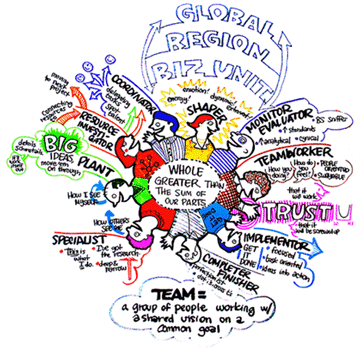
What a gift Brandy Agerbeck has as a “graphic facilitator”. I came across her website when I was preparing to lead a session on Belbin team roles. Here is the result of her listening and representing a session – which happened to be on Belbin’s team roles – I wonder what clues this offers us about what her preferred team role is. Maybe a plant or a monitor-evaluator?

>improvising

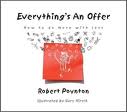
>Lynn Walsh blogs from Australia as a facilitator. She wonders how possible it is to enter conversations/meetings/training without an agenda, and she refers to a meeting that she had recently with people who were prepared to begin with no agenda. She refers to several resource books which have gone on my wish list because I am so intrigued and she quotes Robert Poynton:

“Improvisers … distinguish between action and activity. If someone is changed by what happens they call it action. If not, it is activity. … Embracing change in this way is not an attitude many people habitually adopt. Yet how can an organisation learn, or create action, if the people in it don’t.”

Read more ….

Wearing other people’s faces

>
Parker Palmer has a lot of sensible things to say about vocation in Let your life speak. The book has the strapline – “Listening for the Voice of Vocation”.

Palmer refers to vocation not “as a goal to be achieved”, but as a “gift to be received”. It is about understanding the selfhood given to us by God at birth. Palmer refers to Rabbi Zusya, who as an old man said “In the coming world, they will not ask: ‘Why were you not Moses?’ They will ask me: ‘Why were you not Zusya?'”

As we grow we are trained into acceptability and finish up “wearing other people’s faces”. The deepest vocational question becomes not “what ought I to do with my life?” but “who am I? What is my nature?” The misunderstanding of vocation arises around the confusion between doing and being. Dave Walker’s cartoon on the hierarchy of vocation illustrates (and mocks) the “doing” – though unfortunately that remains the pre-occupation (a good word for this context!).

Palmer highlights the definition of vocation by Frederick Buechner. He describes vocation as “the place where your deep gladness meets with the world’s deep need.” When vocation is just masquerading as that great damage is caused. Another quote – this time from Rumi: “If you are here unfaithfully with us you’re causing terrible damage.”

Now I become myself.
It’s taken time, many years and places.
I have been dissolved and shaken,
Worn other people’s faces …

Now I become myself by May Sarton from Collected Poems

>Cathedral Retreat

>Jeanette and I have just had a really refreshing “Passiontide Retreat” at Foxhill led by Christine Bull and Trevor Dennis. Both sets of input were really challenging and thought provoking – but perhaps the most profound challenge was in Christine’s implied question of what happened to Judas Iscariot. She referred to stained glass windows which Whistler was asked to produce. He produced 13 pictures – one for each of the apostles and one for Jesus. Apparently the church objected to the one of Judas. They did not want him to be included. However, apparently, there is a somewhat overlooked tradition regarding Judas’s redemption. One picture has Judas being dragged into heaven by the rope round his neck. One of Julian’s visions took her to hell – and there was nobody there. And Catherine of Sienna inisisted that she did not want to go to heaven as long as there was even one person in hell. So, what happened to Judas?

The Long Walk to Freedom – still

>

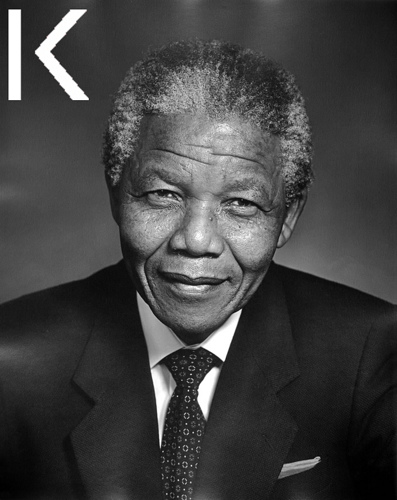
20 years ago ended a remarkable stretch as political prisoner for Nelson Mandela. The next stage of the journey is remembered with awe as Nelson continued his Long Walk to Freedom with such incredible resilience, commitment and dignity. He has been world leader for a generation leading the movement of South Africa from the dark ages of apartheid to freedom.

Astell Collins posted this tribute entitled “The Age of Grace and Timeless Wisdom”

Have you ever observed a lion bound?
Or witnessed the ants freely running around
Did you ever stop to ponder your destiny?
Journeying beyond your daily responsibility
What is the purpose of tomorrow?
If there is no comfort in times of sorrow
Could you clarify the functionality of masculinity?
And explain the multiplicity of femininity
Nelson Mandela, you have given us a proud legacy
Thus to future generations you are legendary
You have thought us your people to forgive
And have shown us that only in love can we live
Your life displayed the fundamentals of greatness
And uncovered the power of selflessness

We thank you for giving us back our home
A paradise where all of mankind has made their own
You have suffered inconceivable cruelty
To ensure the preservation of our humanity
As a people, our coming together in celebration
Demonstrates to you our sincere love and appreciation
We recognize the relevance and power of spirituality
While experiencing the beauty of our freedom in unity
Your life has become the essence of the human story
One of love and resolve, equality and destiny
You are a hero internationally and not only in Africa
So the world pauses to pay its respect to you, Madiba

And today’s prayer picks up the diversity theme:
Almighty God you have created the heavens and the earth and made us in your own image: teach us to discern your hand in all your works and your likeness in all your children ……

>Diversity Training 2

>Lost in thought this morning – with many matters.
Is this what diversity training looks like? This dance group won a British TV talent competition.

Diversifying is God’s business.

Through Abraham and the cross God provides us with a family tree which renders all brothers and sisters. Hear this (as Abraham and Sarah did) – from Genesis 17 – “I will make nations of you. I will establish my covenant between me and you, and your offspring after you throughout their generations …”

God’s business is diversifying – as Paul recognised: “Now faith has come … there is no longer Jew or Greek, there is no longer slave or free, there is no longer male and female; for you are all one …” (Galatians 3:28)

Diversifying is the church’s business. Hear Jesus: “If you greet only your brothers and sisters what more are you doing than others?” (Matthew 5:47)

Restrictions and deprivations make up our history. Analyse the media and it soon becomes apparent that only a small section of society has any say. The voices of so many are not heard. Listening therefore becomes the essential requirement of diversity training. This was the strategy the Church of England try to deploy in our debates about homosexuality in the 90’s. We’re not sure how much listening happened – but the intention was that the gay voice was one which the Christian Church had tried to smother. If someone isn’t allowed to speak – how can they be understood? But how can you listen if you are not pre-disposed to love or care enough to listen to the muffled cries of those fighting for breathing space?

I am reading a book by Natalie Watson called “Introducing Feminist Ecclesiology“. Feminist theologians highlight deprivation and challenge practices which are exclusive. Natalie (why do we use surnames when referring to authors?) quotes Nelle Morton who draws attention to the way that women have heard from one another. “New words and the new way old words came to expression” became a liberating force for the women who have heard from one another. “women came to new speech simply because they were being heard. Hearing became an act of receiving the women as well as the words.”

Diversity training requires us to listen – to listen to those who feel excluded in church and from church, in society and from society. It requires us to realise that they are unable to raise their voices – and if we don’t listen we won’t hear them. It requires us to realise that only the rich and powerful make their voices heard when empires are being built.

Our liturgy (aka our “work) begins with the invitation “lift up your voice” – are we looking forward to a time when all people will be able to lift up their voice (with the confidence that their voice will be heard?

Thank you Tracy for the photo of the Jesus Tree.