Stressed? Just one thing’s needed

This sermon explores why Luke tell us the story of Martha and Mary. Why did he think it was important for his readers? I always begin my sermon these days by saying how I love preaching that brings scripture back to life, and that I assume those who are listening do too. The gospel for the day is Luke 10:38-42: it’s about Martha’s resentment (and, maybe, our resentments too).

The question I have reading the gospel set for today is: why did Luke think it was so important to tell this  story? It is, after all, a minor incident – the day that Martha had a strop. What is it that Luke wanted his readers to hear? It’s certainly a story that has taken off. Everyone knows about Martha and Mary – even though some of us can’t remember which is which. None of us would be any the wiser were it not for Luke.

It is a small, everyday story that I think we can all relate to.
Who hasn’t invited people into their home only to feel stressed by the so many things that need to be done—getting the meal ready on time, setting the table just so—and then having to hide all that stress, frustration, and tension behind a smiling welcome?

This is a story of two sisters. But really, is Luke telling the story because it is the story of us?

Martha is the older sister.
She’s the one who opens her home to Jesus—not just Jesus, but also his twelve disciples.
That in itself would have raised eyebrows: a household of women welcoming in a group of men.
Where’s the risk assessment for that?
Where’s the safeguarding policy?

There would have been a lot to do to make these guests welcome.
And it seems Martha was the one doing it all.
Luke says she was “distracted with much serving.”
The literal meaning of the Greek is that she was “dragged around”—pulled this way and that by all the tasks.

Meanwhile, Mary is just sitting there, listening to Jesus.

The two sisters are both followers of Jesus. They’re both his friends.
But they are very different.
Martha is a “doer.” Mary is a “listener,” a “dreamer.” The church is made up of both.
If we drew a Venn diagram of this congregation, we’d see some who are hands-on people and others who are heads-in-the-clouds people—and many who are a bit of both.
One isn’t better than the other.

Except when one gets distracted.

And that’s Martha’s problem.
It’s not that her work is unimportant or that her hospitality is wrong.
It’s that she has lost her focus. She’s no longer attending to her guest.
Instead, her gaze has shifted to her sister’s shortcomings.
Instead of speaking to Mary, she complains to Jesus about Mary.

“Lord, don’t you care that my sister has left me to do all the work by myself? Tell her to help me!”

Martha’s serving has become all about her—her effort, her stress, her sense of injustice. She’s been “dragged around” by her tasks and “put herself in an uproar” (as the Greek word for “troubled” suggests).

The story of Martha and Mary echoes other sibling rivalries in Scripture.
In Genesis, Cain and Abel both make offerings to God, but it’s the younger brother’s offering that’s accepted.
Cain puts himself in such an uproar over the seeming injustice that he murders his brother.

In Jesus’ parable of the prodigal son, it’s the older brother who refuses to join the party when his younger sibling comes home. He too is dragged around by resentment. He can only see the injustice of it all—how hard he’s worked, how little he’s been appreciated.

This is a pattern in Scripture. The first becoming last, the last becoming first. The kingdom of God upending the old order. And here, it’s the younger sister, Mary, who has chosen “the better part.”

Isn’t that how it often is with us? When we get upset, it’s so often because we’ve put ourselves first. Our effort. Our fairness. Our feelings. When that happens, we lose sight of Jesus. We lose sight of the guest.

This isn’t a story about pitting action against contemplation. The church needs both. The problem isn’t Martha’s serving. It’s her distraction.

We’ve all been in Martha’s shoes, trying to do the right thing in the wrong frame of mind. We’ve probably seen it being played out in our church politics, when, for example, a meeting gets distracted, dragged off track by our focus on the shortcomings of others, where we’ve “put ourselves in an uproar”.

Is this why Luke wanted his readers to know this particular story? So that they would hear Jesus’ response.

This is how Jesus responds:

“Martha, Martha…”

When Jesus uses a name twice in Scripture—“Martha, Martha… Saul, Saul… Jerusalem, Jerusalem…”—it’s never in anger. It’s in love, in compassion. Martha has worked herself into an inner storm, and Jesus does what he always does with storms:

“Peace. Be still.”
“You are worried and upset about many things. But only one thing is needed.”

This is a word Martha needed to hear, and it’s a word that’s been needed ever since—by every one of us who’s let worries, distractions, and resentments drown out the voice of Jesus.

The good news is Jesus doesn’t withdraw from Martha because of her distraction. He speaks to her lovingly, inviting her back to the one thing that matters: attending to him.

In Revelation 3:20, we hear Jesus say:

“Behold, I stand at the door and knock. If anyone hears my voice and opens the door, I will come in and eat with them, and they with me.”

Jesus never forces his way in. He waits for us to open the door. That is how he calls on us.

The question for Luke may be how we are when we answer Jesus’s call, when we open our lives to him and make him our guest.
How do we welcome him?
Will we listen, like Mary, who chose the one thing needed?
Or will we get distracted, dragged around by many worries and upset by the shortcomings of others?
In which case, will we listen, like Martha, and hear Jesus’s words to us – words spoken to us in love and compassion, words to calm the storm?

I assume that is what Luke wanted us to hear from his gospel today.

Closing Prayer
Lord Jesus Christ, you stood at the door and knocked,
and we welcomed you in.
Calm the storms of our hearts, still our anxious minds,
and free us from the distractions that drag us away from you,
so we may serve you with joy and without anxiety or resentment.


The Guest House

The Guest House

This being human is a guest house.
Every morning a new arrival.

A joy, a depression, a meanness,
some momentary awareness comes
as an unexpected visitor.

Welcome and entertain them all!
Even if they’re a crowd of sorrows
who violently sweep your house
empty of its furniture,
still treat each guest honourably.
He may be clearing you out
for some new delight.

The dark thought, the shame, the malice,
meet them at the door laughing,
and invite them in.

Be grateful for whoever comes,
because each has been sent
as a guide from beyond.

I am grateful to Ivonprefontaine for reminding me about Rumi’s wonderful poem, The Guest House. It seems perfect for Lent in that it explores an important dimension of hospitality in a way that reminds me of Jesus’s temptations in the wilderness.
Rumi was a 13th century Persian poet. He was a Sunni Muslim, theologian and Sufi mystic. He was the “father” of the Whirling Dervishes (founded by his son, Sultan Walad).

The image of the poem is freely available through Pixabay

People gatherers

Feeding the 5000 by Eularia Clarke

Some people are just good at gathering people together. They call on people and the people come. This seems to be what leaders can do – or, rather, are those people who can gather us together our leaders? People gatherers have an attraction and an authority. Whether we call a meeting or throw a party, we are acting as people with authority, people able to call on others. Most people can grow that authority, usually by the attractive way that they gather people. Conversely, we have all been in gatherings which have been so carelessly organised that we have said “never again”. There’s usually a reason why “nobody came”.

Neighbours Table tells the story of a people gatherer. In an interview with Tammy Helfrich (available as podcast), Sarah Harmeyer talks about her recent life as a “people gatherer”. She adopts a word for the year. Word of the Year 2011 was “community” which brought a vision for inviting 500 people to her table during the year. At the point of the interview, she is nearing 1500 for the 3 year period on a budget of $75 per month. She started with an invitation to a “pot luck” delivered to her neighbours. Her father made a table to seat 20 – 91 came. She suggests that people are waiting to be invited, that whole neighbourhoods are waiting for such catalysts for change, for people to step forward.

Her “manners” can guide us all. “Plan ahead to be present with people”, develop a culture of mutual respect, interest and listening, introduce people to one another by saying what you love about them – all that makes for a good time gathering. So, pause for thought. Why do we call people together? Are they just instruments to our ambition, pawns in our little games? Are we prepared for them? What is our interest in their offering? Do we know them? Do we love them?

There is always a reason why “people come flocking”.

PS People gatherers are the image of God who gathers people like a shepherd, making of them a nation and a church. Eularia Clarke’s picture of the feeding of the 5000 is a celebration of God as “people-gatherer”, recalling the feeding of the multitude. The painting is part of the Methodist Modern Art Collection, © TMCP, and is used with their permission.

Teaching and hospitality – pause for thought from Henri Nouwen

“When we look at teaching in terms of hospitality, we can say that the teacher is called upon to create for students a free and fearless space where mental and emotional development can take place…. The hospitable teacher has to reveal to the students that they have something to offer. Many students have been for so many years on the receiving side and have become so deeply impregnated with the idea that there is still a lot more to learn, that they have lost confidence in themselves and can hardly imagine that they themselves have something to give, not only to the ones who are less educated but to their fellow students and teachers as well…..”

Henri Nouwen in Reaching Out

Getting good reception

Reception area at Premier Inn, Heathley Park, Leicester

It was a good day because we had a good reception.

It was a day in which we went from one organisation to another and were well received. Starting with the Premier Inn with staging posts at solicitors, Waitrose, funeral directors (Adkinsons), the local church (Oadby), The Curry House and Tesco Express (above Conduit Street, Leicester) we got the sort of reception that we wanted and which helped to turn what could have been a difficult day into an occasion of thanksgiving.

The person who meets our enquiry is crucial to reception. This is the person who meets us at the door. I suggest that each organisation considers the strategic importance of the person “on the door” and the “welcome on the mat” and that there is an underlying question for them to bear in mind. That question is “what sort of reception am I giving?”

Many organisations are able to set aside a dedicated physical space for Reception. But the question of what sort of reception am I giving makes me realise that my own personal organisation (ie ME) needs to give some thought to the development of space in which others may find good reception.

I suggest five rules of engagement:

  1. Provide a cheerful reception – that makes us pleased to move into the space
  2. Avoid confusion – we are often confused when we move into a space that is not ours. Whether it is by email, phone or in person I need to know where I am and who I am dealing with. A good receptionist will put my mind at rest. When I make a phone call, I will be greeted (cheerfully), reassured I have rung the right place and told who I am speaking to. It can be done (and should be done) economically and efficiently.  For example, a typically good reception would be “Good morning. This is [name of organisation]. My name is David. How can I help you?”
  3. Acknowledge and appreciate – whether I am engaging for quick enquiry or whether I am spending longer, for example, a meal, for that moment I am expecting to be acknowledged and appreciated. We normally call this “service” but it really is about reception and respect. I need acknowledging whether I present myself via email, phone call or physically
  4. Offer to help – it is such a relief to be unburdened whether the burden is a deep sadness or a basket of shopping.
  5. Never ever ever EVER give the impression of being too busy to help – that speaks for itself.

Have you got other suggestions borne from experience of getting good reception (or bad)?

Spring Learning

Image

In my own life, as winters turn into spring, I find it not only hard to cope with mud but also hard to credit the small harbingers of larger life to come, hard to hope until the outcome is secure. Spring teaches me to look more carefully for the green stems of possibility; for the intuitive hunch that may turn into a larger insight, for the glance or touch that may thaw a frozen relationship, for the stranger’s act of kindness that makes the world seem hospitable again.

Parker J. PalmerLet Your Life Speak

Exile

By_the_Rivers_of_Babylon

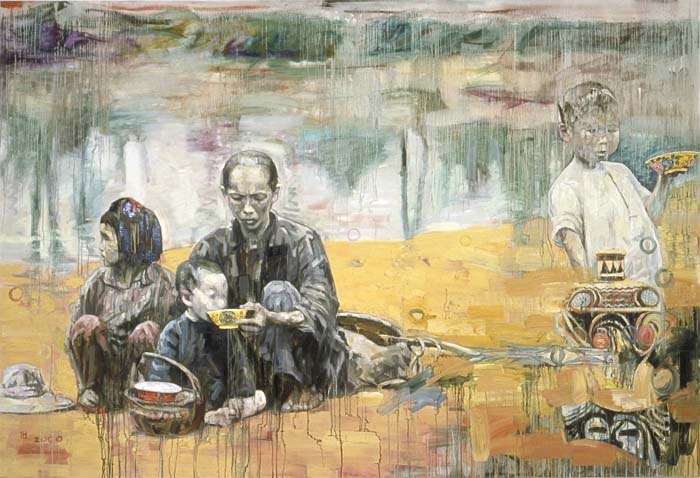
This beautiful photo By the Rivers of Babylon is by HungLiu. By the rivers of Babylon we sat down and wept.

This is one of the most poignant lines in Scripture (Psalm 137:1) recalling such sad times of exile. Those exiles wondered “how can we sing the Lord’s song in a strange land”.

Ben Quash, in Abiding, reminds us of the wisdom that the people of God are nearer to God “when they are in some sort of exile”. The Letter to Hebrews reminds us that “we have no abiding city” and Jesus has warning for those who feel too much at home in this world. Exile and the loss of home(land) must be an awful experience, shaking people to the roots of their identity. I don’t know whether it would be possible to sing any sort of song in such a strange land.

Quash, and many others, suggest that Christians should choose exile. This is “some sort of exile” which may, or may not have the brutality of violent removal and fearful flight. Quash refers to Hauerwas and Yoder who commend life lived “out of control”, “without the compulsion to hold on to the strings of power”. This is some sort of exile which is a walking with God who showed himself in Jesus as having nowhere to lay his head and who finished his days on the dump outside Jerusalem’s city wall.

The Jewish prophet Jeremiah points the way to vocation found in exile. He makes the “prison” of exile into a far more constructive way of life. He writes: “Seek the welfare of the city where I have sent you into exile, and pray to the Lord on its behalf, for in its welfare you will find your welfare.”

It is countercultural and strange to live “out of control”, accepting exilic status and praying for our enemies. It means that we are no longer to see ourselves as “host” but as “guest”. (It may be that the Church can’t be trusted with being “host”. There have been so many complaints about the abuse of power by the Church “in control”). When Jeremiah suggests that the exiles “pray for the welfare of the city” he is encouraging them to be “good guests”. The exiles’ vocation was, and is, how to be a blessing to a host culture on territory which is strange, without losing heart.

I have loved justice and hated iniquity, therefore I die in exile.
Pope Gregory VII

Our own culture is strange. There are many things that go on in society which are strange ways. Many aspects of social policy (I am thinking of the “bedroom tax” and other impending welfare reforms and the impoverishment of families and children) are out of our control. We don’t see the world in the same way. Our values are different. In many ways, we are in a strange land. Most of us don’t bear the physical hardships of those in refugee camps, but there is much that we lament. How do we sing the Lord’s song in a strange land?

Singing the Lord’s song in this strange land is something Jeremiah and Quosh insist that we do. The worship offered by exiles is, according to Quash, both resistance and gift. Quash writes:

God’s will to restore people to freedom before him, to overturn the idolatrous service of other gods, needs people who will use their voices to ‘sing his new song’ …

The early Christians may have handled the currency of the Empire each day, but before any of that, before sunrise, they met as the people of God, as the Church. That was their true city, their real ‘kingdom’, their Jerusalem. Christians’ present challenge too, is to live and work in the world in such a way that the song they sing as people in the Church is strong enough and beautiful enough to relativise ad transform other less sacred songs.

Serious houses on serious earth

locked away
I am not one for visiting churches, but I do love to see a church that is open, rather than closed. There are various reasons why churches are closed (and communities deprived of what should be public spaces). Some are afraid of the security risks (even though, according to the Open Churches Trust churches that are open have a lower risk). Sometimes the gatekeepers are forbidding in their attitudes so people feel they have to be qualified to enter – the “good enough” test. At other times people have been priced out. I am delighted to see that the price barrier at Chester Cathedral has been dropped, and that the Cathedral is now open and free to enter.

In his book, Leaving Alexandria: a Memoir of faith and doubt, Richard Holloway speaks of his love of Old St Paul’s in Edinburgh, particularly when it was empty. Old St Paul’s is a church that is kept open so that people can drift in. Holloway has this to say:

Churches that stay open unclose themselves to the sorrows of humanity and alchemise them into consolation. And not a cheap consolation. Just as artists reconcile us to our ills by the way they notice and record them, so open churches console us by the way they accept the unreconciled aspects of our natures.

They are a haven for the homeless woman whose destitution is obvious, muttering to herself over there in the back pew; but they also accept the moral destitution of the confident man sitting in the dark chapel, gazing at the white star of the sanctuary lamp, heavy with the knowledge of the compulsions that have dominated his life and refuse to leave him.

There is no reproach. Churches do not speak; they listen. Clergy speak, unstoppably. They are ‘randy’ to change, challenge or shame people into successful living. Church buildings that stay open to all know better. They understand helplessness and the weariness of failure, and have for centuries absorbed them into the mercy of their silence. This is grace.

I like the story told by Jesus from the open “church”. It is the story of the Pharisee and the tax collector and their respective prayers in Luke 18:9-14. You’d expect the Pharisee to be “there”. He is the religious one, who spends his life “there” saying his prayers and paying his tithes. He would be an approved key-holder. It’s the other one, the “tax collector” who has stolen in because the place is open. His prayer is the prayer of the people, including the prayer of the destitute woman and morally destitute high achiever referred to by Holloway. The qualification for being a tax collector was to have money for bribes, and the willingness to bribe. These were the people prepared to do the dirty deeds of the day. The building hears his confession and the cornerstone reorders his life.

Two men went up to the temple to pray, one a Pharisee and the other a tax-collector. The Pharisee, standing by himself, was praying thus, “God, I thank you that I am not like other people; thieves, rogues, adulterers, or even like this tax-collector. I fast twice a week; I give a tenth of all my income.” But the tax-collector, standing far off, would not even look up to heaven, but was beating his breast and saying, “God be merciful to me, a sinner!” I tell you, this man went down to his home justified rather than the other.
Chester Cathedral, Chester
This photo, of Chester Cathedral, is by Xavier de Jauréguiberry.
The photo, “locked away” is by Kicki.

The title of this post is taken from the poem Church Going by Philip Larkin.

Ringing true

20120725 Olympic opening ceremony rehearsal DSC_3479.jpg

Marcus Brigstocke couldn’t quite understand why there are so many countries represented in the Olympics. He assumes that some of the countries are made up. I too kept saying “where’s that?” as the athletes paraded. My favourite was Micronesia, which, if I remember correctly, is next to Amnesia, and next to its far larger neighbour Magnesia (famed for its milk and antacid industry). @marcusbrig has suggested other countries that could have been taking part, including Neverland, Narnia and the Land of Nod. Personally I don’t ever see Legoland being able to put together an opening ceremony like the one we saw on Friday, but I do look forward to the opening ceremony in Oz.

Ai Weiwei’s contrast in the Guardian between the Beijing and London Olympic ceremonies is telling. For me, the Opening Ceremony rang true. Aidan Burley MP’s tweet apart (he wrote: “Thank God the athletes have arrived! Now we can move on from leftie multi-cultural crap. Bring back red arrows, Shakespeare and the Stones!”)  the Opening Ceremony has been praised from all quarters. Danny Boyle held up a mirror to the world representing his reading of this “green and pleasant (ironic) land”. People liked what they saw in the mirror, and us Brits said “yes, this is us”. We recognise how the industrial revolution ripped our landscape and communities apart, and we recognised the values which have made for modern Britain. These values of care, generosity and hospitality are not exclusively British, and they are contested values in Britain, but care, generosity and hospitality were celebrated as the building blocks of community. It was good to see the parade of achievements (music, film, comedy) alongside the parade of sporting talent, and to see the national treasure of the NHS polished to the wonderful accompaniment of Mike Oldfield’s Tubular Bells and In Dulce Jubilo.

So many highlights rang my bells. Besides the NHS scenes there was the ringing of the bell, the music, Rowan Atkinson, the drumming (particularly Evelyn Glennie), the Industrial Revolution, the silence, Abide with me, the cast of volunteers and ordinary people, the inclusion of the construction workers and the marvellous lighting of the cauldron designed by Thomas Heatherwick.

Michael Sadgrove has posted his reflections on the Opening Ceremony. He highlights the spirituality of the Opening Ceremony. For Edward Green the Opening ceremony is a sign of the shape of the church to come.

The photo is from powderphotography

The Fourth of July

There are already “safe spaces for respectful conversations across partisan divides” which have been developed with great care through community development. They are shockingly liberal and discomforting, but need treasuring and multiplying. The above sign is from St James’ Church, Piccadilly in which rough sleepers mix (and sleep) with other worshippers (gathering from across many partisan divides) under one roof.

Parker J Palmer, in the Huffington Post draws attention to a project organised by the Wisconsin Council of Churches (with backing from Baha’i, Buddhist, Christian, Muslim and Jewish communities) initiated by a call from thirty-six religious leaders from across the state have called for “a Season of Civility“. Amidst “partisan rancour” they realise that they “must create ‘safe spaces’ for respectful conversations across the partisan divides. And we must move beyond the walls of our congregations to include everyone in our local communities in this dialogue.” They are using Parker Palmer’s Healing the Heart of Democracy to help guide their thinking, focusing on five “habits of the heart”:

  • understanding that we are all in this together (where have we heard that before?)
  • an appreciation of the value of “otherness”
  • an ability to hold tension in life-giving ways
  • a sense of personal voice and agency
  • a capacity to create community

Palmer’s Huffington Post article is written with American civility (or, lack of) in mind, but the issues he faces are universal. They transgress partisan divides. “The powers” have ways of discouraging us from rattling cages and discouraging conflict. In workshops (safe spaces?) I have seen that conflict has negative connotations for most people. But Palmer reminds us that conflict has a real place in the development of civility, community and society. “America was founded on the historically novel and radical premise that conflict and tension, rightly held, are the engine, not the enemy, of a better social order.” “The civility we need will come not from watching our tongues, but from valuing our diferences and the creativity that can come when we hold them well.”