In the thick of things – a sermon for Palm Sunday

On Palm Sunday we celebrate Jesus’ humble entry into the thick of things where we say he is very welcome. This sermon for a small Warwickshire church picks up that theme. The readings appointed for the day are Luke 19:28-40 and Philippians 2:5-11.

Entry of Christ into Jerusalem by Pieter Coecke van Aelst Bonnefantenmuseum 1246

I love preaching that brings scripture to life, and we are in the thick of it, aren’t we? We’re in the thick of it, with one thing after another.

We’re always in the thick of things with things going on in families, things that prevent us having a balance in our lives, worries about our health, pressures in our relationships. We are in the thick of things. In the thick of things our reptilian fear threatens to overwhelm us.

We can hardly believe what we are seeing of what’s going on for the people of Ukraine.
We can’t believe our eyes when we see news of the destruction of lives and communities in Gaza.
And now we’re on the edge of a trade war brought on by the obscenity of a billionaire President’s complaint that the wealthiest nation on earth feels cheated and that they are going to get their own back on nations that are poorer.

And in the thick of things, we are, like Jesus’s generation, “an unbelieving generation” (Mark 9:19). We are people of unclean lips, living among a people of unclean lips. (Isaiah 6:5). How can we be any other? We live in the thick of things. The thick of things take their toll on the way we are, our minds and our behaviours.

Today of all days, Palm Sunday, we look to Jesus who was, and is, always in the thick of things. When he rode into Jerusalem he rode into the thick of things. (Not that he wasn’t already in the thick of things in his ministry in Galilee.) But in setting his mind to go to Jerusalem he was setting his mind to get to the thick of things – Jerusalem, the place of religious and political capital, the place of those who made the rules, the place of turmoil, the place which had such an effect on people’s lives – on their fortune, their anxiety, their shame.

When we reenact the welcome of Jesus by the crowds in Jerusalem we are saying how welcome Jesus is in the thick of things for us. In the thick of things we turn to Christ. That’s the choice we made at baptism. “Do you turn to Christ?” “I turn to Christ”. We turn to Christ in the thick of things because there really is no choice.

Isn’t there?

The truth is that we are spoilt for choice. There are so many contenders, so many who want to govern us, to rule over us, to be our landlords, presidents, press barons and manipulators. That’s why there are so many power struggles. It’s surprising what an unbelieving generation believes. It’s surprising (and alarming) who an unbelieving generation will follow..It is shockingly easy to be misled when we are in the thick of it. We are sheep in the midst of wolves.

There is a choice. Who will we choose?

African-American writer Octavia E Butler wrote this in her Parable of the Talents:

Choose your leaders with wisdom and forethought.
She went on:
To be led by a coward is to be controlled by all that the coward fears.
To be led by a fool is to be led by the opportunists who control the fool.
To be led by a thief is to offer up your most precious treasures to be stolen.
To be led by a liar is to ask to be told lies.
To be led by a tyrant is to sell yourself and those you love into slavery.

Choose your leaders with wisdom and forethought, because when we don’t we find ourselves in the thick of things.

Who do we choose to lead us in the thick of things?

While Butler warns us of bad leaders, another voice—from an unexpected place—tells us what does hold evil in check. This is from The Hobbit.

“Some people believe it is only great power that can hold evil in check, but that is not what I have found. It is the small everyday deeds of ordinary folk that keep the darkness at bay. Small acts of kindness and love.”

In the thick of things we look for a messiah, someone to save us, usually an alpha male, a charismatic leader, someone with great power – a disaster who leads us into war, or poverty, or slavery, or hatred and fear.

Today, we wave our palms as Jesus comes before us, as in Jerusalem, so in our lives. (Incidentally, we see the deaf community waving the palms of both hands in the air – that is silent sound of welcome applause.)
Our palm waving is the sign of our choice, the welcome of Jesus into our lives.

We are at the beginning of the week.
When we get into the thick of the week we find out how Jesus was when he was in the thick of it,
the way that he hung out to the end,
the way he turned the tables on the religious leaders in the cleansing of the temple,
his refusal to justify himself in front of Caesar’s representative, Pilate,
his non-violence when he told Peter to put down his sword
the greeting of his betrayer with a kiss
the promise of paradise to the thief at his side, the way he made a brother of him

All these things add up, and in the thick of the crowd people changed their mind.
They didn’t like the choice they’d made by welcoming Jesus.
They preferred Barabbas.
When they were given a choice about who should be saved,
Barabbas or Jesus,
they chose Barabbas.
They mocked Jesus.
They insulted him, spat at him, and hung him out to die.

It shall not be so with us.
We have saved Jesus for when we are in the thick of things,
all those moments when we are searching
for a better way for our work, for our love,
we have welcomed Jesus into the thickness of our lives
and inclinations, when our tempers flare
when hatreds and jealousies might prevail
when our worries keep us awake
we have chosen Jesus as our saviour.

Let Jesus always be our choice
whenever we are tempted
by the ways of the world
in the thick of things,
in our relationships with one another
have the same mindset as Christ Jesus.
He never considered equality with God something to be used for his advantage,
but chose instead the way of a servant,
joining the suffering of the last and least
always following the rule of the kingdom
that puts love first and the last first.

That’s the way we choose when we wave our palms to welcome Jesus into our thick of things.

So let us wave our palms not as decoration, but as declaration. That in the thick of things—today, this week, this world—Jesus is still our choice, our way to go.

The congregation is the point

I don’t think I have ever preached a sermon where the point has been the congregation before. The congregation seems to be the point of the readings set for the 8th Sunday after Trinity (year B). They are Jeremiah 23:1-6, Psalm 23, Ephesians 2:11-end and Mark 6:30-34, 53-end (text below). I’m covering a long term “vacancy” in a group of churches. I’m hoping these congregations will find encouragement here.

July 21st 2024

The point of today’s readings is the gathering after the scattering – the scattering of people. I don’t think I have ever preached a sermon where the point has been the congregation before, but that seems to be the point that links the readings appointed for today. All four: the reading from Jeremiah, the Psalm, the reading from Ephesians and the gospel reading from Mark – they all build the point. The congregation is the point. The gathering after the scattering is the point.

Never has there been so many people on the move as now. By the end of last year 1 person out of every 69 was forcibly displaced, having been forced to flee persecution, conflict, violence, human rights violations and events seriously disturbing public order. That is double the number of a decade ago.

I in 69. 

Last year the global refugee population increased by 7% to over 43 million people. 73% of them came from just 5 countries: Afghanistan, Syria, Venezuela, Ukraine and Sudan.

As well as those 43 million people another 63.3 million people who were forced to flee remain in their own countries. They are known as internally displaced people. Can you imagine this? Over 9 million people in Sudan, over 7 million people in Syria, 6.9 million people in Columbia, 6.3 million people in the Democratic Republic of the Congo and 4.5 million people in Yemen – all internally displaced, mostly due to conflict and violence, and some due to natural disasters.

1 in 69.

Every bomb dropped on a village or a housing block in Ukraine and Gaza displaces the families who live there. Every military push forces out those in its path.

I in 69 people displaced and scattered. Poet Warsan Shire, herself a British poet born to Somali parents in Kenya, begins her poem called Home with the lines:
No one leaves home unless
home is the mouth of a shark.

Home by Warsan Shire, read here by Sir Jonathan Pryce

1 in 69 people forcibly displaced – according to the United Nations High Commissioner for Refugees recent report on global trends. 1 in 69 – and it’s getting worse. 1 in 69 displaced and scattered because of the failure of governments to guarantee their peace and security.

This is the world we live in. Our scriptures reflect the same realities – the failure of government to secure peace and security. Our scriptures come from the heart of people displaced by persecution, oppression and exile – and those moved with compassion for them.

Jeremiah is one such person used to address the tragedy of his contemporaries being displaced in large number and scattered far and wide. Just as the UNHCR report puts the blame on the failure of governments to safeguard peace and security, so does Jeremiah all those centuries ago.

Woe to the shepherds who destroy and scatter the sheep of the pasture! Says the Lord. Shepherd was a term used to describe the king. Jeremiah’s “woe to the shepherds” is a judgement on the line of kings who have failed the people. 

In the previous chapter Jeremiah protests against the succession of rulers whose eyes and hearts have been set on “dishonest gain, for shedding innocent blood and for practising oppression and violence” (22:17) in contrast to the good king (Josiah) who “judged the cause of the poor and needy” (22:16). 

It was the failure of the rulers to “execute justice and deliver from the hand of the oppressor anyone who has been robbed” which resulted in the scattering of people. The promise in Jeremiah is to gather the scattered, the ones lost, to raise up shepherds who will shepherd them, so that they shall fear no longer, nor be dismayed, nor go missing.

Similarly, in our gospel reading, Jesus sees the crowd coming to him. (Is Mark here seeing the fulfilment of the promise of Jeremiah?) Mark writes that Jesus had compassion on the crowd because they were like sheep without a shepherd. 

The verses of today’s gospel immediately follows the beheading of John the Baptist in prison – the beheading of Jesus’s own cousin by Herod at the request of his dancing daughter and wife. Herod, as king, was supposed to shepherd the people, but left the people like sheep without a shepherd. Mark pictures Herod partying with his courtiers and the “leaders of Galilee” – the very ones who should have been keeping watch of the people. Another Partygate. Mark pictures Herod and his court getting fat at the expense of the poor. 

The lost and scattered, then as now, are always the victims of failed government, self-serving leaders (misleaders) and corrupt shepherds. The lost and scattered are always the people on whom God shows compassion, through the prophets, through Jesus and through the work of the Holy Spirit.

All we see in today’s gospel is people gathering and coming together around Jesus and the disciples. The intention was that Jesus and his disciples were going to find a deserted place so that they could get some rest. They went by boat. But they were spotted. Many saw them and recognised them, and they hurried on foot from the towns and got there before the boat landed. There were five thousand of them – an unimaginable number of people, like sheep without a shepherd.

Again, later, when they landed at Gennesaret in the second section of our gospel reading), people recognised Jesus and they rushed about that whole region and began to bring the sick on mats to wherever they heard he was.

Notice the rush people were in. Mark underlines their hurry. They rushed about that whole region bringing the sick to wherever he was. Wherever he went, into villages or cities or farms, they laid the sick in the market-places, and begged him that they might touch even the fringe of his cloak.

Jesus doesn’t let them go. He has compassion on them.
He heals them. He makes clean what the religious (mis)leaders had made unclean He restores them to their communities – no longer outcasts.

He feeds them – yes, the crowd in today’s gospel is the crowd he feeds with just the five loaves and two fish.
And he began to teach them many things.

Here is the good shepherd doing what good shepherds do: gathering the scattered, the least, the lost, the sick and helpless – making right the people the bad shepherds and corrupt leaders had wronged.

This is the point: the gathering after the scattering. The crowding together is the point. 

And here we are – gathered, a congregation.
How do we see ourselves?
Do we see ourselves as among those on whom Jesus has compassion?
Do we see ourselves as held together by his love?
Do we see that without our gathering we would (in the words of the epistle) remain as strangers and aliens, hopeless and far off?
Do we see that we are brought to this point “by the blood of Christ”? 
Do we see that we are citizens with the saints and members of the household of God?
Do we see ourselves built together spiritually as a dwelling-place for God?
Do we see that Jesus feeds us – even as we walk together through the valley overshadowed by death?
Do we see that Jesus has begun to teach us many things?
Do we see this as the rule of heaven, his will on earth, as it is in heaven?
Do we see ourselves as the lucky ones, even as the ones the world counted least, or last or even lost, who by amazing grace have become among the first gathering of Jesus?
Do we see ourselves being joined by others, including some of the many others who make up the 1 in 69 people currently on the move, without a shepherd?
Do we see this as our place of belonging – after all our longing?

Is this not home, where we belong – counted, fed, healed, restored?
Do we see our congregation as the point that proves Jeremiah’s promise, the gathering that justifies our faith in the Lord our shepherd?

Mark 6:30-34, 53-end

The apostles gathered around Jesus, and told him all that they had done and taught. He said to them, ‘Come away to a deserted place all by yourselves and rest a while’. For many were coming and going, and they had no leisure even to eat. And they went away in the boat to a deserted place by themselves. Now many saw them going and recognised them, and they hurried there on foot from all the towns and arrived ahead of them. As he went ashore, he saw a great crowd; and he had compassion for them, because they were like sheep without a shepherd; and he began to teach them many things.

When they had crossed over, they came to land at Gennesaret and moored the boat. When they got out of the boat, people at once recognised him, and rushed about that whole region and began to bring the sick on mats to wherever they heard he was. And wherever he went, into villages or cities or farms, they laid the sick in the market-places, and begged him that they might touch even the fringe of his cloak; and all who touched it were healed.

Saints and Stains – a sermon for All Saints Sunday

Some churches celebrate All Saints on the Sunday following All Saints Day (November 1st). Here’s a sermon for All Saints Day for our troubled times inspired by the gospel of the day is Matthew 5:1-12, itself a sermon for troubled times.

November 5th 2023

This is how to start a sermon.

How blessed are you who are poor in spirit, for yours is the kingdom of heaven.

There are two clauses in that first sentence – if you like, two lines. We could read between the lines “and those who aren’t aren’t” because Jesus is singling out communities and people who are poor in spirit. Theirs, and only theirs is the kingdom of heaven. 

So reading between the lines of that first beatitude we would have, “How blessed are you who are poor in spirit”, and then brackets (“and those who aren’t aren’t”). But then that doesn’t sound like the gospel until we add another line such as “but grace can change that”. 

I thought we would read the gospel again – reading between the lines. Could one side of the church say between the lines these five words: “and those who aren’t aren’t” with the other side of the church following on with the other five words: “but grace can change that”?

Let’s see how it translates:

  1. How blessed are you who are poor in spirit
  2. (and those who aren’t aren’t)
  3. (but grace can change that)
  4. for yours is the kingdom of heaven
  1. How blessed are the sorrowful and those who mourn
  2. (and those who aren’t aren’t)
  3. (but grace can change that)
  4. for you will be comforted.
  1. How blessed are you who are meek
  2. (and those who aren’t aren’t)
  3. (but grace can change that)
  4. You will inherit the earth
  1. How blessed are you who hunger and thirst after righteousness
  2. (and those who don’t aren’t)
  3. (but grace can change that)
  4. You will be filled
  1. How blessed are you who are merciful
  2. (and those who aren’t aren’t)
  3. (but grace can change that)
  4. Mercy will be shown to you
  1. How blessed are you whose hearts are pure
  2. (and those who aren’t aren’t)
  3. (but grace can change that)
  4. You will see God
  1. How blessed are you who are peacemakers
  2. (and those who aren’t aren’t)
  3. (but grace can change that)
  4. You are true children of God

……………….

The kingdom of heaven isn’t a heavenly space into which the poor in spirit move when they die. The kingdom of heaven isn’t so much a space as a rule. Theirs is the kingdom of heaven because they accept, follow and love the rule of heaven which puts the last first and the first last. They accept, follow and love the rule of heaven on earth.

The Beatitudes has been chosen by the church to celebrate this All Saints Sunday. Across the world, across denominational divides worshippers will be hearing this gospel. 

The passage tells us something important about the saints, and that is that life doesn’t look too good for those Jesus blessed. They were not squeaky clean. They were not like the unsullied in Game of Thrones. They were not untouched by what was going on around them. 

They were in the thick of it, suffering in the thick of it, hoping and praying in the thick of it. Jesus’ blessing comes in the thick of it. Blessed are those of you who mourn – those of you who are upset by the way things are, those who grieve for what’s been lost, those of you who are crying.

Those of you crying out for justice, who hunger and thirst for righteousness, those of you crying because of persecution. These people are in the thick of it, just as God’s kingdom people have always been in the thick of it, suffering trouble and troubled to their heart. 

God’s kingdom is not for the so-called innocent bystander or those who pass by on the other side – it’s for those who get involved in the politics of the gutter, both victims and helpers.

When we gather to hear Jesus’ preaching we join the crowd listening to his sermon begun with his blessings. There, on the mountain, is the throne of God, the majesty of God in the words of grace, blessing, encouragement and love. In Revelation  chapter 7 there is one who looks and marvels at the huge multitude of people around the throne of God. As this one looked he saw that there were people from every nation, from all tribes and peoples and languages. What they had in common was that they had all come through a great ordeal, they had come through the thick of it.

In my mind I gave this sermon the title of Saints and Stains. The author of Revelation sees the multitude robed in white – and that is the way we usually picture them in our stained glass – well dressed. The reality is very different. They’ve been through a great ordeal.They’ve been in the thick of it. They are blood stained, wounded. Their clothing is dishevelled and ripped. They’ve walked the refugee trails. They’ve cared for loved ones to their wit’s end. They’ve been bullied and taunted. They’ve been through great ordeals. What do we expect them to look like?

Here’s what St Paul says of himself and his travelling friends. “We are afflicted in every way, but not crushed; perplexed, but not driven to despair; persecuted, but not forsaken; struck down, but not destroyed… We do not lose heart. Even though our outer nature is wasting away our inner nature is being renewed day by day.” (2 Cor 4)

Not all of us face great ordeals but so many in the world are in the thick of it struggling to get food, keep warm, find rest in the midst of war, famine, flight, poverty, prejudice and health issues. Life is difficult. The challenge and call is about how we live in the thick of it and how we help and care. 

Those first hearers of Jesus’ preaching heard their blessing in their troubled times, in their troubled hearts, while they were in the thick of it, as ones going through great ordeals. How blessed are you who show mercy. How blessed are you who make peace. In the thick of it there is Jesus’ blessing. In the ordeals of the here and now, not pie in the sky when you die, there is the blessing of Jesus who himself is in the thick of it – (who, incidentally, on the throne of God, with a mock crown of thorns pressed on his head by crucifiers until his blood poured looks remarkably like the ram or lamb caught in the thicket as the sacrifice God provides in the story of Abraham and Isaac and the suffering servant pictured by Isaiah).

It was in the thick of it that Jesus knew his own blessing. It is in the thick of it that Jesus’ blessing has been heard down the ages.

A friend’s suggestion was for all of us to identify people who fit these blessings we call the beatitudes. For example, who would we single out as those in the thick of things who hunger and thirst after righteousness? ………….. These people would be our communion of saints.

We can take that further. Not only naming the poor in spirit, the mournful, the persecuted, but also joining Jesus in their blessing, growing our appreciation, our encouragement and our love for the work they do and the way they are, as well as appreciating, encouraging and loving them in the state they are in, in the thick of great ordeals. What would it be to be a church broken and gracious, hearing and  knowing God’s blessing in the thick of things while all the time joining the prayer of others in their ordeals?

The leadership and ministry of fools (and other outsiders)

The Fool (1944) by Cecil Collins
The Fool features in much of Collins’s art. The Fool represents saint, artist and poet – the saviours of life, according to Collins. He always portrays the fool as an innocent figure who, although finding no place in the modern world, has the vision to find fulfilment and eventual reward. Here the Fool is carrying a heart (for love) and an owl (for wisdom and freedom)

When it comes to power and leadership in the church are we confused by worldly perceptions of power and success?

Recently I have heard about arguments amongst leaders about who sits in the “best seats” in the chancel, and there’s real power politics at play in ecclesiastical processions!

If we are entitled (Rev, Reader etc) what are we entitled to? Cases of abuse show how wrong some of us so entitled have been.

What are the qualifications for leadership? And what is our unconscious bias about those qualifications – and how much potential is wasted by those biases?

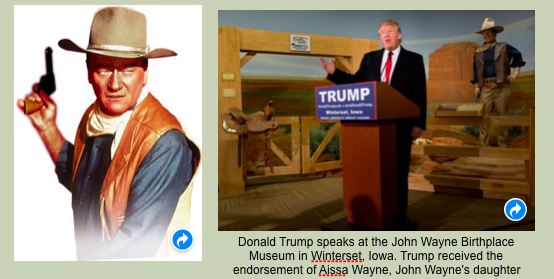
Justin Lewis-Anthony makes the case that our understandings of leadership are qualified and conditioned by Hollywood and the leadership of those on the “wild frontier” as portrayed by decades of “westerns”. (Donald Trump fits that well.) Lewis-Anthony talks about “the myth of leadership” and describes the way the myth is told.

Someone comes from the outside, into our failing community. He is a man of mystery, with a barely suppressed air of danger about him. At first he refuses to use his skills to save our community, until there is no alternative, and then righteous violence rains down. The community is rescued from peril, but in doing so the stranger is mortally wounded. He leaves, his sacrifice unnoticed by all.

This is the plot of Shane, Triumph of the Will, Saving Private Ryan and practically every western every made. It is the founding myth of our politics and our society. It tells us that violence works, and that leadership only comes from the imposition of a superman’s will upon the masses, and preferably those masses “out there”, not us.

The new archbishop of Canterbury should be a disciple rather than a leader in The Guardian, 4 February 2013

The Bible is very critical of worldly systems of power and leadership. Walter Brueggemann (in Truth Speaks to Power) makes the point that the pharoah is never named in Exodus, but that he is a metaphor representing “raw, absolute, worldly power”. He is never named “because he could have been any one of a number of candidates, or all of them. Because if you have seen one pharoah, you’ve seen them all. They all act in the same way in their greed, uncaring violent self-sufficiency.” Samuel is scathing about the Israelites’ insistence that they be led like the other nations. He knew (1 Samuel 8:11-17) that those sort of leaders are always on the take (sons, daughters, chariots, horses, fields and livestock – everything).

The ways of God are very different to the ways of preferment and career advancement. Paul is amazed when he surveys his fellow disciples. He wrote to the church of Corinth: “Consider your calling. Not many of you were wise according to worldly standards, not many were powerful, not many were of noble birth. But God chose what is foolish in the world to shame the wise. God chose what is weak in the world to shame the strong; God chose what is low and despised in the world, even things that are not, to bring to nothing things that are, so that no human being might boast in the presence of God.” (1 Corinthians 1:26-29).

Similarly Jesus praised God that she had hidden the things of heaven from the seemingly well qualified. “Jesus, full of joy through the Holy Spirit said, “I praise you Father, Lord of heaven and earth, because you have hidden these things from the wise and learned, and revealed them to little children.” (Luke 10:21).

What difference would it make to our CVs if we focused on our foolishness and our weakness? Would it prompt us to realise that power and leadership is found in some very strange places and surprising people? What difference does it make when we recognise that leadership qualifications are the gift of God and that the leadership qualities are love, joy, peace, forbearance, kindness, goodness, faithfulness, gentleness and self-control (Galatians 5:22-23) by which measures pharoahs look hopelessly unqualified.

I have recently had the privilege of reading The Bible and Disability edited by Sarah Melcher, Michael C Parsons and Amos Yong. I quickly realised how pervasive disability is and how important a lens it is to view Christian leadership. Under their prompt it is easy to see how “disabled” the people featured in scripture are. Moses was chosen in spite of his speech impediment. Jacob bore his limp with pride that he wrestled with God (and Israel takes its identity and name from that fight). Jesus’ crucifixion was the ultimate disability.

I asked the question on Twitter, “would it make a difference in leadership if we focused on disabilities and vulnerabilities rather than just abilities?” Friend Mark Bennett replied: “In Matthew’s gospel Jesus uses parables so that people hear, “see”, understand anew, overcoming disabilities of preconception, prejudice and fear.” Friend Jenny Bridgman replied: “”What are my blind spots?” is a tough but necessary #leadership question. Some more are: What can someone else do better that I can? How can I free them to do that well? Or even – how do my/our disabilities and vulnerabilities make my/our leadership more effective?”

I suspect that as long as we ignore these questions there will always be “us” and “them” – a few privileged by the powers-that-be working “for” (or even “against” as some sort of pharoah) rather than working and living “with” and in love with others.

PS. I didn’t include the title of Justin Lewis-Anthony’s book because it is so flippin’ long – It is You are the Messiah and I should know: Why Leadership is a Myth (and probably a Heresy) .

Tell me: what does strong leadership look like?

I was floored (or is it flawed?) when the conversation turned to “strong leadership”. I was asked, “What does strong leadership look like to you?” Well, I know that strong leadership doesn’t look like Boris or Donald, and that leadership can be shared, and that leaders should be as strong as they can be in the circumstances.

So I blathered – without realising that this really was a question to which Jesus is the answer.

What does strong leadership look like?

    It looks like Jesus on a cross (is that cross a leadership vote?)
    It looks like Jesus unafraid of nature’s forces
    It looks like Jesus turning his back on the religious and political capital
    It looks like love for the most demonised, ostracised and marginalised
    It looks like Jesus bent refreshing the feet of weary travellers
    It looks like a touch, and feels like a breath
    It looks like a gathering treasuring wisdom
    It looks playfully relaxed with time to rest and pray
    It looks like it can endure tyranny as long as tyranny lasts
    It looks like it’s been to hell and back
    It looks out for the broken
    It looks broken
    It is scarred

What does strong leadership look like to you?

Mushrooms

Mushrooms, by Sylvia Plath, is my poem of the month. Do you want to know what it’s about? One person says it’s about mushrooms. The beauty of poetry is its surplus of meaning. Poems mean a lot – a lot more than the sum of their words and usually a lot more than the poet intends.

Context matters. Friend Helen Scarisbrick, who always wants to explore chaos and complexity, introduced this poem as part of opening worship for a leadership day in the Diocese of Chester alongside the parable of the mustard seed.

Jesus said, “What shall we say the kingdom of God is like, or what parable shall we sue to describe it? It is like a mustard seed, which is the smallest seed you plant in the ground. Yet when planted, it grows and becomes the largest of all garden plants, with such big branches that the birds of the air can perch in its shade.

Instantly the poem becomes much more than about mushrooms. It was then a poem about everything that ever lives – for me, anyway, who carries at the back of my mind these words from Dee Hock, (founder of Visa), railing against failed command and control methods and thinking his way to a better understanding of life from the earth beneath his feet. In Birth of the Chaordic Age he wrote the words which forever challenge my understanding of organisation and leadership:

Soil is building as thousands of gophers, mice and moles work assiduously carrying grass underground and dirt to the surface. Beneath us, billions of worms, ants, beetles and other creatures till the soil around the clock. Trillions of microscopic creatures live, excrete, die beneath my feet, fulfilling their destiny and mine as well, just as surely as fulfil theirs.

In that context it becomes a poem about the power of perseverance, the power in weakness, the place of the seed. It becomes a reminder of the organisms that are part of our organisation which we ignore or oversimplify to our peril, and a reminder that there is “room” in “mushroom” to think again about life, organisation and leadership. It becomes a reminder of what and who we don’t notice, a voice for the voiceless. That makes it my Poem of the Month.

Mushrooms

Overnight, very
Whitely, discreetly,
Very quietly

Our toes, our noses
Take hold on the loam,
Acquire the air.

Nobody sees us,
Stops us, betrays us;
The small grains make room.

Soft fists insist on
Heaving the needles,
The leafy bedding,

Even the paving.
Our hammers, our rams,
Earless and eyeless,

Perfectly voiceless,
Widen the crannies,
Shoulder through holes. We

Diet on water,
On crumbs of shadow,
Bland-mannered, asking

Little or nothing.
So many of us!
So many of us!

We are shelves, we are
Tables, we are meek,
We are edible,

Nudgers and shovers
In spite of ourselves.
Our kind multiplies:

We shall by morning
Inherit the earth.
Our foot’s in the door.

PS. Mushrooms is from Sylvia Plath’s first collection of poems, The Colossus and Other Poems (1960).

Some power lines as powerful as can be

electrical-power-lines (1)

Sometimes what comes out in conversation takes our breath away doesn’t it? Conversations are wonderful ways of learning and realising stuff deep within our experience.

At a recent workshop on power leaders in ministry were sharing empowering stories and exploring ways of empowering others. What emerged was a radical question, very simply expressed: don’t we want everyone to be as powerful as they can be?

There is, of course:

  1. a huge “as long as”,
  2. and a qualification who the “we” is who so want us all to be powerful as can be
  3. as well as a health warning.

The health warning is that power can be so dangerous and all of our perceptions of power are coloured by our experiences and the extent to which we have been overpowered or empowered.

The “we”, of course, is not everyone. There are those who want to protect their “superpower” status and they depend on belittling and demeaning behaviours to manipulate dependence and fear in others. They have a vested interest – and they often are vested, dressed up in uniform – in a status quo in which they are favoured. To be part of the band of “we” we need to ask the question about how we can be disarming – to unilaterally disarm as an initial step to deescalate unhealthy power dynamics.

The “as long as” of the question “don’t we want everyone to be as powerful as they can be?” is as long as it is the right sort of power. We know what the wrong sort of power looks and feels like. It either makes us feel big (aka arrogant) or small – either way it is dehumanising. Our workshop conversation had begun with a consideration of a typology of power developed by French and Raven back in 1959. They identified five (later expanded to six) bases of power. Those bases are of two sorts. The first sort is the power that is handed on with authority, hierarchically and is based on position. The second sort is the power that is given by “followers”. Followers turn to people who they believe are competent (“experts”) and to people they like or respect (“referent”). Those we turn to may have positional power, or they may not.

Power

What we wish for when we want everyone to be as powerful as they can be is:

  1. for them to be freed from oppressive power, and
  2. for us to help one another into habits (not vests!) and disciplines in which virtues grow to the extent that we inspire confidence in one another

This is a tall order. We are all broken power brokers and we all come to the conversation with temptations to, such as, protect our position, make ourselves look big/clever, win. We can only help one another. This is a community endeavour in which we can help one another uncover our abuses of power and re-member those excluded by our executive powers.

NB Spoken by a white middle class university educated priest with well reinforced positional power but convinced that the communities I care for should be as powerful as they can be and eternally grateful for those communities which have been empowering and made this life worth more that it otherwise would have been.

Leadership Styles and a Political Divide

lamdin

Sometimes you hear bells ringing all the while through reading a book. There was so many chimes in Finding Your Leadership Style by Keith Lamdin – so many “just so” moments”, so many reminders of other reading – and I so agreed with the direction of Keith Lamdin’s travel.

Two women staffing a train tea trolley lead Lamdin’s book. While passengers on a delayed train were getting upset about missing their connections these “trolley assistants read the emotional climate of the passengers on the train and knew that they needed to stay calm”. They led in that moment offering “something different from those more familiar teachings about leadership, vision and motivation”. Their example demands a second look at “leadership” and suggests that leadership is for all types, leadership is not something special and that all of us have natural ability to lead others – though some make better leaders than others. Lamdin writes:

“leadership, like love, is a natural human capacity and that what makes Christian leaders distinctive is their seeking to live as disciples of Jesus. Discipleship informs our discontent, colours and shapes our vision and strategic purpose, and fuels our courage.”

That discontent, vision and courage is what calls people into leadership.

Lamdin describes six leadership styles: monarch, warrior,  servant, elder, contemplative and prophet. They fall into one of two categories: the politics of salvation or the politics of revelation (h/t Gordon Lawrence for that).

Monarchy exists where one person is in charge. If the buck stops anywhere it stops with the monarch. Lamdin suggests that monarchy and hierarchy can’t be justified from Jesus’ teaching. He says that there is nothing hierarchical about a priest’s walk alongside others in the territory of the holy (Countryman’s language) but “the moment that a priest is appointed and installed as a rector, vicar or priest in charge, he or she is bound into the hierarchy”.

A lot of leadership thinking has taken place within earshot of battle and this has given rise to the warrior category. So, for example, early British writing on leadership was shaped by experience of leadership in World War 2. “They” (for example, Bion and Adair) “developed ideas about officer selection, and the language of strategic objectives, missions, leadership development and battle plans seemed to transfer easily enough into the post-war world of reconstruction.” I remember a time when the Diocese of Chester was led by a Major and a Wing-Commander – not only officers, but also gentlemen – and there was a special room at diocesan HQ marked “hierarchy” with a capital H! This tone of leadership is reinforced by the “heroic warrior paradigm” that is the basis of much of Christian formation (for example, Joshua, Gideon, David, and even Jesus).

The monarch and the warrior belong to the “politics of salvation”. Lawrence understands “politics” as “the sense of influence of one person or party over another”. The politics of salvation is demonstrated through the “isms” – communism, fascism, capitalism and democracy. “The preoccupation of the politics of salvation is with change – that is, others holding power impose it from the outside on individuals and systems”.

The monarchs and warriors within our systems are easily identified and they have their place. In certain contexts they are the right styles of leadership. So, Lamdin comments, “the monarch provides safety and stability and organisational effectiveness” and “many great changes in social welfare and charitable work are fuelled by this sense of energy, vision and sacrifice. Where the enemy can be constructed and named, whether it is slavery, child poverty, capitalism or socialism, Christianity or Islam, then the energies of the warrior leader are released”.

I would suggest that there is a problem in any organisation that organises itself around these two models of leadership because they are only particularly suitable for certain contexts (where there needs to be a rule and where there’s a battle). Lives which become just that are dysfunctional and organisations that become just that are abusive and xenophobic.

These are also male models of leadership. In a paternalistic and patronizing culture the likelihood is that the monarch is going to be male (and does monarchy thrive in cultures that aren’t paternal and patronizing?). Sport is prominent in our culture. So much of the talk within sport is fighting talk (defence/attack, fighting relegation etc etc) that it isn’t surprising that we have so many “warriors”.

Was Jesus not spending time with those who’d had more than enough of monarchs and warriors? He spends his time with those the monarchy cast out and he challenged the very essence of enmity by teaching his disciples to love their enemies. Was he not saying that we’ve had enough? Does he not expose the limitations (and suffering) of the monarchs and warriors, indicating other ways that deepen and transform community? Lamdin writes: “Jesus finds himself in a religious culture which should be liberating but which is stifled by regulation and political compromise. He sets himself against the establishment and seeks to overturn it with his capacity bot to heal people and to teach them about his understanding of the God of Abraham, Isaac and Jacob”.

The politics of revelation is the landscape from which the trolley assistants emerge. Their leadership takes people (eg Lamdin) by surprise. Their leadership is a revelation. For Lawrence, “the politics of revelation is preoccupied with the conditions and resources for the exercise of transformation that come from inside the person or system, and are brought about through the people revealing what may be the truth of their situation to themselves and taking authority to act on their interpretation”.

The move from one politics to the other is, according to Lawrence, a paradigm shift. It is a shift which allows us to notice a wider range of leadership, to allow the emotionally intelligent trolley ladies to lead us and to recast our organisation for more than battle and an imposed rule.

Lamdin recognises the servant, the elder, the contemplative and the prophet. Of servant-leaders, Steven Covey writes:

“It has generally been my experience that the very top people of truly great organisations are servant-leaders. They are the most humble, the most reverent, the most open, the most teachable, the most respectful, the most caring and the most determined.”

They lead by relationships, not by coercion or domination, guiding people, not driving them.

The elder is the source of wisdom in many communities (though in western society the elder is often redundant). The elder is the consultant belonging to the wisdom tradition represented so well by Jesus through his parables. Here there is no interpretation imposed from outside. Lamdin writes beautifully about this:

“Every time you are faced with something that puzzles you and you discuss it with friends and in the end come to your own decision, you are exercising your freedom and your responsibility. You are more fully inhabiting the world that God has given us in which to work out what it means to be made in God’s image. Every time you do what you are told without thinking, you opt out of the calling that the early stories of Genesis seem to indicate God has imagined for us all.”

The contemplative secures the place of the important and the priority for “prayer, meditation and contemplation” in a world that is at it 24/7.

Lamdin’s comments on the prophet are inspired by Arbuckle’s work on leadership, which Lamdin refers to as the “only book on leadership which is about dissent”. Gerry Arbuckle suggests that the “healthy future of any organisation is to be found not only in the leadership of the hierarchy but also in the leadership that emerges in dissatisfaction and dissents, and in the conflicts between them” It is the prophet who raises the voice of the poor and needy, “a voice that cries for justice, an end to evil abuse of power and the redistribution of wealth”.

Some questions:

Where is there monarchy and where are the warriors in my organisation? Are they strictly necessary in these circumstances?
Should we build a whole leadership industry around them?
Do the politics of salvation shape our pedagogy and church? What would they look like if they didn’t?
And where are the servants, elders, contemplatives and prophets through whom our souls really rejoice?

The Heresy of Western Leadership

screen-shot-2016-11-11-at-13-39-54

I am grateful to Justin Lewis-Anthony’s scepticism about leadership. The same day that America was going to the polls to elect Donald Trump I was exploring leadership in ministry with friends and colleagues in the Diocese of Chester including Helen Scarisbrick and Jenny Bridgman. Lewis-Anthony suggests that the leadership bandwagon started rolling in the early 90’s (he blames George Carey), and since then leadership programmes in the church have been proliferating. The Diocese of Chester was quick onto the bandwagon and I was involved in one of their first courses. (I don’t understand why we haven’t given as much attention to other ships which have a more legitimate claim to be part of the fleet – we never hear of friendship, fellowship or companionship training programmes do we, even though there is more theological justification for them?)

Where do our ideas of leadership come from, and why are we so bothered about leadership anyway?

Justin Lewis-Anthony’s book has the clever title You are the Messiah and I Should Know: Why Leadership is a Myth (and Probably a Heresy)He traces our thinking about leadership to the double headed Emersonian “ur-myth” of “the frontier” and “the American Adam”. For Lewis-Anthony “there is a layer of mythology which is omnipresent, omnipotent and omni-transparent, pervading and influencing every part of our understanding of the world. Our knowledge of leadership comes from believing in and living under the power of the myth of leadership”.

There is a reminder here that we can’t escape mythology in ideology. Drawing on the work of Levi-Strauss, Lewis-Anthony reminds us that ideology develop in an unconscious process shaped by the stories which we tell ourselves. He quotes Kelton Cobb (p.99):

Our myths feed us our scripts. We imitate the quests and struggles of the dominant figures in the myths and rehearse our lives informed by mythic plots. We awaken to a set of sacred stories, and then proceed to apprehend the world and express ourselves in terms of these stories. They shape us secretly at a formative age and remain with us, informing the ongoing narrative constructions of our experience. They teach us to perceive the world as we order our outlooks and choices in terms of their patterns and plots.

In other words, we are caught in a bubble – a bind. Once the myth making took place round the camp-fire. Since the 1950’s it’s been on-screen through film making. One nation has dominated the film industry, and consequently the unconscious formation of our ideology. For a long time we have been subjected to the only films available which have relentlessly had the same story to tell. They have fed us our scripts.

Lewis-Anthony quotes German film maker, Wim Wenders: “No other country in the world has sold itself so much and sent its images, its self-image, with such power into every corner of the world. For 70 or 80 years, since the existence o cinema, American films – or better, this ONE American film has been preaching the dream … of the Promised Land.” (p.75).

The frontier is not about place, but about defining experience. It is to the frontier that the American intellect, according to Turner, owes its striking characteristics. “That coarseness and strength combined with acuteness and inquisitiveness; that practical, inventive turn of mind, quick to find expedients; that masterful grasp of material things, lacking in the artistic but powerful to effect great ends; that restless nervous energy; that dominant individualism, working for good and for evil, and withal that buoyancy and exuberance which comes with freedom – these are the traits of the frontier.” (p.81).

The American Adam myth breeds the individualism that Turner talks about and which is such a modern phenomenon. The frontier depend the sense of individualism to the extent that Americans told themselves, according to Billington, that “every man was a self dependent individual, fully capable of caring for himself without the aid of society.” (p.93).

The journey to the frontier is essentially westwards. The journey spawned a genre of film which took over our screens, the “Western”. The western myths of the Western have shaped a leadership that is essentially masculine and white. The films show how the west was won and defended and how the wild was tamed and controlled. Typically the hero is a man “in the middle, between civilisation and savagery”. Lawrence and Jewett describe the Myth: “A community in harmonious paradise is threatened by evil: normal institutions fail to contend with this threat; a selfless superhero emerges to renounce temptations and carry out the redemptive task: aided by fate, his decisive victory restores the community to its paradise condition: the superhero then tends to recede into obscurity.” (p.210).

The American Adam is a man, and a man with a gun. Lewis-Anthony is quite right to point out that in carrying out the redemptive task, the American Adam becomes the American Cain. But it is with the status of hero and leader that this American Cain is expelled, rather than with a curse.

For Lewis-Anthony any leadership based on this Myth is fundamentally violent, and therefore wrong. “Under the American mono myth of redemptive violence, to be a leader/hero means to be prepared to use violence. To be a disciple/follower means to accept, in turn, an invitation to use and be thrilled by violence.” (p.213). Leadership in our society is “fatally flawed by its roots in violence, the will to power and destruction”.

Tom Wright asks the question about “what any of this has to do with something most Americans also believe, that the God of ultimate justice and truth was fully and finally revealed in the crucified Jesus of Nazareth, who taught people to love their enemies, and warned that those who take the sword will perish by the sword”. Lewis-Anthony continues: “Wright reminds those within the church, the ‘religious admirers of leadership’ that there is a basic problem in this admiration of North American society. With its roots in the mythic use of violence by the outsider, the extra-societal Adam, what can we find in the scriptural tradition to counteract, or set aside, this cult of violence? Surely we can find some ways in which the crucified Jesus of Nazareth rescues leadership from both Marduk and John Wayne.”(p.213).

starwarsrallypng

Why are we bothered about leadership? It matters to those who are the victims of leadership violence. It matters to those of us whose minds have been made up by a myth of leadership. It matters to those who are excluded by such a myth – anyone who is not a white, male, rooting’ tooting’ son of a gun. It matters to God’s mission. The Washington Free Beacon has put these two images together, a Nazi rally – which inspired a scene in Star Wars. It all looks frighteningly ecclesiastical, except there’s more people.

Playmaking leadership in the eyes and hands of great conductors


Itay Talgam uses the faces of conductors to talk through different leadership styles. On one extreme is the face of Riccardo Muti. He is shown as very commanding and competent. He has the expression of one who is responsible for Mozart. He wants the music to be played his way, the proper way. As competent as he was, 700 music employees of La Scala wrote to him (2005) asking him to resign because, they felt, he was using them as instruments.

Talgam uses the expressions of Herbert von Karajan, Leonard Bernstein and Carlos Kleiber to explore other ways of leading without commanding. In those expressions there is the encouragement for the orchestra to exercise their own responsibility, to express themselves, to add interpretation, to become storytellers themselves. They are expressions that energise their fellow professionals. Kleiber is shown as rejoicing in the play, joining with the orchestra in spreading happiness. Great conductors and leaders are playmakers. Just watch from 19:27 to see leaderful joy.

This happy and blessed state is the product of hard work. There are hours of meticulous practice as the music gets under the skin of the musicians. They are led and lead each other to this ecstasy through the practice of the community, by listening to one another, by responding to each other, by loving each other. They all know their place in the social system and play their responsible part in it, with their abilities, goals and wills, according to the boundaries of the organisation. It’s hard work that works magic.

Conducting has often been used as a metaphor for leadership. The metaphor raises the importance of listening and negotiating the parts we want to play, the level which we want to work together and practice together. It shows the possibilities of engagement and empowerment which dissolves organisational boundaries as play pleases, drawing others in pleasure.