A sermon for September 28th 2025 – the 15th Sunday after Trinity (Proper 21C)
All three readings, (Amos 6:1a, 4-7, 1 Timothy 6:6-19, Luke 16: 19-end) address the issue of wealth. (There is far more in the Bible about wealth and riches than about sexual morality, though that is hard to believe when we listen to the politics of the church).
Amos condemns those who are at ease in Zion, those who feel secure in Samaria – the notables of the first nations.
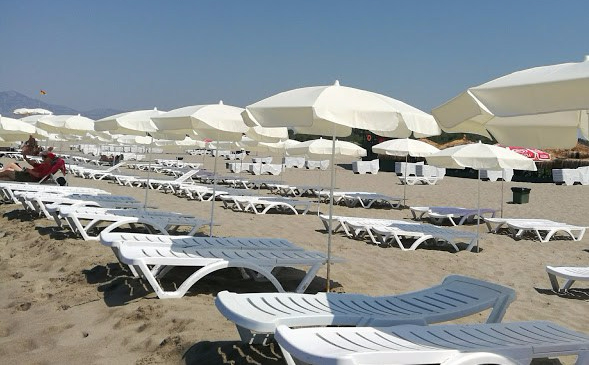
He condemns those who lie on beds of ivory, and lounge on their couches, who drink wine from bowls and massage themselves with the finest oils, but who don’t give a fig about those whose lives are ruined.
For Amos, they will be the first to be exiled.
The revelry of the loungers shall pass away – and we will be all the better for that.
Now, there’s a phrase to conjure with. “They shall pass away” –
dead, no more, nada – thank God –
and those who are the victims of their indifference will breathe a sigh of relief.
What use are the loungers to the world?
The kingdom of God does not belong to the comfortable and secure,
but to the last, the least, and the lost.
Then Paul, in his letter to Timothy talks about the great gain in godliness combined with contentment.
He doesn’t condemn people for having things but warns against wanting more and more.
True wealth is “godliness with contentment”.
That’s the way to be happy.
Paul warns Timothy about the dangers of desire.
“Those who want to be rich fall into temptation and are trapped by many senseless and harmful desires that plunge people into ruin and destruction.”
The danger of desire is that it makes us restless, blind to our neighbour, and forgetful of God. When we chase being first we often step over those who are last.
When we crave more, we forget those with less.
When we seek security in wealth, we leave others lost.
Paul warns that desire blinds us to our neighbour.
And Jesus shows us the tragic result – a rich man so blinded by wealth that he couldn’t see Lazarus at his own gate.
Isn’t it interesting that nobody knows the name of the rich man?
But we all know Lazarus.
The rich man has been forgotten.
That phrase again – he is passed away. He is no more. He is dead.
He is in torment for the torment that Lazarus went through at the rich man’s gate.
He was covered with sores,
and was so hungry he’d have gladly eat the crumbs from the floor of the rich man’s table.
See how the dogs came and licked his sores.
The compassion of the dogs is such a contrast to the indifference of the rich man.
The rich man was at his gate, on his doorstep.
Compassion was surely in his reach.
But he’d made wealth his wall,
and when death came, that wall turned into an unbridgeable chasm.
He passed away into torment, dead to the kingdom of God.
Whereas Lazarus is carried by all the angels to be with Abraham – carried as one of the people of God.
“The loungers shall pass away” says Amos.
And in this parable, the rich man – nameless, forgotten – has passed away.
Dead to God’s kingdom, dead to compassion, dead to life.
We are a rich nation.
And yet, how often we choose not to see the plight of the poor.
The men, women and children arriving in small boats —
are they not Lazarus at our gate?
They lie at the threshold of our common life, in need of compassion.
And here’s the Gospel twist:
Lazarus means “helped by God.”
God helps the poor, the overlooked, the forgotten.
They are not abandoned.
And in God’s strange mercy, they are also sent to help us.
Lazarus is not just a man to be pitied — he is a godsend.
How the rich man needed Lazarus.
At the end of the parable, he begs Abraham to send Lazarus back to warn his brothers.
But Abraham replies:
They already have Moses and the prophets — they should listen to them.
He could also have said:
They already had Lazarus — lying at their gate.
That was their opportunity. How many more chances do they need?
Lazarus is the examiner of compassion,
who stands at the door and knocks to see if any love of God lives in this household.
This is where the kingdom of God begins: in the last, the least and the lost whom God helps.
The rich man failed the test.
He failed the test to help the ones God helps.
He was like those condemned by Amos – a reveller, a lounger,
and he becomes one of the first in the gospel to go into exile, into torment, into unending death.
Can a rich man ever enter the kingdom of God?
Yes, but only if they help the ones God helps.
The tragedy for the rich man was that he never recognised Lazarus as the gift God had sent him. Wealth had become his wall against him.
When death came, that wall turned into an unbridgeable chasm.
The rich man passed away nameless, forgotten, as Amos warned.
“The revelry of the loungers shall pass away.”
But Lazarus —
helped by God, sent by God —
was lifted up and carried by the angels to the bosom of Abraham.
Pope Francis reminded us that the poor are our evangelisers.
They proclaim the gospel to us.
They show us the face of Christ.
They test our compassion
and teach us where the kingdom of God begins (and where it ends).
So the question is this:
will we see these godsends at our gate,
within our reach, and open the bridge of compassion?
Or, will we, like the rich man, turn away and pass away?





 Grits and Grains
